This article is machine translated
Show original
Why M-type traders might be trading saints? (Serious Version)
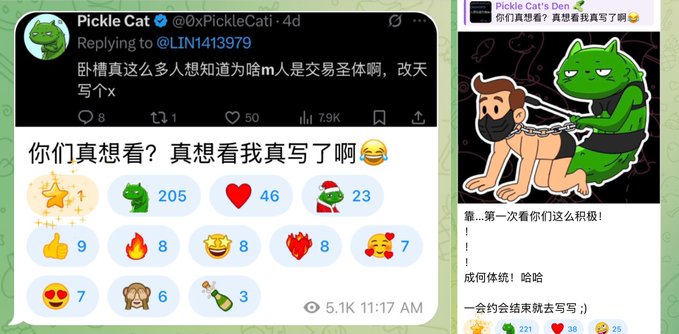
I thought only a weirdo like me was interested in this topic, but after posting it on Telegram, I realized there are so many like-minded people!
My usual serious Telegram posts don't get as much interaction as this casual one 🤡
Have I finally found my tribe?
Great, great, finally I can freely discuss this topic that's been on my mind for so long 👇
First, the core point: The difficulty in trading is never about predicting the direction, but about your relationship with "pain."
Most people's instinctive reaction to pain is only one: avoidance.
Loss = Threat = Must immediately stop the pain.
But M-type traders are structurally different in this respect.
It's not that M-type traders necessarily "like all pain," but rather that they have established a long-term, stable, and coexisting relationship with a certain type of controllable pain.
They even feel uncomfortable without this pain for a long time, and actively "endure the pain."
This relationship itself has already helped them bypass the biggest hurdle in trading.
1. Different pain thresholds lead to different recovery speeds👇
> When most people see a loss, their emotions and physical reactions often explode simultaneously. Heart pounding, anxiety, impulsiveness, and the desire to immediately win back the loss.
This has little to do with IQ or personality; it's essentially about your pain tolerance and how you interpret pain.
> People with high pain thresholds don't lack reaction; rather, they are more familiar with the existence of pain.
> They are more likely to do one thing: acknowledge the existence of pain, rather than immediately trying to eliminate it.
This directly impacts a crucial ability: the ability to refrain from immediate action after a loss.
2. Impulsive trading and revenge trading are essentially about avoiding pain🤡
> Many people think revenge trading is "fighting pain," but it's actually a complete escape.
> Revenge trading is about avoiding recalling, reviewing, and facing "why I just lost."
> It's about using new stimuli to cover up old pain!
Because M-type individuals are accustomed to coexisting with pain, they are more likely to do something that most people instinctively resist:
> Repeatedly reviewing, dissecting, and analyzing their most painful trades.
Trading, in essence, boils down to two things: optimizing strategies + cultivating the mind. And both of these inevitably involve direct confrontation with pain.
3. They distinguish between "necessary pain" and "devastating pain" earlier 👇 Newcomers discussing risk usually only say one thing: "I'm only using this much money; if I lose, I lose."
> This sounds carefree, but it's extremely irresponsible.
Because you don't know your true pain tolerance level, specifically how much position to open, how to allocate it, how much leverage, where to set stop-loss orders, and what percentage of your risk account you're willing to risk.
> This leads to recklessly depositing more money after losses and rarely withdrawing profits, with little objective, long-term planning.
> As a result, losses snowball, people become increasingly anxious, and ultimately believe it's because they haven't learned enough or their strategies are inadequate.
The root of the problem lies in your never confronting your own pain and fear.
Because people like M have a very clear understanding of the boundaries of their "tolerable pain," they are more likely to understand the most important questions in trading:
What kind of pain is necessary to experience, and what kind of pain will directly destroy me?
Therefore, they start planning their overall risk, position sizing and drawdown management, and strict control over deposits and withdrawals much earlier, focusing their energy on long-term survival rather than constantly worrying about whether the direction is right.
4. An obsessive "belief" in "rules" 👇 The most common saying in trading is: follow your system.
But writing rules is easy; following them is difficult!
Because in trading, there's no tutor to punish you, and no boss to deduct your salary.
You are your own boss; if you make a mistake, you have to punish yourself severely.
This often leads to wishful thinking, a reluctance to punish oneself for violating trading rules, the belief that no one will notice a single slip-up, and the belief that trading habits can be easily changed or selectively ignored. Once these habits form, it becomes impossible to adhere to any trading system long-term.
> Moreover, most people can't be ruthless with themselves.
> But many successful traders are different. Their obedience to rules carries an almost religious conviction.
> Once this structure is transferred to a trading system, discipline becomes second nature.
I have my own trading punishment system: violating the rules requires doing something I utterly dislike but that won't harm me.
It took me a long time to truly implement this system.
For many successful traders, however, "punishing" themselves is something they do immediately, and they do it more precisely, without delay, and with greater ruthlessness.
5. Aftercare, the trading review system👇 The most important aspect of B*SM is not the pain itself, but aftercare, and the same applies to trading.
> Journaling, reviewing, and adjusting strategies are essentially processes of transforming pain into power.
> If you don't review your trades, your system will never evolve.
Most people often have to go through many interruptions, avoidances, and giving up before slowly establishing the habit of reviewing their trades.
M people are already familiar with the aftercare structure, so incorporating this mindset into trading reduces the psychological barrier and makes it easier to adhere to.
⚠️This doesn't mean that S people or people without any "special inclination" can't become good traders. After all this, you'll find that it essentially boils down to three points: a high pain threshold, a clear sense of boundaries, and long-term adherence to rules.
These are characteristics that every consistently profitable trader possesses, and theoretically, everyone can gradually develop them in different ways.
It's just that, statistically speaking, M people may acquire these structures earlier and more naturally.
So the question is, are switch traders even stronger? I don't know, I have very few friends who are both switch traders and professional traders, haha.
This is merely a speculative analysis based on a sample of "true M-type traders" I know. It's a divergent personal observation, not a psychology paper, and doesn't constitute investment advice, but the logic is sound. It's purely for fun.

Pickle Cat
@0xPickleCati
12-18
卧槽真这么多人想知道为啥m人是交易圣体啊,改天写个x
Forwarded to a gambling addiction rehabilitation group in Macau
Takeaway: There's actually an overlap between afterplay and debriefing.
You know what, you really don't know what I mean.
To be frank, I've wasted my breath.
😂

From Twitter
Disclaimer: The content above is only the author's opinion which does not represent any position of Followin, and is not intended as, and shall not be understood or construed as, investment advice from Followin.
Like
Add to Favorites
Comments
Share
Relevant content