In the cryptocurrency industry, professional players always make direct and straightforward choices. In 2025, KOLs cast their most genuine vote for the development of industry tools and ecosystem through a year's worth of investment and time investment.
We interviewed over ten leading KOLs covering various sectors including arbitrage, MEME, secondary market trading, and wealth management, focusing on four core questions: "What is the biggest achievement this year?", "Given the achievements, what is your most frequently used and favorite OKX product in 2025?", "Why do you like it?", and "What practical value has this product brought you?"
Their annual review reveals that with the rapid development of the on-chain ecosystem, on-chain operations accelerated across the board in 2025, and KOLs' product preferences subtly shifted: they were no longer satisfied with just a single function, but placed greater emphasis on efficiency, combination strategies, and value capture. Among numerous tools, OKX ranked among the top 3 most popular products of the year, thanks to its wallet, DEX aggregator, yield-generating financial products (such as Flash Earn, Dual Currency Win, and PayFi), as well as its accurate understanding of user needs and the successful implementation of its features.
I. OKX Wallet: Avoiding wasting user time on irrelevant operations
The most noticeable change in the on-chain environment in 2025 is that opportunities are more dispersed. It's no longer a case of "one chain dominating for six months," but rather L2, modular, application chains, Move-based chains, and mainstream public chains taking turns appearing, further fragmenting airdrops and early-stage opportunities. However, the time and energy of ordinary users, and even professional airdrop hunters, are fixed. The real problem becomes: it's not that you don't understand blockchain, but that you can't simultaneously operate so many chains with finesse.
The shortcomings of traditional wallets are magnified in this environment—they require manual network setup, RPC is prone to glitches, and the interaction experience between different chains is fragmented, making them prone to errors during intensive operations. Many users aren't incapable of using them, but are deterred by the costs of configuration, switching, and errors. OKX wallet was used frequently during this phase, essentially addressing a real need: keeping operational complexity within a manageable range for users as the number of chains continues to increase. For heavy users, this isn't about an upgrade in experience, but rather a question of whether they can continue to use the wallet long-term.
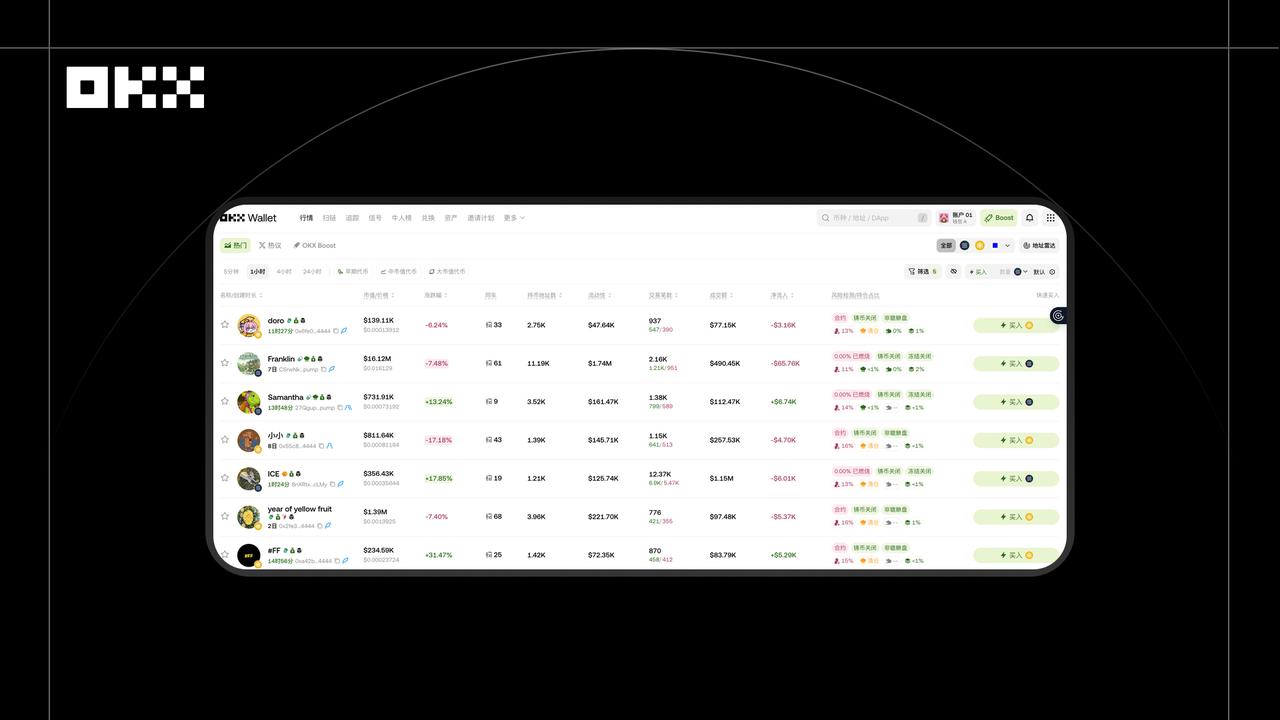
Ice Cream Warrior (@Xuegaogx): If I could only choose one product, it would be the OKX Wallet.
To my shame, I didn't actually have any projects that made me rich overnight this year. But if I had to pick my biggest gain, it would definitely be my personal growth experience. Starting at the beginning of the year, I systematized my previously disorganized trading activities, breaking them down into four main tasks: filtering information, recording accounts, executing trades using tools, and tracking profits. I've consistently run this system for a year, and I've clearly felt a reduction in time costs, less repetitive work, and more stable on-chain returns. For example, using this method, I've received relatively consistent returns from airdrops in the Kaito, Layer 2, and ZK sectors. This is my biggest achievement this year.
Given the results, if I could only choose one product, it would definitely be the OKX wallet. Especially its multi-chain extensions, abstract accounts, and batch tasks—these features have become standard in my daily operations. Frankly, in the realm of cryptocurrency mining, it's the entry point I've opened the most this year. The wallet combined with multi-chain extensions and embedded task flows has become my main battleground for cryptocurrency mining.
From the perspective of a purchasing enthusiast, the OKX wallet offers a truly comfortable experience. First, it boasts multi-chain coverage. This year, I've used chains ranging from L2 and L3 to Move-based systems, Cosmos, and even new modular chains, and the OKX wallet can connect directly to almost all of them. There's no need to install a dozen plugins or constantly switch between RPCs. It's stable, fast, and responsive, which is especially important during peak purchasing periods. Second, almost all tasks from popular projects can be completed directly on OKX. This year, many projects have integrated their task entry points into the wallet, resulting in smoother interaction, no missing task data, and a significantly better gas estimation and signing experience compared to plugin-based wallets. The task completion process is much smoother, completely eliminating the need to open a dozen web pages back and forth.
The practical value of this product is very clear. First, it reduces redundant costs, allowing me to cover more projects. For example, this year, a modular L2 ecosystem task involved eight on-chain projects. Using a native wallet, I would have had to open eight web pages, make eight RPC calls, and repeatedly switch chains, taking half an hour each time. With the OKX wallet, I could complete it all on one page, taking only ten minutes. I used the extra 20 minutes to run another L3 task, which actually offered a more generous airdrop. This is a very clear example of the positive feedback loop of "time → reward." Secondly, it significantly reduces error rates, drastically decreasing the chances of signing the wrong name or going through the wrong steps. Some cross-chain bridges and staking tasks are prone to misclicking chains, RPC getting stuck, or signature errors. OKX's smart chain detection and task flow guidance essentially eliminate these problems. For freeloaders, avoiding mistakes is itself a benefit. Finally, there are transfer notifications. If you transfer funds to a contract address, the OKX wallet will provide a very prominent reminder. This feature saved me from losing several thousand dollars in a transfer this year.
Max (@0xcrypto_max): It's safer to keep all on-chain funds in an OKX wallet.
This year has been alright. I wasn't as daring as last year; I've mostly been accumulating wealth little by little. Because I haven't All In all in, my capital curve has been slowly rising, but I find this state quite comfortable. It's not as painful anymore; in fact, I feel quite happy.
My absolute favorite product is the OKX wallet—it's the smoothest wallet I've ever used. More importantly, it's secure. Because I'm quite risk-averse, I'm not comfortable keeping my money anywhere. I don't dare keep too much in exchanges or financial products; most of my funds are stored in a cold wallet. The OKX wallet is practically a semi-cold wallet; I only feel relatively safe keeping my on-chain funds there.
Additionally, I think the pool data is the best. When trading on-chain pools, pool size is a very important reference indicator. Other DEXs usually don't have complete pool data. For me, pool size is useful for judging whether market makers are distributing their holdings. Sometimes when they add to the pool at a high price, I sell along with them. Most of the time, I'm right, but occasionally I sell too early.
Chain expert (@wenxue600): The main value of OKX wallet is that it improves the efficiency of on-chain interactions.
This year's biggest success was the Aster airdrop. My main account received nearly 100,000 tokens in the first round, with a peak value exceeding 200,000 USDT. However, it sold out quickly at launch, but thankfully, my smaller accounts managed to hold onto them. The sense of accomplishment from this project wasn't just about how many I acquired, but also about providing key recommendations and reminders at each important juncture, perfectly aligning with the final airdrop rules. Many of my followers and group members who listened and followed these instructions received a significant amount of A7 tokens.
My most frequently used wallet is OKX Wallet. OKX Wallet understands how efficient it is for arbitrageurs, requiring minimal configuration and offering comprehensive features and a smooth user experience – making it an essential tool for arbitrage and improving efficiency in many ways. Of course, its main value lies in improving on-chain interaction efficiency. OKX Wallet responds very quickly to popular networks, eliminating the need for manual network configuration and providing a dedicated entry point for arbitrage, making it extremely convenient. While other wallets might encounter errors during interactions, OKX Wallet rarely experiences these issues. Whether it's trading, cross-chain transactions, IPOs, or dongle trading, OKX has provided an excellent experience.
Suy (@Crypto_Suy): OKX Wallet is the smoothest and can be used anytime, anywhere.
This year's market fluctuations have been intermittent. I reaped my biggest gains in March with $mubarak, and in September and October with $giggle and $palu, but every time the market closed, I lost a significant portion of it back. My favorite and most frequently used product has to be the OKX wallet.
I've been using OKX wallets since the Inscription era. I remember OKX wallets being the smoothest operating system back then, allowing me to manage them anytime, anywhere on my phone. While using OKX wallets, I made my first money in the crypto. OKX wallets' UI is very user-friendly, and every new feature they release follows the latest trends, from Inscription to Memes. OKX wallets also brought me good fortune. I remember the morning after the release of White Cloth. After waking up, on my way to my lab class, I looked at the candlestick charts and bought White Cloth in all three of my wallets. I held it until it was listed on an exchange, making over thirty times my initial investment.
II. OKX DEX Aggregator: MEME Opportunity – The Key is Whether You Can Transaction Immediately.
In 2025, MEME and smaller cryptocurrencies will experience shorter trading windows, greater volatility, and more dispersed liquidity . Prices will either remain stagnant or surge wildly, and the earliest transactions are often the ones that generate real profits. However, the reality is that many on-chain traders don't lose because their judgments are wrong, but because their execution paths are too long. For example, cross-chain transactions take time, finding a trading pool takes time, and exchanging gas takes time. By the time the operation is completed, the price has already changed.
This is why more and more users are focusing on whether a DEX is easy to use, shifting their focus from fees and UI to whether it can be completed with a single click . The value of OKX DEX aggregator at this stage lies more in shortening the process—compressing operations that were originally scattered across multiple platforms and steps into a single trading decision. For users, it doesn't solve "how to trade," but rather whether there's still time to trade . In a market where opportunities are increasingly scarce, this is a very real pain point.
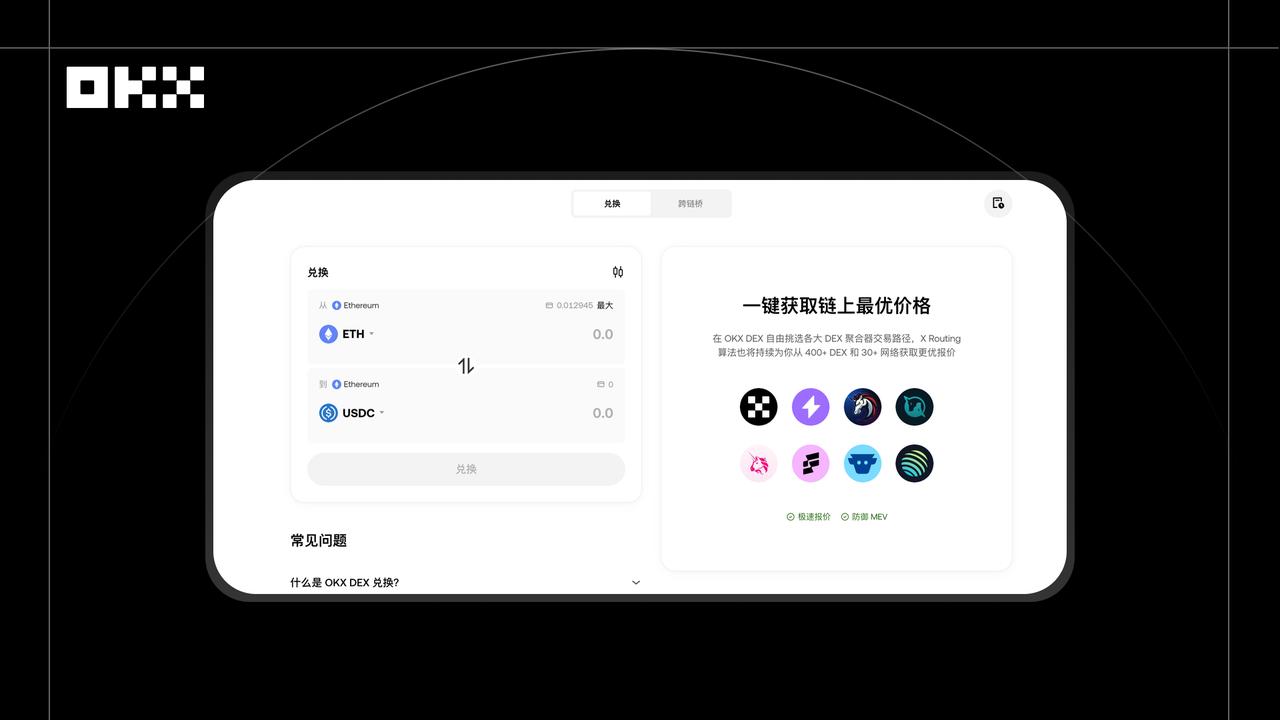
Jin Xiaoxiao (@Haz59188): OKX DEX transactions are super convenient across chains, no need to switch back and forth.
I was actually losing money throughout the first half of this year until X Layer launched. I spent a week turning 3000 USDT into 80,000 USDT. My biggest profits came from XDOG, OKAY, ODOG, XLAB, FUN, etc., all from early adopters. That's how my X Layer journey began. To be honest, OKX really transformed me from a second-tier blogger into a blockchain warrior.
This year, my top pick is definitely the OKX built-in DEX + OKX wallet combination. Now, for 99.9% of on-chain meme—buying, selling, cross-chain transactions, taking profits, and exiting—I use only the OKX app. Even when buying spot commodities, I'm used to using the OKX wallet directly; it's incredibly convenient. The recently released OKX built-in DEX is a game-changer, giving me yet another reason to continue loving OKX.
What I used to hate most was switching wallets, paying gas, and seeing fake candlestick charts. Candlestick charts had latency, and cross-chain transactions were a hassle. I used to find on-chain transactions particularly cumbersome, and I'm someone who hates hassle. Two years ago, when I was into ICOs, I found switching between other wallets incredibly chaotic. A friend recommended the OKX wallet, which supports full-chain and cross-chain transactions—super convenient, and most importantly, no need to switch back and forth. Back then, I wasn't into on-chain meme, and the cross-chain experience was the first reason I fell in love with it. However, cross-chain speeds used to be slow, but now they're not only getting faster, sometimes almost instantaneous with zero lag, but there's also more and more innovation. The candlestick charts in the wallet are also very detailed, with no latency; many other wallets have delays, making it impossible to react in time. The speed at which new coins are released is phenomenal; as soon as DexScreener refreshes a new coin, OKX can already buy it directly. For any new coin released on any chain, I directly purchase it through cross-chain transactions in the OKX wallet. The recently released built-in DEX even eliminates the need for cross-chain transactions; you can directly buy tokens. While others are still using other wallets to buy platform tokens for gas, I'm already making money! This feature completely blows away most wallets on the market. I love it! However, the newly added built-in DEX does have a slight delay; it's not as fast as the original wallet's candlestick charts and data response. I believe this can be improved in the future.
To be honest, I used to be a basic blogger, just looking at candlestick charts and helping my community followers open contracts. After making money through the OKX wallet, I learned a lot about the core logic of the ecosystem, understood the current state of the industry with multiple chains coexisting, and realized how cross-chain technology breaks down the barriers between different blockchains. The OKX wallet has given me a new vision for my career.
Mike (@maik2hello): Tokens from various chains can be quickly and optimally exchanged on the OKX DEX aggregator.
There haven't been any major results yet this year, but the features of OKX products have really helped me a lot.
My favorite OKX product is the OKX DEX aggregator. Its intelligent aggregated trading and one-click cross-chain bridging features are what I admire most. These are the features that immediately come to mind. It has helped me quickly exchange smaller cryptocurrencies at the best prices several times. I recall the first time I used it: I was participating in a private sale of a project and couldn't operate it on my computer (it was a smaller cryptocurrency, and I wanted it to run as quickly as possible on TGE, as many people understand). I quickly received the airdrop using my OKX wallet. After receiving it, I wanted to transfer it to an exchange to sell, but token transfers weren't available at the time. So I thought I'd try trading and exchanging it on OKX's DEX aggregator. Surprisingly, it worked smoothly, and the price matched the exchange, completely avoiding losses from a subsequent rapid price drop. After that, I frequently traded and exchanged tokens on it. You'll find that tokens from various chains can be quickly and optimally exchanged on the OKX DEX aggregator, including one-click cross-chain bridging, allowing me to quickly meet my trading needs for tokens from different chains.
Later, I did some research into why the OKX DEX aggregator is so good, which further clarified why I've always liked using it. It can capture liquidity from 500+ DEXs in real time using its self-developed algorithm, allowing me to get the best prices across the entire chain without switching between different platforms, while consistently keeping overall slippage below 0.3%. At the same time, its execution efficiency is extremely high, with transaction speeds down to milliseconds. Combined with the one-click redirection via the "floating plugin," the overall operation time is reduced by about 70%. In terms of security, the OKX DEX aggregator proactively blocks blacklisted addresses and provides risk warnings before trading, which makes me feel more at ease when participating in smaller cryptocurrencies or new projects, and less likely to accidentally touch high-risk tokens.
I remember that during the surge in BRC-20 tokens around Q3 of 2024, the ON-CHAIN MEME token on OKX DEX had a bid-ask spread of only 0.5% due to its aggregated liquidity advantage, while the spread on other platforms was as high as 3%. By using the smart order book function of the OKX DEX aggregator to set limit orders in advance, we could accurately capture profits during token price fluctuations and achieve a daily return of over 150%.
III. OKX Income Investment Products: Increased Demand for Certainty of Stable Returns
In 2025 , users' patience for high returns was waning, while their demand for certainty was rising . After experiencing several rounds of on-chain incidents, project failures, and complex financial models, more and more users realized that the problem was not low returns, but rather that "money was locked up, inaccessible, or they couldn't understand what they were earning." Especially during airdrops and periods of narrative vacuum, idle funds were slowly eroded by inflation and opportunity costs.
Against this backdrop, simple, transparent, and readily withdrawable financial products have become important again. OKX's Flash Earn and PayFi products are repeatedly mentioned not because they offer the highest returns, but because users know what their money is doing and when they can get it back . They serve more as a "transitional solution"—ensuring that funds don't become a hindrance when there's no clear direction for investment. This need isn't radical, but it's very real.
Furthermore, as market volatility becomes more complex, structured products like Dual Currency Wins have gained acceptance among some trading users at this stage. The platform's value is no longer the thrill of making money, but rather the ability to survive according to plan . In this sense, the stability of the trading experience is even more important than transaction fees.
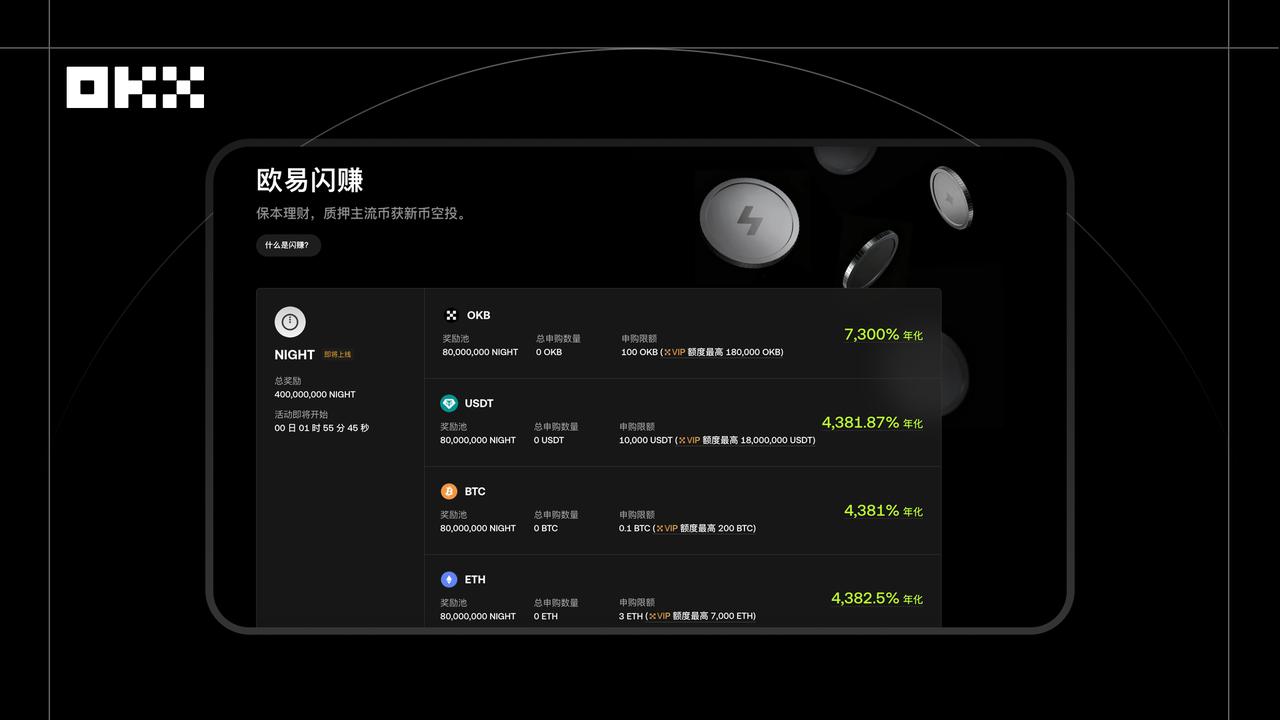
CoinToEarn (@CoinToEarn): OKX's "Flash Earn" truly takes simple wealth management to the extreme.
Based on the current results, it appears to be the KOL round. This year's airdrop market was largely dominated by "talking big," but due to misjudgment, I basically miss the pump on this wave of opportunities. Compared to "talking big," although KOLs weren't as outstanding this year, I'm very grateful for the help of friends who allowed me to participate in some KOL rounds. This is a relatively satisfactory result considering I didn't participate in "talking big" this year.
In 2025, my favorite products were OKX's " Flash Earn" and PayFi's Easy Earn, among others. Compared to the risks of many on-chain financial products, OKX's "Flash Earn" truly exemplifies simple financial management. An announcement is made first, then you click to subscribe at the designated time, and the rest is left to the market and time. If you enable the "Auto Earn" function, your "Flash Earn" subscription will automatically transfer to "Trade Earn" after maturity, continuing to enjoy the same returns as Easy Earn. During this period, your funds can be flexibly transferred at any time. Compared to complex financial management, I prefer the simplest financial management under the premise of security.
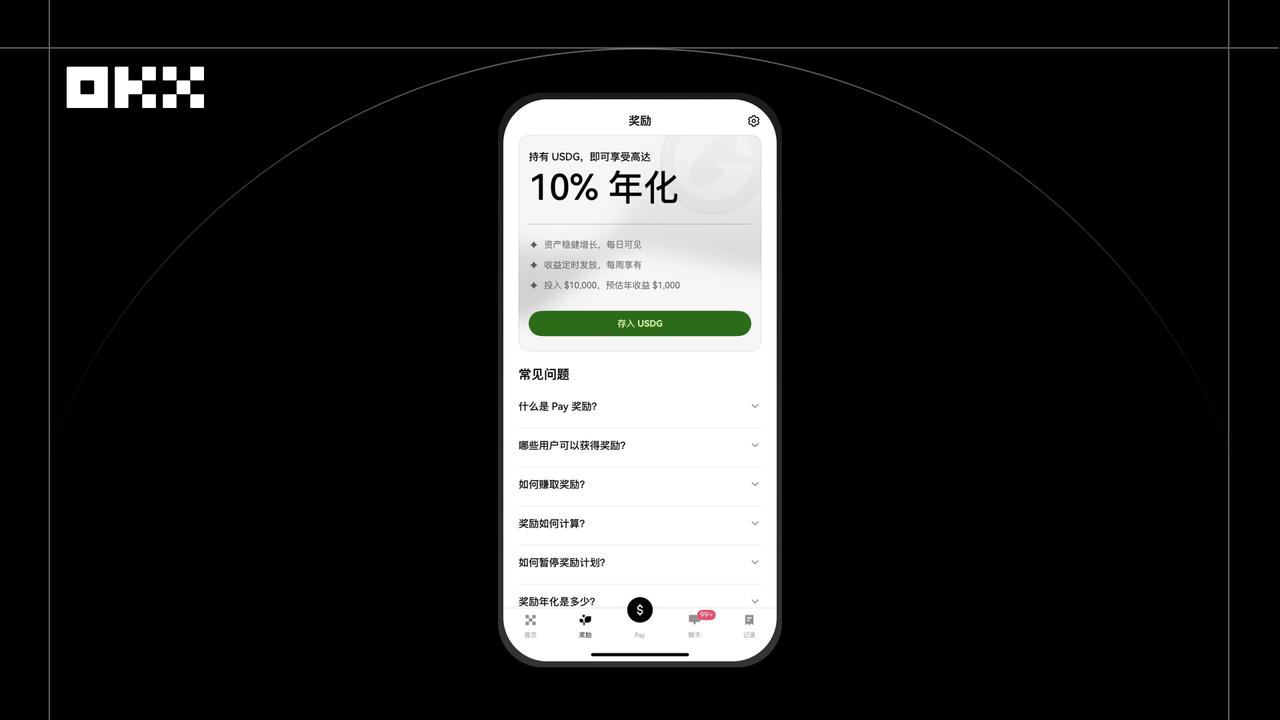
When PayFi first emerged, the community's initial reaction was that OKX was trying to enter the payment sector. At the time, I offered some suggestions based on my experience with WeChat communities. Surprisingly, OKX directly launched USDG, offering a 10% APY return. Compared to the occasional 4% APY fixed deposits offered by centralized exchanges, my understanding is that OKX was conducting a PayFi experiment, trying to integrate the "Blockchain Trilemma" of security, returns, and flexibility as much as possible. Ultimately, I now keep part of my funds on OKX in PayFi to earn interest, and the rest rotating between instant earning and automatic earning programs—simple and convenient.
KeX (@KeHenryA8): OKX is a better fit for single-page applications and user experience in terms of operation habits.
On April 22nd of this year, I opened a short position in Bitcoin futures on OKX for $92,000 and held it until November 18th. At its peak, the unrealized loss was nearly $30,000, but I ultimately broke even. Honestly, I only dared to hold a position like that on OKX. This was probably my longest "trade" this year. Why is this the biggest takeaway? Because holding a position for such a long time is extremely demanding on one's mindset, and this trade truly honed that, making my subsequent trading strategies much clearer.
The feature I use most often is OKX's contract trading platform. While I've been profitable overall in contracts this year, I haven't made a fortune. However, it's only on OKX that I've been able to consistently achieve my monthly profit targets. Personally, I think there's even a touch of mystical element to it.
My favorite thing about contracts is that I'm a trader by trader's background. Contract trading, which most people in the market find unacceptable, is actually my livelihood. I've tried a series of other exchanges, and ultimately found that only OKX allows me to achieve my monthly profit goals. First, I compared the liquidity of various exchanges, and OKX's strength is undeniable; second, based on my experience, OKX is the only exchange that allows me to consistently profit, and the user experience is also very compatible; I'm already very familiar with OKX's trading interface and operating habits.
I'm a full-time trader, and my monthly profit targets are basically met through trading. This is more important than how much money I make, because my monthly expenses are largely covered by contract trading – that's the most tangible value. However, I'd like to offer a few suggestions: I hope OKX's contract trading platform can implement a sub-account feature as soon as possible. This is crucial for traders, helping them better manage each order. Also, consider launching combined contract trading and wealth management products, such as trading contracts while simultaneously investing (similar to using a bicycle to generate electricity – both exercise and electricity). Currently, I don't invest all my funds in contract trading; I keep a large portion in wealth management and a smaller portion in contracts. Combining wealth management products with contract trading would be even better and would attract more contract traders.
Unicorn (@UnicornBitcoin): OKX dual-currency wins turn volatility from risk into profit.
The big result was Bitcoin. I focused on Bitcoin as the main theme, achieving annual returns and position growth. I dared to hold during the main upward trend, realized profits at key price levels, and transformed volatility into a sustainable source of income. In 2025, my most frequently used and favorite OKX product was Dual Currency Win. It turns volatility from risk into return. Dual Currency Win solves three things through its target price and fixed-income structure: making money even when the market isn't trending in one direction, automatically executing buy-low-sell-high at the target price, eliminating the need for constant monitoring, providing a clear profit path, and having low execution costs, making it ideal for position management and cash flow enhancement during major Bitcoin price movements.
Its practical value lies in improving capital utilization, strengthening trading discipline, and reducing decision-making costs. For example, while holding BTC, I can use Dual Currency Win to set a target price at which I prefer to sell. If the price at maturity does not reach the target price, I can still receive interest and continue holding the coins; if the price at maturity reaches or exceeds the target price, the system will sell at the target price and settle the interest together, which is equivalent to earning an extra layer of profit at the price at which I would have preferred to trade.
Looking back at 2025, the "most frequently used" choices made by KOLs based on real-world usage scenarios provide the most direct reference. This feedback not only reflects changes in product preferences but also reflects the higher demands of the on-chain ecosystem for efficiency and composability.
Thank you to all our users for your continued use and feedback throughout the year. It is this feedback from real-world scenarios that has driven the continuous optimization and evolution of OKX products. In the future, we will continue to refine the product based on actual needs, and we welcome more suggestions and feedback to help us make the tool even better.