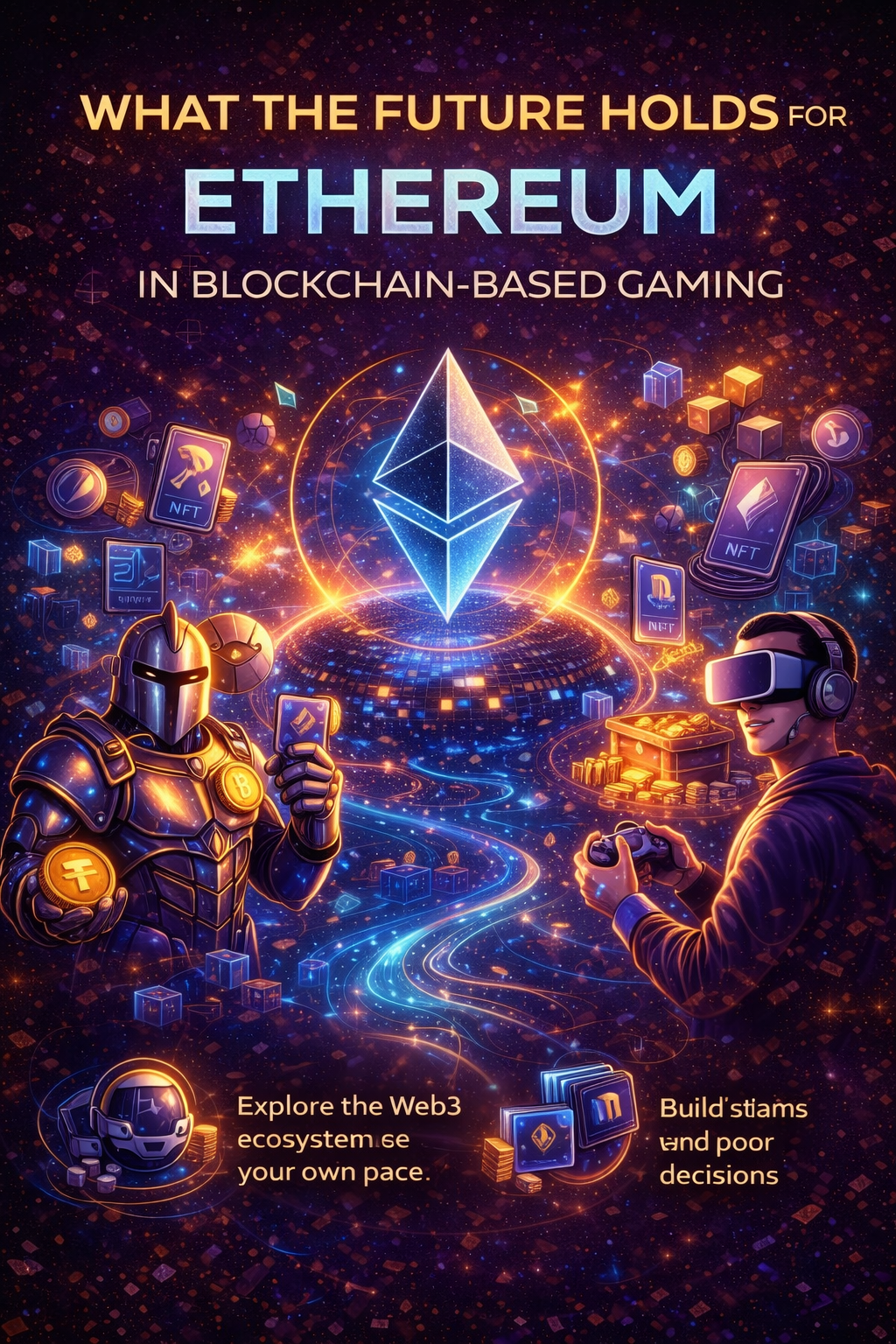
Blockchain-based gaming has evolved rapidly over the past few years, and Ethereum has remained at the center of this transformation. As one of the most established blockchain networks, Ethereum continues to shape how decentralized gaming ecosystems are built, operated, and experienced. Looking ahead, the future of Ethereum in blockchain-based gaming appears increasingly promising, driven by technological upgrades, growing adoption, and expanding use cases.
Ethereum’s Strong Foundation in Gaming Innovation
Ethereum’s early introduction of smart contracts gave it a decisive advantage in blockchain gaming. These programmable agreements allow games to run transparently, ensuring that outcomes, rewards, and in-game transactions follow predefined rules without manual interference. This foundation has enabled developers to build trustless gaming environments where fairness and automation are standard rather than optional.
As blockchain gaming matures, Ethereum’s proven infrastructure continues to attract developers seeking stability and flexibility. This ongoing innovation positions Ethereum as a long-term backbone for gaming projects that prioritize transparency and player trust.
Scaling Solutions Will Drive Wider Adoption
One of the biggest challenges Ethereum has faced historically is network congestion and transaction costs. However, the rise of Layer 2 solutions such as rollups and sidechains is changing the landscape. These technologies significantly reduce fees and improve transaction speeds, making blockchain gaming more accessible to everyday users.
For gaming applications that require fast interactions and frequent transactions, these scaling improvements are critical. As performance barriers decrease, Ethereum becomes more practical for real-time gaming experiences, encouraging broader participation and engagement.
Expanding Use of Digital Assets and Ownership
Blockchain gaming is increasingly centered around digital ownership, and Ethereum plays a vital role in this shift. Non-fungible tokens (NFTs) and tokenized in-game assets allow players to truly own items they earn or purchase. These assets can often be traded, sold, or transferred across platforms, creating new economic opportunities for players.
This model aligns closely with Ethereum’s decentralized ethos and supports gaming ecosystems that reward long-term participation. Many trusted Ethereum gambling platforms are already exploring tokenized rewards and blockchain-based economies to enhance player engagement while maintaining transparency.
Improved Security and Player Trust
Security remains a top priority for blockchain gaming, and Ethereum’s decentralized design offers strong protection against manipulation and data tampering. Open-source smart contracts allow users to verify how games operate, reducing reliance on blind trust.
In the future, more rigorous audits, enhanced wallet integrations, and improved identity tools are expected to further strengthen user confidence. As security standards rise, Ethereum-based gaming platforms are likely to be viewed as safer alternatives to traditional systems.
Regulatory Clarity and Market Maturity
Another factor shaping Ethereum’s future in gaming is regulatory evolution. As blockchain adoption grows globally, clearer guidelines are emerging around digital assets and decentralized applications. Ethereum’s transparent transaction model makes it easier for platforms to adapt to regulatory requirements while preserving core blockchain benefits.
This balance between compliance and decentralization is essential for sustainable growth. As regulations mature, Ethereum-based gaming projects that prioritize responsible innovation are well-positioned to gain mainstream acceptance.
Final Thoughts
The future of Ethereum in blockchain-based gaming is defined by scalability, security, and expanding digital ownership. With ongoing network upgrades and growing developer activity, Ethereum continues to evolve alongside the gaming industry. As players seek fairer, more transparent experiences, Ethereum’s role in shaping decentralized gaming ecosystems is set to grow even stronger in the years ahead.