Is OpenAI going to revolutionize Google Translate?
On January 15th, ZhiDongXi reported that OpenAI quietly launched a standalone translation function on the ChatGPT web platform – ChatGPT Translate . At first glance, it appears quite similar to traditional translation tools like Google Translate. What truly distinguishes it is the interactive and personalized adjustment capabilities offered by ChatGPT Translate after translation.
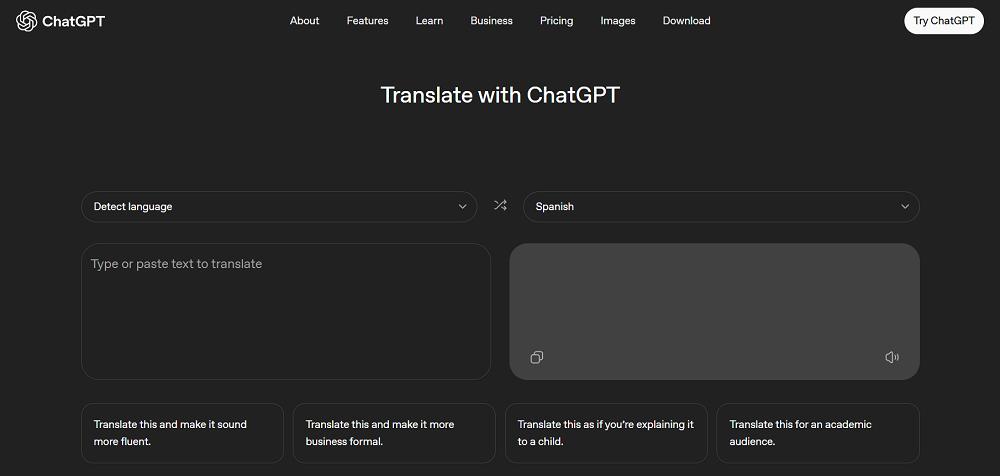
After its launch, ZhiDongXi immediately conducted a comparative test between ChatGPT Translate and traditional translation tools such as Google Translate.
Currently, ChatGPT Translate supports translation between more than 50 languages , and supports text, voice, and image input. However, in our experience, the PC web version does not yet support multimodal input, while the mobile web version only supports text and voice.
After translation, users can submit modification requests or inquire about specific details on the same interface. Submitting these requests will redirect users directly to the ChatGPT main site.
From a translation quality perspective, ChatGPT Translate isn't significantly different from Google Translate. While the "machine translation" feel might be less pronounced, it's still noticeable. Compared to ChatGPT, ChatGPT Translate is faster but of lower quality, possibly because it uses a different model.
Experience link:
https://chatgpt.com/translate/
01.
The translation still has a "machine translation feel".
Failure to accurately handle terminology
In terms of UI design, ChatGPT Translate offers little innovation , maintaining the same design language as Google Translate. The source language is on the left, and the target language is on the right.
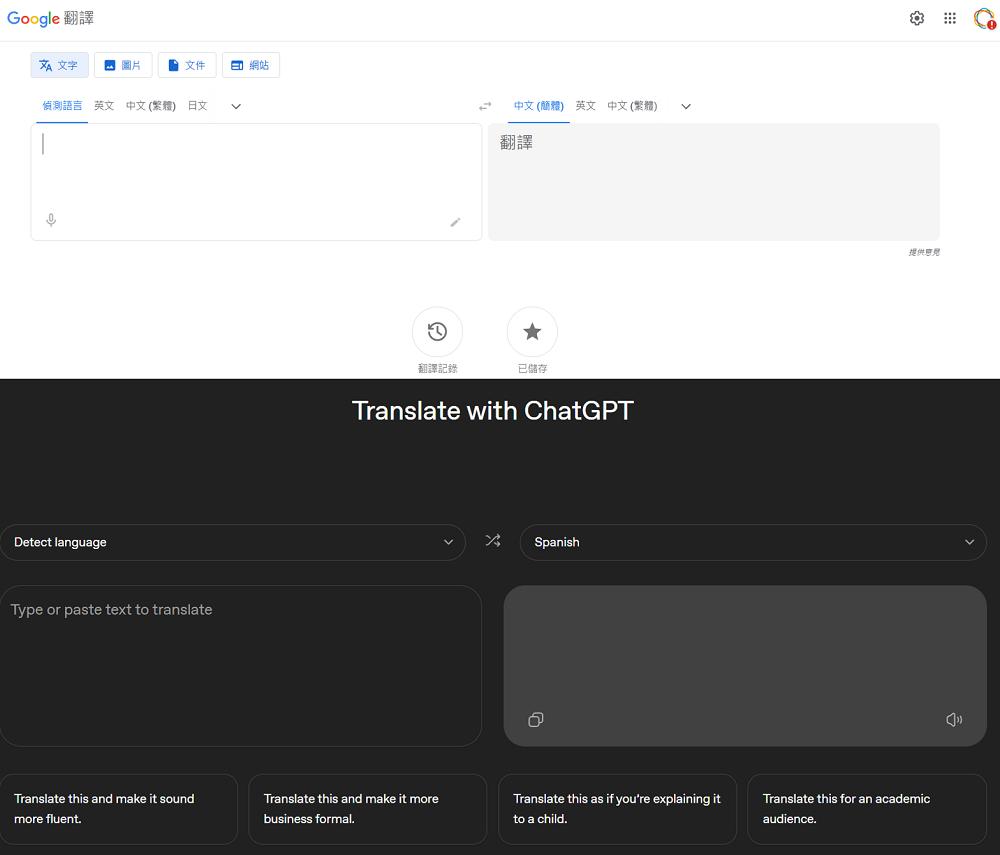
Currently, ChatGPT Translate lags behind Google Translate in terms of the number of languages supported and the types of input files. In terms of languages, Google Translate supports 243 languages, while ChatGPT Translate supports over 50. Google Translate can handle image, document, and website translations, which ChatGPT Translate does not currently support.
However, the translation quality in common languages is probably what most people are more concerned about. We first tested the English-to-Chinese translation capabilities of the two products.
The text below is from a recent press release from OpenAI, announcing a partnership between OpenAI and AI chip unicorn Cerebras. ChatGPT Translate translated the original English text in less than 5 seconds.
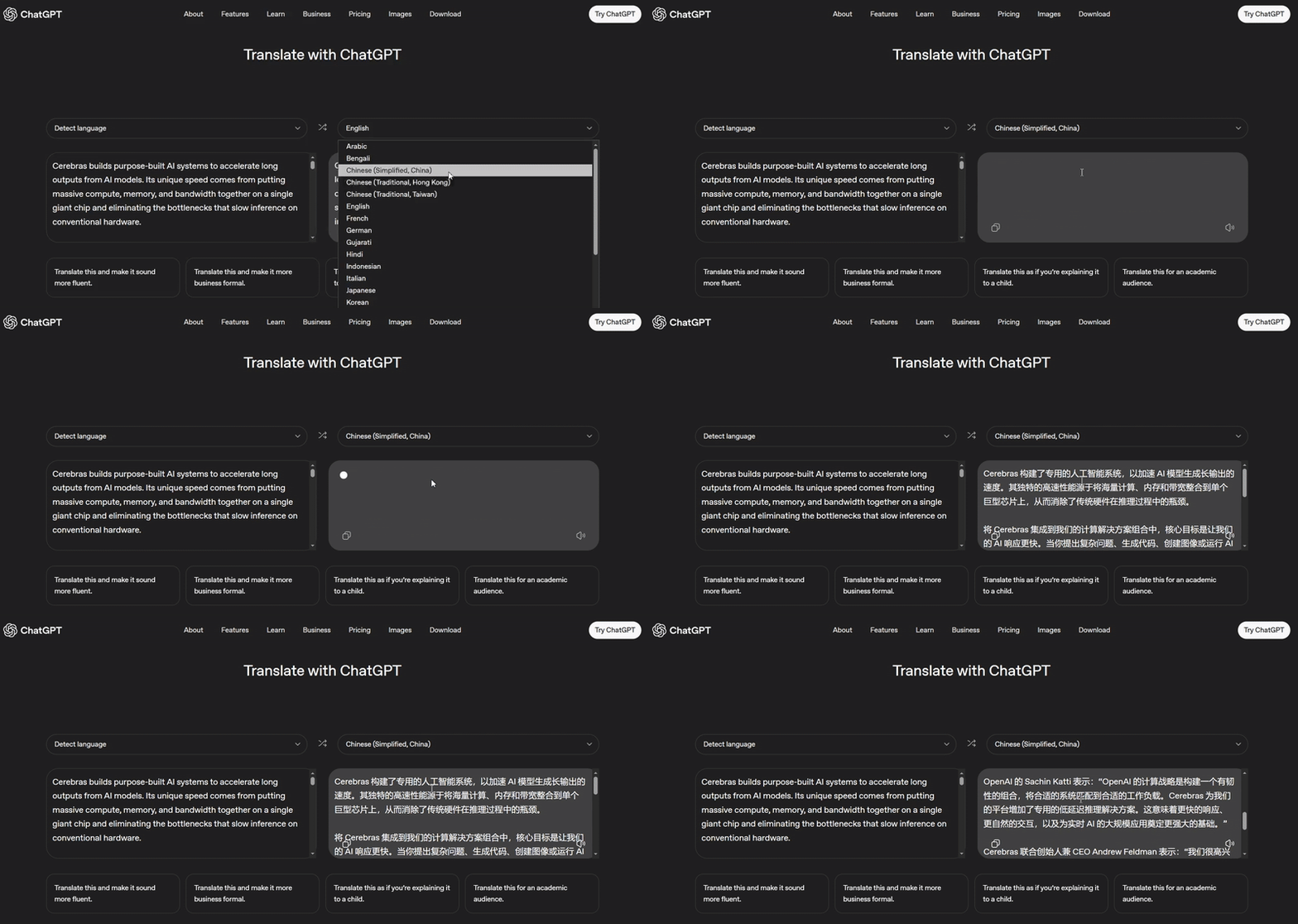
▲ChatGPT Translate translation speed (without acceleration)
It's noticeable that this speed is completely different from ChatGPT's usual conversational speed. In our tests, the same text took ChatGPT over ten seconds to translate. This suggests that ChatGPT Translate may be using a dedicated model.
Below are the results of the ChatGPT Translate translation. In terms of accuracy, ChatGPT Translate faithfully reproduces the semantics of the original text, and the translation of key terms and information is generally correct. At the same time, ChatGPT Translate has adjusted some English word order to better suit Chinese usage.
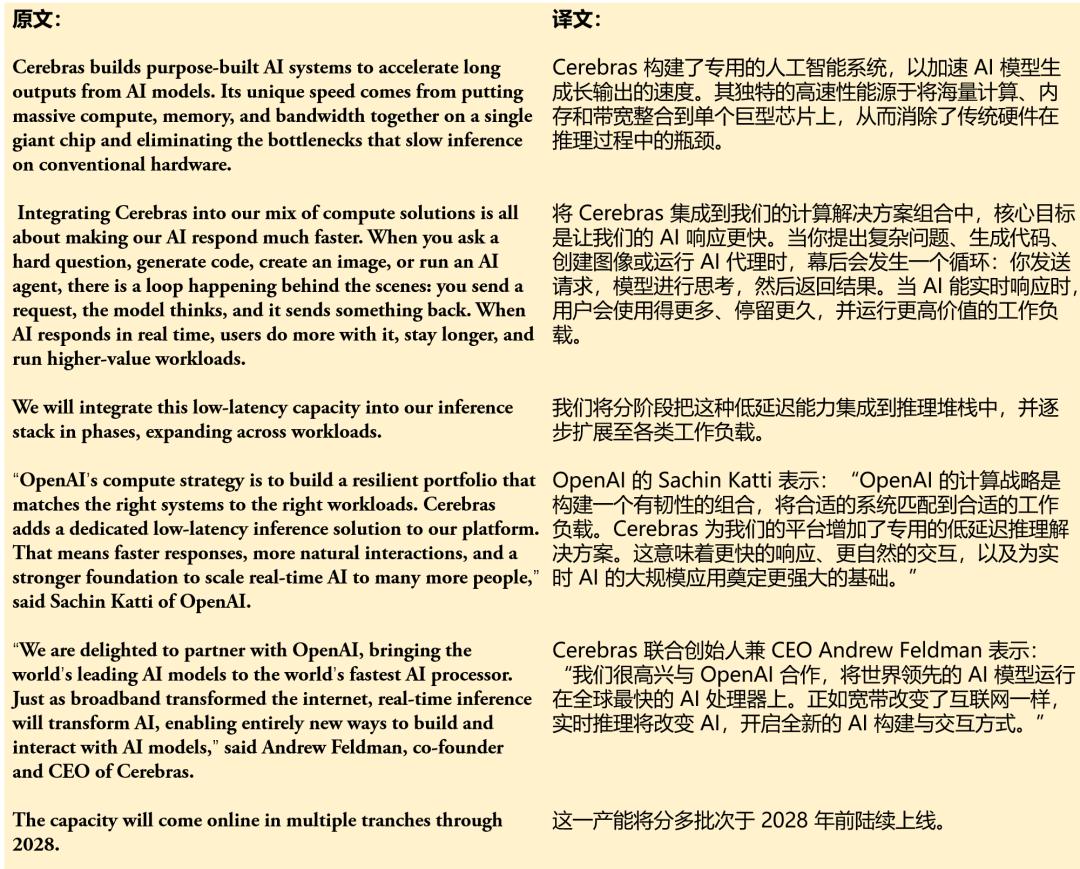
▲Translation results from ChatGPT Translate (Graphics by Zhidongxi)
However, ChatGPT Translate's translation is not without flaws. Its understanding of context is not always accurate; for example, the phrase "this capacity" in the last sentence is a literal translation of the original "The capacity," failing to accurately capture its meaning. Some parts of the translation feel more like a machine translation.
ChatGPT's current default model, GPT-5.2, handles this sentence much better, translating it as: "The relevant computing power will be rolled out gradually in multiple phases, with plans to continue until 2028."
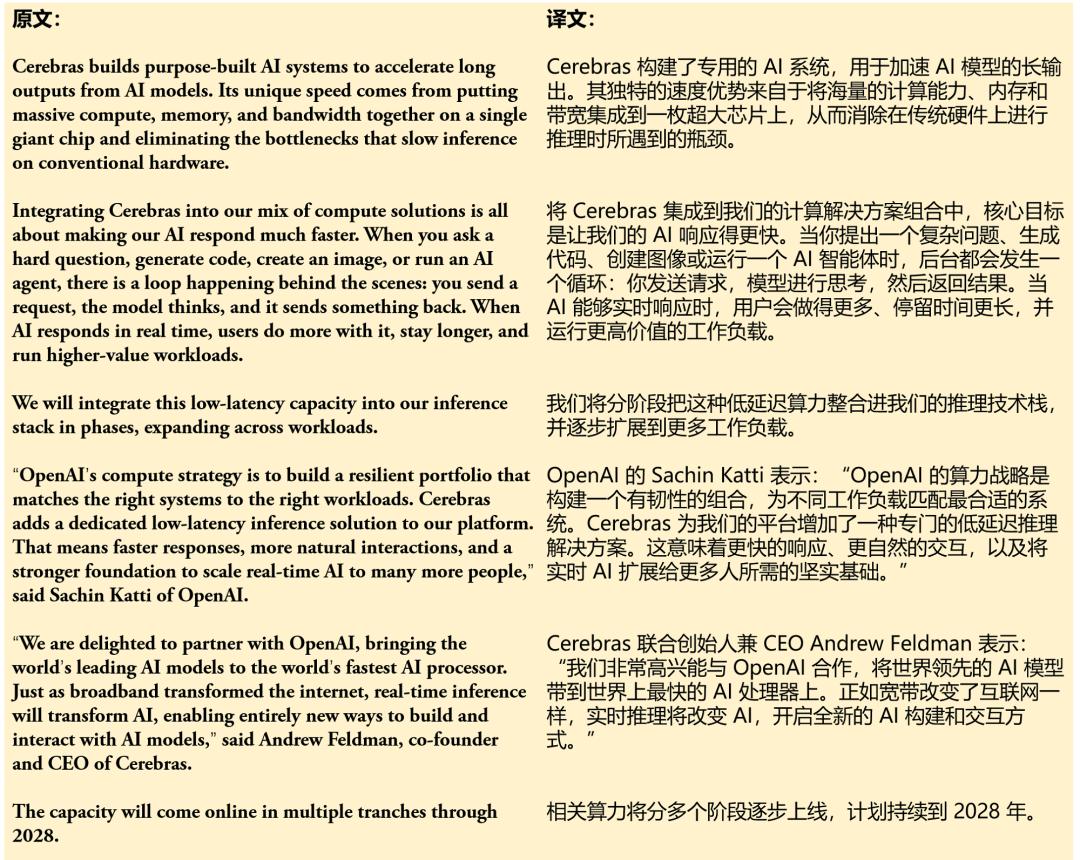
▲Translation results of ChatGPT (GPT-5.2) (Graphics by Zhidongxi)
Let's look at Google Translate's performance. Its overall translation quality is similar to ChatGPT Translate; Google Translate makes the same mistakes as ChatGPT Translate, but the latter's machine-translated feel is more pronounced. Google Translate also retains all English word order, such as placing the source quotations after the verb, but in Chinese expression habits, placing the source quotations before the verb is more common.
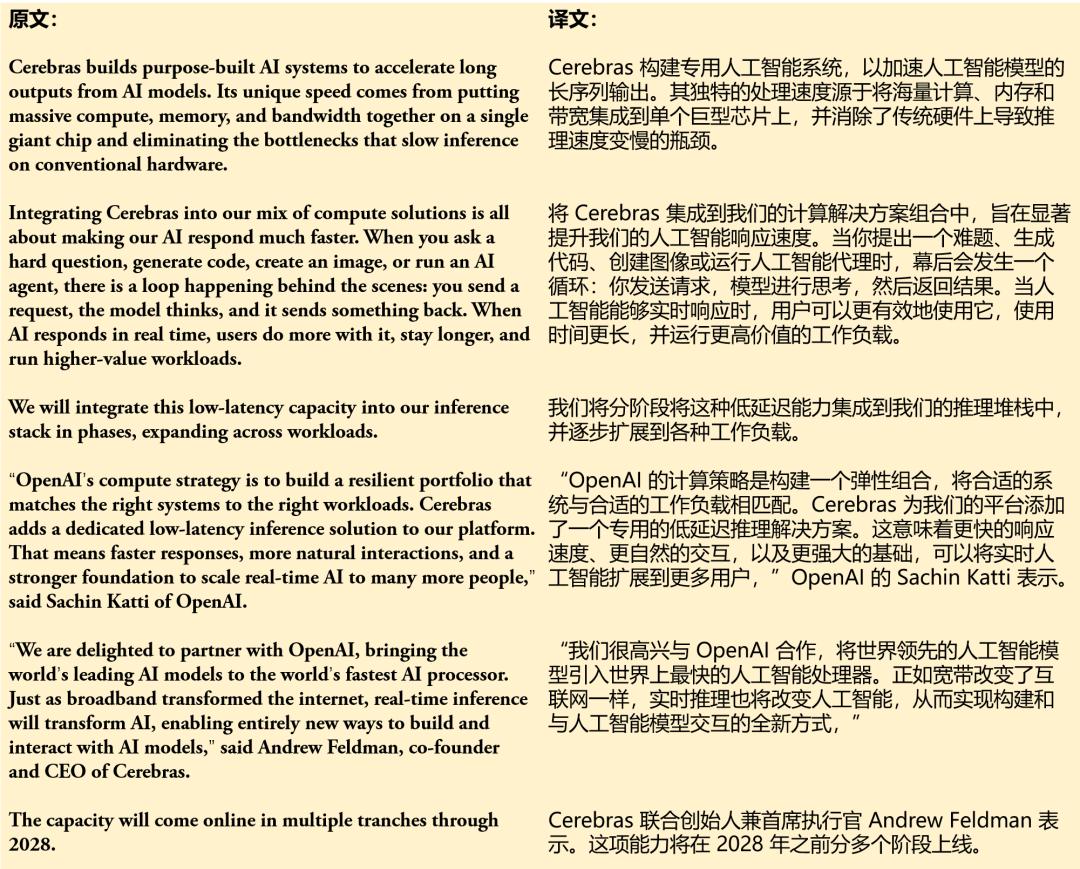
▲Translation results from Google Translate (Graphics by Zhidongxi)
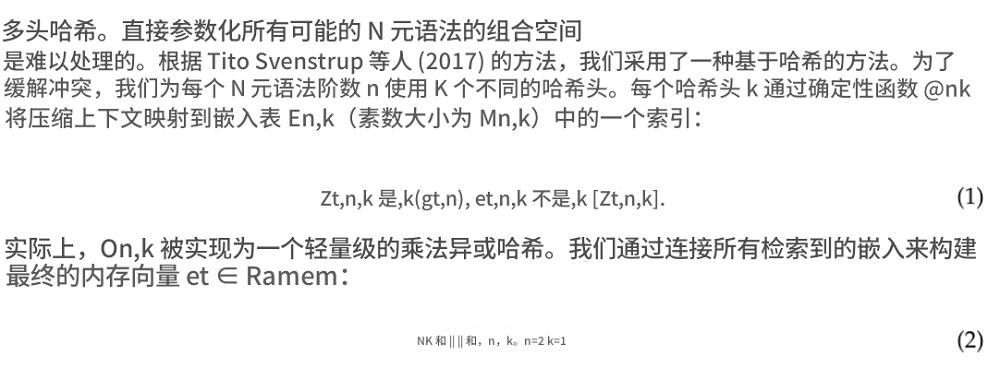
We then had ChatGPT (GPT-5.2), ChatGPT Translate, and Google Translate each translate a passage from DeepSeek's recently published Engram paper. Since not all tools support document translation, to be fair, we copied the content directly as text and pasted the translation.
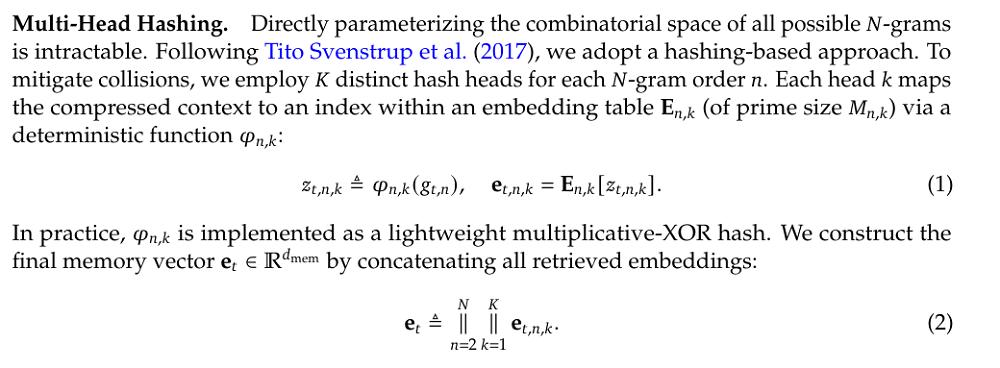
The difficulty in translating this text lies in the technical terminology and formulas. Below is the translation result from ChatGPT (GPT-5.2), where the formulas are accurately reproduced, there are no garbled characters, the terminology is accurate, and the text flows smoothly and naturally.
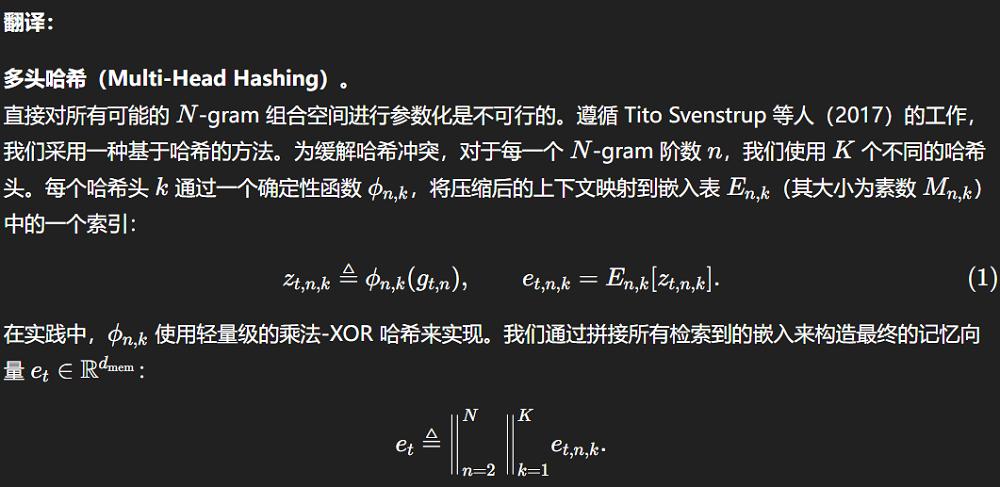
ChatGPT Translate failed, as the formulas were not reproduced in the text translation, resulting in poor readability. However, the text translation was generally accurate.
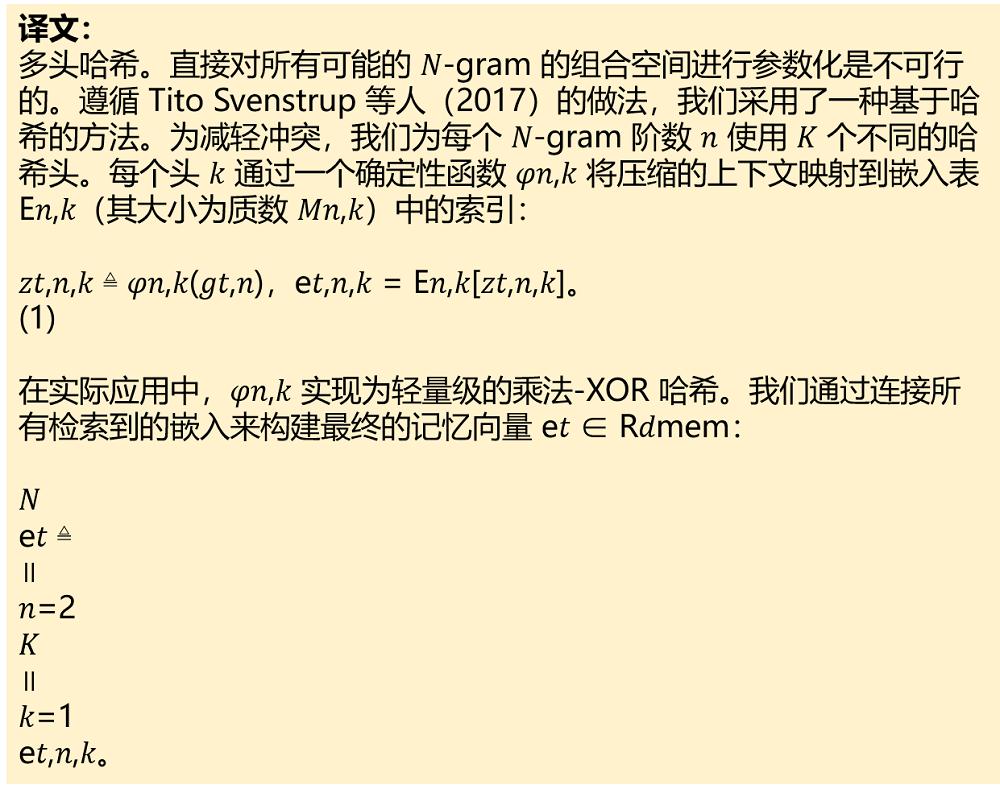
The translation results from Google Translate are shown below, and you can see that the quality is basically the same as ChatGPT Translate.
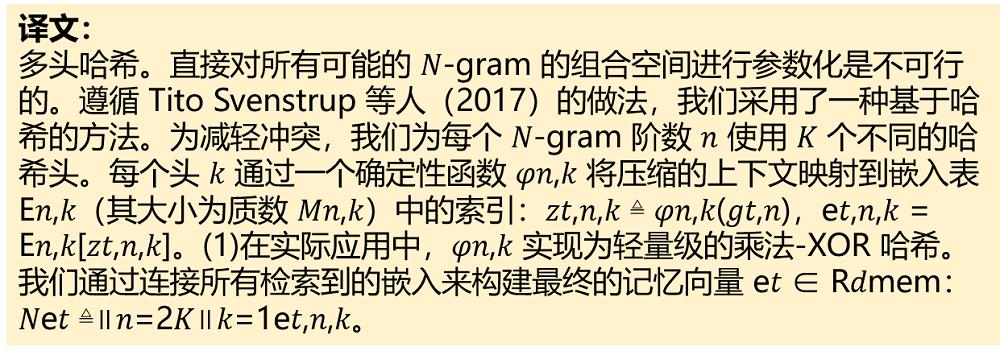
We also tried Google's image translation, but the results were poor. Even the original formulas were translated into Chinese and became completely unreadable.
02.
Four translation templates are provided.
You still need to be redirected to the ChatGPT main site to use it.
While ChatGPT Translate fails to differentiate itself from Google Translate in terms of basic translation capabilities, will its post-editing features offer any surprises?
Currently, ChatGPT Translate offers four post-translation editing templates on its interface: "Translate the original text and make it more fluent," "Translate the original text and make it more business-like and formal," "Translate the original text as if you were explaining a problem to a child," and "Translate the original text for an academic audience."
We first tried the first template. This template is essentially a formatted prompt that, when clicked, redirects directly to ChatGPT. We then had the AI write a somewhat disjointed Chinese passage and translate it into fluent English, with generally accurate results.
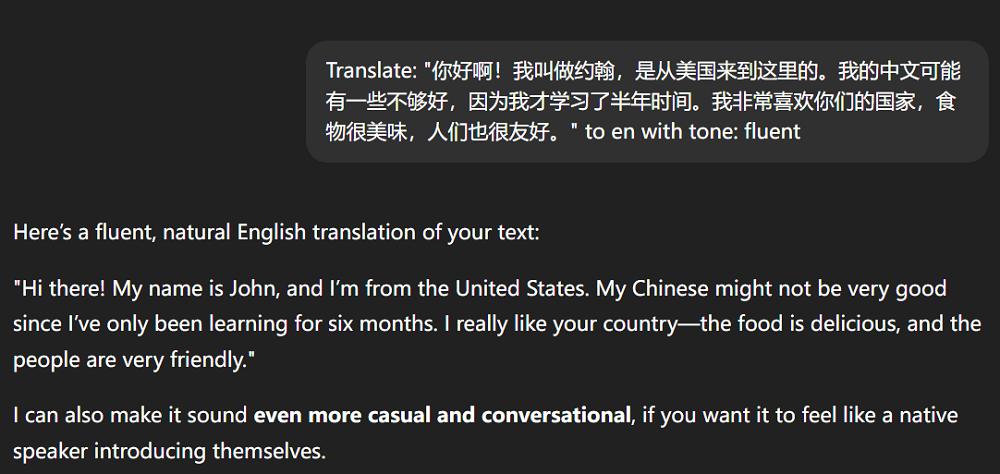
Actually, this template is somewhat redundant. A person's native language is undoubtedly their strongest language. If the user inputs fluent text in their native language, there's no need to make it even more fluent; a direct and accurate translation is sufficient.
The only use case I can think of right now is for translating English into English when someone is communicating with another person in broken English.
The more business-like and formal translation template below is actually more practical. For example, after translating the previous text into English, the English vocabulary is noticeably more formal than the Chinese.
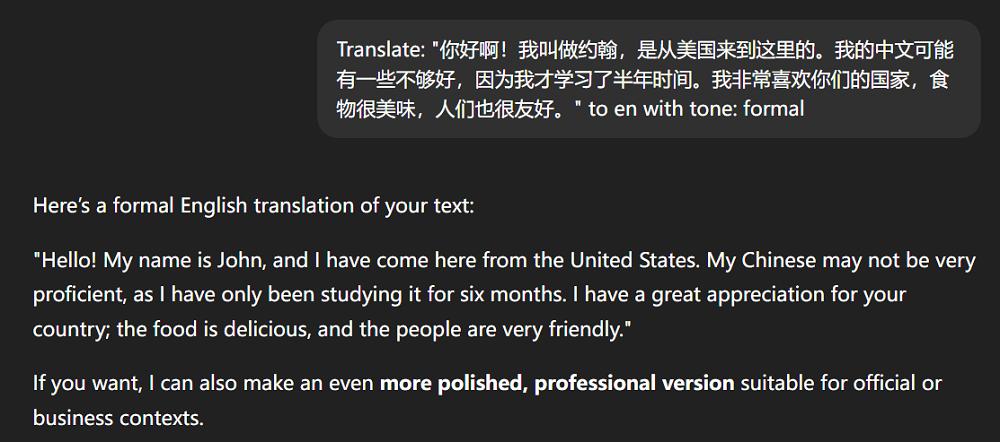
Overall, the post-editing features offered by ChatGPT Translate are not particularly impressive. For ordinary users, translating and editing directly within ChatGPT would provide a more seamless and natural experience.
03.
Conclusion: ChatGPT Translate
It will take time before it can replace Google Translate.
After a full experience, ChatGPT Translate did not leave a deep impression on us. While its translation speed was faster than ChatGPT, it failed to differentiate itself from Google Translate, and its quality was essentially the same.
Furthermore, Google Translate doesn't solely rely on translation quality to succeed; its popular features like image and voice translation provide an irreplaceable user experience. While our tests showed that its image translation couldn't handle complex technical documents, it handled common translation objects like road signs and signage quite accurately.
Google Translate also supports model selection for users in some regions, allowing users to have Gemini translate. In this case, Google Translate's translation quality may be better than ChatGPT Translate.
Based solely on the current PC web experience, ChatGPT Translate may not yet be considered a revolutionary product. Whether OpenAI can leverage its model capabilities to further enhance the experience remains to be seen.
This article is from the WeChat public account "ZhiDongXi" , author: Chen Junda, editor: Xinyuan, and published with authorization from 36Kr.