On January 7, the Cambodian Ministry of the Interior posted a brief notice on its official website: At the request of China, three Chinese citizens, Chen Zhi, Xu Jiliang, and Shao Jihui, were arrested and extradited back to China. A month earlier, the King of Cambodia had issued a decree revoking Chen Zhi's Cambodian citizenship.
In recent days, "Chen Zhi" and his "Prince Group" have appeared on everyone's timelines multiple times. In different reports, they often point to the same description: behind the bustling buildings of Phnom Penh, Cambodia, lies a staggering network of gray and black industries.

On the surface, Prince Group maintains good relations with local governments and claims to operate more than 100 business entities in over 30 countries, with its business portfolio covering multiple sectors including real estate, banking, aviation, and supermarkets.

Beneath the surface, Prince Group's business involves money laundering, telecom fraud, online casinos, and more, operating a vast criminal empire worldwide.
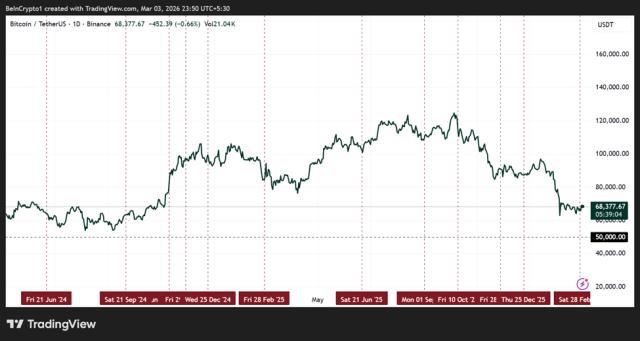
An even more dramatic footnote comes from the other side of the Pacific. In October 2025, the U.S. Department of Justice announced in a public document the seizure of 127,271 bitcoins under Chen Zhi's name, which, based on the market value at the time, amounted to a staggering $15 billion, setting a record for the largest seizure in U.S. judicial history.
This is just the tip of the iceberg of Chen Zhi's wealth. According to public documents, one of his accomplices stated in 2018 that the Prince Group earned over $30 million per day through "pig butchering" scams and related criminal activities. Much of this enormous income was used by Chen Zhi to purchase yachts, private jets, luxury mansions, and rare artworks, including paintings by Picasso.

As the founder of this criminal empire, Chen Zhi's background seems rather ordinary. Born in 1987 in a fishing village in Fujian, Chen Zhi has a high school education and worked as an internet cafe manager in Guangdong and Jiangsu. He later ran a data trading and gaming dating website and claimed to have owned an internet cafe.
How did a boy from a fishing village rise to become a key figure in a transnational criminal network in just over a decade? In depicting his rise, almost all clues clearly point to a game familiar to a large number of Chinese players:
"legend".
Knights that slipped through the net
In 2018, Amiga Entertainment, a company under Chen Zhi's name, applied to open an account at the Cayman Islands National Bank. According to subsequently leaked bank records, when faced with the bank's compliance review of the startup capital, the young tycoon explained:
He once received a personal loan of $2 million from an "uncle," which was used to establish Hengxin Real Estate Company in Cambodia.
When the bank requested further details about the uncle's personal assets, the leaked documents fell silent. A more widely circulated story, however, is that Chen Zhi's initial funding came from the then-popular TV series "Legend."
In 2001, the South Korean online game "Legend of Mir" entered the Chinese market and quickly became a milestone product in the early development of the domestic Internet. However, just one year later, the source code of the Italian server of "Legend of Mir" was accidentally leaked. Coupled with the fact that the official license could not meet the huge demand of players, a large number of unofficial "private server" servers began to emerge on the Internet.

According to industry insiders, at its peak, there were nearly a thousand private servers for the game "Legend" operating simultaneously across the country, with an annual market value exceeding 2 billion yuan. If the related servers, payment settlement, and other related chains are included, the industry scale exceeds 4 billion yuan.
In an era rife with private servers, the core competitive advantage for acquiring customers lies in "traffic." Private server operators need to post server opening information on specialized advertising websites to attract players. At the same time, the number of private server operators and advertising websites in the market is very large, which has given rise to a highly profitable advertising agency business.
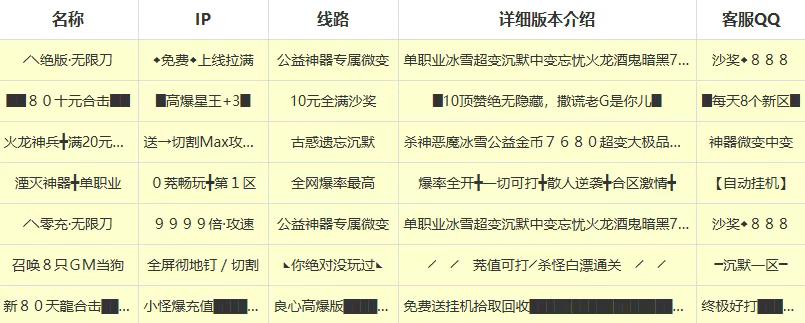
Driven by huge profits, coupled with a massive and unregulated traffic distribution chain, a number of criminal organizations that masquerade as advertising agents but actually carry out hacking attacks have naturally emerged.
According to Caixin, multiple hackers and private server operators confirmed that Chen Zhi was indeed a member of the "Knight Attack Group".
The "Knight Attack Group" is notorious in the world of private servers for the game "Legend of Mir". Its founder, Cai Wen, started out by acting as an advertising agent for private servers. In order to monopolize advertising agency rights and drive down agency prices, the group used DDoS traffic attacks and other means to massively paralyze those private server advertising sites that refused to cooperate.
Under continuous cyberattacks, 13 of the largest private server websites in China, including "SF123", were forced to surrender, and their advertising agency rights all fell into the hands of the "Knight Attack Group".
In late 2008, after profiting 10 million yuan from monopolizing agency rights, Cai Wen was investigated by the Xiantao police in Hubei Province for suspected illegal business operations. However, after paying 5 million yuan in "bail", he fled to Chongqing to meet up with his friend Hu Xiaowei and prepare to make a comeback.
In Chongqing, the "Knight Attack Team" further escalated its tactics. When technical attacks proved ineffective, they bribed the server hosting providers of private server advertising sites to directly use physical means to "dip the wires" and paralyze the target websites.

Image source: Chongqing Business Daily
Relying on this violent method, the "Knight Attack Group" became even more successful. By the time the case was uncovered in 2011, the group had profited nearly 100 million yuan and built four advertising websites. During this period, they were investigated by the police twice, but were released each time after paying a "bail" of 10 million yuan.
In 2011, under the supervision of the Ministry of Public Security, Chongqing police officially cracked this case of illegal intrusion into computer information systems. Nineteen suspects in the team were arrested, one of the main culprits, "Hu Xiaowei," fled abroad, and Chen Zhi was not among those arrested at the time.

In the same year, Chen Zhi, who was already in Southeast Asia, began to venture into the Cambodian real estate industry with start-up capital of unknown origin.
The two "escaped knights" who quietly withdrew from the eye of the storm did not part ways. Instead, they formed a closer cooperation in a foreign land and even transferred this tacit understanding based on black market genes to a wider international arena.
Hu Xiaowei was born in 1982, five years older than Chen Zhi. Chen Zhi has referred to Hu Xiaowei as his "elder brother" on several occasions. According to a report by the Organized Crime and Corruption Reporting Project, a U.S. non-governmental organization, this "elder brother" mentioned by Chen Zhi used the identity "Chen Xiaoer" overseas and obtained a passport from the Federation of St. Kitts and Nevis in 2018.
Subsequently, in Palau, an island nation in the western Pacific, Chen Zhi and "Chen Xiaoer," who held the passport, jointly established the "Grand Legend International Asset Management Group."
Although the company's main business is developing luxury resorts, it's not hard to sense the two founders' subtle feelings for "Grand Legend" through the company name.
As Prince Group continued to expand, Hu Xiaowei began to frequently appear under pseudonyms such as "Chen Xiaoer" and "Hu Shi" in Prince Group's equity changes and overseas entity lists.
In Singapore and Cyprus, shares in several entities affiliated with the Prince Group were frequently transferred and moved between Chen Zhi and Hu Xiaowei over the years. In Taiwan, Hu Xiaowei was described by local media as the "second-in-command" of the Prince Group, responsible for assisting Chen Zhi in managing the financial operations of the companies in Taiwan, with substantial sums of money flowing into accounts under his actual control every week.
According to the former head of Prince Group's Taiwan operations, Chen Zhi repeatedly stated that Hu Xiaowei was "the one who introduced him to online games," and that the two had a close relationship.
Chen Zhi has never given up on the path he took to create "Legend".
Legendary Casino
In 2020, a criminal judgment issued by the Luojiang District People's Court of Deyang City, Sichuan Province, revealed the specific operational model of Chen Zhi's Prince Group in engaging in gambling business through the private server of the game "Legend".
The judgment shows that in early 2019, "73 Network Company", whose office was located in the Prince Building in Phnom Penh, Cambodia, began to set up a private server website for the Legend of Mir game and successively operated several private server servers such as "Cangjiang Heji", "Qilin Heji", and "Guangyao Huolong".
Unlike traditional game operations, the core logic of these private servers is not to profit from game cards or virtual equipment, but to embed a gambling plugin called "Fat Girl" into the game interface. The gambling game rules are extremely simple, with each round taking only 45 seconds to settle, and it runs 24 hours a day. The maximum win or loss in a single round can reach tens of thousands of RMB.
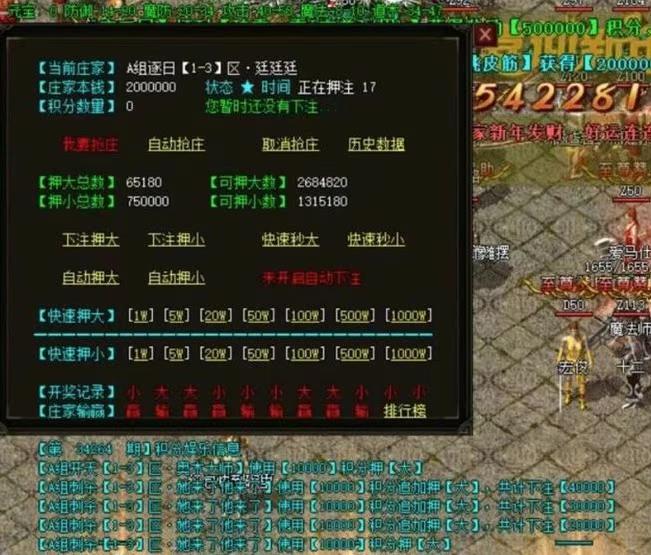
According to the website's technicians, the Prince Group in Phnom Penh operates several companies that specialize in setting up private servers for the game "Legend of Mir" with embedded "Fat Girl" software to run casinos. "73 Network" is one of them. Each company has its own boss, and these companies are actually part of an alliance, all belonging to the Prince Group.
To entice players to participate, these private servers have established an "entertainment value" threshold mechanism. In servers like "Qilin Combo," the drop rate in high-level maps is much higher than in ordinary maps, but players must have enough "entertainment value" to enter high-level maps; items and equipment dropped by monsters can be exchanged for real money, but similarly, sufficient "entertainment value" is required for the exchange.

Some of the products mentioned in the judgment can still be found through distribution channels.
Regardless of winning or losing, players can earn entertainment points by placing bets through the "Fat Girl" plugin. This mechanism forces most players who are pursuing high-level equipment or intend to make money by acquiring loot to participate in gambling, thus transforming them from gamers into gamblers.
Some private servers are directly named "Fat Girl Betting Big or Small Guaranteed to Win Server".
In the payment settlement process, these private servers have established an agency system called "Merchant Guild". Players pay the Merchant Guild to purchase in-game currency (yuanbao) via WeChat, Alipay, or bank cards. The Merchant Guild then reaps huge profits by buying and selling yuanbao at a price difference and by deducting a 5% "handling fee" from the game.
The audit report revealed that the "73 Network Company" branch alone used 137 bank cards and 26 Alipay accounts for fund transfers. Between 2015 and 2020, the total amount transferred in and out by this criminal network reached 4.515 billion yuan. Furthermore, the operation also achieved data interoperability between the website and mobile devices through a mobile app, further expanding its reach.
A search on the China Judgments Online website using the keywords "Legend" and "Fat Girl" reveals that casinos using private servers of the Legend series are indeed thriving. However, it seems that the Prince Group's appetite extends beyond this.

Wei Qianjiang, a core subordinate of Chen Zhi and former independent non-executive director of Hong Kong-listed Zhihaoda Holdings, began to establish a presence in Beijing, Shenzhen, Hong Kong and other places in 2017. His key core is Chongqing Longxun Technology Co., Ltd. (hereinafter referred to as "Longxun Technology"), a mobile internet company located in Chongqing.
Longxun Technology presents itself as a comprehensive interactive entertainment company focusing on global mobile game publishing and operation as well as mobile game development. It claims to have its own independently developed game engine and game development platform, and completed a $50 million Series A financing in 2017.
According to the Chongqing Evening News, Longxun Technology sold the overseas distribution rights for a 3D mobile game in Singapore for 20 million yuan. In 2018, the company's total revenue exceeded 250 million yuan.

TapTap still displays the interface of its product "Super God Awakening," which still shows a strong preference for the word "legend."
Under Wei Qianjiang's management, Longxun Technology originally planned to go public in Hong Kong at the end of 2020, becoming the fourth Hong Kong-listed company controlled by Chen Zhi.
However, in July 2020, a raid by the Xiangcheng County Public Security Bureau in Henan Province interrupted its path to listing. Police investigations revealed that Longxun Technology's profits did not come from normal mobile game distribution, but rather from signing fraudulent "Information Release/Promotion Service Agreements" with 19 shell companies to provide comprehensive advertising and online promotion services for highly gambling-related mobile games such as "Golden Toad Fishing" and "Hundred Joys Thousand Cannon Fishing" on 850 Chess and Card Games.
One player claimed that he lost more than 1.4 million yuan without realizing it. "The specific way to play these games is for players to deposit money into a designated bank account, and then a middleman buys and sells points. But I almost never won, until I lost all the money I could lose."
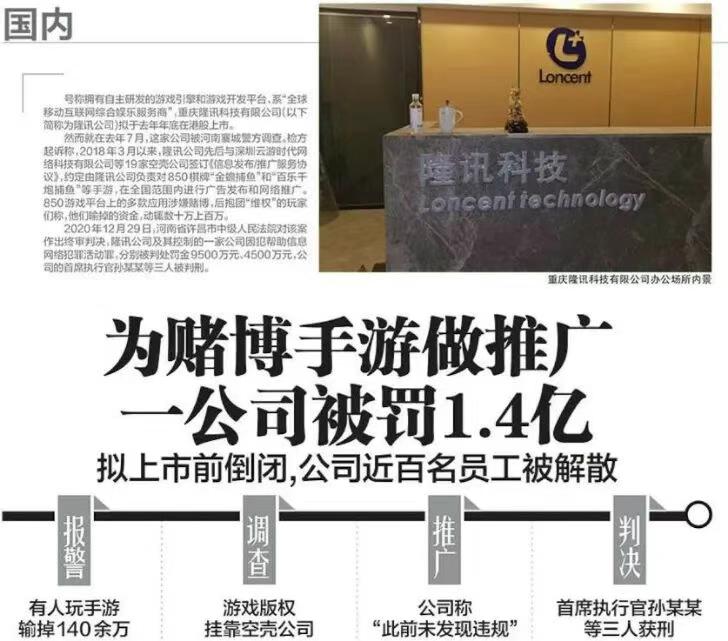
The judgment shows that Longxun Technology illegally transferred and laundered money through multiple shell companies, involving a total amount of 430 million yuan. In December 2020, the Xuchang Intermediate People's Court of Henan Province sentenced Longxun Technology and its affiliated companies to fines of 95 million yuan and 45 million yuan respectively for "aiding and abetting cybercrime." Several of its executives, including its CEO, were sentenced, and Wei Qianjiang fled. As a result, Longxun Technology, which was originally valued at hundreds of millions of dollars, quickly went bankrupt.
Around the same time as Longxun Technology, Chongqing Qusu Infinite Equity Investment Fund claimed to be a high-tech venture capital fund investing in the Internet, mobile Internet, mobile game industry and related industries. Wei Qianjiang, the "founder", still holds 30% of the shares, while the other shareholder is Chen Zhi, who holds 70%.
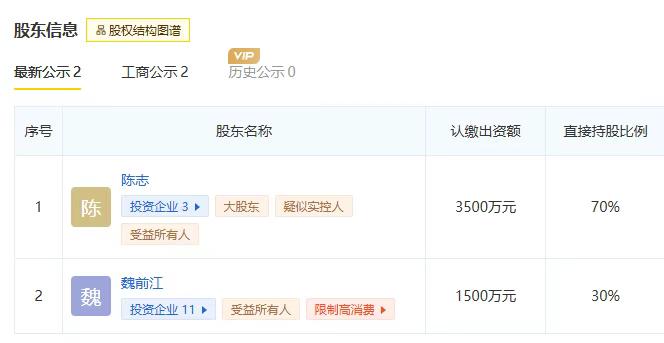
Beneath the capital shell of these 'game companies,' what they are constantly refining is never the product itself, but rather how to more efficiently capture human nature.
Humanity Games
In a 2007 interview, Chen Tianqiao, the former richest man in China and founder of Shanda Interactive Entertainment Group, said: "Games are something that truly touches the heart. From a dialectical point of view, the more ever-changing the form, the more it can touch the heart. Conversely, the more you want to touch the heart, the less you can be bound by the form. The same is true for changes in business models. We can discard everything, but we cannot give up our understanding of human nature."
The success of "Legend of Mir" today is also due to the developer's accurate understanding of human nature. In 2001, Shanda Games acquired the mainland China agency rights for "Legend of Mir" for $300,000. Faced with the game's popularity and the shortage of game cards in many places, he developed the online sales system "E-sales" and started a game card distribution model in cooperation with internet cafes.
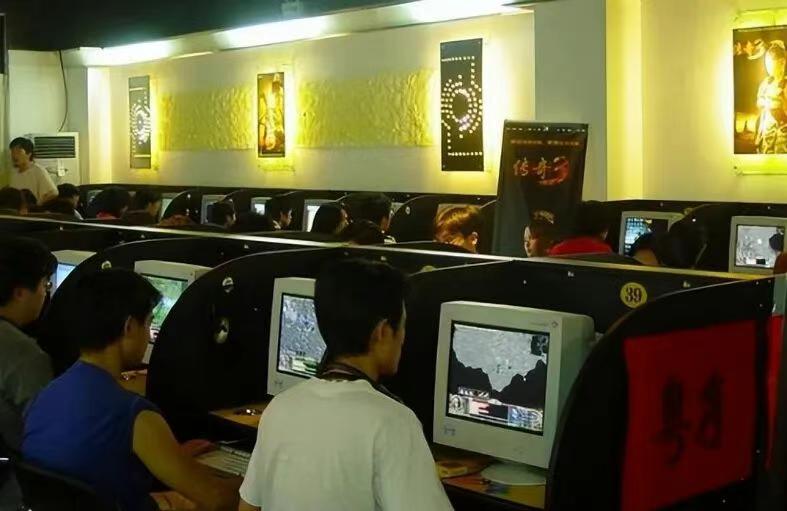
The profits from sales commissions transformed internet cafe owners into a community of shared interests. Driven by profit-seeking, internet cafes across the country spontaneously promoted the game, ultimately propelling "Legend of Mir" to become the first game in Chinese online gaming history to surpass 500,000 concurrent online users. Shanda Games also rose to prominence thanks to the success of "Legend of Mir" and went public on NASDAQ in 2004.
From a game mechanics perspective, the design of "Legend" truly strikes at the heart of human nature. Because monsters can drop top-tier equipment, and the game features open-world PvP and loot drops, the brain naturally generates a stronger dopamine rush when rewards are random and extremely scarce. Terms like "Dragon-Slaying Saber" and "Paralysis Ring" have transcended the game industry's lifecycle and remain in the vocabulary of today's players.
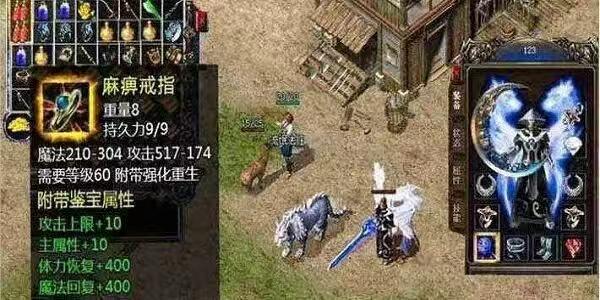
For early gamers, the gameplay of "Legend" almost perfectly placed "gain" and "loss" on the table at the same time. Through a relatively low learning cost and a very high emotional premium, it constructed a unique closed loop based on "greed and fear" - which was a game experience that was hard to find at the time.
But does this mean that the gameplay of "Legend" itself has an "original sin"?
In the early days of the internet, when copyright awareness was weak and regulatory and enforcement methods were still immature, the popularity of phenomenal products made them easy targets for the gray and black industries.
The reason why private servers for the game "Legend" are so popular is that they accelerate this stimulation of human nature—faster leveling, higher drop rates, and more direct value trading. By leveraging the brand recognition and user base of "Legend," every link in the private server industry chain essentially puts the pleasure points of human nature on the scale for trading in a more straightforward way.

It wasn't until the emergence of figures like Chen Zhi that more radical approaches were taken—illegal content such as online gambling was directly embedded into the gameplay. Although it was still a "game," "Legend" was simply packaged as a more easily spread and harder-to-detect traffic-driving portal.
For most ordinary gamers today, "private servers for the Legend of Mir" sounds like old news from the last generation of the internet, seemingly far removed from daily life. However, according to publicly available data from the regulatory side, it hasn't completely disappeared.
According to the "2024 IP Rights Protection Report" released by Shengqu Games, Shengqu reported 138 cases of private server cheating to the public security authorities in one year, removed more than 1,400 infringing online games, and shut down more than 160 private server servers.
The ongoing crackdown has, to some extent, reduced the space for illicit activities, but it also demonstrates that infringement and related black and gray industries surrounding game IPs remain a real problem requiring long-term governance. Beneath the surface, we still don't know how many products exist that use the guise of games to engage in illegal activities.
Conclusion
From its inception, Legend of Mir has been a game that fully explores human nature. But in news related to Chen Zhi, it is more like a fable of "clear distinction between good and evil".
Chen Tianqiao, who also accumulated his initial wealth during the era of "Legend of Mir," gradually faded from the domestic game industry. After stepping down as chairman of Shanda Games and gradually disposing of his related shares, he invested a significant portion of his personal wealth in scientific research.
In 2016, Chen Tianqiao announced the establishment of the Tianqiao Brain Science Institute (TCCI) to support basic research in brain science and other fields, and to participate in promoting the construction of related research platforms in China. In his public statements, this path is often linked to his own health experience—after stepping away from the extremely high-pressure life of an entrepreneur, he began to treat "understanding the brain" as a longer-term research topic.


Brain science research institutions founded by Chen Tianqiao in China and the United States
For criminals, acquiring wealth seems to be an endless pursuit. After making his first fortune through private servers, Chen Zhi quickly channeled his understanding of rules, human nature, and traffic into a more covert, lucrative, and destructive cross-border criminal network.
As the "industry" grows larger and larger, various groups of people who seek profits from it constantly gather, divide labor, and iterate, creating shady ways of playing that depend on this huge industry. There is always a new set of "rules of the game" to hunt down those who are just as greedy as they are.
Do rules automatically lead to evil? I think not. For developers, even the most successful game is just a product and a business; but for those who treat games as hunting grounds, it's a useful net—they do manage to hunt down what they want, but what they ultimately face isn't the next settlement, but legal reckoning and accountability.
Humans and ghosts are destined to be apart; in the end, no "rules of the game" can save them.

CCTV footage shows Chen Zhi, the head of a major cross-border gambling and fraud syndicate, being extradited from Cambodia back to China.
References:
"Prince Group Founder Chen Zhi Has Been Extradited Back to China: Unveiling the Inside Story of His Billion-Dollar Black Market Empire's Rise," Caixin.com, 2026
"Investigation into Chen Zhi of the Prince Group", Hong Kong 01, 2025
"Company Fined 140 Million Yuan for Promoting Gambling Mobile Games," Chengdu Business Daily, 2021
"Hacker Arrested for Establishing Online 'Mafia' and Profiting 70 Million Yuan," Chongqing Business Daily, 2011
"The Hidden World of Hackers and Private Game Servers," by Chu Yunfan, 2013.
Criminal Judgment of the First Instance for the Crime of Operating a Casino by Jin, Zheng, Chen, et al., Luojiang District People's Court, Deyang City, No. (2020) Chuan 0626 Xingchu 70