Original author: Julie Chen (@0xJuliechen)
a16z raised $1.5 billion; what exactly is it betting on in the new media sector?
On X, everyone is a KOL, with millions of views every month. Traffic itself is no longer valuable. What's valuable is attention, the power of "belief," and the scarce right.
This article explains a16z new media, agency, and how to make Twitter traffic meaningful, leading to ICM.
🌟🌟
@a16z raised $1.5 billion in funding in the new year, which went viral across various platforms. They raised so much money to tell a story of "all in America, believing in AI + crypto and technology."
Two months ago, they also established a new media team to help a16z itself and its portfolio companies develop "new media".
AI/web3 companies in Silicon Valley are currently hiring, offering hefty rewards for finding a "storyteller"—someone who can write threads, write shitposts, and tell stories.
A partner at a16z New Media bluntly stated: Marketing has replaced Computer Science as the most sought-after major.
What a16z has truly valued in recent years is not the content itself, but the way power is restructured.
New media is just a facade.
What has really changed is: who has the authority to give orders (agency)?
1️⃣ Why has "new media" been elevated to such a high level in the past two years?
Because the attention economy has basically run out of new tricks.
- Extremely excessive content
- Distribution costs are close to zero.
- Being seen no longer constitutes an advantage.
What's truly scarce now isn't exposure.
Instead, there are two things:
- Is your judgment trustworthy?
- Can you turn "belief" into "action"?
This is why you will clearly feel a change:
Previously, the media focused more on storytelling and defining narratives ;
Now, the media is beginning to directly influence decision-making and trigger actions .
When content is no longer scarce
What truly matters is no longer "what you said".
Rather, it's about what will happen next.
This is the core meaning behind a16z's repeated emphasis on new media.
It's not a problem with formats like threads, podcasts, or short videos.
Rather, the distribution structure has changed, and the power structure has changed accordingly.
A very simple comparison:
Old media
- Distribution is scarce (TV, newspapers, platforms).
- Value is concentrated in institutions
- Creators are essentially employees
New Media
- Decentralized distribution (X / YouTube / Substack / podcasts)
- The individual itself becomes a node
- Creators directly accumulate influence and bargaining power.
The real change can be summed up in just one sentence:
The media has transformed from institutional assets into personal capital.
Once the media becomes personal capital...
It is no longer just an "exposure tool".
And it began to become a tool of power .
When the media belongs to an organization, it becomes your exposure tool;
When the media belongs to an individual, it becomes your ability to influence the decisions of others.
Influence on decisions is power.
2️⃣ Agency
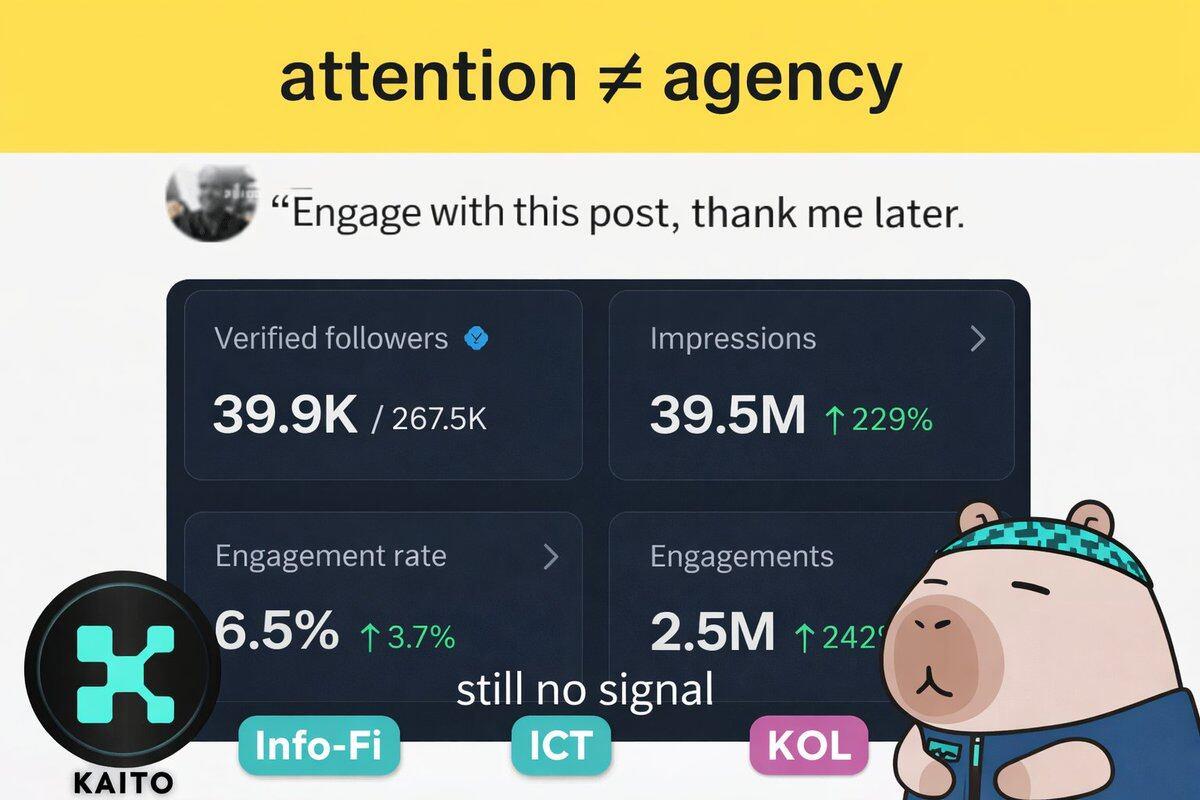
The ultimate goal of new media is not page views.
Rather, it is the right to act (agency).
The right to act means that others are willing to act with you, trust your judgment, and pay for your ideas.
Packy mentioned in "The Power Brokers" :
The goal of the fund is to earn carry with as few people as possible in the shortest possible time.
Firm 's goal is to continuously accumulate long-term advantages through scaling up.
This distinction explains one thing:
Why is media capability always considered "icing on the cake" in traditional venture capital?
In a16z, this was directly incorporated into the infrastructure .
For a long time, our default order was:
Money → Company → Market
Money comes first; it decides everything.
But in a world of media saturation, this order has been reversed:
Right to act → Community → Market → Capital
Why is it that nowadays "there is a lot of money, but things are difficult to do"?
Because funds no longer automatically translate into action .
- Distribution is not scarce
- Extremely noisy attention
- Trust cannot be bought with a budget.
We've seen this many times in the crypto(I won't give examples to avoid offending anyone):
Despite having a lot of money, the project still failed to launch successfully.
The valuation is high, but nobody really wants to participate.
The narrative was complete, but no one followed up with its execution.
It's not because we don't have enough money.
Rather, it's because they lack the right to act .
The truly scarce resource now is not capital.
Instead:
- Is it possible to get a group of people to believe the same thing at the same time?
- Can they act at the same time ?
Who can do this?
Whoever holds the real leverage.
So I'm not praising it, but using a16z to explain an ongoing structural change.
3️⃣ What has new media solved? What is still missing?
If the media can form a consensus, and that consensus can drive action, then the market is the settlement layer for that consensus.
Why did ICM (Internet Capital Markets) inevitably emerge after new media?
Because new media has an inherent structural flaw :
- Influence ≠ Ownership
- Traffic can be monetized, but it cannot be combined or held long-term.
- Creators still rely on platform revenue sharing, brand collaborations, and advertising cycles.
The concept of ICM was first proposed by @solana , and it filled in this gap:
- Narrative/Consensus/Culture
- Transformed into a tradable, holdable, and collaborative capital structure.
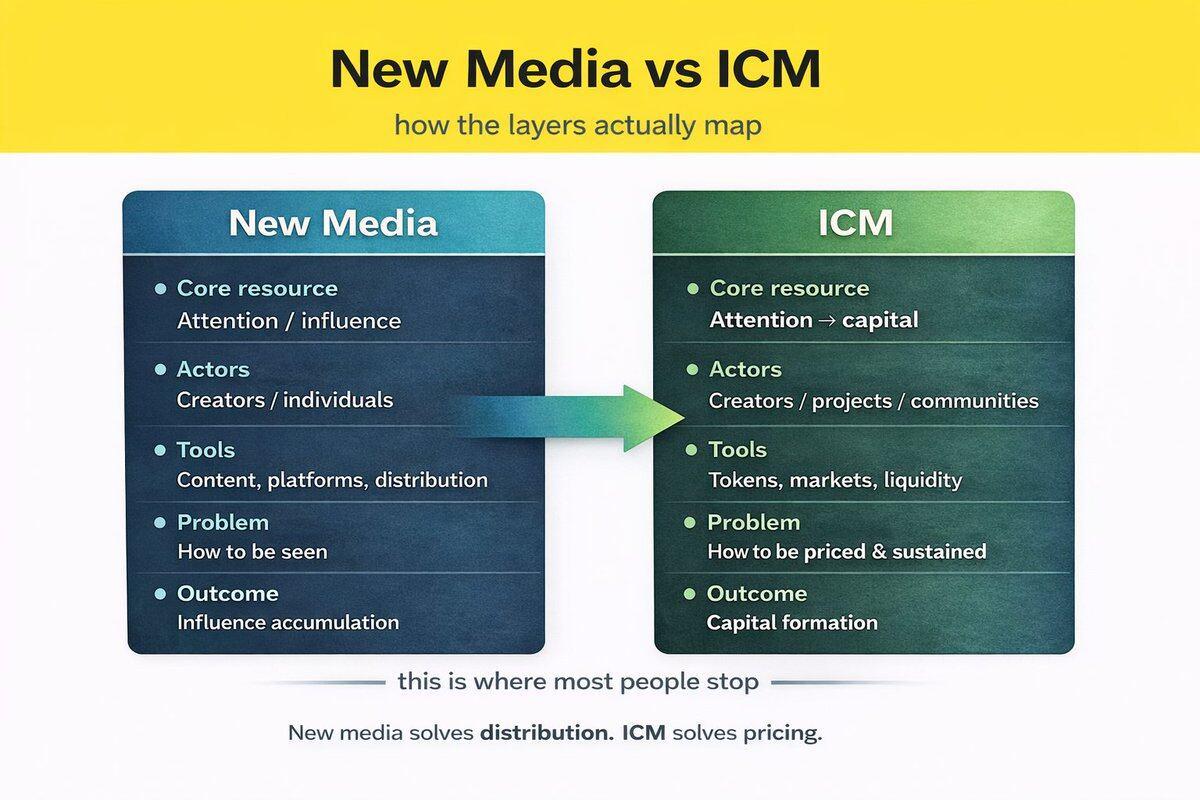
ICM addresses the next step in new media :
How is influence priced, traded, and sustained?
If we were to categorize it in one sentence:
- new media : → Who gets attention?
- ICM : → How Attention Becomes Capital Structure
in conclusion :
New media addresses the "right to disseminate information," while ICM addresses the "right to set prices."
The essence of ICM :
- Change attention → agency → pricing → capital formation
- It's not a speculative tool, but rather a coordination infrastructure.
ending
Finally, I'd like to quote a famous saying by Navarre, which I admire, to echo this point and conclude the article.
Navarre said: Code and media are the levers behind the new rich.
Indeed, over the past 10 years, Silicon Valley's upstarts and big companies (Internet/software/AI) have essentially relied on "code leverage" to create wealth.
With the popularization of Cursor and Claude, everyone can do Vibe coding, and the ability to write code is gradually becoming less scarce; some even predict that all junior programmers' jobs will be replaced by AI within the next 10 years.
The truly scarce leverage in the next cycle is new media:
This refers to the scalable dissemination of narrative, judgment, and taste. Good leverage can generate compound interest while you sleep, and continue to influence others when you are not present, helping you build "trust + reputation + opportunity entry points".
Code is law
New media is the law.