Mr. President, the fourth tower of mathematics has fallen!
Last night, the meme of the president whispering to someone sparked a nuclear-level discussion in American academic circles.
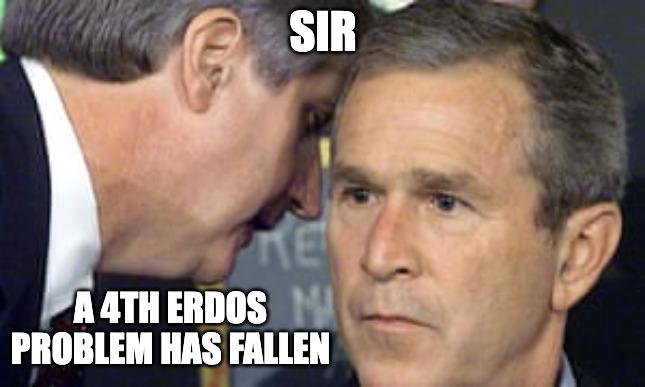
Paul Erdos's Problem No. 281 was solved by an "outsider" using AI through brute force.
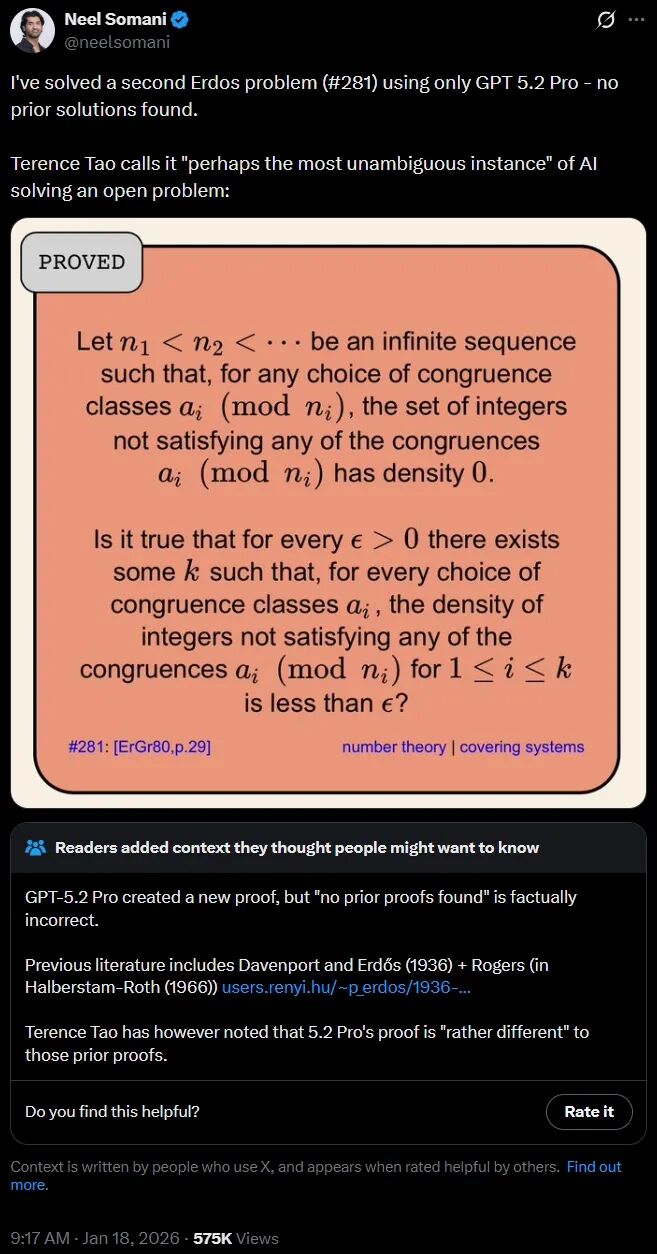
Humanity's most serious intellectual heights have been reduced to a footnote in a meme. The rules of the old world have collapsed.
First-hand report: The century-old problem solved by GPT-5.2
This is not just cracking, it's "intrusion".
A "barbarian" wielding an H100 computing power cluster kicked open the door to the ivory tower.
Just looking at Neel Somani's resume is enough to make traditional mathematicians feel their faith crumble:
Former quantitative researcher at Citadel (a Wall Street giant known for its high-frequency trading).
Former founder of Eclipse (a high-performance blockchain project in the Solana ecosystem);
Actively exploring the intersection of AI and blockchain.
He comes from Eclipse and immerses himself in the jungle of cryptocurrency and blockchain. In his world, computing power is power, and consensus is truth.
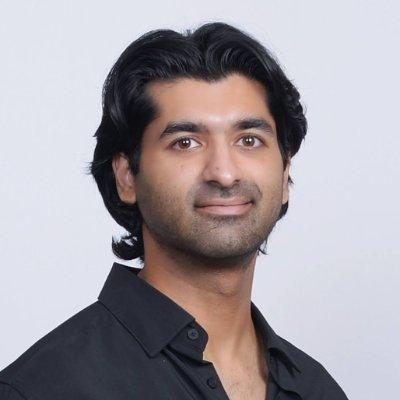
In January 2026, he stormed into the mathematics community with Silicon Valley's worship of computing power—through investment or collaboration, he promoted the ErdosProblems.com platform, turning the mathematical bounty left by Paul Erdős into an open "hunting game".
His weapon wasn't a brilliant mind, but the GPT-5.2Pro.
Somani's logic is simple and straightforward: since mathematical proofs can be formalized, they are essentially no different from Bitcoin mining.
As long as I have enough graphics cards and the AI can test and fail fast enough, I can use exhaustive search to unlock the door to truth.

And what happened? He won his bet.
Just a few days ago, as a major achievement of this harvest month, GPT-5.2 successfully solved Erdős Problem #281.
Erdős Problem #281, originating from the 1980 work of Erdős and Graham, focuses on the extreme behavior of "covered systems":
Given an infinitely increasing sequence of positive integers n₁<n₂<⋯, if for any chosen residue class aᵢmodnᵢ, the entire set of integers can be "almost completely covered" by these residue classes (i.e., the density of uncovered integers is 0), does there necessarily exist a finite prefix k such that using only the first k residue classes, the density of uncovered integers can be reduced to below arbitrarily small ε, and such reduction holds uniformly for all residue class choices?
This problem has been stuck for 46 years, involving hardcore tools such as traversal theory and Haar measure on profinite integers.
Somani's GPT-5.2Pro provides a proof using ergodic theory, point-state ergodic theorem, and Dini's theorem. Terence Tao commented that this approach is quite different from the known Rogers/Davenport-Erdős proof.
Users on X have also hailed it as "the first AI to truly reach the level of a PhD".
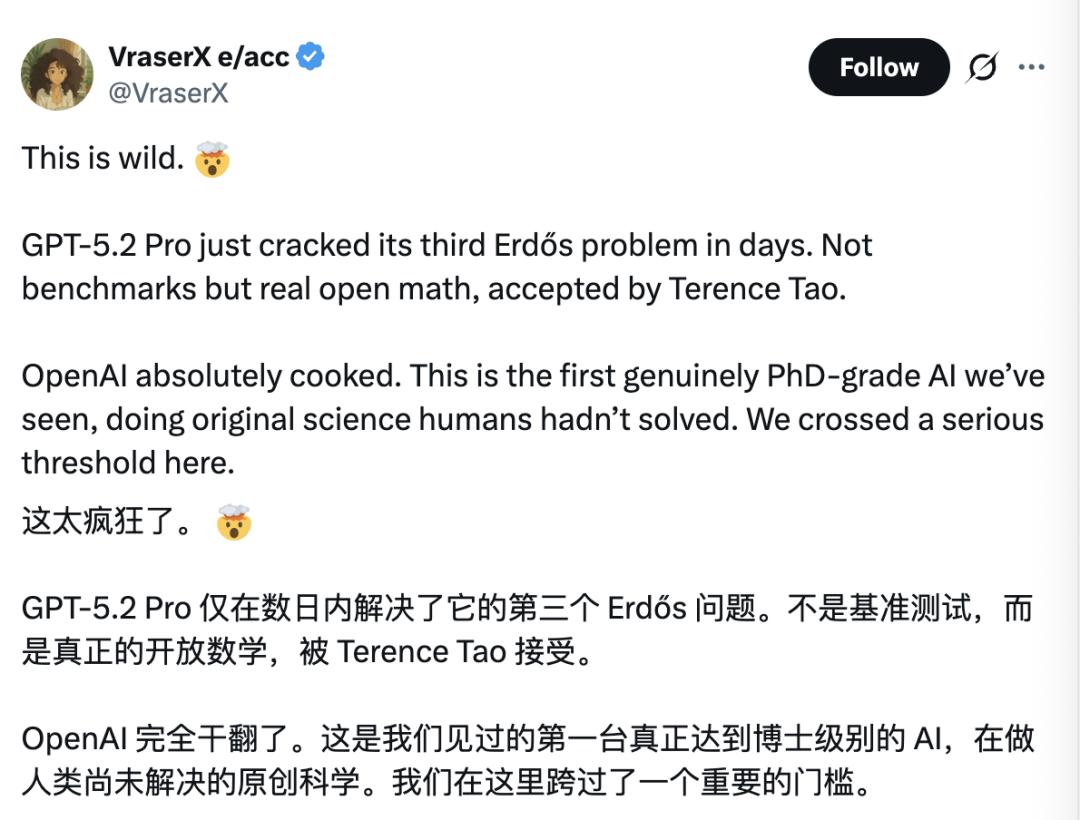
This is already the third Erdős problem to be shot down by GPT-5.2Pro in January 2026.
Since Christmas, 15 problems on ErdosProblems.com have changed from "open" to "solved", 11 of which explicitly indicate the involvement of AI.
Terence Tao even created a wiki page specifically to document "AI's contributions to the Erdős problem".
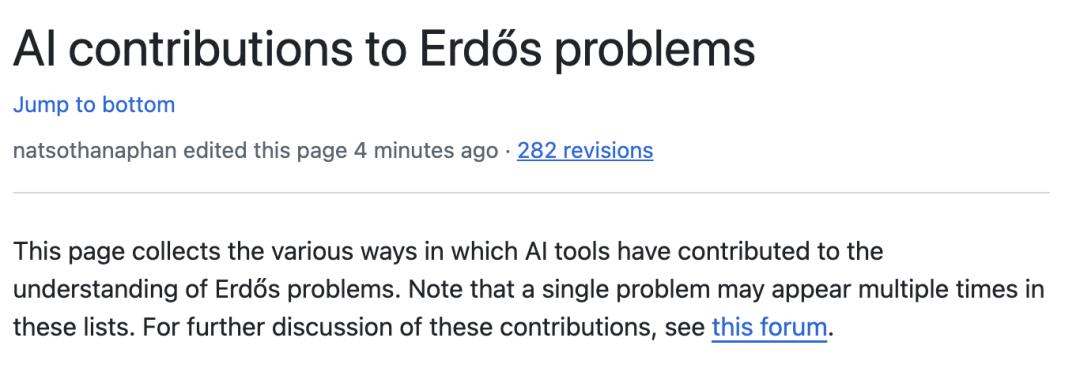
https://github.com/teorth/erdosproblems/wiki/AI-contributions-to-Erd%C5%91s-problems?referrer=grok.com
The mathematics community has jumped directly from the question of "whether it will happen" to the panic stage of "how fast it will come and how much it will sweep away".
Somani is showing the world that you don't need to understand the beauty of mathematics; as long as you have enough electricity and your GPU is running at full capacity, you can reap the "holy grail" of mathematics.
However, amidst this cheering atmosphere, if you look at the backend data released by Somani, you'll find that the true undertone of this "victory" is a desolate wasteland littered with corpses.
Databases littered with corpses
Neel Somani won, but it was a very ugly victory.
Log in to ErdosProblems.com and turn off the "Show only successes" filter. You'll see thousands of "corpses" lying in the background.
According to actual statistics from the database backend, GPT-5.2 Pro's first-time pass rate for this type of problem is a paltry 1% to 2%.
This means that, in order to achieve that perfect proof of making headlines, the AI rambled on hundreds or thousands of times in the background.
It can fabricate non-existent lemmas, get stuck in logical loops, and even turn mathematical proofs into doggerel.
If there were only one GPT-5.2, this pile of garbage would have already overwhelmed the mathematics community.
Therefore, in this game, the real MVP is not GPT at all, but a cold tool that has been overlooked by the public - "Aristotle".
Aristotle is actually a dedicated tool developed by Harmonic. It automatically translates and forcibly converts the natural language output by GPT (which is often nonsense) into Lean-form language, and then hands it over to the Lean kernel for rigorous verification.
This is equivalent to equipping the AI with an automated compilation and unit testing system that allows for "unlimited trial and error and zero tolerance for bugs".
Without it, GPT's 1% to 2% success rate would never have come to light.
The current AI problem-solving process is becoming increasingly standardized. GPT guessing frantically → Aristotle's forced formalization and garbage elimination → Lean verification passed → human review.
Once, twice, ten thousand times. Aristotle will only let them pass when that extremely rare "survivor" appears.
What the public perceives as a "miracle" is actually a statistical inevitability.
Terence Tao hit the nail on the head in Mastodon. He refused to use the term "Intelligence" and instead coined a new one: "Artificial General Cleverness."
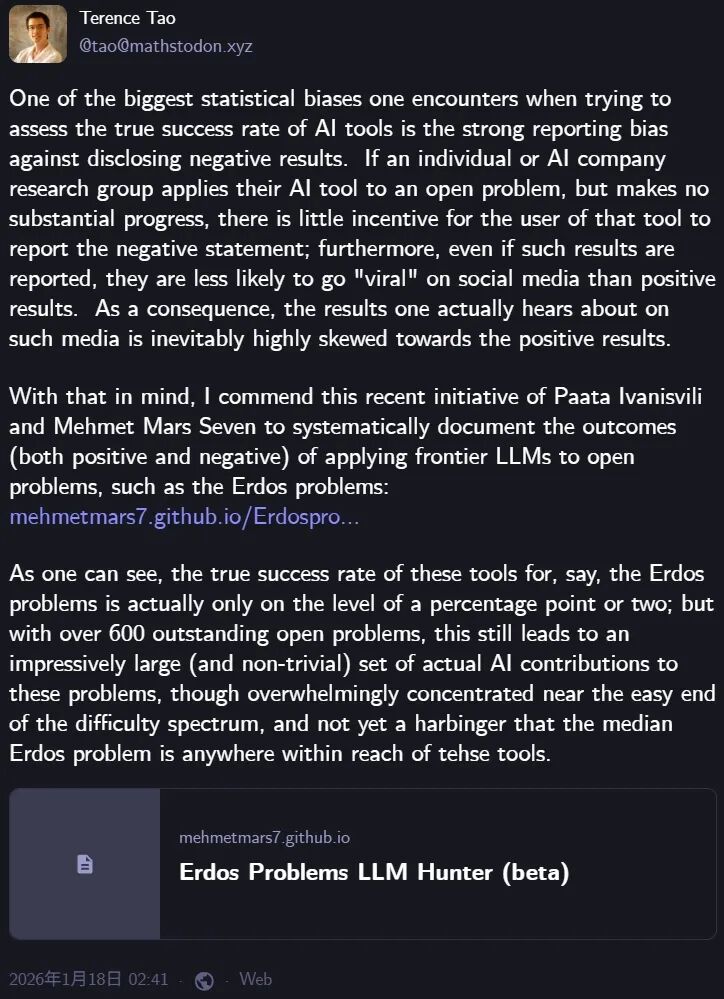
Note this word: petty cleverness.
It's like a poor student who never listens to lectures or understands the textbook, but somehow manages to guess the answer to an advanced math problem by cheating and trying everything.
And that's exactly what NeelSomani wanted. For those who "min," as long as they can dig up gold, who cares whether the mining machine understands geology?
The last line of defense: Humans are only responsible for "asking questions," no longer for "providing answers."
So, are human mathematicians going to lose their jobs?
Not necessarily. But their jobs will undergo a complete transformation.
In Neel Somani's radical version, mathematical research is no longer the chanting of artists, but the blueprints of architects.
Previously, mathematicians had to personally go down into the mines, digging for truth one pickaxe at a time. Now, GPT-5.2 has taken over the pickaxe.
The only remaining privilege and last line of defense for humanity is called "defining the problem".
You need to tell that crazy AI miner: Where to mine? What to mine? And most importantly—why is it worth mining?
This sounds like a promotion, from "miner" to "contractor." But behind this lies a huge concern: we are losing control over "why."
When GPT-5.2 throws you a Lean proof code that's thousands of lines long, Aristotle will tell you "this is correct," but you probably won't understand what's going on in the middle.
On the surface, humanity has been promoted from "miners" to "contractors." In reality, we are losing the right to explain "why."
Mathematics was once the language by which humanity understands the universe, pursuing the ultimate in elegance and simplicity.
Under the rule of AI, mathematics may become a jumbled mess of logic that is correct but lacks any aesthetic appeal.
This may be the price of what Terence Tao called "cleverness." We trade computing power for efficiency, but outsource the task of understanding to machines.
Of course, Terence Tao also repeatedly emphasized that most of the Erdős problems that AI can solve quickly belong to the "lowest fruit" category—the kind that can be solved with standard tools, but no one has bothered to combine them before.
AI has yet to touch upon the truly most hardcore dozens of areas (such as those requiring entirely new ideas or new objects).
The problem is that once computing power multiplied by the model continues to increase exponentially, yesterday's "most hardcore" might become tomorrow's "lowest-hanging fruit." This is not the end, but rather an acceleration.
The $500 check has already been cashed by Neel Somani's algorithm.
The amount of money was small, but the price was high. It disenchanted genius and shattered the last vestiges of sanctity in mathematics.
Truth is no longer God's whisper; it's just a line of code spewed out by the server's fans after they've spun wildly.
From then on, what determines truth is no longer the level of intelligence, but the number of graphics cards.
Wake up! The Age of Exploration is over, and the Industrial Revolution has begun.
The steam engine devalued muscle, electricity devalued distance, and today's GPU clusters are devaluing the "scarcity of mathematical intuition."
The next target to be exploited may not be the Erdős problem, but rather a $50 million industrial optimization problem, or a key lemma in drug molecule design that has been stuck for twenty years.
The ivory tower of mathematics has collapsed—like that meme of the president's whisper, your industry might be next.
References:
https://the-decoder.com/gpt-5-2-pro-solves-another-erdos-problem-while-a-new-database-reveals-most-attempts-still-fail/
https://www.erdosproblems.com/forum/thread/281
https://x.com/neelsomani/status/2012695714187325745
https://mathstodon.xyz/@tao/115911902186528812
https://www.erdosproblems.com/forum/thread/281#post-3327
This article is from the WeChat official account "New Zhiyuan" , author: New Zhiyuan, editor: Qingqing, and published with authorization from 36Kr.