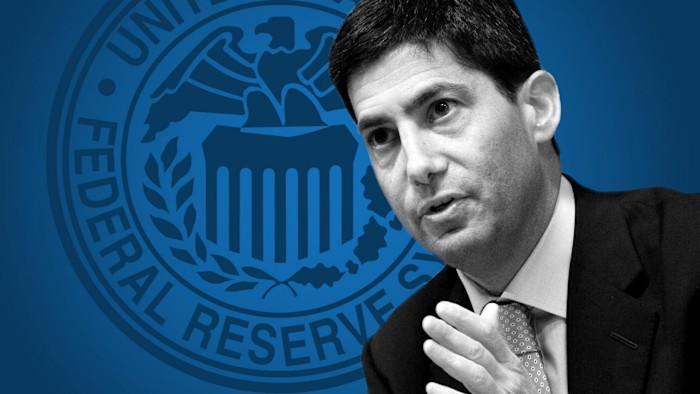
 Bitcoin (BTC) plummeted to near $81,000 late Thursday, coinciding with a surge in the probability of Kevin Warsh becoming Chairman of the Federal Reserve in the prediction markets.
On Thursday, U.S. President Donald Trump said he would soon announce his choice to replace current Federal Reserve Chairman Jerome Powell when Powell's term ends in May. Although there has been no official confirmation, many sources suggest that the Trump administration is preparing to nominate Kevin Warsh – the former Fed governor from 2006–2011.
Warsh has previously made positive statements about cryptocurrencies. However, the price of Bitcoin still plummeted to around $81,000 as odds of his nomination increased sharply, leading some analysts to consider Warsh a "bearish" factor for BTC.
According to Markus Thielen, founder of 10x Research, the market generally believes that the return of Kevin Warsh's influence will be detrimental to Bitcoin, as he emphasizes monetary discipline, high real interest rates, and tight liquidation. This approach makes crypto XEM like a speculative asset, only benefiting from abundant cheap money, rather than a hedge against currency devaluation.
High real interest rates mean that the cost of Capital after accounting for inflation increases, reducing the attractiveness of risky assets like Bitcoin. When real interest rates remain high, investors and businesses tend to reduce their risk tolerance.
Warsh's past hardline stance has also caused market concern. During the 2007–2009 global financial crisis, he repeatedly warned of inflation risks, even as the global economy faced the threat of severe deflation. In September 2008, at the time of Lehman Brothers' collapse, Warsh still said he was not ready to dismiss concerns about inflation. Seven months later, with inflation at only 0.8% and unemployment at 9%, he still maintained that the risk of rising inflation was more worrying than the risk of deflation.
Many argue that this "hawkish" approach contributed to prolonging the crisis. According to Thielen, if that approach had been widely adopted, it could have led to higher unemployment, a slower recovery, and greater deflationary risks in the 2010s.
This creates a paradox: Warsh's hawkish monetary policy record contradicts President Trump's stimulus-oriented approach, which favors risky assets. Trump has repeatedly criticized Jerome Powell for keeping interest rates high, even calling for a reduction to 1% from the current 3.5–3.7%.
Therefore, many observers believe that Warsh is not a suitable choice if the Fed is expected to follow Trump's direction. Renaissance Macro Research notes that Warsh has been a monetary hawk throughout his career, and his current dovish stance is merely temporary. Bloomberg's Chief US Economist Ana Wong also stated that she had read the FOMC minutes during the crisis and felt concerned about Warsh's statements.
Even so, as Fed Chairman, Warsh cannot single-handedly decide interest rates because policy decisions are made collectively. However, until the White House makes a final decision, his hawkish past could continue to put pressure on risky assets and support the US dollar in the short term.