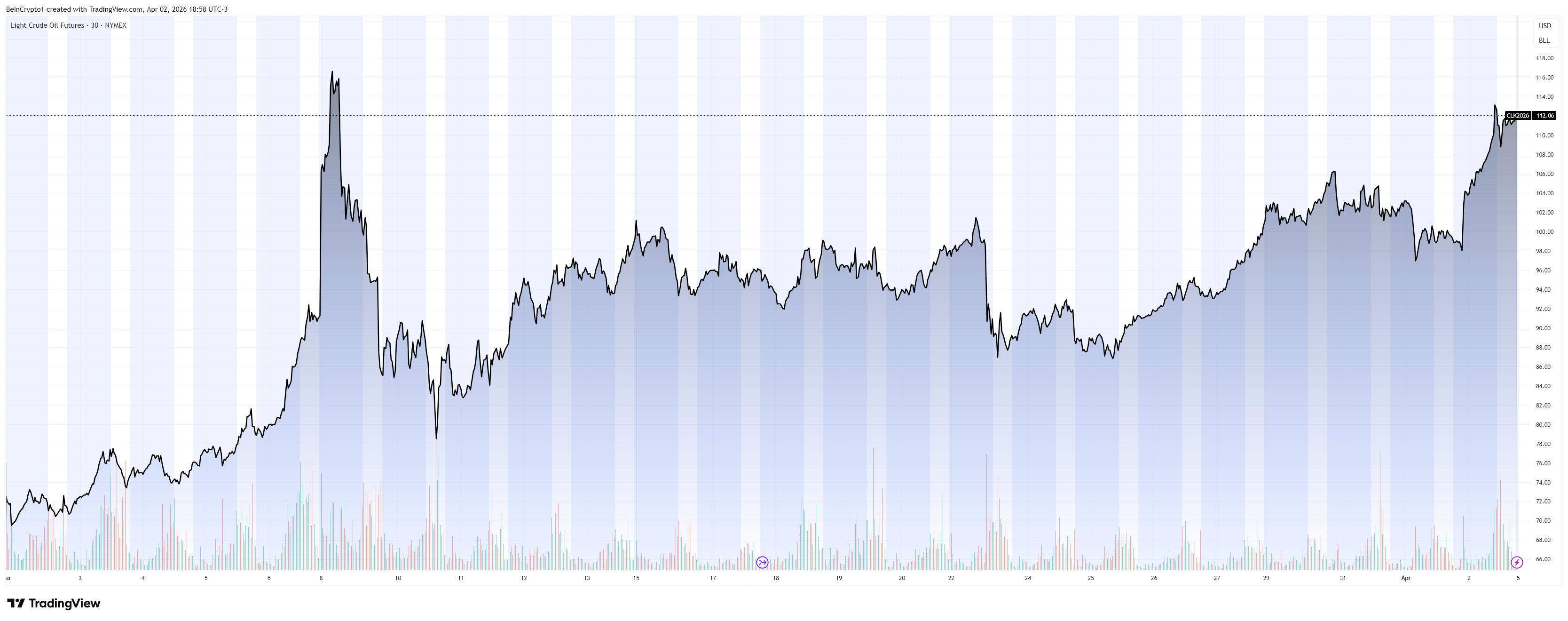
The global market is currently extremely fragile.
Written by Eric, Foresight News
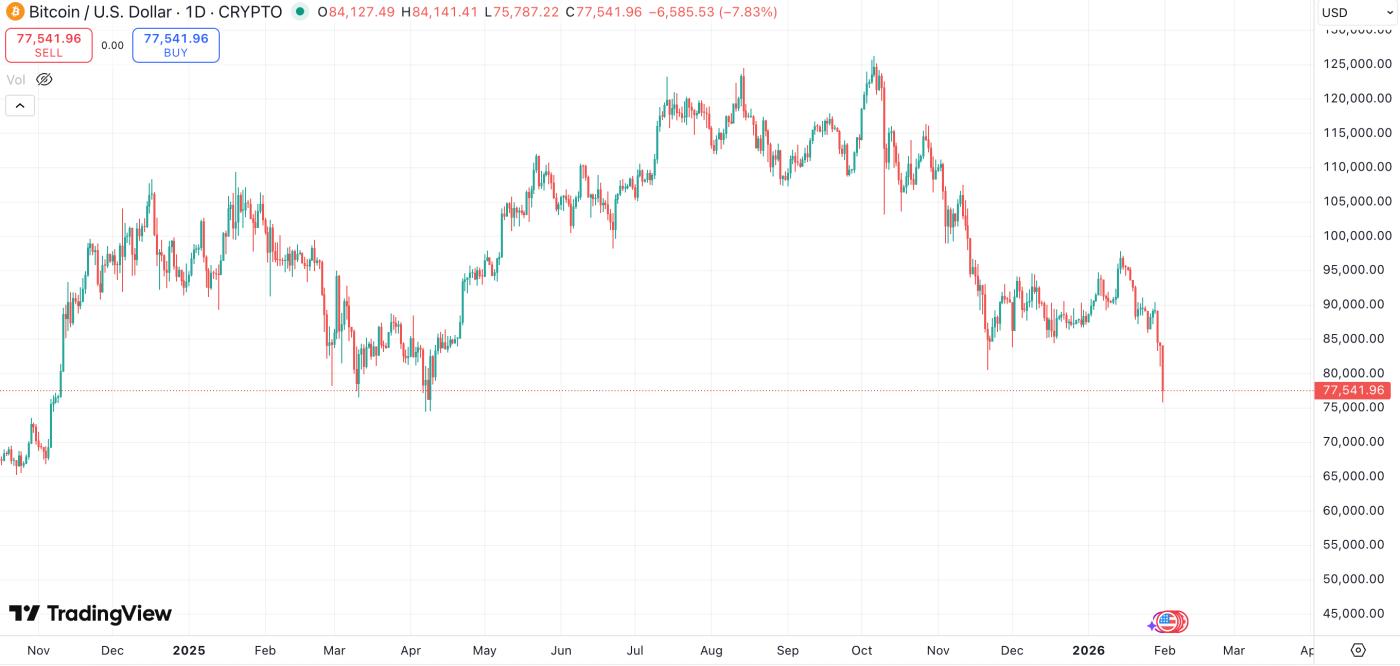
In the early hours of February 1, 2026, Beijing time, Bitcoin briefly fell below $76,000, breaking below Strategy's cost line again after nearly two and a half years. It was also the first time it had fallen below the $80,000 mark since April 12, 2025, and was only a step away from the low of around $74,500 reached on April 7, 2025.
According to CoinAnk data, nearly $2.2 billion in cryptocurrency futures contracts were liquidated across the network within 24 hours, wiping out over 335,000 investors and marking the highest single-day liquidation volume since "October 11th". Ethereum liquidations totaled approximately $961 million, Bitcoin liquidations $679 million, and SOL liquidations $168 million.
Several high-profile whale were also not spared. Huang Licheng's "Machi Big Brother" position was completely liquidated on the evening of January 31; the address starting with 0x9ee, known as "CZ to close the market," had over $60 million liquidated, losing all profits and incurring a loss of over $10 million; the so-called "insider" who shorted after the 1011 flash crash also had over $200 million liquidated, going from a profit of $142 million to liquidation in just 56 days.
Meanwhile, as Ethereum once fell to $2240, Trend Research, owned by Yi Lihua, saw its holdings of 651,300 ETH suffer a floating loss of nearly $1.2 billion. Trend Research currently has 175,800 WETH staked on Aave, borrowing approximately 274 million USDT, with a borrowing position health of 1.29 and a liquidation price of $1558. Although the liquidation price is still some distance from the current price, if the market downturn continues, $1500 is not out of reach.
Recent financial market volatility has been extremely high. Based on closing prices, spot gold and silver fell by more than 10% and 26% respectively on the last trading day of this week, representing massive declines rarely seen in decades. Microsoft's Azure growth alone saw a 1% quarter-on-quarter decline, resulting in a market capitalization loss of over $350 billion. These staggering figures demonstrate that funds are highly concentrated in a few assets, and everyone is on edge; even the slightest crack could trigger a stampede of selling.
Geopolitical risks escalate, and the US government shuts down again.
According to Xinhua News Agency, an explosion occurred in a residential building in Bandar Abbas, Iran, on the evening of January 31st, Beijing time. The instability at the Strait of Hormuz, a key oil hub handling approximately 20% of the world's seaborne oil, coupled with escalating US-Iran conflict, has further heightened market concerns about the situation in the Middle East. While risk aversion related to the international situation may be a contributing factor, the founder of Punchbowl News tweeted around 4 AM today that House Democrats have informed House Republican leadership that they will not assist Republicans in passing a funding bill while funding is currently suspended. This could turn what was initially thought to be a government shutdown lasting only a few days into a second, longer shutdown in months.
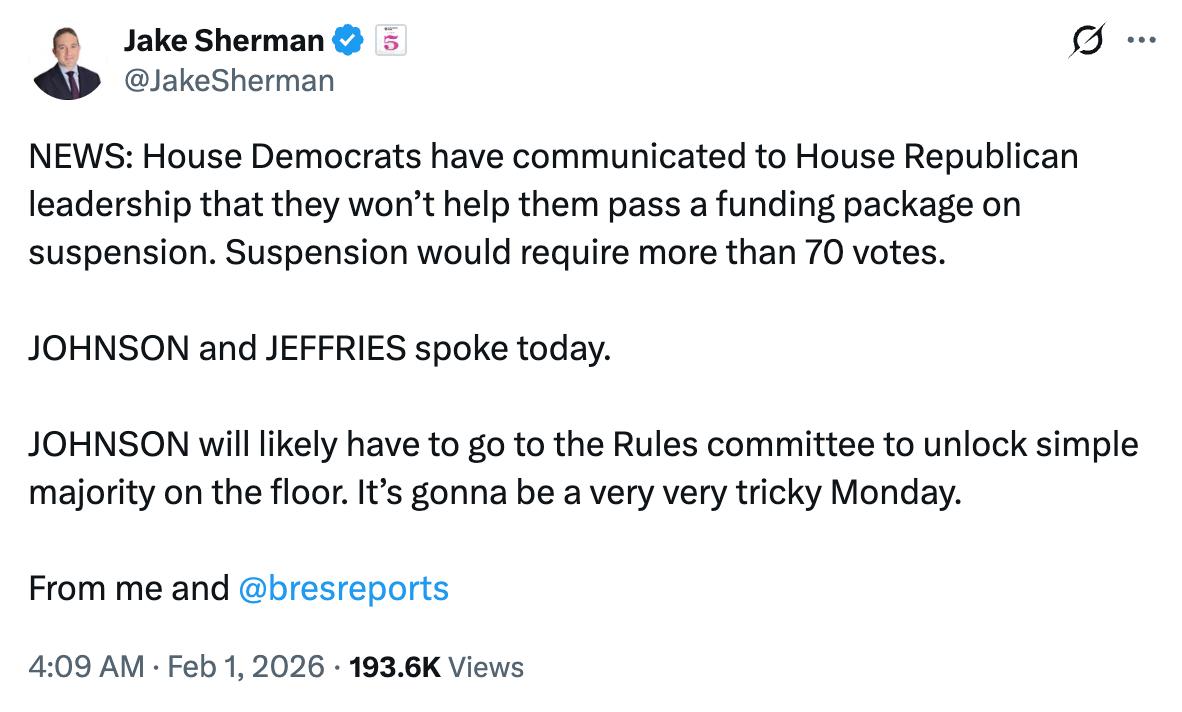
Although the news came later than the start of the decline, the panic caused by various uncertainties, coupled with the thin liquidity over the weekend, meant that even a small-scale sell-off was enough to trigger continuous liquidations. Abraxas Capital's Heka fund transferred 2,038 bitcoins to Kraken last night.
Regulatory legislation severely damages confidence, and Bitcoin's status is being questioned.
Since 10/11, the cryptocurrency market has gradually underperformed the stock, precious metals, and commodity markets. Besides a significant drop in liquidity, the much-anticipated but ultimately ineffective crypto market structure legislation, which treats crypto assets with the same level of protection as securities, may also be a contributing factor. The past cryptocurrency boom largely benefited from a relaxed regulatory environment, and the development of stablecoins and RWA tokenization began to integrate into the mainstream, while the survival of "crypto native" cryptocurrencies unexpectedly suffered. This gap between expectations and reality has caused the previous over-optimism to backfire.
On January 29, Beijing time, the U.S. Securities and Exchange Commission (SEC) issued new regulatory guidance, clarifying the bottom line that tokenized stocks should be subject to the same regulatory rules as ordinary stocks, which can be regarded as a death sentence to the expectation of "weak regulation" for tokenization.
In addition, Bitcoin's recent divergence from both risky and safe-haven assets has cast doubt on its fundamental nature. For a considerable period, Bitcoin typically followed the trends of tech stocks or gold, but since October, it has failed to keep pace with both the AI-driven surge in US stocks and silver, and the geopolitical rally in gold. Clearly, whether one is bullish on AI development or seeking a safe haven, there are better alternatives to Bitcoin in the market.
The net outflow of nearly $3 billion from spot ETFs over two consecutive weeks also indirectly confirms this. While US stocks and gold and silver both experienced significant declines last weekend, funds did not flow into the cryptocurrency market, indicating that market interest in cryptocurrencies has waned.
2026 will be an extreme test of the resilience of the crypto market. While we do not want the industry to be hit again, most people would agree that a major reshuffle is not necessarily a bad thing for the current crypto industry .