



In January 2026, two key developments set new historical benchmarks for the global crypto market.
On January 25, after years of debate and compromise, the U.S. Senate and House of Representatives finally reached a decisive consensus on a comprehensive regulatory framework bill for digital assets—"The Big Bill." Three days later, the three departments of the U.S. Securities and Exchange Commission (SEC) jointly released a statement on "tokenized securities," with its core position unequivocally clear: regardless of the technological form in which an asset exists, its financial substance determines the applicability of regulation.
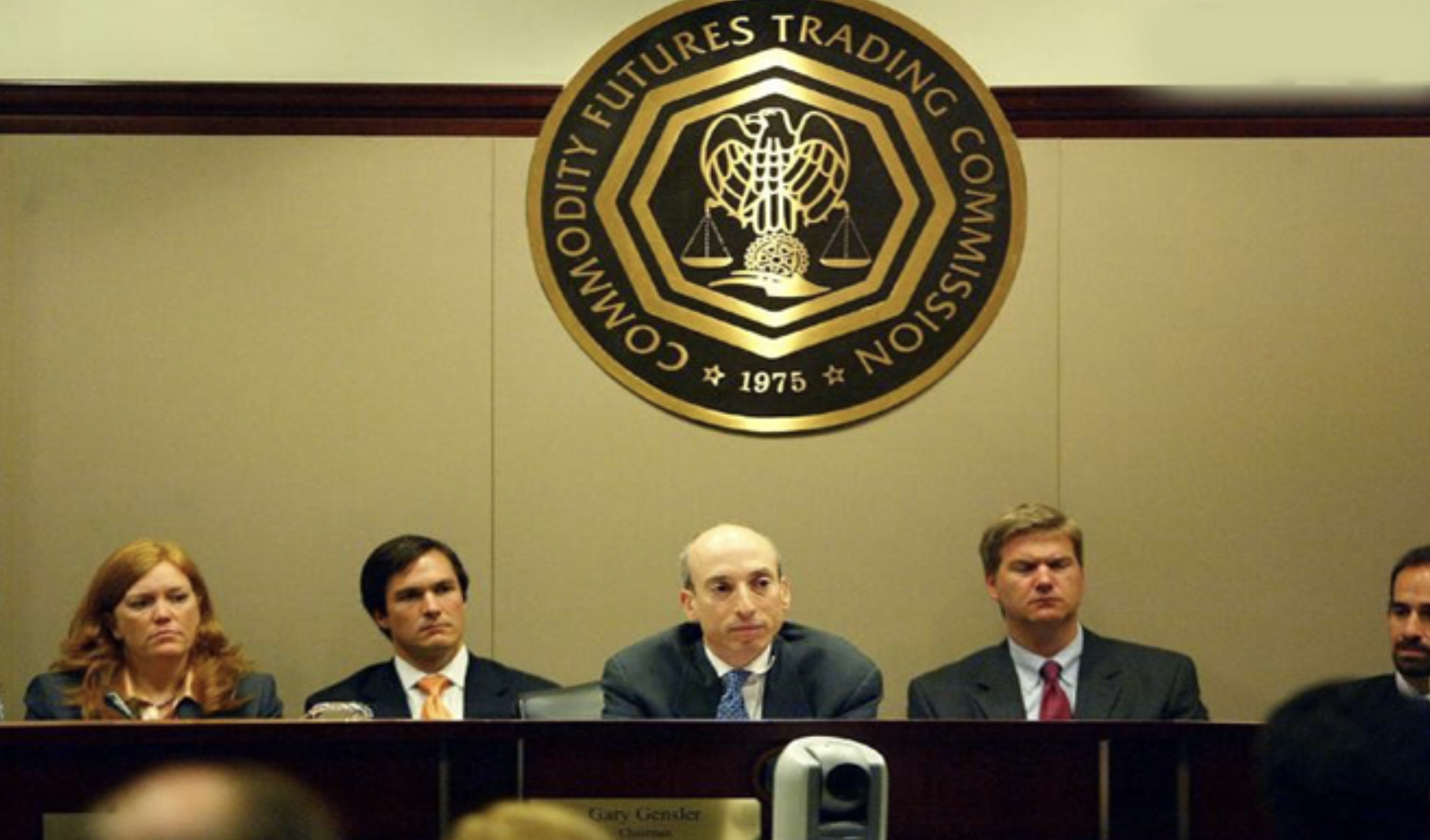
These two seemingly independent events are actually intertwined, both pointing to an irreversible trend: the era of a "rule wasteland" that has plagued the global crypto space for over a decade is coming to an end. A clear, rigorous regulatory system with global spillover effects is rapidly taking shape. This is not simply a matter of "tightening" or "loosening," but a profound paradigm shift—crypto assets are being systematically incorporated into the framework of modern financial regulation.
For every market participant, understanding the rules themselves is far more important than speculating on short-term market fluctuations. This is not merely the implementation of regulations, but also signifies that the entire industry will move from tentative steps on the fringes to mainstream infrastructure, shifting from a narrative of pursuing "absolute freedom" to seeking new paths to value creation within "established rules." When the legal framework is finally in place, the rules of the game have been completely rewritten.
I. Where did the bill come from: A legislative battle that lasted for several years
The path to US crypto legislation is far more complex than the outside world imagines. It is not something that can be accomplished overnight, but rather a long process that has evolved from ideological differences and political maneuvering to a technological consensus. This process consists of multiple parallel tracks, each representing different regulatory philosophies and interests, but ultimately converging on the same goal: to establish clear and enforceable legal boundaries for digital assets.
Back in July 2025, the House of Representatives overwhelmingly passed the "Guiding and Building a National Innovation for Stablecoins Act" (commonly known as the "Genius Act"). This bill requires stablecoins to be backed by liquid assets such as the US dollar or short-term US Treasury bonds, and issuers must disclose reserve details monthly. Almost simultaneously, another key piece of legislation—the "Digital Asset Markets Clarity Act" (HR3633)—was also passed by the House. Its core objective is to clarify the regulatory boundaries of the SEC and the Commodity Futures Trading Commission (CFTC) in the crypto space, providing the market with definitive rules.
Entering 2026, the legislative process has accelerated significantly. On January 12, Senate Banking Committee Chairman Tim Scott released the latest revised text after bipartisan negotiations. The revised version further strengthens the criminal liability constraints on issuers of "permissioned payment stablecoins" and refines the verification procedures regarding "blockchain maturity." The core innovation of the bill lies in the introduction of a regulatory classification method based on quantitative indicators, aiming to end the ambiguity of relying on subjective precedents (such as the "Howey Test") for many years.
However, the key to determining the enforceability of this law lies not in the vote itself, but in the regulators' first attempt to translate the abstract concept of "decentralization" into verifiable and auditable technical conditions. Section 205 of the Digital Asset Markets Clarity Act establishes the criteria for determining a "mature blockchain." According to these criteria, a system must meet a series of stringent technical indicators to be classified as a "digital commodity" under the CFTC's jurisdiction rather than a "securities" under the SEC's regulation.
The two most crucial criteria are: First, the total voting rights held by any issuer, affiliates, and parties acting in concert in the past 12 months must not exceed 20%; and second, no single entity possesses the "unilateral authority" to substantially alter the core logic of the agreement. This quantitative standard provides unprecedented certainty to the entire industry, shifting compliance requirements from a gray area reliant on legal interpretation to publicly verifiable technical parameters.
For decentralized finance (DeFi) projects, this means their governance structures, token distribution models, and code control will face unprecedented transparency and auditing requirements. Projects that do not meet these "decentralized" technical standards will be automatically classified as securities, thus subject to stricter disclosure and registration regulations from the SEC. This "technology-anchored" regulatory approach signifies the US's attempt to use code and data structures to embody legal will, laying the methodological foundation for the subsequent regulation of all specific asset classes.
II. Stablecoins become "bank deposits," and the "freedom" of putting securities on the blockchain is no longer possible.
Once the fundamental regulatory framework is established, the first to be reshaped and subject to institutional restructuring are the two core asset classes in the crypto world: stablecoins and tokenized securities. The regulatory logic in the United States clearly indicates that it aims to redefine boundaries in the digital asset space: which can be accepted as part of mainstream financial infrastructure, and which must be strictly defined as regulated financial products. This process essentially involves bringing "wild" assets into the mainstream of traditional financial regulation.
The regulation of stablecoins is the most mature and fastest-progressing part of this wave of legislation. The Genius Act, signed into law in July 2025, fundamentally changes the niche of stablecoins, elevating them from privately issued "digital tokens" to "bank-like monetary instruments." According to the Act, stablecoin issuers must hold 100% of their reserves in highly liquid assets such as US dollar cash or short-term US Treasury bonds. Monthly, they must undergo "Examination" level financial audits—the highest standard in auditing, requiring auditors to conduct direct, penetrating verification of the underlying assets, rather than relying on financial statements provided by the issuer.
Even more stringent is the introduction of criminal liability for executives in the bill. If a reserve shortage is found to have been deliberately concealed, the company's CEO and CFO will face federal criminal charges. This mechanism aims to fundamentally end the algorithmic decoupling and reserve fraud problems in the stablecoin sector. For ordinary users, this regulatory shift is a double-edged sword. On the one hand, the security of mainstream stablecoins such as USDT and USDC will be unprecedentedly enhanced, with their credit backing almost equivalent to bank deposits protected by deposit insurance. On the other hand, the strict asset reserve requirements also mean that the past models that provided users with "risk-free returns" of over 10% through algorithmic models or venture capital will be unsustainable, and stablecoin returns will return to mediocrity.
Almost simultaneously with the forced return of stablecoins to balance sheets, the on-chaining of traditional financial assets also saw greater regulatory clarity. On January 28, 2026, the SEC's statement on tokenized securities drew insurmountable red lines for this field. The statement explicitly reiterated a fundamental principle: the format or recording method of a security (whether on-chain or off-chain) does not affect the applicability of federal securities laws. This position is deeply rooted in US legal tradition, traceable to the Supreme Court's 1967 precedent principle: "In exploring the meaning of the term 'security,' form should be disregarded and substance should be the focus."
The SEC's statement establishes a concise and robust classification framework. It divides tokenized securities into two main categories: tokenization led by the securities issuer or its agents, and tokenization led by a third party. The former is relatively simple and straightforward, with blockchain merely serving as a technological alternative to shareholder registers; the latter is more complex and is further divided into "custodial" and "synthetic" models. "Custodial" tokenization is similar to traditional American Depositary Receipts (ADRs), where users hold a claim to the underlying assets held by the custodian; while "synthetic" tokenization typically involves complex derivatives such as securities swaps and is subject to the strictest sales and trading restrictions.
This classification has a decisive impact on the entire Real-World Asset (RWA) tokenization industry. It explicitly states that any attempt to circumvent the Securities Act through sophisticated technical structures or legal wordplay will face regulatory scrutiny based on substance over form. Regardless of whether a product is packaged as a "revenue rights token," "asset-backed certificate," or any other novel name, as long as its economic substance provides exposure to the value or cash flow of securities, it must comply with the relevant securities regulations. This clears legal obstacles for compliant RWA projects (such as Treasury bond tokenization) while simultaneously eliminating the gray area for regulatory arbitrage models such as "synthetic equity."
III. How will ordinary users be affected: Tax bills are approaching, and wallet access will be tightened.
Once the macro-level legislative framework and regulatory rules for core assets are finalized, their most direct and subtle impacts will ultimately reach the digital lives of every ordinary user. This impact manifests in two seemingly independent but closely interconnected aspects: complete financial transparency and a redefinition of individual control over assets. Together, they answer a fundamental question: In this new regulatory era, how much autonomy do individuals ultimately have left in the digital finance sector?
Crypto taxation has long been a regulatory gray area, but this is fundamentally changing. The tax provisions in the new bill may reshape the daily behavior of ordinary users more than any technology regulations. According to legislative trends, all centralized exchanges and decentralized exchange applications (DEXs) that meet certain thresholds will be required to automatically report user transaction data to the IRS. Similar to Form 1099 used in traditional finance to report investment income, the digital asset space may introduce a "1099-DA" form to systematically report users' capital gains, losses, and other taxable activities.
This change signifies a complete overhaul of the original concept of "on-chain privacy." While users theoretically retain control of their private keys, the complete transaction history may be included in national tax reporting systems once assets interact with regulated exchanges, payment processors, or any entity defined as a "financial intermediary." For US users, this means cryptocurrency transactions will become as transparent as stock and bond transactions. Rewards from liquidity mining, staking yields, airdropped tokens, and profits from the sale of non-fungible tokens (NFTs) could all be explicitly identified as taxable events. This will lead to a significant increase in individual compliance costs; systematically recording the cost, time, and fair value of every on-chain activity will become a heavy daily obligation, and professional tax software and accounting services may shift from optional to essential.
Accompanying this pursuit of financial transparency is the technical definition of the boundaries of self-custodial wallet rights. Self-custodial wallets have always been a core symbol of the crypto philosophy, representing absolute control over users' assets. The new legislation attempts to find a difficult balance in this sensitive area. On the one hand, the bill explicitly protects the right of U.S. individuals to own and use self-custodial wallets for peer-to-peer transactions; the law prohibits regulators from directly restricting individuals' use of hardware wallets or non-custodial software wallets, which is seen as a crucial preservation of the core spirit of crypto.
On the other hand, regulations require all regulated entities (such as trading platforms) to employ "appropriate distributed ledger analytics tools" to monitor and report suspicious activity. This requirement elevates "on-chain analytics" from an optional compliance tool to a legally mandated obligation. This balance creates a delicate reality: your assets are private in your wallet, but every step they take when you attempt to transfer them to mainstream financial channels can be under surveillance. For users, this can complicate the user experience: transferring funds from self-custodial wallets to exchanges may face stricter scrutiny of the source of funds; large or frequent on-chain transactions may trigger additional due diligence. Ultimately, a harsh but realistic conclusion is emerging: self-custodial remains legal, but a "completely invisible" on-chain financial life is no longer a reality for the foreseeable future.
IV. Global Trends and Survival Rules: Finding New Opportunities in an Era of Rules
Regulatory trends in the United States are never just a matter for the US. As the anchor of the global financial system and the source of technological innovation, US legislation in the crypto space is rapidly evolving into a de facto global standard, triggering a global regulatory convergence. This convergence is not only reconfiguring the market landscape but also fundamentally changing the survival strategies of every market participant. Understanding and adapting to this new set of rules is far more urgent than yearning for the "wilderness freedom" of the past.
The EU's Crypto Asset Markets Act (MiCA) came into full effect in 2024, establishing a unified regulatory framework for its 27 member states. Meanwhile, ambitious financial centers such as Hong Kong, Singapore, and Abu Dhabi in the UAE are actively developing their own crypto asset regulatory systems, attempting to attract innovation while maintaining compliance. The completion of comprehensive US legislation provides a crucial blueprint for these jurisdictions, potentially accelerating the convergence of regulatory principles across major global markets. This convergence will have profound implications for the industry. On one hand, it provides multinational crypto companies with more consistent and predictable compliance expectations, reducing the complexity of global operations. On the other hand, it also means a sharp reduction in the space for "regulatory arbitrage," with projects attempting to find the most lenient legal environment through constant relocation finding fewer and fewer safe havens to choose from.
For ordinary users, the convergence of global regulatory standards presents a paradoxical experience. It means that regardless of location, users can expect similar levels of investor protection, asset security, and market integrity when using mainstream crypto financial services. However, it also means that arbitrage opportunities based on geographical differences (such as tax differences and trading restrictions) will gradually disappear. On a personal level, this global regulatory convergence forces every user to fundamentally adjust their mindset and strategies: from "loophole hunters" eager to find and exploit legal gray areas to "compliance players" striving to understand and optimize their position within established rules.
The most fundamental strategy is to embrace tax compliance without reservation. Users must begin to systematically record all on-chain activities, just as they would with traditional investments. In terms of asset allocation, a new risk assessment framework needs to be established. Strictly regulated stablecoins offer near-cash security but extremely low returns; while high-yield opportunities inevitably come with higher risks and may exist in emerging areas not yet fully covered by regulation, requiring users to possess stronger independent research and risk assessment capabilities. Regarding the selection of technical tools, strategies may tend towards diversification. Maintaining multiple wallets with different purposes becomes necessary: one "clean" compliant wallet for interacting with regulated exchanges; another for exploring more experimental decentralized applications. Understanding the privacy features, compliance risks, and technical barriers behind different tools will become an essential skill.
This profound regulatory transformation is not the end of innovation, but rather a shift in the logic of value creation. The RWA (Real-World Asset) tokenization field is becoming one of the clearest beneficiaries under the new rules. Clearer regulations pave the way for the large-scale, compliant on-chain introduction of traditional assets such as bonds, private equity, and real estate. The direction of industry transformation is clear: innovation will shift from testing the limits of regulation to how to more efficiently, transparently, and accessibly exchange and create financial value within a clear compliance framework. Projects and individuals who can understand the new rules first and build sustainable business models accordingly will find their place in the new, reshuffled order.
U.S. Treasury Secretary Janet Yellen has stated that the stablecoin market is projected to grow to $3.7 trillion by 2030. With the rules becoming clearer, Wall Street bankers are already gearing up to enter the market.
Meanwhile, on the QELT blockchain, over $1.1 trillion in assets await tokenization. An ordinary investor could acquire a digital share of ownership in a Dubai real estate project, all within a legal framework established in early 2026.
Some of the information comes from the following sources:
• 2026 US Crypto Legislation: How Will Ordinary Users Survive When the Law Finally Takes Effect?
• The U.S. SEC has just released a major statement regarding tokenized securities! The rules of the game for tokenized securities have been set.
Author: Liang Yu; Editor: Zhao Yidan



