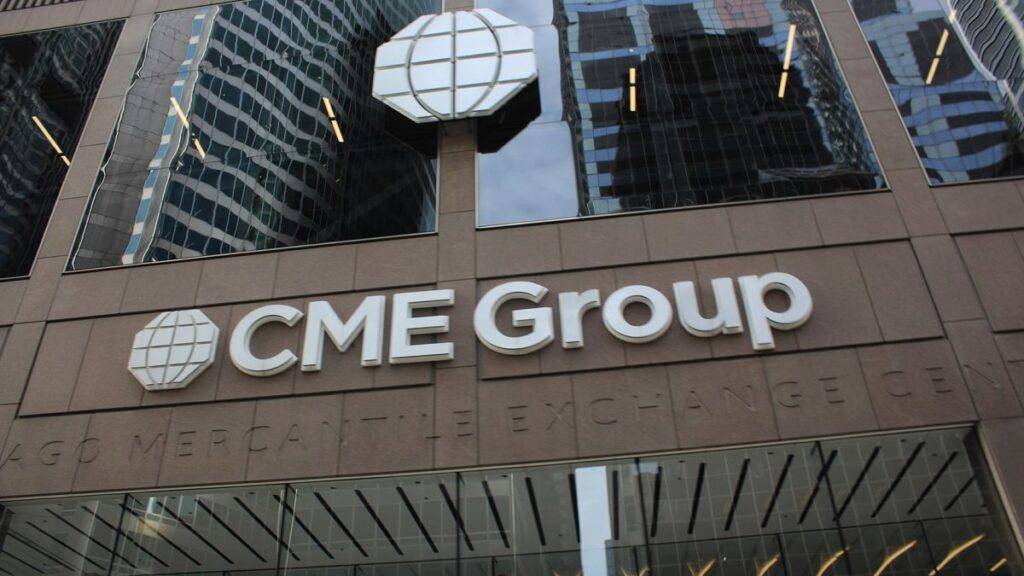
 Derivative giant CME Group is considering issuing CME Coin. Photo: Reuters.
CME Group , the world's largest Derivative exchange, is exploring the possibility of issuing its own cryptocurrency, as Tokenize is gradually becoming a part of the traditional financial infrastructure.
During the latest earnings call, CEO Terry Duffy confirmed that CME is XEM initiatives with its own coin , which could be deployed on a decentralized network. This statement came in response to a question from Michael Cyprys (Morgan Stanley) regarding the Vai of Tokenize collateral in the escrow system.
According to Mr. Duffy, CME is reviewing various forms of margin trading, with the key factor being the creditworthiness of the Token Issuance. “If you give me a Token from a systemically significant financial institution, I’ll feel much more secure than if a third- or fourth-tier bank tries to Token Issuance as collateral,” he said. “It’s not just Tokenize cash; we’re also XEM at other initiatives with our own coins.”
CME has partnered with Google to develop a cash Token solution, expected to launch later this year. This model will have a custodian bank Vai as an intermediary to facilitate transactions, ensuring compliance and operational security. The private coin that Mr. Duffy mentioned is understood to be a distinct Token that CME may issue and place on a decentralized network for use by industry members.
When asked whether the Token would function as a stablecoin, a payment Token , or some other instrument, CME declined to comment in detail. However, according to industry sources, the focus of the initiative is not on retail payments but on its function as collateral and margin for the Derivative market, an area where CME holds a dominant global position.
If implemented, CME Coin could have implications far beyond those of a typical cryptocurrency. Unlike most current stablecoins that facilitate trading in the crypto market, CME's Token – if directly linked to margin trading and risk management – could become a new layer of financial infrastructure, impacting how Capital and risk are allocated within the financial system.
Furthermore, CME is considering the possibility of deploying Token on a decentralized network, rather than a private blockchain or a permissioned network like traditional banks typically choose. This would open up the possibility for more institutions to participate and use a common collateral standard.
Alongside developing its own Token , CME is also evaluating the acceptance of various other Tokenize asset classes as collateral, including stablecoins, Token issued by major banks, or Tokenize money market funds, provided they meet risk and security criteria.
The group plans to launch 24/7 crypto Futures Contract trading in Q2 of this year, in order to synchronize with the global trading pace of the digital asset market. CME is also preparing to add Futures Contract based on Cardano, Chainlink , and Stellar to its existing portfolio.
Last year, the Medium daily cryptocurrency volume on the CME reached approximately $12 billion, with micro-ether and micro-bitcoin contracts being the fastest-growing products.
Besides CME Group, many Wall Street giants and global financial institutions have also issued or are preparing to Token Issuance , notably JPMorgan Chase with JPM Coin (JPMD), Citigroup considering an internal stablecoin,Bank of America developing a USD-pegged stablecoin, and European banks such as Société Générale , BNP Paribas, and UniCredit with stablecoin or Tokenize deposit projects; in addition, names like Goldman Sachs and BNY Mellon are also deeply involved in the Tokenize financial asset sector.
Coin68 compilation