
In January 2023, a Barcelona fan posed a seemingly simple yet fundamentally probing question on social media: “I spent €80 on $BAR tokens—who do they really belong to? Barcelona, the Socios platform, or me?” This question sparked weeks of heated discussion within the community, ultimately without consensus. What appears to be a technical question actually exposes the core paradox of the sports industry’s Web3 transition: we are using decentralized technology to build centralized power structures.
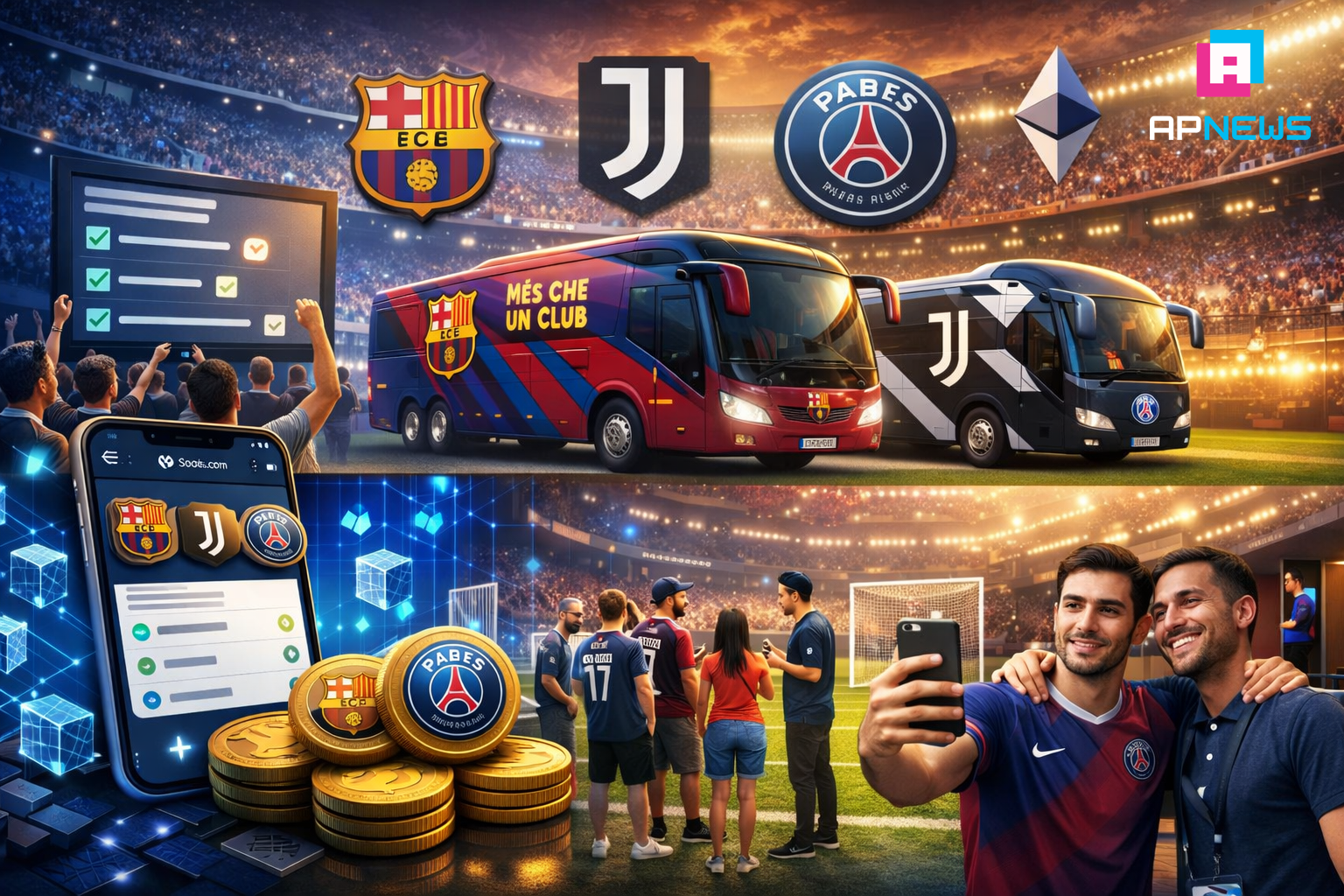
Today, when Juventus fans vote on the team bus color via $JUV tokens, or Paris Saint-Germain holders participate in training-ground naming with $PSG, a carefully crafted narrative has emerged—blockchain technology grants fans unprecedented “ownership.” Yet, a closer examination of these fan tokens’ technical implementation reveals an unsettling reality: most fans are not buying true digital assets but rather participation certificates stored in centralized databases. These tokens are “trapped” within the walled gardens of specific platforms, cannot be freely transferred or used across other ecosystems, and their voting rights are strictly confined to symbolic, non-competitive topics.
This article will deconstruct the “asset cage” nature of the current fan token model from a technical architecture perspective, analyze the business logic and historical inevitability behind this design, and explore potential paths for breakthrough. We will see that the evolution from “platform-controlled participation certificates” to “user-owned digital identities” is not only a matter of technical choices but will determine the fundamental allocation of power in Web3-era sports communities.
How Centralized Platforms Define the “Decentralized” Experience
The current mainstream fan token ecosystem is built on a sophisticated centralized architecture. Take the industry-leading Socios platform as an example: its tech stack exhibits a typical three-layer structure. The top layer, the user interface, provides smooth voting and interaction experiences; the middle layer, the business logic servers, handles all core computations; the bottom layer, the blockchain, only serves as a ledger for the final state. In this architecture, real control resides in the middle-layer server clusters, not in the underlying decentralized network.
The first limitation of this design is asset non-portability. Fan tokens purchased with fiat are effectively stored in custodial wallets controlled by the platform. Users receive only a database record of “ownership,” not true private key control. This means fans cannot transfer these assets to personal hardware wallets or use them on other blockchain-supported platforms. When the collaboration between a platform and club ends, or if the platform encounters operational issues, the fate of these digital assets entirely depends on centralized operators’ decisions.
The second limitation is performative governance. Fan tokens are marketed as “governance tokens,” but their governance scope is strictly limited to cultural and marketing issues. Clubs predefine voting options via smart contracts, while platforms collect and verify results through centralized servers. Technically, this is no different from a conventional online survey, with blockchain recording merely adding the appearance of immutability. True club governance—transfer strategies, financial allocation, management appointments—remains fully controlled by traditional ownership structures.
The third limitation is ecosystem closure. $JUV tokens only function within the Socios ecosystem—they cannot purchase NFT tickets, serve as collateral in DeFi protocols, or prove fan identity in other metaverse platforms. This enclosure ensures the platform’s commercial monopoly but contradicts Web3’s core principle of interoperability. Fans cannot link tokens from different clubs, nor can they form cross-platform fan identity graphs.
Why Centralization Is an Inevitable Transitional Stage
Understanding the current state of fan tokens requires situating them within the macro context of the sports industry’s digital transformation. The emergence of centralized platform models is not a technological regression but a rational choice given historical conditions.
From a club’s perspective, partnering with professional platforms like Socios provides the path of least resistance to digital adoption. Traditional sports organizations generally lack blockchain expertise; building and maintaining decentralized systems in-house would require massive technical investment and ongoing operational costs. Professional platforms offer complete solutions: they handle complex technical implementation, ensure compliance with regulations, provide user support and community management, and even take on market education and promotion. In return, platforms take a share of token sales and transactions and accumulate valuable user data and industry influence.
From a regulatory compliance standpoint, centralized architecture provides necessary control points. The sports industry faces strict AML, KYC, and securities regulation. Centralized platforms can perform identity verification, monitor suspicious activity, and generate compliance reports like traditional financial institutions. Fully decentralized systems struggle to meet these requirements, exposing clubs to legal risk. The current hybrid centralized-decentralized approach strikes a temporary balance between compliance and technological innovation.
From a user experience perspective, centralized servers maintain familiar traditional internet interactions. Fans expect instant responses, zero transaction fees, and intuitive interfaces. Fully on-chain voting requires blockchain confirmations, gas fees, and private key management—all barriers for mainstream users. Platforms handle interactions centrally and only record the final state on-chain, hiding blockchain complexity and enabling millions of non-technical fans to participate seamlessly.
This stage can be understood as the “dial-up era” of sports Web3. Just as the 1990s internet required centralized portals like AOL to connect, today’s fans require platforms like Socios to experience blockchain-enabled interactions. Immature technology, insufficient market education, and regulatory uncertainty collectively shaped the current centralized dominance. This phase has accumulated valuable user bases, validated business models, and operational experience, but also created risks of excessive power concentration.
How Open Protocols Can Unlock Closed Ecosystems
The technical keys to breaking the asset cage are gradually taking shape. This process is not a revolutionary disruption but a gradual protocol innovation building parallel, interoperable, open ecosystems.
The evolution of portable asset standards is the critical first step. Current fan tokens are often implemented on private or highly customized public chains, but the industry is slowly migrating toward public blockchains and open standards. Ethereum’s ERC-1155 standard offers unique advantages, allowing a single contract to manage multiple asset types—voting tokens, commemorative NFTs, identity credentials can be issued and managed together. High-throughput chains like Polygon and Solana are also actively supporting sports asset issuance. This migration enables fans to control private keys, choose custody solutions, and transfer assets across wallets and applications.
The introduction of decentralized identity (DID) systems will redefine fan-club relationships. Blockchain-based autonomous identity systems allow fans to create unified digital identities across platforms and clubs. This identity can accumulate multi-dimensional reputation data—token holding duration, voting history, event participation, community contributions—which can be verified via zero-knowledge proofs without revealing private information. When interacting with a new club, fans can selectively demonstrate proof of experience with other clubs to earn recognition or privileges.
Standardized composable interfaces will unleash the network effects of fan assets. Unified APIs and data formats allow tokens issued by different clubs to be used in third-party applications. Imagine a football metaverse game where players wear virtual jerseys representing the clubs of their tokens, or a DeFi protocol accepting mainstream fan tokens as collateral. Composability transforms fan assets from “closed membership points” into “open financial and cultural media.”
Gradual decentralized governance experiments may move from peripheral to core decisions. Clubs could start with low-risk, non-financial decisions on-chain—for example, letting token holders manage charity funds via DAOs or collaboratively run a fan media channel. These experiments build technical experience and community trust, laying the groundwork for participation in more critical governance matters.
When Fan Identity Becomes an Autonomous Digital Entity
A fan token ecosystem driven by open protocols will differ fundamentally from today’s centralized model. In this new ecosystem, fan identity is no longer a platform-defined appendage but an autonomous, programmable, composable digital entity.
Core changes lie in ownership transfer. Fans control digital assets representing voting rights, access, and identity directly via their wallets. Assets are no longer tied to platform accounts, adhering to the Web3 principle: “Not your keys, not your tokens.” Clubs define economic models and rights via smart contracts but cannot dictate asset transfers or usage. Even if club-platform relationships change, fan assets and histories remain unaffected.
The granularity and programmability of rights reach new heights. Modular smart contracts allow clubs to provide differentiated benefits: long-term holders receive commemorative NFT airdrops, active governance participants gain higher-weight voting tokens, event attendees receive soulbound (SBT) attendance proofs. These rules are fully transparent and automatically executed, reducing management costs and human intervention.
Cross-ecosystem value circulation becomes the norm. Fan reputation and assets can be applied across sports, entertainment, and commercial contexts. A veteran football fan’s reputation may grant initial trust in a basketball community; governance experience in a home club can apply to other DAOs; token collections may become unique categories in digital art markets. This cross-pollination generates new network effects and business opportunities.
Substantive governance evolution rebalances club-community relationships. While core competitive decisions remain with professional management, more operational decisions can gradually open to community input. Season ticket pricing ranges, stadium renovation designs, youth team priorities—these community consultations can occur via transparent on-chain governance. Clubs may automatically distribute part of commercial revenue (e.g., merchandise sales) to token holders, creating true economic symbiosis between community and club.
The Long Revolution of Fan Sovereignty
The evolution of fan tokens from “asset cages” to “autonomous identities” is not a simple technical upgrade but a long revolution of fan sovereignty in the digital era. The central tension lies between traditional, highly centralized control in the sports industry and Web3’s decentralization philosophy.
Current centralized platform models play a historical transitional role. They lower technical barriers, validate market demand, and build initial business models, allowing millions of fans to experience participation as “digital shareholders.” Yet, their inherent limitations are becoming evident: creating new centralized power nodes, restricting real asset ownership, and limiting ecosystem innovation.
Open protocol development provides an alternative. Through portable asset standards, decentralized identity systems, and composable interface design, fans may truly “own” their digital identity and community rights. This transition will not happen overnight; it will take years of gradual migration, facing technical challenges, business competition, and regulatory coordination.
Success is measured not by technological sophistication but by achieving a sustainable balance between innovation and tradition. Clubs must maintain professional competitive performance and commercial operations while granting appropriate community participation; fans must enjoy sovereignty while taking responsibility; developers must create valuable and usable products.
Once achieved, a new sports community paradigm emerges: clubs are no longer one-way content brands but co-created ecosystems with fans worldwide; fans are no longer peripheral consumers but true members with digital identity, economic rights, and governance participation. From caged assets to autonomous homes, this evolution will determine whether Web3 truly delivers user sovereignty, rather than merely wrapping old power structures in new technology.