Original title: "As someone who plays the market prediction game every day, I've witnessed these innovations and changes."
Original author: Asher, Odaily Odaily
" With Polymarket's high liquidity, why use other prediction market platforms besides accumulating points for token airdrops ?" This is a question I've been pondering while experiencing several prediction markets recently.
Admittedly, Blockratize, the parent company of Polymarket, recently filed a trademark application for "POLY" during its token issuance plan. Coupled with Polymarket executives' previous statements about plans to launch a native token and airdrop it, the market widely expects Polymarket to be the next big "freebie hunter." However, unlike other emerging prediction markets, Polymarket currently lacks clear points or task incentives. Users cannot dynamically adjust their "freebie hunting" strategies based on feedback from point incentives, remaining, to some extent, in a difficult "blind hunting" mode .
In contrast, most of these emerging prediction market platforms have introduced a points system, giving users a clearer "airdrop strategy path" while participating in platform trading. Although most of these prediction market platforms are still in their early stages, have some bugs, and often draw complaints from community members, some distinctive features that "distinguish them from Polymarket" can indeed be found in actual use.
Below, I will introduce several highlights that I have summarized in my recent experience with different prediction market platforms.
Highlight 1: Funds in positions are no longer "lying idle"; even predicted positions can generate continuous returns.
In traditional prediction markets (such as Polymarket and Kalshi), after a user buys a YES/NO position, the funds are typically locked until the event is settled. During this period, these funds cannot participate in other strategies or generate any returns; essentially, they are "idle funds" with a significant opportunity cost.
predict.fun attempts to change this. The platform will integrate users' collateralized funds used for predictions into a low-risk, interest-earning strategy within the BNB Chain ecosystem, allowing positions to automatically generate stablecoin yields during the holding period. According to an official announcement on January 8, 2026, predict.fun has partnered with Venus Protocol , where users' locked USDT collateral will be automatically deposited into Venus's money market to earn interest, thus continuously generating additional returns while awaiting event outcomes.
In other words, users' funds continue to "work" on-chain during the holding period, with typical stablecoin annualized returns ranging from 3% to 5% (depending on the underlying DeFi strategy and market conditions). More importantly, this return is independent of the prediction result—regardless of whether the final prediction is successful, the yield generated during the holding period can be claimed separately, effectively adding an extra layer of passive income beyond the predicted profit and loss.
From a product mechanism perspective, this design is equivalent to transforming "dead money" in traditional prediction markets into "live money," which is also one of the most distinctive differentiating features of predict.fun. Currently, the platform has enabled the function of claiming holding profits, allowing users to claim accumulated holding profits at a fixed time every Tuesday, giving long-term holdings a clearer compound profit logic at the strategy level.
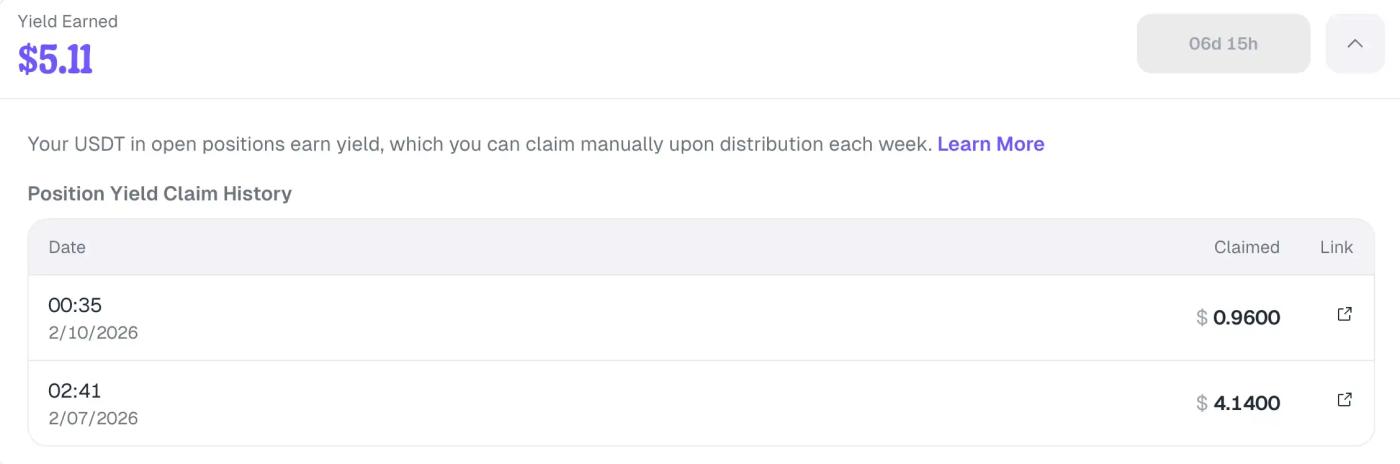
predict.fun portfolio profit chart
Highlight Two: The short video-style swiping experience brings the prediction market closer to a "content consumption product".
Unlike traditional prediction market interfaces that resemble trading terminals, some emerging prediction market platforms are increasingly adopting an interaction design that resembles content platforms , aiming to lower the barrier to entry and increase user engagement . For example, in the mobile interface of predict.fun, each screen corresponds to a prediction event, and users can quickly browse different markets by swiping up and down, creating an experience more akin to the feed format of a short video platform. This design eliminates the need for users to actively search for events; instead, they naturally discover prediction targets of interest while continuously "browsing the market," significantly improving browsing efficiency and participation frequency.
Similarly, Probable uses a left-right swipe interaction method, making the prediction behavior more similar to the information matching logic of social products in terms of user experience. From a product perspective, the core of this type of design is not simply to optimize the UI, but to try to transform the prediction market from a "low-frequency trading tool" into a "high-frequency content consumption portal".
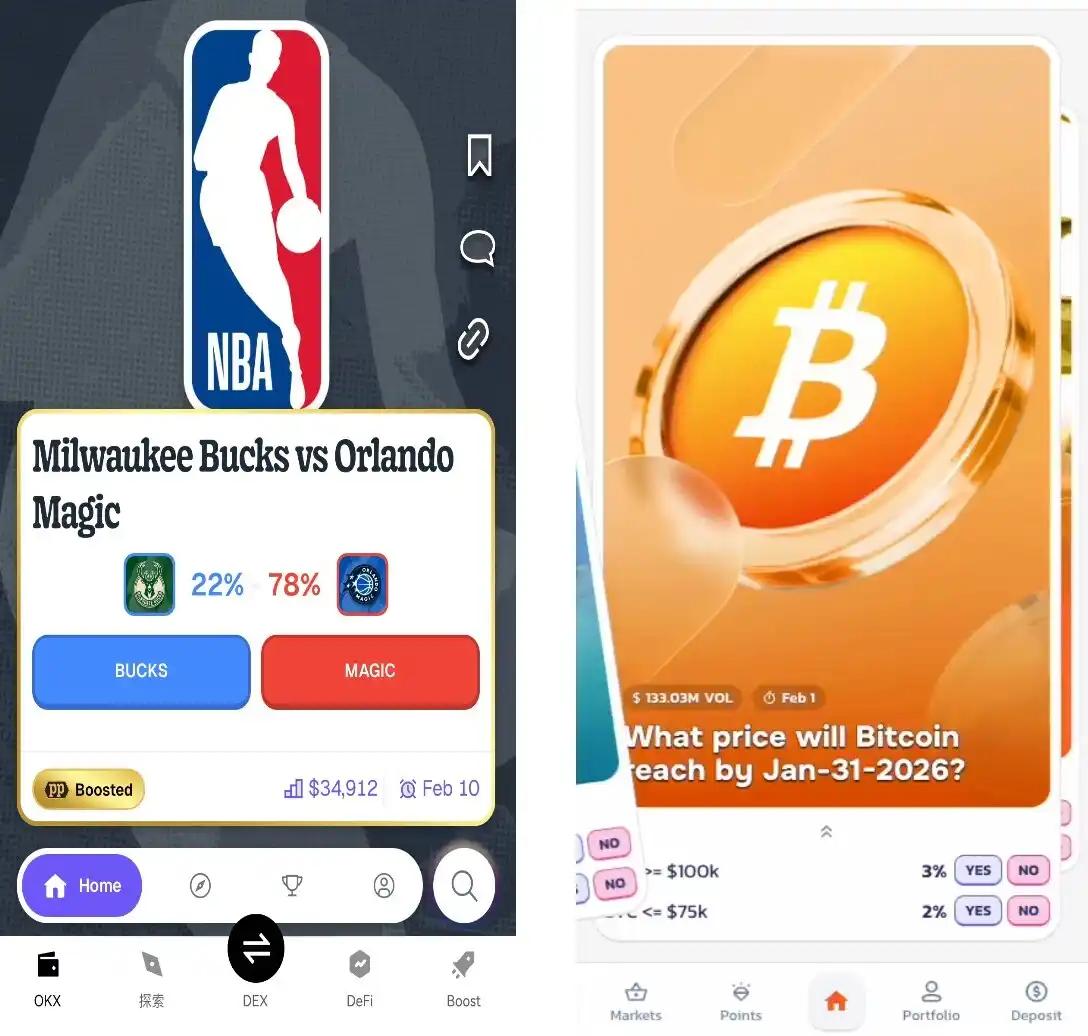
Illustrations of mobile interaction methods for two prediction market platforms (left: predict.fun; right: Probable)
Dingaling, the founder of predict.fun, also mentioned in Space that he hopes to build the prediction market into a usage scenario similar to short video apps—users can place bets while browsing trending events and interesting topics, and further enhance community participation and user stickiness through comments, interactions and other functions.
From an experiential perspective, this information flow-style interaction is itself a highly attractive product innovation. Compared to the traditional method of actively searching for the market, swiping allows users to continuously "browse the market" during fragmented time, naturally generating participation while browsing content, making the user experience of predictive markets more lightweight and seamless.
Highlight 3: A "dedicated event marketplace" centered around community hot topics enhances localized participation.
Beyond product mechanics and user experience, some emerging prediction market platforms are also exploring differentiated approaches in their content design. Instead of simply replicating generic events already available on platforms like Polymarket or Kalshi, they are launching more niche-focused "exclusive event markets" centered around topics of high interest within the crypto community. For example, prediction.fun's prediction events related to Binance and community hot topics, such as "Changes in Binance SAFU Fund Wallet Bitcoin Balance on March 1st" and "Number of Tweets by CZ between February 7th and 14th, 2026," fall into categories more relevant to the daily discussions among crypto users.
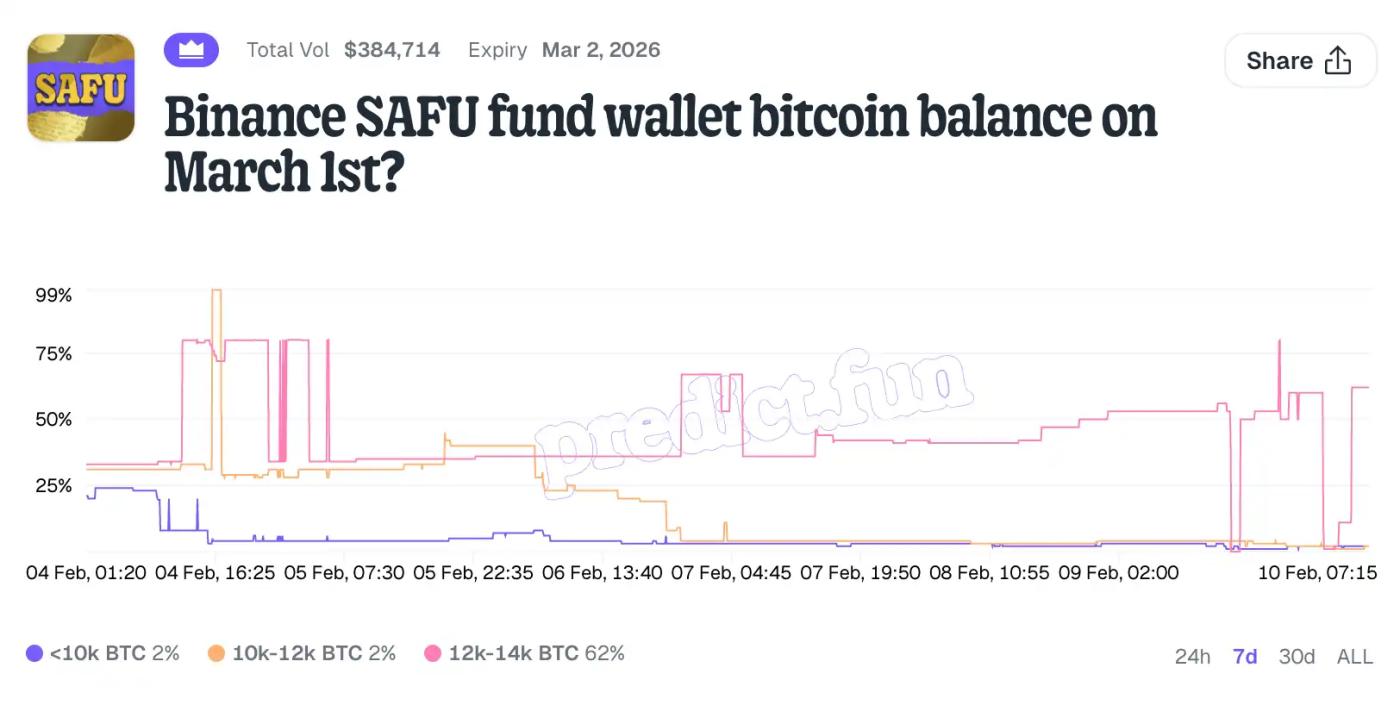
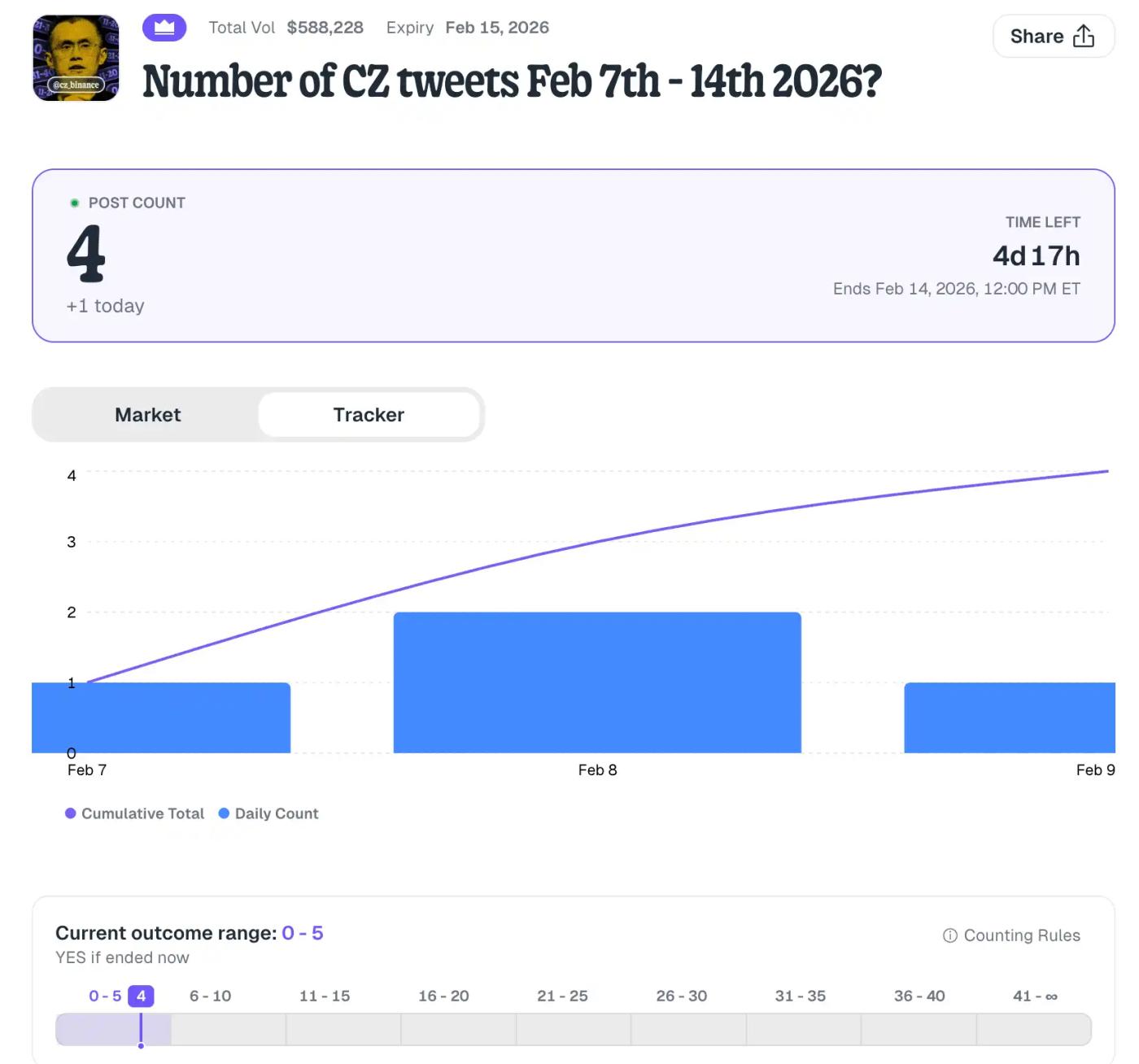
predict.fun launches exclusive event prediction service
Compared to traditional macro events or general political and sports markets, these prediction events with a strong community element are more likely to spark user discussion and dissemination, and are also more likely to generate participation among specific user groups. From a platform operation perspective, the continuous launch of exclusive events is essentially building a content supply with platform characteristics, making the prediction market not just a "trading venue," but also gradually becoming a gathering place for community hot topics, emotions, and narratives.
As seen from the above events, predict.fun is consciously differentiating itself at the "event supply" level, rather than simply replicating existing markets on Polymarket or Kalshi. By designing prediction events around CZ, the Binance ecosystem, and hot topics discussed in the community, the platform can more easily generate dissemination and engagement among specific user groups. This content strategy is also becoming an important operational direction for some emerging prediction markets.
It's worth noting that a significant portion of the more active emerging prediction markets currently feature projects from the BNB Chain ecosystem, and their user base is noticeably skewed towards the Asian community. Against this backdrop, community culture, subcultures, and even more "fandom-like" participation behaviors are gradually becoming crucial factors influencing the design and dissemination of prediction market events . Therefore, for emerging prediction market platforms, the Asian community culture and more "fandom-like" participation behaviors arising from differentiated event design are becoming a key area of research, and their impact will be further discussed in subsequent articles.