Written by: Connor Dempsey
Compiled by: TechFlow TechFlow
TechFlow Summary: This article reviews the extreme optimism following Trump's election victory in early 2025, culminating in an epic crash caused by the "First Family's" token issuance, tariff policies, Binance's unexpected outage, and a stock market sell-off. From the perspective of an eight-year industry veteran, the author provides a profound analysis of how the crypto market transitioned from an "independent market" to a "double-edged sword" situation deeply intertwined with Wall Street. Despite the current chaos, the author argues that, given the macroeconomic expectations of interest rate cuts, a weak dollar, and the trend towards on-chain financial infrastructure, we remain at the "chaotic starting point" of this internet finance revolution.
The full text is as follows:
I've been in the crypto market for eight years, and every now and then, I encounter days like these past few days.

February 5th was that day. But it didn't all happen overnight. Here's our journey.
Looking back
As we entered 2025, expectations for cryptocurrencies were incredibly high. Bitcoin (BTC) began breaking new highs the moment Trump secured his victory at the end of 2024. We were transitioning from a Biden administration actively trying to stifle the American crypto industry to a Trump administration vowing to make America the "crypto capital of the world." Clear regulations were on the horizon, Bitcoin had a completely new institutional narrative, and exchange-traded funds (ETFs) were ready to provide easy exposure for large sums of money.
The screeching sound of brakes
The world's largest economy was finally embracing the technology we'd all spent 16 years building. The mood (Vibes) was incredibly high. Then, the dumbest thing I'd seen in eight years in the crypto industry happened. The President of the United States—Donald J. Trump—launched his own Shit coin. Then, his wife launched one too.

Overnight, public opinion shifted from "cryptocurrencies will modernize financial markets" to "the president is pumping and dumping." A large group of retail investors rushed into $Trump. Most of them were fleeced. This gave those who had always hated the industry another reason to claim the whole thing was a scam.
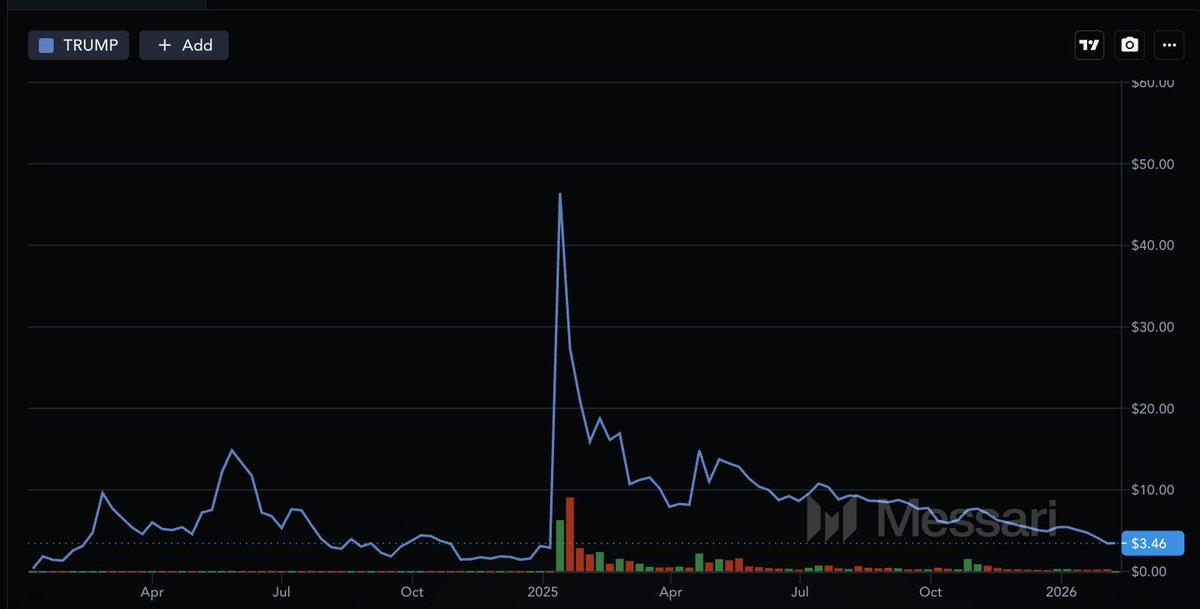
Source: @messaricrypto
Stay positive.
Cryptocurrencies have escaped similar predicaments before, and there was still much to be optimistic about then. Billions of dollars were flowing into BlackRock's Bitcoin ETF. Stripe, Visa, and even century-old companies like MoneyGram were investing heavily in stablecoins. The Trump administration implemented federal regulations for stablecoins, followed by the Clarity Market Structure Act, which aimed to establish clear rules for the entire industry. The race is still going on.
October 10 (10/10)
Most market participants (myself included) expect the year to end at all-time highs (ATHs). The Federal Reserve is cutting interest rates, Bitcoin is retesting its all-time high of $125,000, experts predict Bitcoin will reach $250,000, Ethereum (ETH) will reach $12,000, and stocks and gold will also hit new highs.
Then, on October 10th, Trump announced a 100% tariff on China, and Morgan Stanley Capital International (MSCI) proposed removing companies with a high proportion of crypto business from the indices tracked by pension funds and ETFs. The latter threatened to cut off one of the largest sources of buying for Bitcoin.
The market began to sell off, and then the real catastrophe in the cryptocurrency world began. Crypto investors were over-leveraged (as always), and then a technical glitch on Binance, the world's largest exchange, triggered the largest single-day liquidation in crypto history. A forced sale of $30-40 billion occurred, and some Altcoin plummeted by 70% in a single day.
It is widely believed that this event temporarily disrupted the crypto market, and since then, we have been decoupled from the ever-rising stock market and commodities.
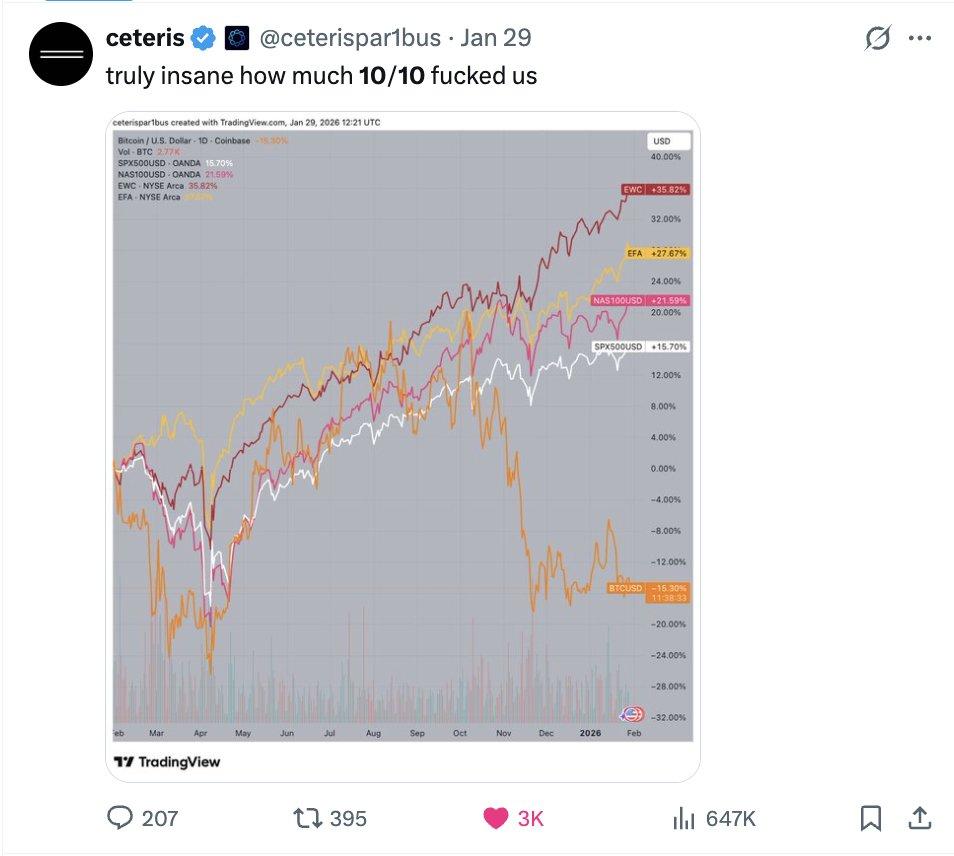
Caption: Thanks to @ceterispar1bus for the great chart.
Falling all the way down
What followed was real pain. While other assets soared, cryptocurrencies slumped. The all-time high scenario predicted by Fundstrat, which would lead us to the "Valhalla," was based on: interest rate cuts, a weaker dollar, and rising global risk-on sentiment. The S&P 500 closed at an all-time high. Gold and silver embarked on epic rallies. Peter Schiff danced on our graves. And cryptocurrencies sat there bleeding.
Re-hook
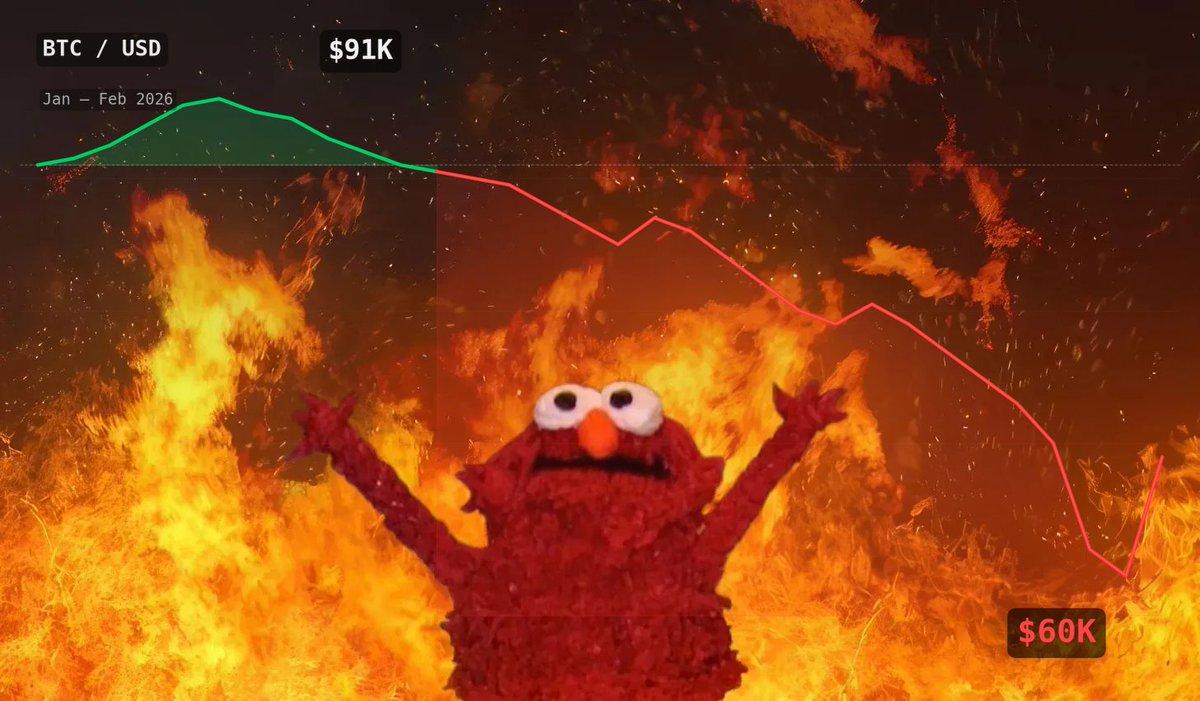
By 2026, other parts of the market had begun to decline, and cryptocurrencies followed suit. The S&P 500 began to give back trillions of dollars in gains, and gold and silver experienced their worst sell-off in over 40 years. On February 4th, hedge funds were hit hard. Many attributed this to a sell-off in tech stocks fueled by fears that artificial intelligence (AI) would render software companies obsolete. Regardless, risk managers had to step in and reduce positions, including the large amounts of Bitcoin they now held through ETFs, options, and other instruments. The sell-off caused Bitcoin to fall, triggering further mechanical selling that subsequently impacted crypto-native funds. The situation was exacerbated by reports that Trend Research had $2 billion in Ethereum positions liquidated on Aave.
The sell-off in traditional finance (Trad-Fi) triggered the sell-off in cryptocurrencies, not the other way around. The institutional adoption we fought so hard for ultimately proved to be a double-edged sword, leading us to this point.
Crypto is dead.
As expected, those who have been wrong about cryptocurrency for over a decade have once again crawled out of their holes and are dancing on our graves.
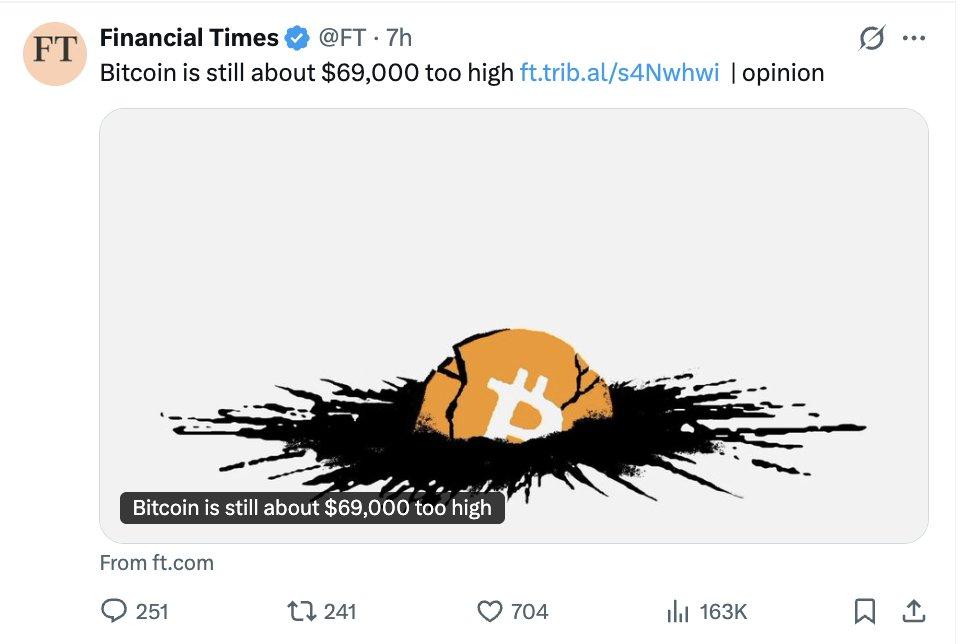
"The theory of digital gold has failed. Cryptocurrency is not a hedge against currency devaluation. Worse still, the miner death spiral is coming, and everything will go to zero. This has been a scam from beginning to end." Elizabeth Warren's tweet about how Bitcoin causes cancer will probably be released someday.
Long-lived cryptocurrencies
Critics are right; Bitcoin and the rest of the market have indeed been disappointing in 2025. The reality is, it's still an immature market, only 17 years old. It still largely trades like tech stocks, and last week's performance shows its intricate connection with Wall Street is deeper than ever. On the bright side? Wall Street, which dragged cryptocurrencies down last week, can ultimately pull them back up.
Moreover, the conditions are already in place. The Trump administration and the incoming Federal Reserve chairman have signaled their intention to address the debt crisis through low interest rates and a weak dollar, allowing the economy to overheat. This is the macroeconomic prescription driving up risk assets, including cryptocurrencies.
Furthermore, let's not forget the bigger narrative. Even our longest-time critics no longer deny the reality of what we've built. Stablecoins are revolutionizing the way money flows globally. Market Structures Act will be passed, paving the way for all financial transactions to be underpinned by blockchain. The entire financial system is being upgraded; we're currently just finalizing the details.
Have we escaped the crisis forever? No. Macroeconomic risks could still weigh on us. Quantum computing poses a real threat to Bitcoin. Trump's erratic behavior has given Democrats another reason to crack down on the industry once they regain power.
But a hundred years from now, all of this will be just noise, and an internet-based financial system will seem inevitable. This period will be seen as the beginning of chaos. There's also a real variable: the convergence of cryptocurrency and artificial intelligence is unavoidable. We just don't yet know exactly what it will look like. In short, we are still in the early stages.
This article guarantees it is free of AI-generated spam . In other words, every single word was typed by a human. Even so, I did use Claude Opus 4.6 as an editing and research partner, and the content it fed was written by people far smarter than me.