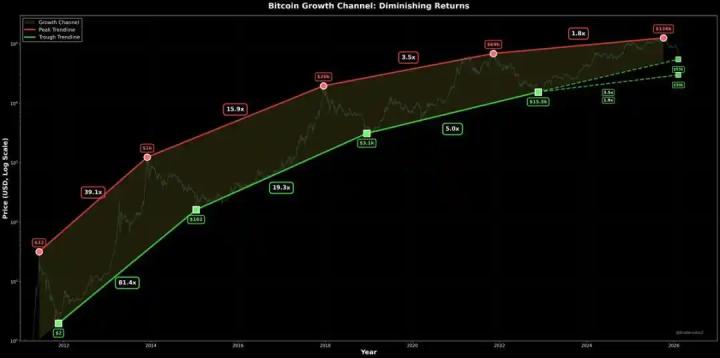
The crypto market is facing a complete wipeout of gains since Trump's election. Wintermute's February crypto market report indicates that Bitcoin fell to $60,000 last week, erasing all gains since Trump's election. Spot fund flow data shows "significant structural pressure."
The most crucial signal came from the Coinbase Premium Index. Wintermute stated that this index has consistently traded at a discount throughout the market, remaining negative since December of last year, indicating persistent selling pressure from the US. According to external data, the Coinbase Premium Index fell to -167.8 in February, hitting a new low for the year, meaning that Bitcoin prices on Coinbase have remained below those on Binance, and the selling pressure from institutional investors cannot be ignored.
Wintermute further revealed that its internal OTC fund flow data also confirmed that US counterparties were the main sellers throughout the week, and this trend was further amplified by continuous ETF redemptions. Statistics show that on February 5th, US spot Bitcoin ETFs saw a net outflow of $545 million in a single day, with a cumulative outflow of over $817 million over two consecutive days. Since 2026, ETFs have turned into net sellers, cumulatively reducing their holdings by approximately 10,600 BTC, creating a demand gap of approximately 56,000 BTC compared to the same period last year.
The AI sector's ability to attract investment is squeezing out the crypto market.
Wintermute raised a compelling point: over the past few months, AI-related assets have been consistently absorbing available funds in the market, crowding out allocation space for other asset classes.
The report points out that the phenomenon of crypto assets underperforming when AI-related companies rise and experiencing amplified losses when they fall can be "almost entirely explained by capital rotation into the AI sector." In other words, for crypto assets to outperform the market again, AI trading needs to cool down first.
Wintermute believes that Microsoft's weak earnings report has already begun the cooling-off process for AI, "but it's far from enough." This means that unless the market's enthusiasm for AI subsides significantly, the crypto market will struggle to attract sufficient new capital.
Leverage-driven, spot market absent
Wintertermute described last week's plunge as a "capitulation." The Fear & Greed Index fell to 17 (extreme fear) and even below 10, volatility soared, and $2.6 billion in global crypto market liquidations occurred, while buying interest emerged around $60,000.
However, Windemute warns that with spot trading remaining low, leverage has become the dominant factor in price volatility. The report explicitly states: "If open interest cannot rebound significantly, it will be difficult for the market to sustain its upward or downward momentum on either side."
More worryingly, Wintermute believes that "a real structural repair requires a return to spot demand, but there is almost no evidence of that at present."
Four key indicators determine the timing of a reversal
Looking ahead, Windemute believes the market is "likely entering a highly volatile, range-bound price discovery phase," and lists four key indicators as prerequisites for a reversal:
- The Coinbase premium has turned positive, indicating that US institutions have shifted from being net sellers to net buyers.
- ETF fund flows have reversed, shifting from continuous redemptions to net inflows.
- Basis interest rates have stabilized, and the price difference between futures and spot prices has returned to normal levels.
- Spot demand is returning, with genuine buying from both retail and institutional investors re-entering the market.
Before these four conditions are met, Wintermute believes it is "difficult to see sustained upside potential." Meanwhile, retail investors' attention is being diverted to other asset classes (especially AI), and market direction appears increasingly driven by institutional flows through ETFs and derivatives.
The above is not investment advice.