After multiple cycles driven by narrative momentum and market speculation, the Web3 industry is approaching a new inflection point. The market is beginning to revisit a long-neglected question: if digital assets cannot continuously generate real value, their prices will ultimately be driven by sentiment rather than structure. Against this backdrop, TerraFlow’s announcement that it will launch the first phase of the TOF Blind Box on February 12, 2026 has drawn significant attention from developer and infrastructure communities.
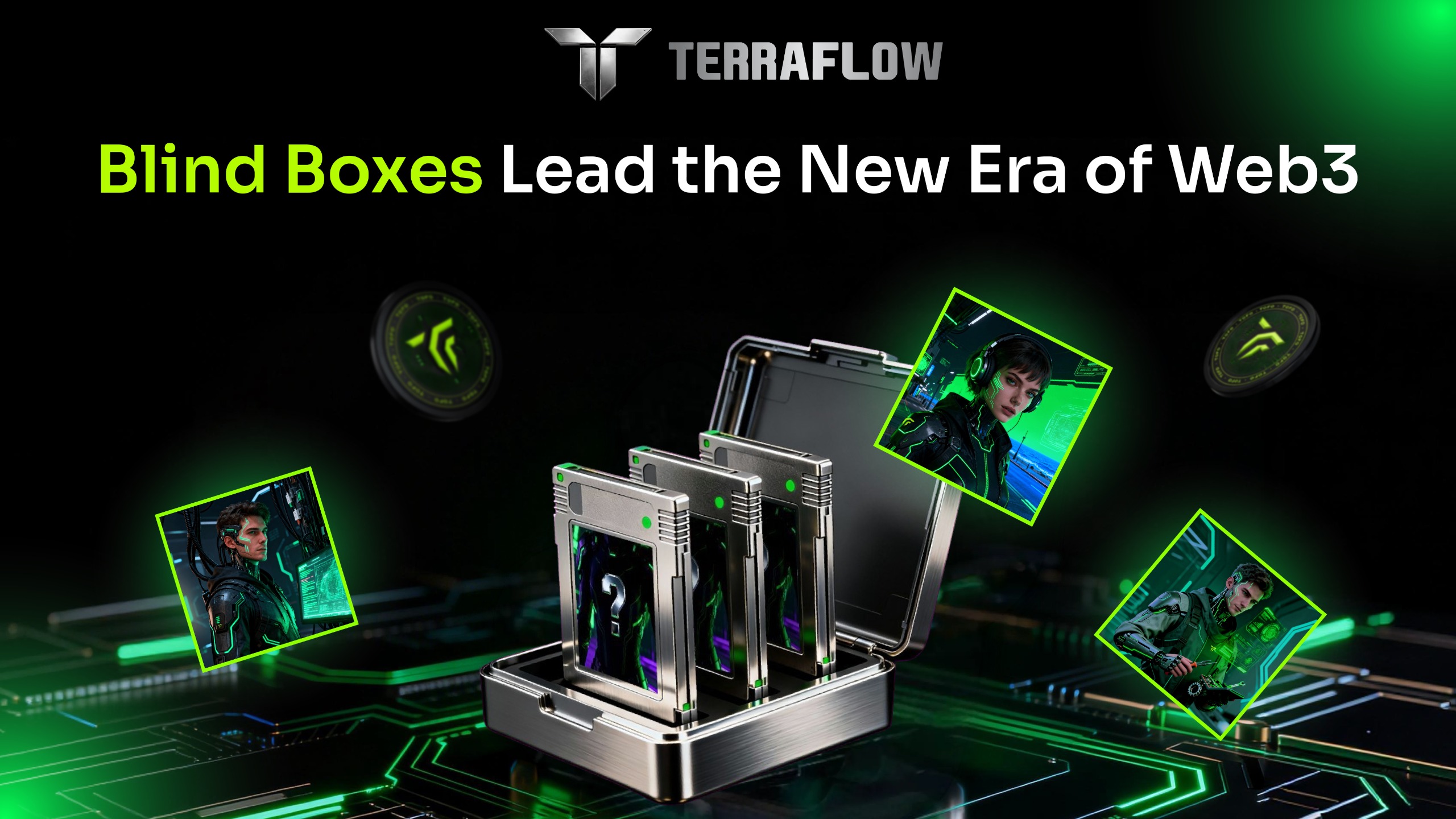
This is not a conventional NFT sale. For TerraFlow, the TOF Blind Box functions more like the official “on-chain activation switch” of its computing-power economy network, marking the first time a system built around the core logic of “computing power as an asset” enters a phase of engineered, real-world deployment on a global scale.
For a long time, computing power has played a foundational yet largely invisible role in blockchain systems. It determines network security and influences reward distribution, but it has never truly existed as an independently priced, freely composable asset. TerraFlow aims to change this. Through the TOF Blind Box system, computing power is directly encapsulated within an NFT structure, becoming a verifiable, transferable, and upgradable on-chain productive asset. For the first time, it moves beyond abstract parameters and into a clearly defined asset layer.
From a technical perspective, TOF does not simply record “computing power values” in NFT metadata. Instead, NFTs serve as key credentials for computing power scheduling and revenue distribution, deeply embedded within TerraFlow’s automated value engine. Each NFT corresponds to a real computing power weight within the network and directly participates in protocol-level settlement. This means that the value of an NFT no longer depends on narrative premiums in secondary markets, but is tightly bound to its actual productive capacity within the system.
In terms of capital handling, TerraFlow adopts a highly automated on-chain execution mechanism. All funds contributed through the blind box are instantly split by smart contracts: one portion is directly converted into TOF tokens, while the other is automatically injected into decentralized exchange liquidity pools. After LP tokens are generated, they are synchronously burned. Through this design, liquidity is no longer a variable that relies on manual “lock-up commitments,” but is structurally and permanently absorbed by the protocol, creating an endogenous balance between deflationary dynamics and price stability.
The NFTs randomly generated through the blind box are categorized into multiple computing power tiers, with initial ranges spanning from 10,000 to 50,000. These NFTs are no longer static collectibles, but productive nodes that continuously participate in the operation of the TerraFlow network. Within the reward model, the growth of computing power is synergistic with the overall scale of the system, giving computing power assets the potential to accumulate value as the network expands.
Particularly noteworthy is TerraFlow’s on-chain NFT synthesis system. This mechanism allows users to merge two computing power NFTs of the same tier via smart contracts to create a higher-tier asset. The synthesized NFT not only achieves exponential growth in computing power, but also gains enhanced liquidity incentives, governance weight, and participation rights in future ecosystem modules. This design enables user decisions to directly reshape the asset structure itself, driving system-level self-optimization in a decentralized environment.
At the market level, the launch of the TOF Blind Box is accompanied by an initial liquidity pool of 2 million USDT, combined with a real-time on-chain pricing model that dynamically links token prices to pool depth. This mechanism reduces the impact of short-term speculation on price movements, allowing market value to more accurately reflect the system’s actual computing power scale and capital capacity. For early participants, returns are not driven by price volatility, but by the long-term structural rewards generated from the computing power and liquidity they contribute during the network’s early expansion phase.
In its issuance design, TerraFlow deliberately avoids the “centralized minting and rapid distribution” model common in traditional NFT projects. The blind boxes will be released in limited daily quantities over a defined period, with purchase caps applied per address to ensure that computing power assets remain relatively decentralized during the network’s initial phase. This design not only enhances network security, but also lays the groundwork for future governance and computing power collaboration.
All critical processes—including fund flows, liquidity injection and burn records, computing power allocation, and NFT synthesis paths—are fully traceable through on-chain data. This high level of transparency allows participants to rely on code and rules as the foundation of trust, rather than centralized endorsements.
In internal discussions, TerraFlow’s core R&D team has stated that they view TOF more as an entry point to a “computing power economy operating system” than as a standalone product. “The future of NFTs should not remain at the display or narrative layer, but should enter the realm of productive relations themselves. Only when assets can be composed, amplified, and collaboratively utilized can Web3 form an endogenous economic structure independent of emotional market cycles.”
According to TerraFlow’s publicly disclosed ecosystem roadmap, the TOF Blind Box is only the starting point of its computing power economy network. Going forward, the protocol will gradually expand into themed computing power NFT matrices, zero-knowledge-proof-based computing power rental markets, cross-chain asset interoperability protocols, and decentralized governance systems—further unlocking the composability of computing power assets across different chains and application scenarios.
On February 12, 2026, as the TOF Blind Box launches simultaneously worldwide, TerraFlow poses a fundamental question to the market: if computing power can be priced, composed, and governed like capital, could the digital economy, for the first time, truly possess its own “means of production”? The answer may not be immediately apparent, but one thing is certain—a profound transformation centered on the essence of digital assets has already begun to unfold quietly on-chain