In the financial industry, whoever controls the clearing system controls the flow of value. This week, three of the most influential banking lobbying groups in the United States—the Bank Policy Institute, the Clearing House Association, and the Financial Services Forum—jointly submitted a strongly worded letter to the Federal Reserve.
Their demand is singular: to prevent cryptocurrency and fintech companies from directly accessing the Federal Reserve's payment system.
The starting point of this war was a new concept proposed by Federal Reserve Governor Waller in October 2025: a slimmed-down master account – a payment account. This concept means granting non-bank institutions limited access to the Federal Reserve's payment system for clearing and settlement.
Ironically, those crypto companies that once touted "decentralization" and "disrupting banks" now desperately want access to the world's most centralized financial system.
The power of an account
To understand the significance of this war, we must first understand what the "Federal Reserve Main Account" actually is.
The Federal Reserve's master account is the nerve ending of the U.S. financial system. Institutions holding this account can maintain balances on the Fed's balance sheet and directly use Fedwire (the core of the U.S. real-time gross settlement system) to clear funds peer-to-peer with other financial institutions. Currently, approximately 9,000 institutions across the U.S. have this authority, almost all of which are federally regulated depository institutions.
In layman's terms, the master account is like the entrance ramp to the US financial highway. Without it, you can only hitch a ride on someone else's vehicle.
For crypto and fintech companies, this means a harsh reality: no matter how advanced your technology or how decentralized your blockchain, every dollar transaction you make ultimately has to go through a traditional bank's master account to be cleared. You are a tenant of the bank, not the landlord.
This is why Circle wrote in its submission that payment accounts are "an important step toward realizing the vision of the GENIUS Act" and would strengthen the domestic payment infrastructure.
What it didn't say was: if stablecoin issuers can never have direct access to the Federal Reserve, then stablecoins will forever remain appendages to the banking system, not alternatives.
Caitlin's Six Years' War
This battle for market access didn't begin in 2025. Its prologue dates back to a woman who returned to Wyoming from Wall Street.
Caitlin Long worked on Wall Street for 22 years. She joined Salomon Brothers in 1994, later served as managing director at Credit Suisse, and spent nine years at Morgan Stanley.
In 2012, she began exploring Bitcoin. In 2018, she returned to her home state of Wyoming and, as an advisor to the governor, spearheaded 20 blockchain-related bills, making Wyoming one of the most crypto-friendly states in the U.S.
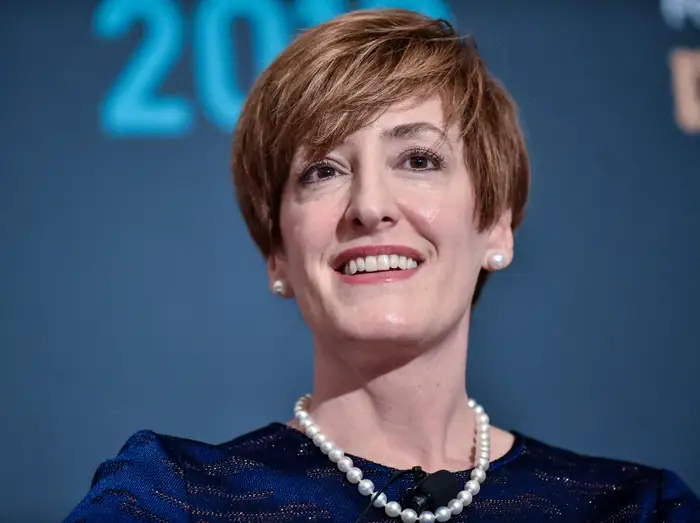
In 2020, Caitlin founded Custodia Bank (formerly Avanti Bank & Trust) and obtained a Special Purpose Depository Institution (SPDI) license in Wyoming in October of the same year. Her plan was clear: to establish a fully-reserve crypto bank, then apply for a master account with the Federal Reserve to legally access the U.S. payment and clearing system.
This seemed like a reasonable path, but she underestimated the goalkeeper's determination.
In October 2020, Custodia submitted a master account application to the Federal Reserve Bank of Kansas City. Then, nothing happened. The application was put on hold, with no response and no timeline.
In June 2022, after nearly two years of waiting, Caitlin sued the Federal Reserve, accusing the Kansas City Fed of unreasonably delaying the approval process. In November 2022, the judge issued a preliminary ruling, finding Custodia's claims "reasonable and credible" and rejecting the Fed's motion to dismiss the case.
But the turning point came quickly. On January 27, 2023, the Federal Reserve Board formally rejected Custodia's application for Federal Reserve System membership, citing "significant safety and robustness risks." Hours later, the Kansas City Fed also rejected its master account application.
Two rejection notices were issued in less than a day. Six years of preparation and two years of waiting vanished in a single day.
In March 2024, a federal court again ruled that the Federal Reserve is not obligated to issue a master account to every legitimate depository institution. The judge wrote that the Kansas City Fed has the "discretionary power to approve or deny" master account applications, even if the applicant is legally eligible.
The translation is: the door is open, but the gatekeeper has the right to decide whether or not to let you in.
Caitlin has appealed, and the case is currently being heard on the Tenth Circuit Court of Appeals. But Custodia's story transcends the fate of a single company; it has become a symbol of just how difficult it is for crypto companies to gain "legal and compliant" access to the traditional financial system in the United States.
Operation Chokehold 2.0
Custodia's experience is not an isolated case. It is a microcosm of a larger, systemic campaign of exclusion.
Between 2022 and 2024, at least 30 digital asset companies and individuals lost their bank accounts. This campaign, dubbed "Operation Chokehold 2.0" by the industry, stemmed from coordinated actions by regulators during the Biden administration.
Through later-released FOIA (Freedom of Information Act) documents, the Federal Deposit Insurance Corporation (FDIC) was revealed to have sent "suspension letters" to nearly 24 banks in 2022, instructing them to suspend or withdraw cryptocurrency-related services. These letters were never made public, and the regulator has publicly denied any systemic action.
Then came the chain reaction collapse in March 2023.
On March 8, Silvergate Bank announced voluntary liquidation. On March 10, Silicon Valley Bank was seized by California regulators. On March 12, Signature Bank was shut down by the New York State Department of Financial Services. Three banks most closely associated with the crypto industry collapsed within five days.
The crypto industry's access to banks in the United States was cut off almost overnight.
This is why the Fed's "slimmed-down master account" proposal has generated such a strong reaction in the crypto community. For companies that have experienced strangulation, direct access to the Fed's payment system is not just about efficiency: it's about survival. If your clearing doesn't rely on any commercial bank, no one can kill you through "de-banking."
Phil Goldfeder, executive director of the U.S. Fintech Council, wrote in his opinion piece: "A well-designed payment account can foster competition and responsible innovation in the payments space without introducing new risks."
But what he didn't say was: We no longer want to entrust our fate to others.
The goalkeeper's counterattack
The Banking Policy Institute, the Clearing House Association, and the Financial Services Forum presented three reasons for their opposition in a joint statement.
The first layer is risk . They point out that the business models of crypto companies and stablecoin issuers are "similar to taking in deposits, but without deposit insurance, liquidation mechanisms, or comprehensive federal-level regulation." If these institutions are granted direct liquidation authority, who will bail them out in the event of a run or system failure?
The second layer is fairness . To maintain their Federal Reserve master accounts, banks must comply with a full set of regulatory requirements, including capital adequacy ratios, liquidity coverage ratios, anti-money laundering compliance, and stress tests. If crypto companies can obtain similar permissions through a "simplified pathway," does this constitute regulatory arbitrage?
The third layer is the most crucial—profit . If non-bank institutions can settle directly with the Federal Reserve, customer funds could flow from bank deposits to stablecoins or payment accounts. This would drive up banks' funding costs and weaken their credit intermediation function.
To put it bluntly, the core business model of banks—low-cost deposit absorption and high-yield lending—may be fundamentally undermined.
Therefore, the three lobbying groups put forward a specific requirement: any institution must operate securely under federal supervision for at least 12 months before being granted payment account status. For newly licensed stablecoin issuers, this means that even if the GENIUS Act passes, they may not be able to access the Federal Reserve until the end of 2027 at the earliest.
This isn't a technical requirement. It's a wall of time.
Slimmed-down main account
On October 21, 2025, Federal Reserve Governor Waller delivered a speech at the first Payments Innovation Conference, formally proposing the concept of a "payments account." His wording was carefully crafted: this is not a master account, but a new, limited specification.
Specific restrictions include:
- The overnight balance is capped at $500 million or 10% of the holder's total assets, whichever is lower.
- No interest paid
- The Federal Reserve's intraday overdraft limit cannot be used; when the balance reaches zero, payment instructions are directly rejected.
- Unable to borrow from the Federal Reserve's discount window
- Not all Federal Reserve payment services can be used
Simply put, the Federal Reserve gives you a ticket to the highway, but you can only drive in the outermost lane, your speed cannot exceed 60 kilometers per hour, and you must fill up your own tank. If your car breaks down, no one will come to tow you.
Waller's target timeline is for official launch in the fourth quarter of 2026. During the public comment period ending February 6, the Federal Reserve received 44 comments.
Ironically, even crypto and fintech companies themselves are not entirely satisfied. The Banker magazine reported that some fintech companies stated in their submissions that the slimmed-down accounts were "too restrictive" and could force them to continue relying on banks.
Currently, crypto companies want full access, while banks want to keep them out forever, and the Federal Reserve is trying to find a compromise between the two: the result is that neither side is satisfied.
The Paradox of Decentralization
This seemingly technical debate about payment and settlement actually touches on the most fundamental identity crisis in the crypto industry.
In the Bitcoin white paper, Satoshi Nakamoto described a peer-to-peer electronic cash system that does not require a trusted third party. "Be Your Own Bank" has become the spiritual totem of the entire crypto movement.
But 17 years later, in 2026, the most influential companies in the crypto industry are lining up at the Federal Reserve’s doorstep to submit petitions requesting permission to hold balances on the central bank’s balance sheet.
This cannot be called betrayal; it can only be called reality.
Value tends to gravitate towards the side most legally recognized, capable of carrying cash flow, and easily enforceable. Decentralization can be a technological architecture, but settlement must be a legal one. Your smart contract can run on Ethereum, but your dollars must be settled on the Federal Reserve's ledger.
Circle can issue USDC on-chain, but if it cannot directly clear redemption requests on Fedwire, every redemption goes through a commercial bank that can close down at any time. Operation Chokehold 2.0 has already demonstrated this.
Caitlin spent six years battling the entire federal regulatory system for a single master account. Waller proposed a compromise, attempting to walk a tightrope between innovation and stability. Banking lobbying groups are mobilizing all their resources to ensure the door opens as slowly as possible.
The outcome of this war may determine the future of the crypto industry even more than the price fluctuations of Bitcoin…