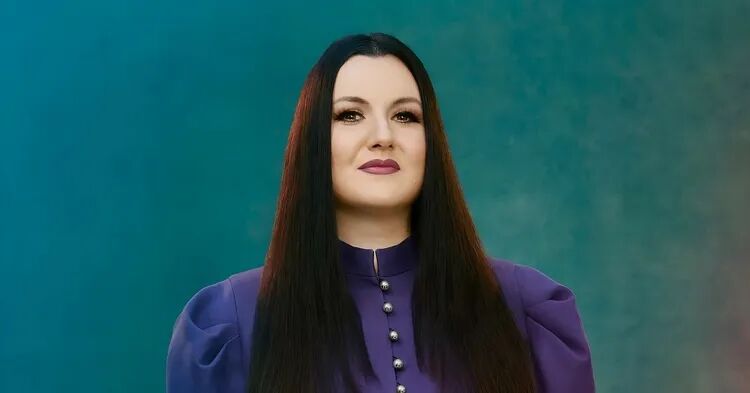
On February 11, 2026, Fidji Simo, CEO of OpenAI Applications, gave an in-depth interview on the ACCESS podcast. This was her first long public conversation since joining OpenAI in August 2025. As a former Facebook/Instagram executive and former CEO of Instacart, Simo gave a rare and systematic explanation of OpenAI's advertising strategy, Code Red status, AI Agent social networks, and other core topics in this interview.
This was not a typical product launch. Simo explained in detail that ChatGPT's advertising model would be "more like Google's intent system than Facebook's ad machine"—she had helped build the latter; she publicly confirmed for the first time that OpenAI's "Code Red" status was about to end and that normal operations would resume after the release of the new model; she revealed that the company was exploring a completely new direction: an AI Agent social network, allowing personal AI agents to help manage human social relationships; she even admitted that ChatGPT's AI model could provide completely neutral evaluations of ads, and even criticize some ads.
The most crucial assessment is that OpenAI's advertising model will completely disrupt the traditional advertising logic of social media—the AI model itself is unaware of the ad's existence unless the user inquires, and once inquired, the AI can provide a completely neutral evaluation, even criticizing the ad. This transparency is the fundamental difference between OpenAI and Facebook/Meta. But we've only just begun.
The following is a compilation of the core content of this interview.
Original link: https://sources.news/p/openais-fidji-simo-on-ads-in-chatgpt
I. From Facebook to OpenAI: A Fundamental Shift in Advertising Models
Sam Altman's role at OpenAI is unique. While Sam Altman heads the research and computing teams, everything else—ChatGPT, Sora, Codex, enterprise business, advertising, etc.—is managed by Sam Altman.
"For me, being in charge of deployments is like a child entering a candy store and gaining access to the world's best research labs," Seamo said in an interview. The interview was recorded last Friday at her home in Los Angeles.
Unique perspective from a former Facebook executive
Simo's background gives her a deep understanding of advertising systems. She worked at Facebook for over a decade, holding senior positions such as Head of Facebook App, Vice President of Video, Games and Monetization, and Director of Product Management. She launched Facebook Live (which grew to 3.5 billion broadcasts) and Facebook Watch (400 million monthly active users), and developed video advertising into a major revenue stream.
But when she joined OpenAI, she realized that the advertising model there had to be completely different.
"Like Google, not Facebook"
Simo explicitly stated, "ChatGPT's advertising model will be more like Google's intent system than Facebook's ad machine."
This distinction is crucial:
Google's model : Based on user intent, relevant ads are displayed when a user searches for "best running shoes." The ads are highly relevant to the user's current needs.
Facebook model : Based on user profiles and behavioral data, algorithms predict content that users may be interested in, even if it is unrelated to the current conversation.
Simo emphasized that OpenAI chose the Google model because ChatGPT is a conversational tool where users have clear intentions and needs. Advertisements must be relevant to the content of the conversation, rather than based on users' historical data and behavioral patterns.
Advertising will "forever" be a minority of income.
Simo also made a noteworthy statement: "Advertising will 'likely forever' remain a small portion of OpenAI's revenue."
This statement warrants stress testing because OpenAI is considering an IPO as early as this year. If advertising revenue accounts for a small percentage, what are OpenAI's main revenue streams? Subscriptions? Enterprise services? Or something else?
Simo did not elaborate, but the statement suggests that OpenAI relies on advertising far less than social media companies like Meta.
II. The Transparency Revolution in ChatGPT Advertising: AI Can Criticize Ads
Simo revealed a revolutionary feature of ChatGPT's advertising system: the AI model itself is unaware of the existence of ads unless the user asks for them.
The AI model is unaware of the existence of the advertisement.
"According to Simo, the AI model itself is unaware that an ad exists in the thread unless you ask it," the interview stated.
What does this mean? Ads will be displayed as independent UI elements and will not affect the AI model's responses. The AI model's generated answers will be entirely based on the conversation content and will not be influenced by the ads.
If a user asks, the AI can critique the advertisement.
But what's even more revolutionary is that if a user asks ChatGPT about the ads on the screen, it will give a completely neutral assessment.
"In some cases, the model will say, 'Well, I see ads from these two companies,' but actually, one is good, while the other isn't so good," Simo said.
She acknowledged that some brands might dislike this. "But I also believe we live in a world where transparency and authenticity are very important."
Transparency vs. Brand Control
This design completely overturned the traditional advertising model:
Traditional model : Brands control advertising content, platforms guarantee ad display, and users passively accept it.
OpenAI model : Brands place ads, but AI can independently evaluate and even critique them. Users receive completely transparent information.
Simo believes this transparency is the trend of the future. "We live in a world where transparency and authenticity are very important," she said.
But she also acknowledged that this would make some brands uneasy. "Some brands will hate this." But OpenAI is willing to take the risk because user trust is more important than brand satisfaction.
Comparison with Anthropic
This design also contrasts with Anthropic's Super Bowl ads. Anthropic ran several satirical ads during the Super Bowl with headlines including "Cheat," "Betrayal," "Treachery," and "Violation," and the tagline, "Ads are going into AI. But not into Claude."
OpenAI's response was: We do not target ads in the way Anthropic described. Our ads are transparent, and AI can independently evaluate and even critique them.
Simo's design is actually a response to the Anthropic attack: We are not Facebook, we are Google. Our ads are transparent, and AI can criticize them.
III. The End of Code Red: Normalcy Will Be Restored After the New Model is Released
Simo has publicly confirmed for the first time that OpenAI's "Code Red" status is about to end.
Background of Code Red
In December 2025, OpenAI CEO Sam Altman announced "Code Red" to counter competitive pressure from Google and Anthropic.
The situation at the time:
Google's Gemini grew from 450 million monthly active users in July to 650 million in November.
Gemini generated 1.351 billion website visits in November, a 14.3% increase from October.
Claude at Anthropic is also growing rapidly.
OpenAI responded by temporarily postponing several major revenue initiatives, including advertising, expanding e-commerce offerings, and agent systems such as the personal assistant Pulse, to focus on improving core ChatGPT features, such as speed and reliability.
Code Red only affects the product team.
Simo explicitly stated, "Code Red only affects ChatGPT and the product research team, not the long-term research team led by Altman."
What does this mean? OpenAI’s long-term research (such as AGI) has not been affected; Code Red is merely an emergency response at the product level.
The new model will be released and then the process will end.
Simo revealed, "The company hopes to release a new model soon, which will end Code Red."
She did not disclose a specific timeframe but hinted that the new model would be released soon. Once the new model is released, OpenAI will resume normal operations and restart its previously postponed revenue plans.
The impact of Code Red
During Code Red, OpenAI:
- The advertising plan was postponed (but is now underway).
- Delayed e-commerce expansion
- The proxy system was delayed.
- Focus on speed and reliability
- But Code Red also brought positive effects:
- ChatGPT's speed and reliability have been improved.
- The team is more focused
- Increased competitive awareness
Simo believes that Code Red is a necessary "emergency response" but will not last long. OpenAI will resume normal operations after the new model is released.
IV. AI Agent Social Networks: OpenAI's Next Exploration Direction
When asked about OpenAI's ambitions in social networks beyond Sora, Simo gave an unexpected answer: AI Agent social networks.
What would happen to social relationships if everyone had a personal AI agent?
"What would happen to social relationships if everyone had a personal AI agent? How could these personal agents help you better manage your social relationships?" Simo said.
She framed this idea as: instead of letting agents talk to each other aimlessly like Moltbook, let AI mediate existing human relationships.
"We haven't figured out what this will look like yet, but I think it's a very interesting area," she said.
Differences from Moltbook
Moltbook is an AI-only social network where AI agents can interact autonomously, while humans can only observe. As of February 2026, Moltbook had over 2.6 million registered AI agents, but actual active participation was low.
Simo's idea is different: not a social network between AI agents, but a tool for AI agents to help humans manage social relationships.
For example:
- AI agents can help you manage your schedule.
- AI agents can help you reply to messages.
- AI agents can help you maintain relationships.
- AI agents can help you discover new social opportunities.
AI mediates human relationships
Simo emphasized that this is not about AI agents replacing human relationships, but about AI mediating and enhancing human relationships.
"We haven't figured out what this will look like yet," she said. But it's a "very interesting area."
This idea suggests that OpenAI may be exploring a completely new product direction: not traditional social media, but AI-enhanced social tools.
The relationship between AI companionship and loneliness
The interview also touched on the topics of AI companionship and loneliness. Simo believes that AI can help people manage social relationships and reduce loneliness, but it will not replace human relationships.
This idea relates to AI Agent social networks: AI can help you better manage existing relationships, rather than creating new AI relationships.
V. Working relationship with Sam Altman: Division of labor between research and deployment
Simo described his working relationship with Sam Altman in detail.
Clear division of labor
"Sam Altman heads the research and computing team. Everything else—ChatGPT, Sora, Codex, enterprise business, advertising, etc.—is under my management," Sam Altman said.
This division of labor is very clear:
Altman : Research, Computing, Security
Simo : Product, Deployment, Commercialization
"Like a child entering a candy store"
"For me, being in charge of deployment was like a child entering a candy store and gaining access to the world's best research labs," Simo said.
What does this mean? OpenAI's research team is world-class, and Simo has access to the latest research findings and can translate them into products.
Division of labor during Code Red
- During Code Red, this division of labor became even clearer:
- Altman's long-term research team remains unaffected.
- Simo's product team is on high alert.
This ensures that OpenAI's long-term research is not affected by short-term competitive pressures.
Challenges of working relationships
Seamus did not describe in detail the challenges of working with Altman, but she hinted that it was a "very interesting" role.
"We haven't figured out what this will look like yet," she said. This could refer to the AI Agent social network, or it could refer to OpenAI's overall product strategy.
In conclusion
This interview reveals OpenAI's key strategies for early 2026:
Advertising model : Like Google rather than Facebook, based on intent rather than profile, AI can critique ads, and transparency is a priority.
Code Red : It's about to end. It will return to normal after the new model is released. It only affects the product team and will not affect long-term research.
AI Agent Social Networks : The direction of exploration is not social interaction between AI agents, but rather AI helping humans manage social relationships.
Working relationship : Altman is responsible for research, Simo is responsible for deployment, with clear division of labor and efficient collaboration.
For the AI industry, OpenAI's advertising model is an important experiment. If successful, it will prove that advertising in the AI era can be completely different—transparent, neutral, and user-centric.
For OpenAI, the end of Code Red means the company is about to return to normal operations and restart previously postponed revenue plans. The release of new models will be crucial.
For users, ChatGPT's advertising model will offer unprecedented transparency. AI can critique ads, and users will receive completely neutral information. This is an advertising revolution in the AI era.
But most importantly, OpenAI is exploring a completely new direction—AI Agent social networks. This isn't about AI agents replacing human relationships, but rather about AI helping humans better manage social relationships. This direction may be more important than advertising because it could redefine how humans interact with AI.
As Seamus said, "We haven't figured out what this will look like yet, but I think it's a very interesting area."
We'll wait and see what 2026 brings.
This article is from the WeChat official account "GenAI Silicon Star" , authored by the Large Model Mobility Group, and published with authorization from 36Kr.