Source: Synced
MiniMax has just released its first earnings report since its IPO! Revenue surged 158%, with 70% coming from overseas, demonstrating MiniMax's full global expansion. In the AI Agent revolution, Chinese players are now in position.
On the eve of the Lantern Festival, MiniMax submitted its first annual report since its listing to the Hong Kong Stock Exchange.

While OpenAI is still burning through cash, MiniMax is directly facing the market test and has shown an amazing growth curve.
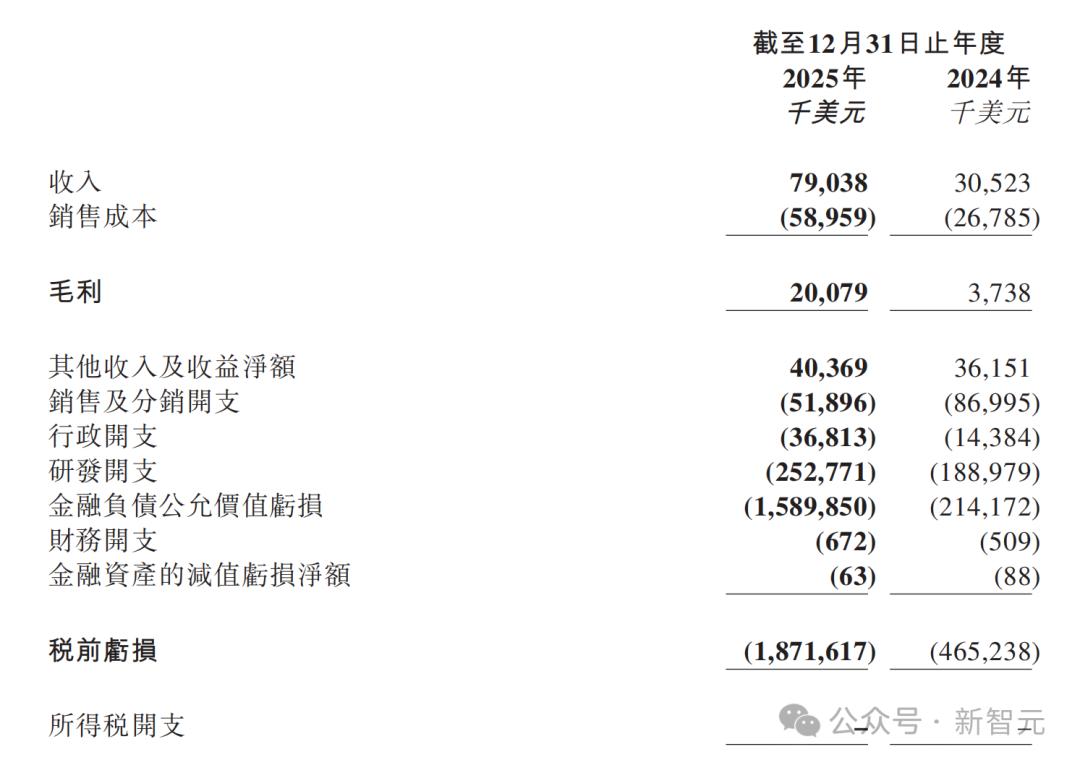
During the reporting period, the company achieved total revenue of US$79.038 million, representing a year-on-year increase of 158.9%, with 73% of the revenue coming from international markets.
Gross profit reached US$20.079 million, a surge of 437.2% compared to the same period last year, and the gross profit margin improved to 25.4%, demonstrating a significant improvement in profitability.
Meanwhile, the company has served more than 236 million users, covering more than 200 countries and regions, and has 214,000 enterprise clients and developers.
Behind this growth curve, we can finally see the scarcity value of MiniMax.
First, MiniMax is moving from a large model company to a platform company in the AI era.
MiniMax founder and CEO Yan Junjie systematically explained for the first time: "AI platform value = intelligence density × token throughput".
He pointed out that the core of future competition in the AI industry lies in whether or not the boundaries of intelligence can be defined. When these boundaries are broken, a large number of new scenarios and new users will emerge, further forming a new ecosystem and new commercial dividends.
Secondly, there's the improvement in inference efficiency. The inference cost per million tokens for the M2 series text models has decreased by more than 50% compared to December of last year, and the inference latency for the Conch video generation model has decreased by more than 30% during the same period!
In addition, MiniMax has built a full-modal R&D capability, possessing globally competitive models in all major modalities such as language, video, voice, and music.
Furthermore, their global reach is impressive, with MiniMax Agent, HailuoAI, Talkie , and other products boasting a large number of loyal users both domestically and internationally.
No wonder MiniMax's performance is so outstanding.
108 days to iterate through 3 generations of models, the fastest programming progress in the industry.
Why have they achieved such remarkable results? Clearly, this is inseparable from MiniMax's core technological advantages.
MiniMax's rapid model iterations over the past year are the best testament to the company's technological dominance.
At the beginning of 2026, MiniMax launched the wildly popular MaxClaw, dropping a bombshell on the market.
Today, MaxClaw's mobile app was launched.

MaxClaw has been launched globally on the MiniMax App mobile platform (iOS & Android). Users can run OpenClaw directly on their mobile devices, enabling multi-device collaboration.
This "cloud-based AI claw" shattered the market's calm overnight. It wasn't a lukewarm iteration, but a naked disruption.
Based on the open-source OpenClaw framework, MaxClaw is equipped with the M2.5 model, which can be deployed with one click and go online in 10 seconds, making it a truly "intelligent agent that everyone can use".
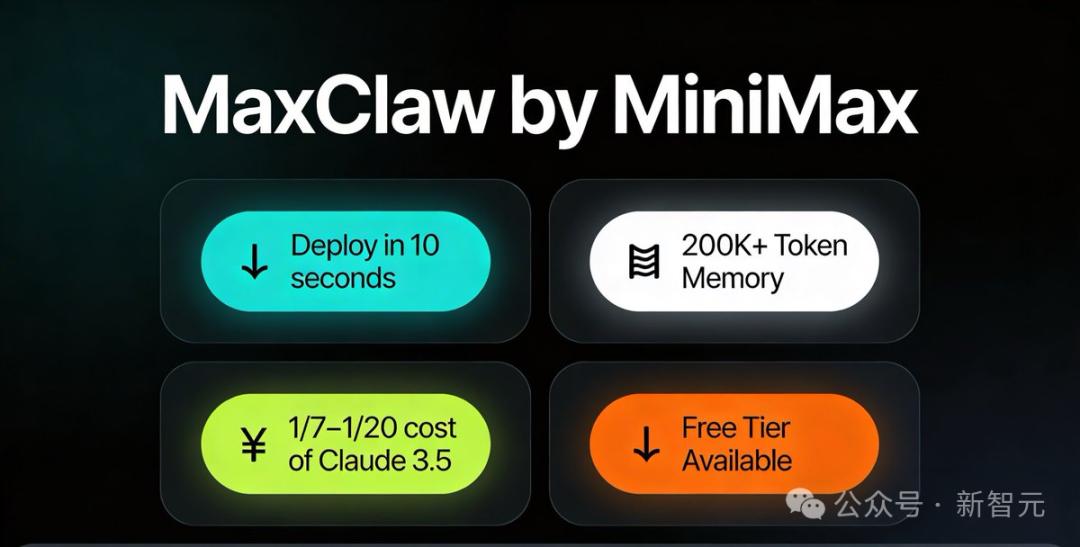
In just a few days, it spread like wildfire and received a flood of positive reviews.
Just as the "lobster farming" craze swept through the AI industry, MiniMax seized the pain point and encapsulated the high-barrier open-source framework into a "zero-barrier revolution," instantly transforming it from a developer's toy into a mass consumer product.
But the story doesn't end there; MaxClaw's rise to fame was just the prelude to the agent upgrade.
At the same time as the launch of MaxClaw, MiniMax Agent Expert 2.0 made a powerful debut, allowing users to no longer worry about configuring Skill, SubAgent, and MCP, and completely reconstructing the AI intelligent agent!
MiniMax continues its progress because they know that the base model is the foundation of an intelligent agent, and the success of MaxClaw is due to the improved capabilities brought about by model iteration.
Within 108 days, MiniMax updated three models: M2, M2.1, and M2-her, achieving the fastest progress in the industry.
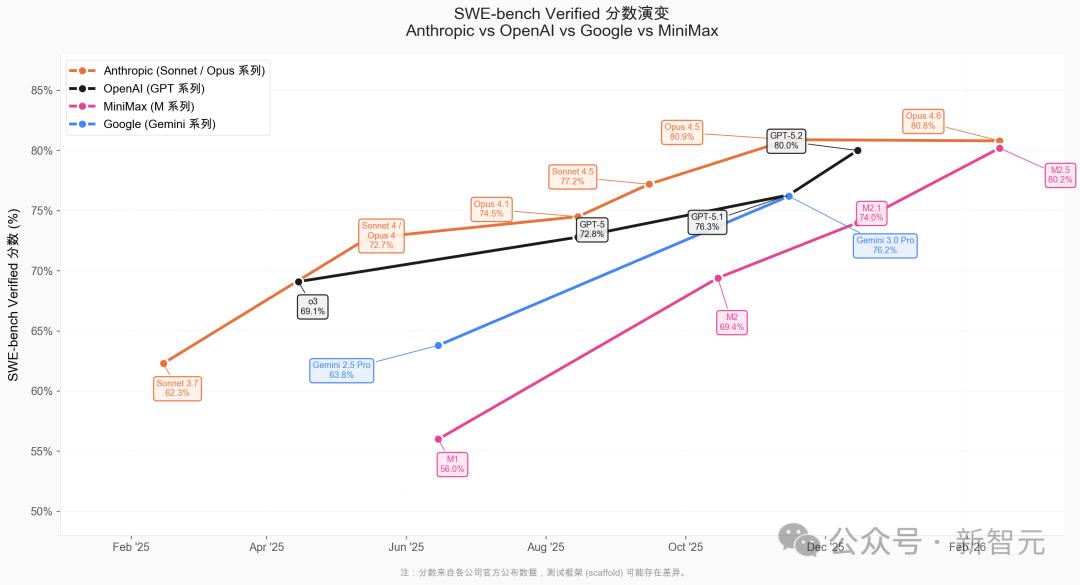
In the SWE-Bench Verified benchmark test, which is the most representative benchmark in the programming field, the M2 series models have maintained the fastest progress rate in the industry.
M2 has also become the first Chinese model on OpenRouter to exceed 50 billion tokens per day!
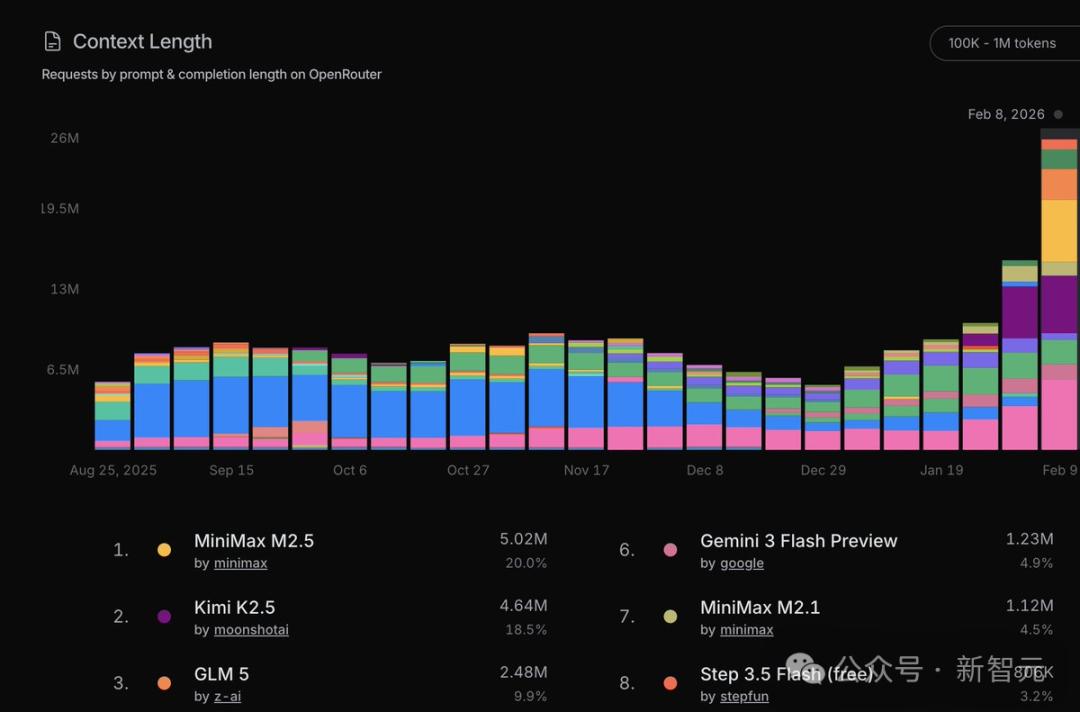
M2 redefines the balance between effectiveness, price, and speed, possessing three key capabilities: programming, tool invocation, and deep search, and leading the token consumption rankings.
M2.1 arrived soon after, with a focus on improving performance for complex real-world tasks.
In addition, the underlying model M2-her of Hoshino and Talkie's two AI interactive products ranked first in the world in a 100-round long-distance dialogue test.
The latest M2.5 model adopts the MoE architecture, with a total of 229 billion parameters. Each token activates 10 billion parameters, and the inference speed soars to 100 tokens/second. The context window ranges from 200,000 to 1 million!
The M2.5 model has significant advantages in code, tool calls, and logical reasoning.
Behind the training of the M2.5 model, the team designed an asynchronous native Agent RL system—Forge—which accelerated training by 40 times, breaking the "Blockchain Trilemma".
In productivity scenarios such as programming, tool usage and search, and office work, it has broken into the top tier globally, on par with Claude Opus 4.6, Gemini 3 Pro, and GPT-5.2.
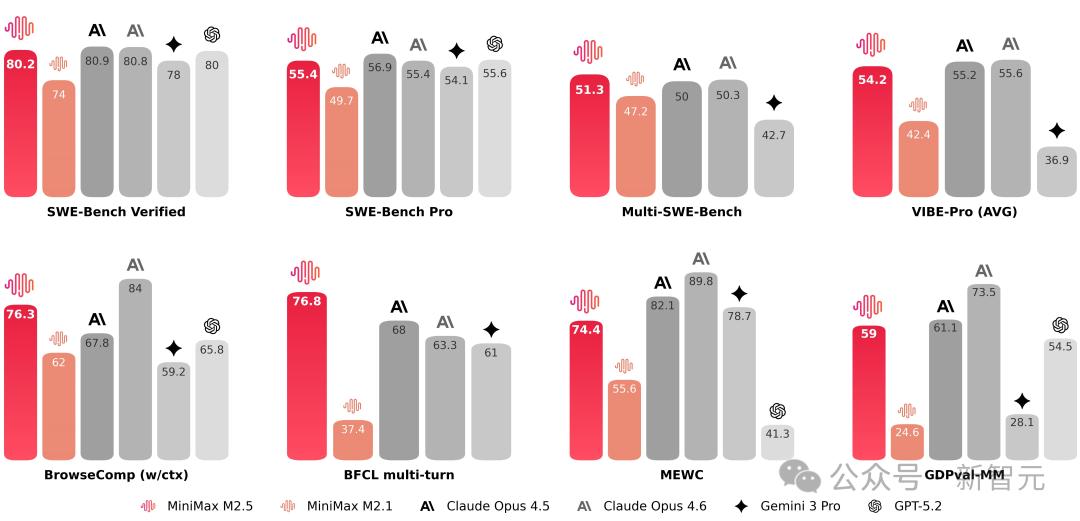
It's not just about high performance, but more importantly, it offers great value for money.
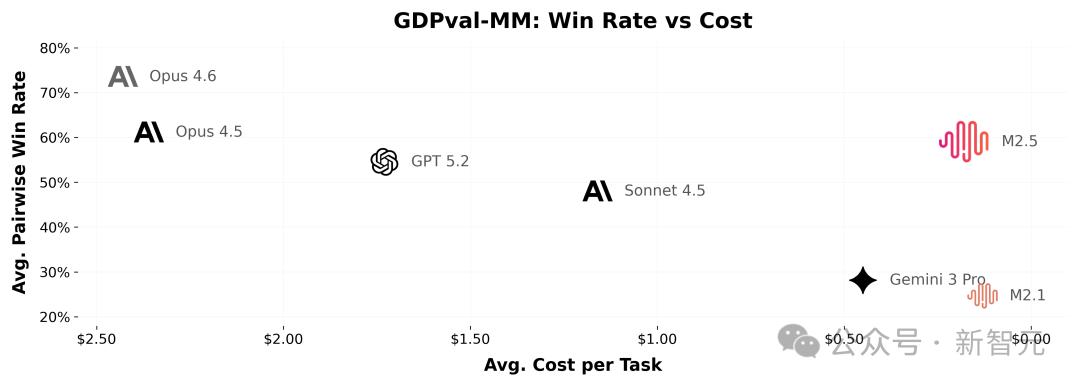
The MiniMax team’s original intention was to run complex agents without cost constraints, and M2.5 has come close to achieving this goal.
The output price of the 50 TPS version of the M2.5 is only 5%-10% of that of comparable models such as Opus, Gemini 3 Pro, and GPT 5.
Looking at the performance figures, where does MiniMax's value lie?
Technological breakthroughs must ultimately translate into commercial value.
With the improvement of model capabilities and the reduction of agent operating costs, MiniMax's business growth has gained an underlying engine.
Judging from the latest performance data, MiniMax's "all-modal + integrated production and model + globalization" strategy is releasing unique business value.
First, the company delivered a strong growth report: total revenue reached $79.038 million in 2026, representing a year-on-year increase of 158.9%.
In terms of revenue structure, two major engines drove this growth.
On the one hand, revenue from AI-native products reached $53.075 million, a year-on-year increase of 143.4%, demonstrating the market appeal of C-end applications.
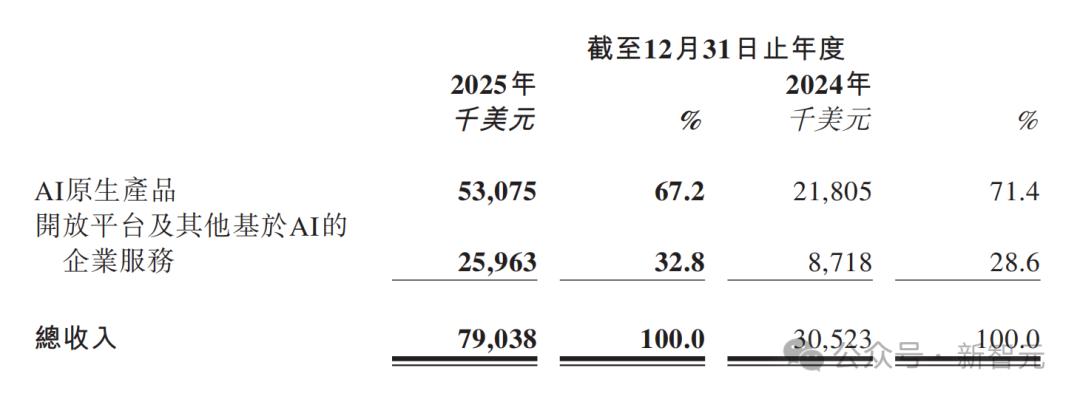
On the other hand, the open platform business for developers grew even more rapidly, with revenue reaching US$25.963 million, a surge of 197.8% year-on-year, demonstrating the strong potential of B2B technology empowerment.
The improvement in commercialization efficiency was also significant. Thanks to a substantial increase in model and system efficiency, as well as in-depth optimization of infrastructure configuration, the company's gross margin improved by 13 percentage points from 12.2% in 2024 to 25.4%.
At the same time, the adjusted net loss rate narrowed significantly year-on-year, which means that while the company is expanding rapidly, it is gradually moving towards a healthier financial model.
Meanwhile, the accumulation of users and the ecosystem lays the groundwork for continued growth in the future.
To date, MiniMax has served more than 236 million users, with 214,000 enterprise clients and developers.
It is particularly worth mentioning that the number of new registered users of the open platform products in February 2026 was more than four times the level in December 2025, showing extremely strong growth momentum.
Behind these impressive figures lies MiniMax's full-modal technological capabilities, its integrated production and molding strategy, and its global business closed loop.
Full Modality: The Efficiency Truth Behind Costs
Currently, MiniMax has achieved remarkable results in all modalities.
Under the AI-native organizational structure, MiniMax is globally competitive across major modalities such as language, video, voice, and music.
It is widely believed that achieving international leadership across all modalities requires at least tens of billions of US dollars. MiniMax, however, accomplished this with only about $500 million.
In February 2026, MiniMax released the M2.5. It can work continuously for one hour at an output rate of 100 tokens per second, and costs only $1.
This means that $10,000 can enable 4 agents to work continuously for a year, making the operation of complex agents infinitely scalable in terms of economic cost!
Why should we be committed to full-modality?
From day one, MiniMax was convinced of the feasibility of this route.
Recent trends have validated their judgment: in the past six months, modal fusion has brought about changes in the boundaries of intelligence, such as the Nano Banana Pro that has swept the internet.
The industry trend is already clear: the future of AGI will inevitably be a multimodal model. Multimodal fusion is the only way to raise the upper limit of intelligence.
Today, this multimodal technological reserve has been transformed into a huge competitive advantage.
MiniMax is one of only three companies in China that have achieved a leading position in every modality, and it is also the only independent startup company.
Integrated production and manufacturing form a moat
The integration of production and molding has become a major competitive advantage for MiniMax.
Companies today easily fall into two extremes: either focusing solely on models or solely on applications. Consequently, they either lack the ability to monetize or lack technological barriers.
MiniMax has been continuously investing in its underlying model and achieving large-scale application on the product side. In other words, it has laid the groundwork for continued growth in the future.
A set of data in the financial report strongly supports this: the gross margin increased to 25.4%, a 13 percentage point increase from 12.2% in 2024.
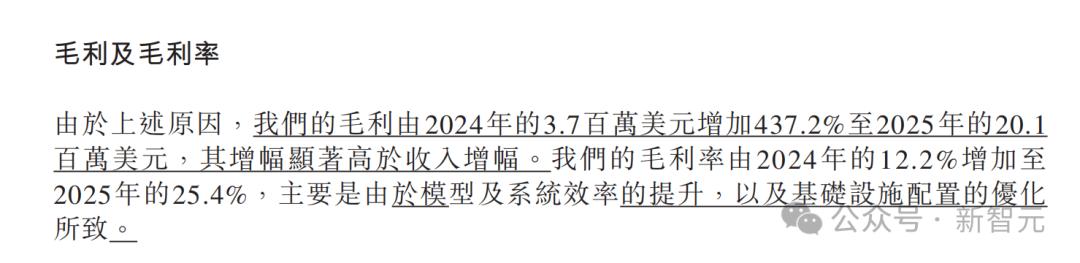
The main reasons are the improvement in model and system efficiency, and the optimization of infrastructure configuration.
At MiniMax, the effects of scale have already begun to emerge.
In other words, the delivery cost per unit of intelligence has been reduced.
From the perspective of costs, the signal sent is even clearer.
First, sales and distribution expenses decreased by 40.3% year-on-year, from $86.995 million to $51.896 million—the reason is simple: good AI-native products are mainly driven by organic growth and word-of-mouth marketing, so promotion expenses naturally decrease.
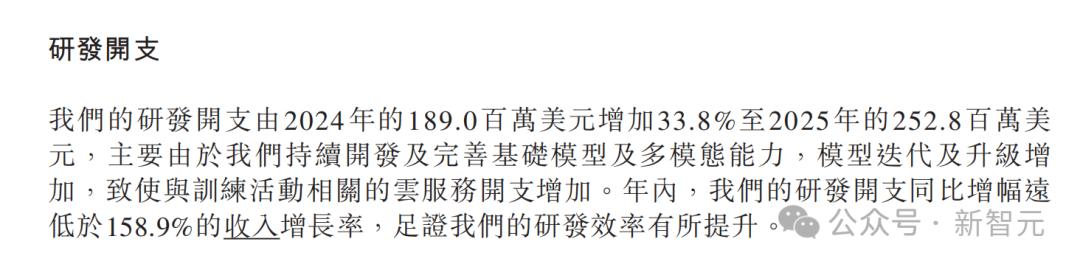
Secondly, R&D expenditure increased by 33.8% year-on-year (from US$189 million to US$253 million), far less than the revenue growth rate of 158.9% year-on-year, which is enough to show the great improvement in its R&D efficiency.
This is what the annual report emphasizes as the improvement in R&D efficiency.
Looking at the market as a whole, there are very few companies that can do all of these things at the same time: soaring revenue, rising gross profit, easier customer acquisition, and continuous increase in R&D investment.
Overseas Markets: A Decisive Move That Sets the Ceiling
In addition, MiniMax's globalization strategy has been fully implemented.
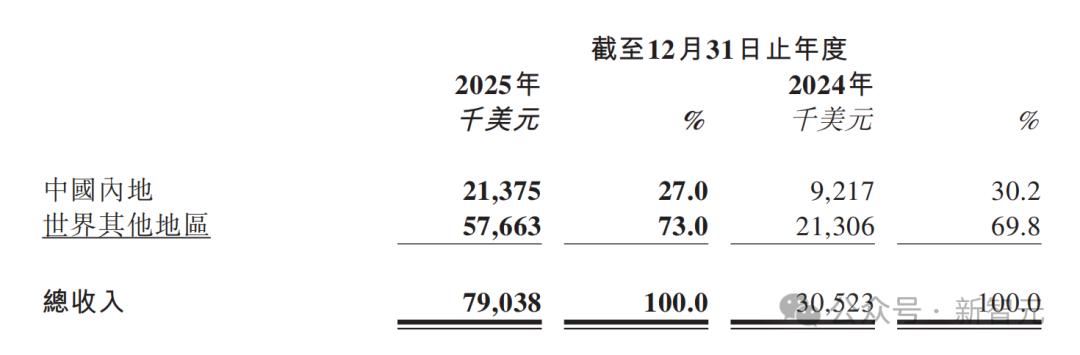
By 2025, revenue from outside mainland China will account for approximately 73%, thus truly achieving a revenue structure primarily based on overseas markets.
Meanwhile, MiniMax's business covers more than 200 countries and regions, serving 236 million users and attracting 214,000 enterprise customers and developers from more than 100 countries and regions.
It can be said that, under the "strangulation" of AI giants such as OpenAI, Anthropic , Google, and xAI, MiniMax has forged a truly profitable path to overseas expansion.
Since its release, M2.5 has garnered significant attention in the international market and has achieved remarkable success: leading global cloud vendors and AI-native cloud platforms have deployed the MiniMax model, including Google Vertex AI, Microsoft Azure AI Foundry, Fireworks AI, and Nebius AI.
MiniMax has become the default preferred model for developers on leading coding platforms such as OpenCode and Kilo Code!
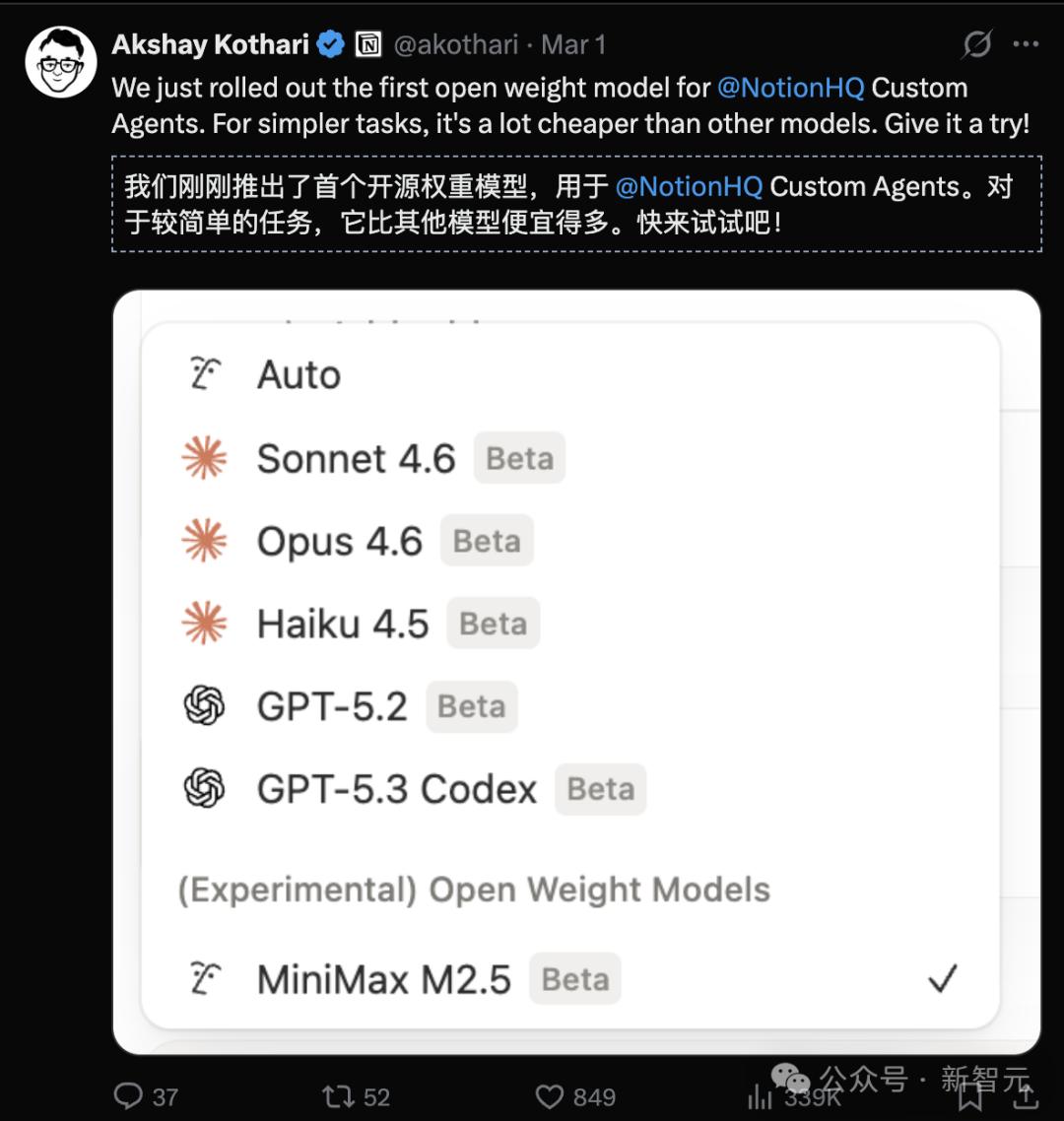
Recently, Notion also launched M2.5, which is Notion's first and only open-source model.
This step determines the valuation elasticity.
Many domestic AI companies also talk about "going global", but most of them stop at "product localization" - it's still the same product, just sold in a different market.
MiniMax, on the other hand, is more like something that overseas users are willingly buying with real money.
Clearly, MiniMax has truly begun to move towards becoming an "AI platform company" and is starting to enjoy the commercial benefits brought by innovation and uniqueness.
The global AI competition has entered its second phase.
When MiniMax's products are validated by users worldwide, it will face not only regional competition, but will directly stand on the main stage of global AI competition.
The global AI competition has now entered its second phase.
From the explosive popularity of Claude Code to the widespread adoption of OpenClaw, intelligent agents have entered a golden age.
The explosive popularity of Claude Code completely ended the era of "handwritten code." OpenClaw, on the other hand, ignited the spark of personalized agents.
When AI shifts from passively being invoked to actively performing tasks, the true Agent revolution will begin.
YC believes that a new economic model driven by intelligent agents is taking shape.
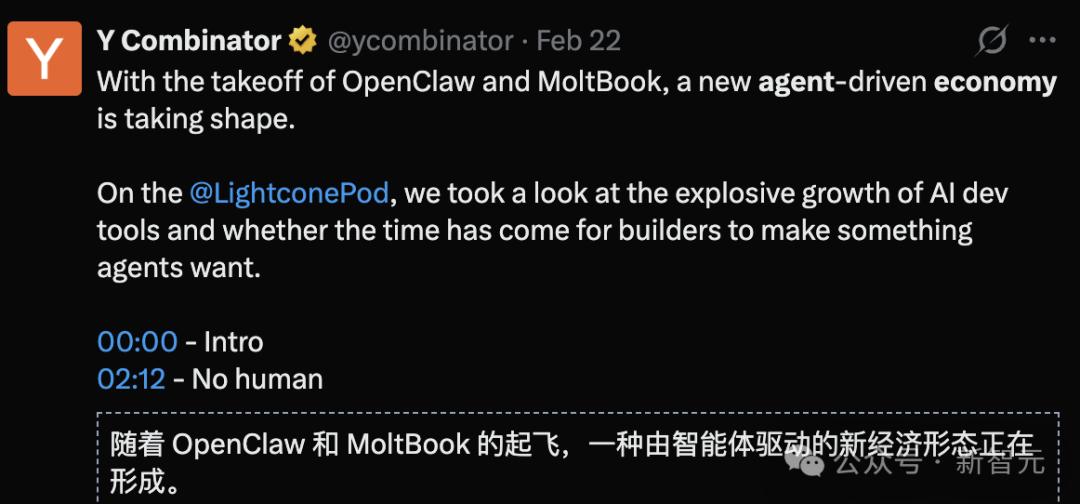
Now, the AI competition has officially entered its second phase: from coding to agents, the scale of tokens and their use cases will see further explosive growth.
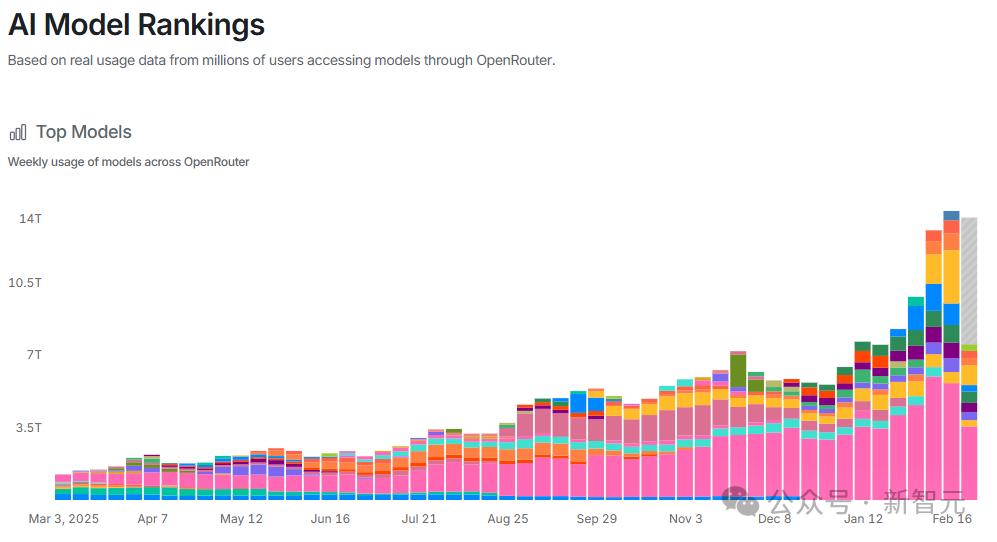
This trend is also evident in MiniMax's financial reports:
In February 2026, the average daily token consumption of the M2 series text models had increased to more than 6 times that of December 2025, with token consumption from CodingPlan increasing more than 10 times.
Within MiniMax, Agent interns cover nearly 90% of positions, including programming development, data analysis, operations management, human resource recruitment, and marketing sales.
MiniMax believes that the intelligence level of the model will be further improved in the coming year.
This time, they are betting on three major tracks: programming, office work, and multimodal creation.
The programming field will see the advent of L4 to L5 level intelligence, moving from "tools" to "colleague-level" collaboration;
The office sector will replicate the pace of progress seen in the programming sector last year;
Multimodal creation will also move towards "directly deliverable" medium-to-long content, and even new forms of streaming and real-time output will emerge.
The combination of these three factors means that humanity will usher in a larger-scale explosion of intelligent supply, as well as an unprecedented window of opportunity for innovation at the application level.
MiniMax predicts that token consumption this year is likely to increase by 10 to 100 times.
In response to these challenges, they have already made preparations, and the targeted development of the M3 and Hailuo 3 series models has begun.
But more importantly, MiniMax shared their internal thoughts on the future and their bigger goals.
MiniMax: From a large model company to an AI platform company
Strategically, MiniMax aims to evolve from a large model company into a platform company for the AI era.
Why does MiniMax have the potential to become a platform company?
First, AI is not currently a zero-sum game market; the annual growth rate is greater than the existing market size. There has not yet been a "winner-takes-all" situation.
As long as you have your own innovation and uniqueness, you will have your own opportunities.
MiniMax has already gained an advantage in the model, product, and ecosystem layers.
Next, MiniMax made two preparations:
By breaking through the boundaries of intelligence through the next generation of full-modal models, the uniqueness of the model is formed;
Develop unique products and ecosystems around the model.
Aside from major companies, MiniMax is one of the few companies that can do both of these things at the same time, and may even be the only startup in Asia.
They have the confidence to do so.
Over the past few months, MiniMax has seen continuous improvement in model iteration speed, revenue growth, user service capabilities, and token throughput.
This allows them to define the goals of new models more quickly, because internally they fully leverage the value of AI, so each model iteration significantly enhances and improves the company's overall capabilities, including overall R&D and external service capabilities.
This creates a positive flywheel, which is MiniMax's core competitive advantage.
In addition, MiniMax will further develop its commercialization strategy and explore global market opportunities.
The impressive performance of Hong Kong stocks is just the first step.