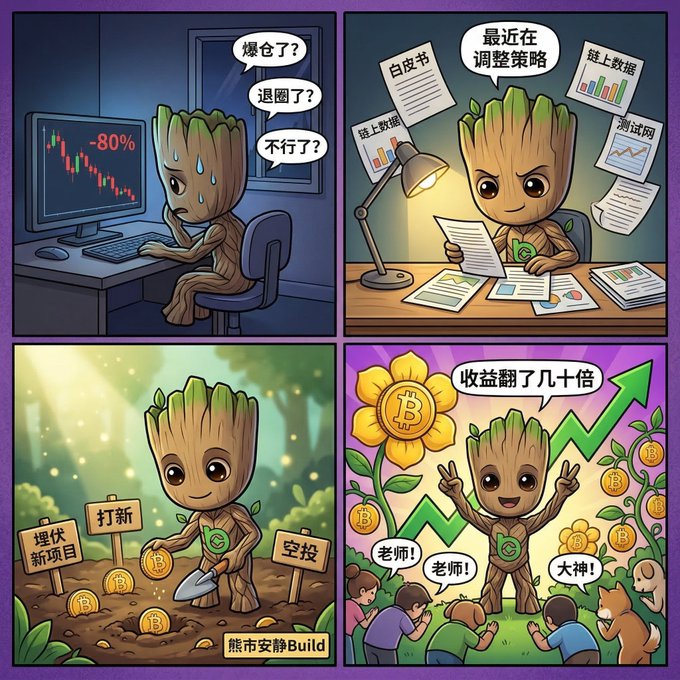
When the market was at its coldest, a friend of mine in the crypto suddenly "disappeared." He stopped talking in group chats and stopped updating Twitter. Many people started speculating: had he been liquidated and left the crypto space? Had the project team stopped paying him? Some even concluded that he was finished. But only I knew that he wasn't finished; he had simply liquidated his positions and started quietly studying on-chain data, reading white papers, browsing testnets, and looking for new opportunities. During that time, when people asked him how he was doing, he never mentioned losing money, a bad market, or a lack of opportunities. He always said the same thing: "I'm adjusting my strategy and looking for new opportunities." That's how the crypto is. When you're making money, everyone thinks you're a guru; but once you're down, many people's first reaction isn't to help you, but to watch the drama unfold. Some might offer words of comfort, but secretly they're thinking, "Will they ask me for money?" Even more terrifying are rumors. You might only suspend trading for a few months, but the rumors can escalate into claims that you've been wiped out and eliminated by the market. Many people are "talked to death" this way; their reputation is ruined before any opportunity even arrives. So sometimes, silence isn't about pretending; it's about self-preservation. The more you explain, the weaker others perceive you to be; the more silent you are, the less likely they are to judge you. Later, as the market gradually recovered, he had already positioned himself in several new on-chain projects, perfectly timing his initial public offerings (IPOs), airdrops, and secondary market moves. A few months later, he suddenly became active again, posting analyses on Twitter and discussing opportunities in groups. People checked his on-chain address and found his returns had increased dozens of times. Those who had previously criticized him were now calling him "teacher" in the comments section. When you're broke, many people don't take you seriously; but once you start making money, everyone suddenly becomes very polite. So, during downturns, explain less, complain less, and don't constantly say you've lost money, there are no opportunities, or the market is bad. Like many on-chain projects, those that truly survive quietly build during bear markets. When the cycle returns, your assets will naturally be in your hands. This article is sponsored by @bcgame
This article is machine translated
Show original
Sector:

From Twitter
Disclaimer: The content above is only the author's opinion which does not represent any position of Followin, and is not intended as, and shall not be understood or construed as, investment advice from Followin.
Like
Add to Favorites
Comments
Share