avatar
币圈荒木
144,324 Twitter followers
Follow
投研|MEME|早期项目|段子手|反指冠军| ▫️#OKX:https://t.co/TZzreDEhll ▫️币安注册 #Binance https://t.co/jJJeGD6X5Q ▫️所有推文都不构成投资意见 🤝合作电报:https://t.co/g6lnRM1YDK
Posts
avatar
币圈荒木
03-29
Thread
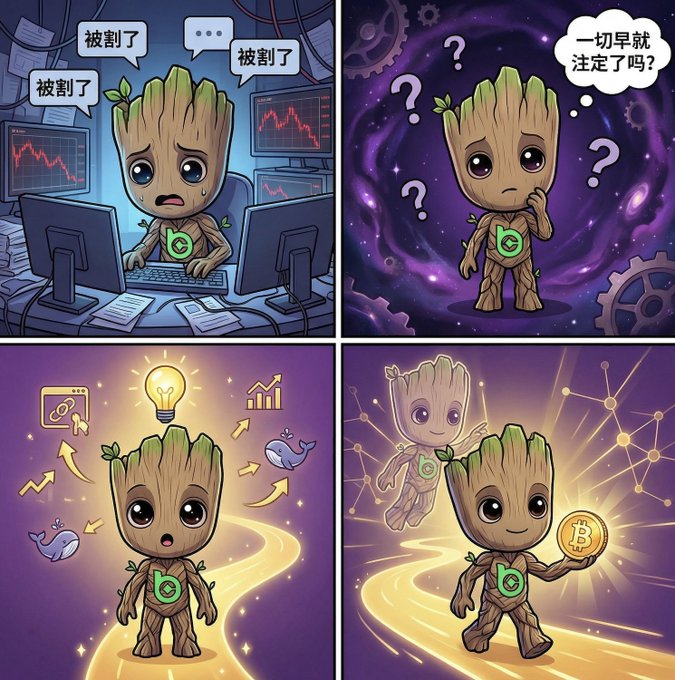
I used to think that the crypto was all about speed, information, and luck. Until one time when I was watching the market, I suddenly had an epiphany. The market was terrible a couple of days ago, and a bunch of people in the group were cursing, saying they'd been burned again. I was thinking at the time: is every single purchase predetermined to be a profit or a loss? If everything was written from the moment of the Big Bang, then what's the point of me watching the market and analyzing it every day? But then I changed my perspective. I discovered that the answers were already on the blockchain. If you look at the on-chain data, you see when large investors enter the market, how funds flow, and which direction the narrative is heading. These things don't seem to happen randomly; they're more like an existing path that most people haven't seen yet. Just like the path of light, it never wanders randomly, but rather takes the path that saves the most time. Perhaps it's not me making the choice, but rather the version of myself that has already made money pulling me back into the present. It's like someone who has successfully escaped at the peak of a bull market is looking at you from a future point in time and saying: Don't rush in recklessly, don't be FOMO, don't buy this. You think you're making a decision, but you're actually aligning it with an existing outcome. Later, I started to approach this market in a different way. Instead of worrying about short-term fluctuations every day, I would first ask myself: If this project really does increase fivefold in three months, what should the current trajectory look like? Then work backwards. Does it currently have a narrative, is there funding coming in, is someone quietly building it, and is it undervalued? You'll find that it's like writing a prompt for the future. The clearer your description, the clearer the path will be. Gradually, you'll stop being the one placing orders randomly and start following an existing optimal path. So I stopped dwelling on fatalism. Because if everything was truly predetermined, then the point of effort isn't to change the outcome, but to align with that already existing result more quickly. Destiny is not a chain, but more like a mainnet on the chain. Each of us is simply packaging transactions, submitting choices, and waiting for confirmation. You think you're walking, but you're really just... The shortest path that belongs to you is slowly becoming apparent. This article is sponsored by @bcgame.
BTC
0.3%
avatar
币圈荒木
03-13
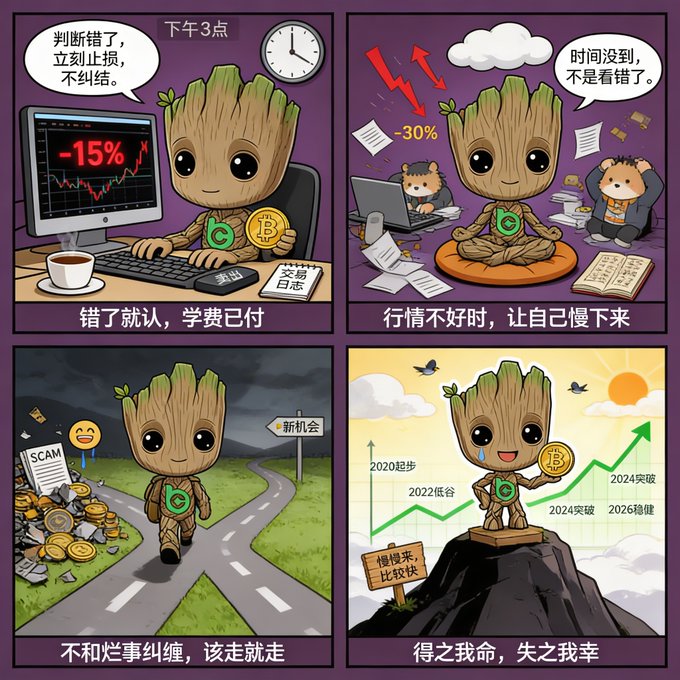
I know a guy who does on-chain trading. He has a really strange habit: as soon as he realizes he's made a mistake, he immediately cuts his losses, never dwells on it, and certainly doesn't complain to anyone. He says that since he's the one who clicked the buy button, losing money is his due tuition fee. The market has already given the result; constantly analyzing emotions will only make things more chaotic. If you're wrong, admit it, move on, and start the next trade. Later, I gradually discovered that he was remarkably calm when the market was down. Many people panic when the market drops, and panic leads to chaotic trading, but he remained largely still. He said the market is like life; many things aren't that you've misjudged, but rather that the time hasn't come yet. The more unfavorable the situation, the more you need to slow down, calm down, and give yourself time to think things through. Many problems, if you just slow down, often reveal better solutions. He also told me that, in reality, there are very few people in this world who truly care whether you've made money or not. A lot of people's internal conflicts are essentially creating drama for themselves, always feeling like everyone is watching them. But the market doesn't care about individual emotions; it only cares about results. Instead of constantly worrying about what others think of you, focus your energy on improving yourself and finding your own rhythm. Having been in the crypto for a while, you'll find that those who thrive in the long run share a common trait: they don't get entangled in things. They don't dwell on bad projects, past losses, or emotional turmoil. They know when to exit and when to cut their losses. Because they understand that bad people and bad situations will only waste your time and energy, slowing you down from your initial investment. Gradually, I've come to understand the saying: "What I gain is my fate, what I lose is my fortune." Some opportunities, though missed, may seem like regrets, but looking back a few years later, they might actually be helping you avoid bigger pitfalls. Many experiences that seemed like failures at the time were simply guiding you to a path that suits you better. Ultimately, I realized that investing and life are essentially the same. Those who truly go far aren't necessarily the smartest, but rather those with goals, strong execution skills, and an orderly lifestyle. They don't chase every opportunity; they only do what's worthwhile. Slowly, life becomes like a long-term upward curve—it may not lead to instant wealth, but it will definitely become increasingly stable. (This article is sponsored by @bcgame)
BTC
0.3%
avatar
币圈荒木
03-10
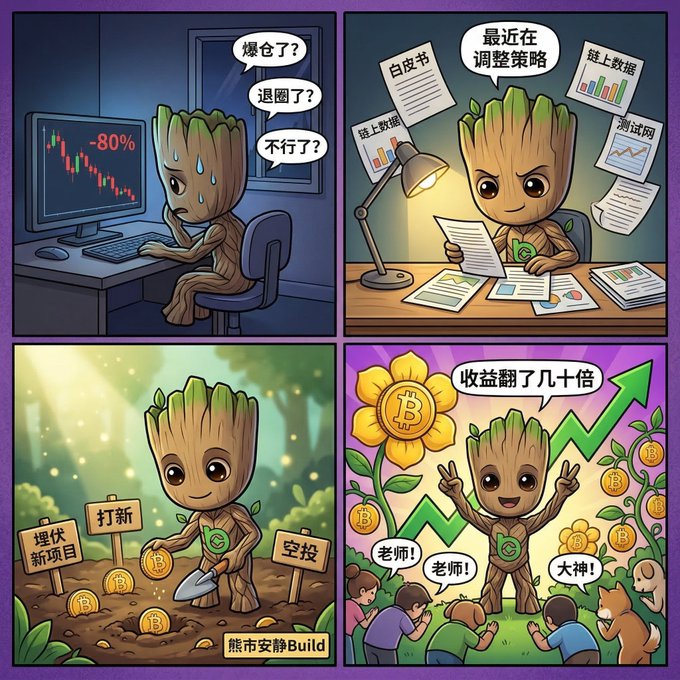
When the market was at its coldest, a friend of mine in the crypto suddenly "disappeared." He stopped talking in group chats and stopped updating Twitter. Many people started speculating: had he been liquidated and left the crypto space? Had the project team stopped paying him? Some even concluded that he was finished. But only I knew that he wasn't finished; he had simply liquidated his positions and started quietly studying on-chain data, reading white papers, browsing testnets, and looking for new opportunities. During that time, when people asked him how he was doing, he never mentioned losing money, a bad market, or a lack of opportunities. He always said the same thing: "I'm adjusting my strategy and looking for new opportunities." That's how the crypto is. When you're making money, everyone thinks you're a guru; but once you're down, many people's first reaction isn't to help you, but to watch the drama unfold. Some might offer words of comfort, but secretly they're thinking, "Will they ask me for money?" Even more terrifying are rumors. You might only suspend trading for a few months, but the rumors can escalate into claims that you've been wiped out and eliminated by the market. Many people are "talked to death" this way; their reputation is ruined before any opportunity even arrives. So sometimes, silence isn't about pretending; it's about self-preservation. The more you explain, the weaker others perceive you to be; the more silent you are, the less likely they are to judge you. Later, as the market gradually recovered, he had already positioned himself in several new on-chain projects, perfectly timing his initial public offerings (IPOs), airdrops, and secondary market moves. A few months later, he suddenly became active again, posting analyses on Twitter and discussing opportunities in groups. People checked his on-chain address and found his returns had increased dozens of times. Those who had previously criticized him were now calling him "teacher" in the comments section. When you're broke, many people don't take you seriously; but once you start making money, everyone suddenly becomes very polite. So, during downturns, explain less, complain less, and don't constantly say you've lost money, there are no opportunities, or the market is bad. Like many on-chain projects, those that truly survive quietly build during bear markets. When the cycle returns, your assets will naturally be in your hands. This article is sponsored by @bcgame
BTC
0.3%
avatar
币圈荒木
03-07
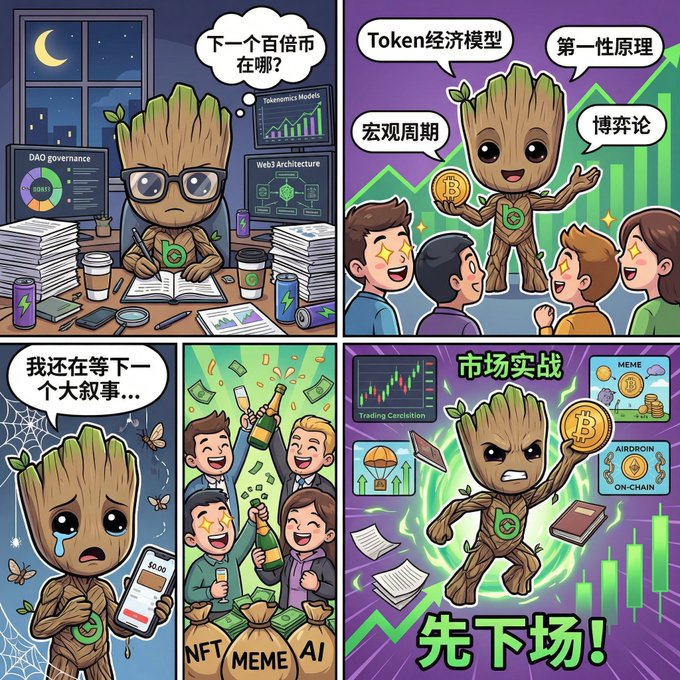
I know someone in a group who was obsessed with blockchain a couple of years ago. He spent every day either reading white papers or studying various "underlying logics". He spoke fluently about token economic models, DAO governance, Web3 narratives, and first principles. Whenever someone in the group discussed a project, he could analyze it for ages, going from narratives to macroeconomic cycles, from liquidity to game theory models. Back then, everyone thought he was amazing. Until later, I discovered something—he basically never made any money in his account. I once asked him, "You've researched so many projects, why don't you do them?" He said something particularly memorable: "I'm still waiting for the next truly great narrative." While he waited and waited, others had already profited from NFTs, DeFi, MEME, AI, and blockchain games. He was still analyzing. Later, during a drinking session, he suddenly told me, "Actually, I've discovered something very cruel. Many of the people who make the most money in the crypto don't have as much insight as I do." He's right. You'll find a strange phenomenon—many people who make money in the crypto don't necessarily understand any complex logic. They probably only do three things: see a project → participate → review the results. But many "highly cognitively advanced people" remain stuck in the research phase. They spend their days reading research reports, listening to Space, scrolling through Twitter, studying tokenomics, and analyzing narratives. Their minds are full of strategies, but their wallets are never holding anything. 😂 It's like someone who has memorized all the martial arts manuals. They know the Eighteen Subduing Dragon Palms, the Nine Swords of Dugu, and the Lingbo Steps, but have never actually fought anyone. Then a street thug came up with a brick, and a dozen different countermeasures flashed through his mind. The brick was already hitting his face. The same applies to the crypto. Reading a hundred articles about airdrop strategies is less effective than actually trading ten projects yourself. Studying a bunch of trading systems is less effective than actually trading for three months. Instead of spending your days analyzing on-chain data, participate in an on-chain narrative yourself. Because many things you only truly understand through participation. For example, why some projects are destined to fail, why some memes suddenly become wildly popular, and why some seemingly brilliant narratives fail to attract buyers. These things aren't in the book; they're all in the money lost. There are really only two kinds of people in the crypto. One kind is looking for the next big thing, and the other kind is digging deep in their own niche. The first type of person asks every day: Where is the next 100x? AI? RWA? Or a new public chain? They keep switching tracks. Today they're grabbing airdrops, tomorrow they're participating in ICOs, the day after they're chasing MEME, but they don't delve deep into anything. The second type of person is quite simple; they might only do one thing. Some specialize in on-chain data analysis, some specialize in studying MEME culture, some only do trading, and some only create content. They worked slowly, taking one, two, or three years. Gradually, they became very valuable within a small circle. Some people trusted them, some were willing to cooperate with them, and some were willing to listen to their information. This is their base. When the real opportunity arrives, they won't be chasing it; they'll be already standing on the cusp of it. Many "highly cognitively poor" people lose because they are too smart. They are so smart that they think everything through before acting, try to find the optimal solution for everything, and wait for certainty in everything. But the reality is that the market only rewards those who do the work, not the smartest people. Many people always think, "I just haven't had my chance yet." But real opportunities in the crypto are never something you wait for; they come to you while you're doing things. So I've come to believe more and more in this saying: In this industry, knowledge is very important. But something even more important than knowledge is—getting involved first. This article is sponsored by @bcgame.
avatar
币圈荒木
02-28
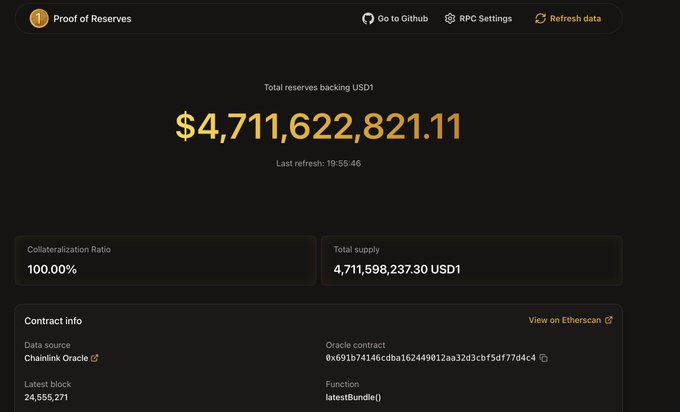
Many people believe this crash was caused by war or sudden news. But spending time on the blockchain reveals that in extreme market conditions, what truly kills isn't the drop itself, but "uncertainty." You don't know if exchanges will experience slowdowns. You don't know if stablecoins will de-peg. You don't know if your assets are truly backed by real reserves. The essence of panic is never losing money, but losing the basis for judgment. This is why I've started re-evaluating #USD1. It offers the market more than just "stability"; it provides a verifiable certainty. In the past, stablecoins were more like a black box: You believed it had reserves because it claimed to; You believed it was safe because it released reports; But reports are always in the past, while risks occur now. USD1 completely reverses this logic. Key data such as reserve size, supply, and collateral ratio are directly on-chain, accessible to anyone in real time. This means you no longer need to "trust anyone," you only need to verify it yourself. When the market crashes, the prices of most assets fluctuate wildly. But what's truly scarce is "verifiable security." Prices can rebound, or they can continue to fall. But once transparency is established, it doesn't disappear. So in a sense, the value of USD1 isn't in whether it rises or falls, but in the fact that it lets you know where you stand even in the most chaotic times. @worldlibertyfi #USD1 #WLFI twitter.com/HM010169/status/20...
USD1
0%
avatar
币圈荒木
02-24
Thread
This time, I actually think this isn't a "crypto crisis," but rather an information warfare exercise. You'll notice the synchronized rhythm: screenshots of deleted posts appear first—emotions are ignited—they start spreading in groups—someone shouts "Run!"—price volatility is amplified. If you remove the word "stablecoin," it's more like a test of media manipulation. The core issue isn't whether the asset has problems, but how easily market psychology can be swayed. What's truly interesting isn't the price drop, but whether the system experienced a substantial run on liquidity due to panic. No. #USD1's 1:1 collateral structure, minting, and redemption mechanisms are functioning, and the price is gradually returning to its peg. This indicates that this turmoil is more about "emotional liquidity" being drained than a collapse in asset liquidity. In other words, this is like a stress test. Someone tried to amplify volatility through account hacking, post deletion, FUD (Fear, Uncertainty, and Doubt), and short selling, but the system wasn't breached. What was truly tested was the patience of retail investors. The market is never about who gets the news fastest, but about who doesn't get led by the nose by news. #WLFI @worldlibertyfi
WLFI
@worldlibertyfi
02-24
For clarity: no WLFI or USD1 smart contracts or wallets were hacked. Today’s incident involved unauthorized access to co-founders’ X (Twitter) accounts — not wallets or protocol infrastructure. Zero smart contracts were affected. All USD1 funds remain completely safe, secure, x.com/worldlibertyfi…
USD1
0%
loading indicator
Loading..