
Institutions with elite roles may be an unfortunate historical necessity in an age of more restricted communication, but modern information technologies such as the Internet and blockchain can rapidly expand our available options.
Original title: " What even is an institution? "
Written by: Vitalik Buterin
Compilation: Kate, Marsbit
Special thanks to Dennis Pourteaux and Tina Zhen for discussions that led to this article.
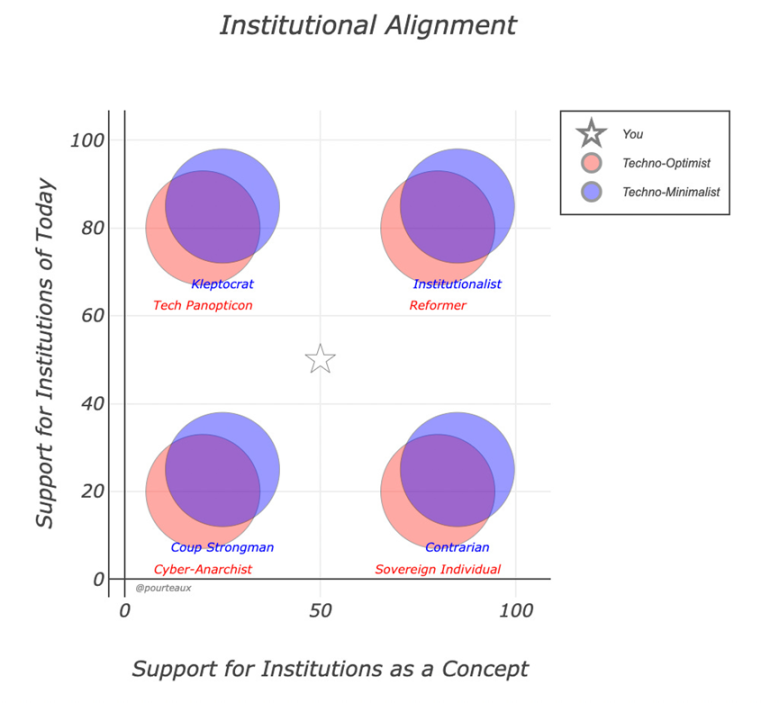
Another political compass recently proposed by Dennis Pourteaux proposes that the most important political divide of our time is not freedom versus authoritarianism or left versus right, but how we think about "the system." Are the institutions by which society operates today good or bad? Is the solution to incrementally improve them, replace them with radically different systems, or abolish systems altogether?
However, this raises a very important question: what exactly is an "institution"?
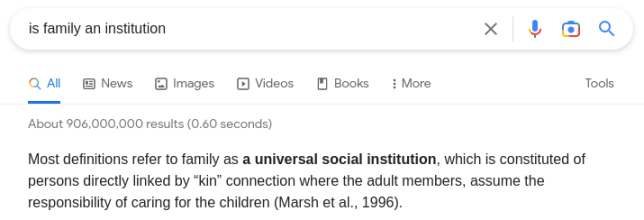
The word "institution" in political discourse conjures up images of national governments, the New York Times, universities, and perhaps the local public library. But the word is also used to describe other kinds of things. The phrase "the institution of marriage" is so common in English that it garnered more than two million search results on Google. If you asked Google outright, "Family is an institution," the answer would be yes.
ChatGPT opinion:
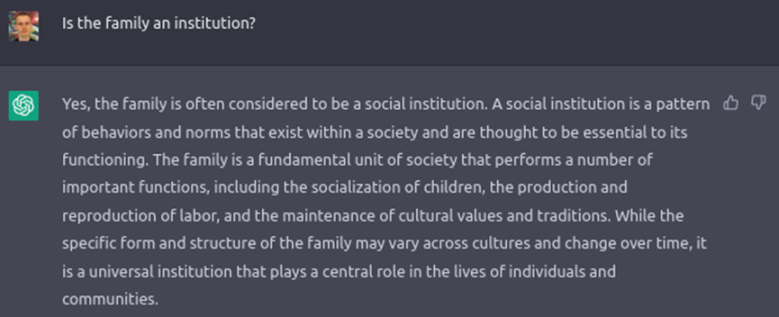
If we take ChatGPT’s definition seriously, that “a social institution is a pattern of behavior and norms that exist in a society and are considered essential to its functioning,” then the New York Times is not an institution — no one would argue It's actually so essential that many people think it's harmful! On the other hand, we can give examples of institutions that Pourteaux's "anti-institutionalists" would probably approve of!
- Bitcoin or Ethereum blockchain
- English language
- sub stack
- market
- standards organization dealing with international shipping
This leads to two related but somewhat separate questions:
1. Some things become "institutions" in people's eyes, while others are not. What is the dividing line?
2. What kind of world do those who consider themselves anti-institutionalists actually want to see? What should anti-institutionalists do in today's world?
investigation experiment
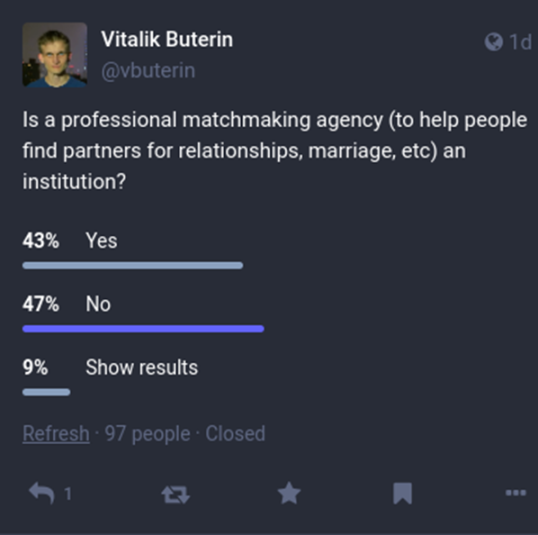
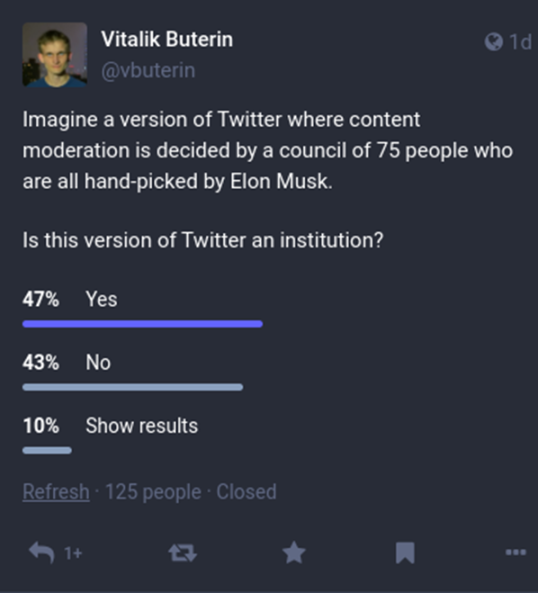
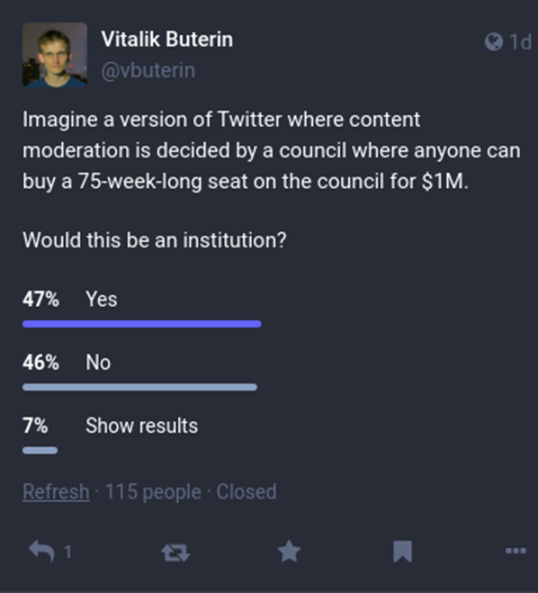
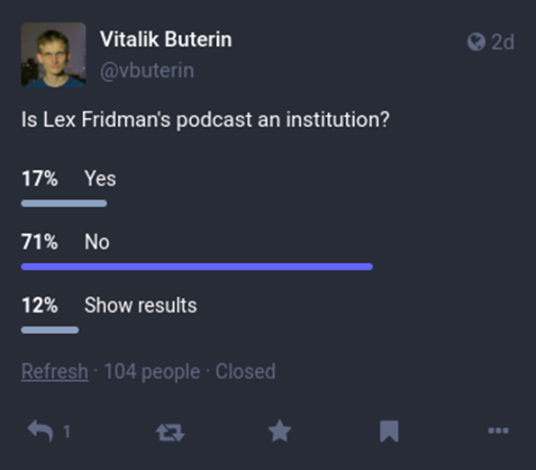
Over the past week, I've conducted a series of investigations into Mastodon, in which I've provided many examples of different objects, practices, and social structures, and asked the question: Is this even an institution? In some cases, I made different tweaks on the same concept to see the effect of changing some specific variables. There are some interesting results.
Here are some examples:
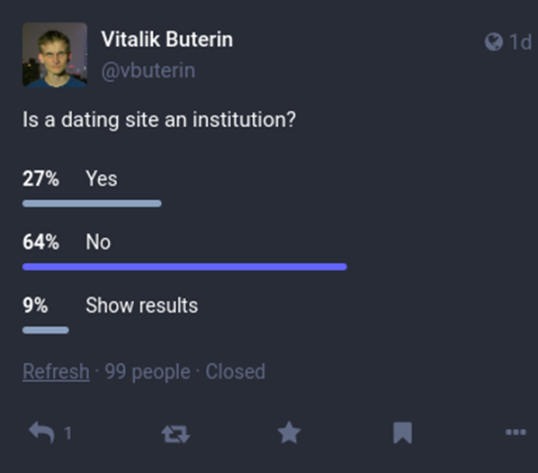
and:

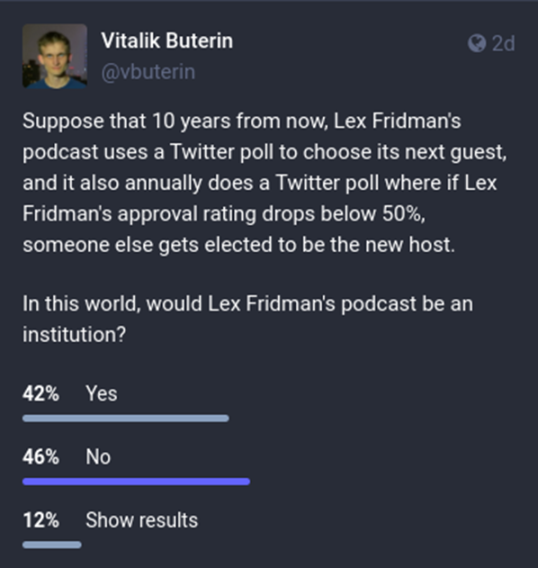
besides:
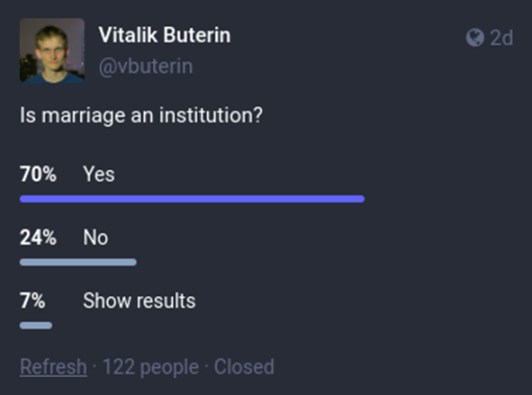


There are many more interesting ones: New York Times vs RT vs Bitcoin Magazine, solar system vs what if we start redesigning it, prediction markets, various social conventions, etc.
Here we are already starting to see some common factors. Marriage is more of an institution than a romantic relationship, possibly because it bears the stamp of official sanction, and more mainstream relationship styles are more institutional than less mainstream styles (compare NYT, TODAY Russia and Bitcoin Magazine, this pattern is repeated). Systems in which decisions are made by clearly visible humans are more like institutions than impersonal algorithmic structures, even if their output is ultimately a function entirely of human-supplied inputs.
To clarify further, I decided to do a more systematic analysis.
What are the common factors?
Robin Hanson recently published an article in which he states:
At least on high-profile topics, most people want the agency to take the following ideal form:
The masses recognize the elite, who oversee the experts and pick the details.
This seems to me to be an important and valuable insight, albeit in a different direction: yes, this is the institutional style people are familiar with, and not surprised (when they see the many "alternatives" that Hanson likes to propose They may be surprised when it comes to "institutions"), but that's exactly the style of institutions that anti-institutionalists most vehemently oppose! Mark Zuckerberg's institutionalized oversight board certainly followed the "elite of mass-approved oversight experts" template pretty well, but it didn't really make many people happy.
I decided to put this theory of institutions, as well as others, to the test. I identified seven attributes that I think may be important characteristics of institutions, with the aim of determining which attributes are most closely related to people's idea that something is an institution:
- Does it have a "mass-approved elite" model?
- Does it have a model of "elite supervisory experts"?
- Is it mainstream?
- Is it logically centralized?
- Does it involve human interaction? (eg. intermittent fasting won't, since everyone can choose whether to do it individually, but the government can)
- Does it have a specific structure with a lot of deliberate design behind it? (eg, company has, friendship does not)
- Does it have roles independent of the individual? (As in, democratically elected governments do, after all they even call their leaders "Mr. President," but podcasts named after their sole host don't do that at all).
I went through the list and scored 35 possible establishments based on my polls for these categories. For example, Tesla gets:
- 25% is the "mass recognition elite" (because it is run by Elon Musk, as a celebrity, he does get a lot of recognition and support in practice, but this is not an intrinsic characteristic of Tesla, if Elon lose legitimacy, he won't be kicked out of Tesla, etc.)
- 100% Agree with "Elite Oversight Experts" (all big companies follow this model)
- 75% say it's "mainstream" (almost everyone knows it, a lot of people have it, but not quite a NYT-level household name)
- 100% "logic centralization" (most things are 100% on this; as a counterexample, "dating sites" get 50%, as there are many dating sites, "intermittent fasting" gets 0%)
- 100% "involves human interaction" (Tesla makes products that it sells to people, it employs employees, has investors, etc.)
- 75% "intentional structure" (Tesla does have a deep structure with shareholders, directors, management, etc., but this structure is not part of its identity, e.g., proof-of-stake consensus for Ethereum, voting and Congress for government)
- 50% chose "independent roles" (although roles in companies are often interchangeable, Tesla does gain a lot from being part of the Elon universe)
The full data is here. I know that many people will have a lot of disagreement with the various personal rankings I do, and readers may convince me that some of my scores are wrong. My main hope is that I've included enough different systems in the list that individual differences or mistakes can be roughly averaged out.
Here are the relevant tables:
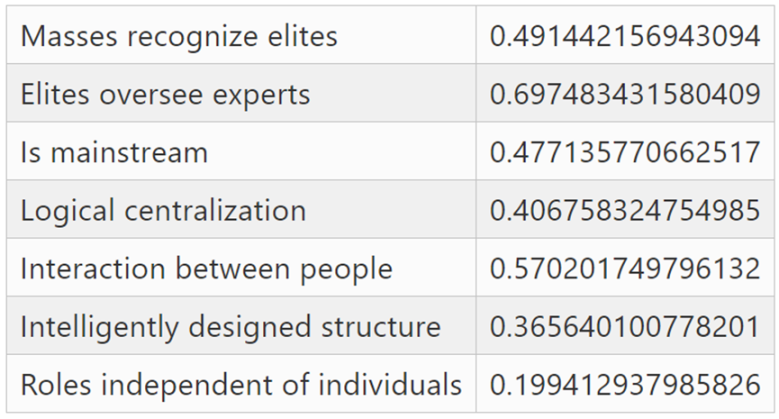
But this correlation has proven to be misleading. "Human interaction" has almost certainly become a necessary attribute of an institution. The correlation of 0.57 suggests this somewhat, but it underestimates the strength of the relationship:

Literally every single thing that I marked as obviously involving interaction was considered an institution by more people than anything I marked as not. The dot in the middle is my hypothetical example of an island where people with odd birthdays are not allowed to eat meat until 12:00. I don't want to give it 100% because not eating meat is a private activity, but the question still strongly suggests some social or other pressure to follow the rule, so it's not really 0% either. This is one place where the Spearman coefficient is better than the Pearson coefficient, but I'd rather just show the graph than spew out bizarre numbers. Here are the other six:


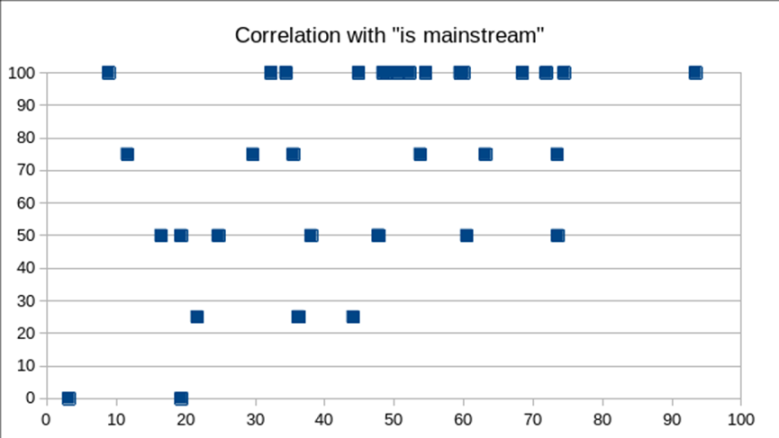
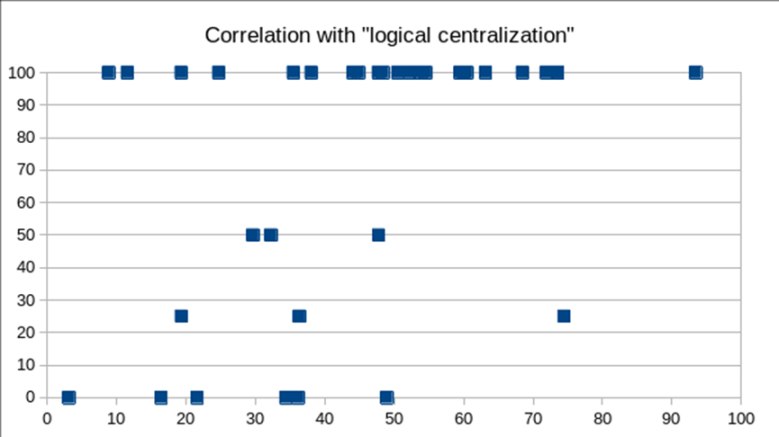


The finding that surprised me the most was that "role independent of the individual" was by far the weakest correlation. Twitter run by democracies is the most institutionalized, but Twitter run through a paid governance program is just as institutional as Twitter run directly by Elon. Characters that are independent of individuals add a guarantee of stability, but independent of individuals in the wrong way can feel too foreign, haphazard, or uninstitutional. Dating sites are more independent of individuals than professional matchmaking agencies, but people think of matchmaking agencies more like institutions. Trying highly character-driven and mechanically believable neutral media, (such as this neat design, which I actually think is really cool) just feels strange - maybe bad, but maybe good too, if you find today's The system is frustrating and you are open to possible alternatives.
"Popularly recognized elites" and "elite supervision experts" are highly correlated. The second is higher than the first, although Hanson and I may have different understandings of "recognize". The lower right corner of the "Intentional Structure" diagram is empty, but the upper left corner is complete, suggesting that intentional structure is necessary but not sufficient to make something institutional.
That said, my main conclusion might be that the word "institution" is a mess. Unlike the term "institution" which refers to a range of concepts (such as "high modernism"), the term appears to have many different definitions:
- This structure is in line with the familiar model of "the public recognizes the elite and supervises the experts"
- Any large structure intentionally designed to regulate human interaction (including financial markets, social media platforms, dating sites, etc.)
- widespread and generally regulated social customs
I suspect that anti-institutionalists focus their skepticism on (1), especially the example of (1) being caught by the wrong tribe. For anti-institutionalists, it doesn't seem to matter whether structures are individualistic or role-driven: personalities ("Klaus Schwab") and bureaucracies ("awakened academics") can equally come from the wrong tribe . Anti-institutionalists generally do not object to (3), and indeed in many cases wish (3) to replace (1) as much as possible.
Support for (2) may be closely related to Pourteaux's distinction between "techno-optimists" and "techno-minimalists". Tech minimalists don't see Twitter, Substack, Bitcoin, Ethereum, etc. as part of the solution, although some "Bitcoin minimalists" see the Bitcoin blockchain as a narrow exception, and otherwise want to see To a world where factors such as family determine more outcomes. "Techno-optimist anti-institutionalists" are exclusively engaged in a political project that either tries to replace (1) with the correct (2) or tries to reform (1) by introducing more elements of the correct (2).
What is the way forward for anti-institutionalists or institutional reformers?
It would be a mistake to attribute too much deliberate tactics to anti-institutionalists: anti-institutionalism is a movement that is more united in opposition than in support of any particular alternative. But it is possible to recognize the pattern and ask which paths forward make sense for anti-institutionalists.
From a linguistic standpoint, even using the word "institution" seems more confusing than enlightening at this point. (i) a desire to replace structures containing elite roles with structures free of elite roles, (ii) a preference for small-scale and informal structures over large-scale and formal ones, (iii) a desire to simply replace current elite into new elites, and (iv) a social liberal position that individuals should be driven by their own ideas rather than incentives created by others. The word "institution" masks this divide, and may focus too much on what is being dismantled rather than what is to be built upon.
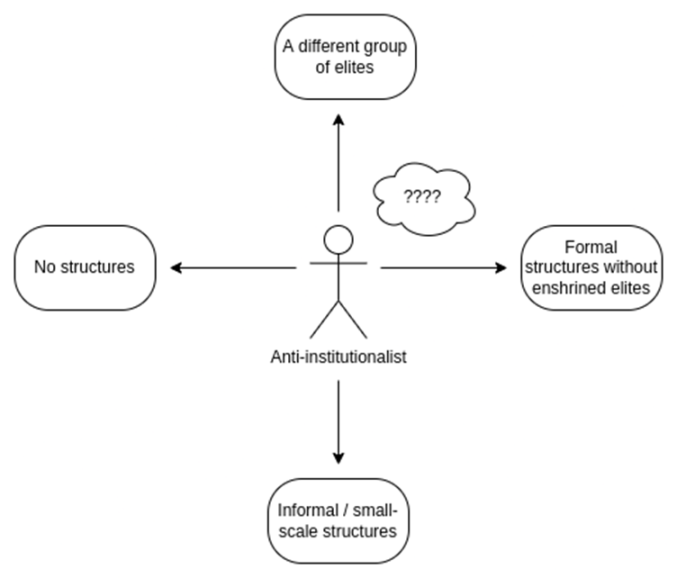
Different anti-institutionalists have different goals. Of course, the people who are forcefully scathing about The New York Times on Twitter agree with you about how society shouldn't work, but are you sure they're going to be your allies when it comes to deciding how society should work?
The challenge of avoiding structure altogether is obvious: there is a prisoner's dilemma, and we need incentives. The challenges of small scale and informal structures are often evident: the gains from economies of scale and standardization – although sometimes the other benefits of informal approaches are worth losing these benefits. The challenge of simply exchanging elites is obvious: it cannot scale socially to consensus across tribes. This is more believably neutral if the goal is not to worship a new group of elites perpetually, but to keep elites in perpetual high turnover (see Balaji's founder vs heir dichotomy), but then it starts to get closer to avoiding universal worship of elites field of.
Creating formal structures in the absence of elites is intriguing, not least because it is underexplored: there is a strong case that institutions with elite roles may be a This is an unfortunate historical inevitability, but modern information technology (including the Internet, and newer and scarier things like zero-knowledge cryptography, blockchains, and DAOs) can rapidly expand the options available to us. Still, as Hanson points out, this path has its own challenges.