Looking at just one chart, you might think that the AI chatbot sector is already dead. Those at the forefront are either tech giants or smaller giants valued at hundreds of billions or tens of billions of dollars.
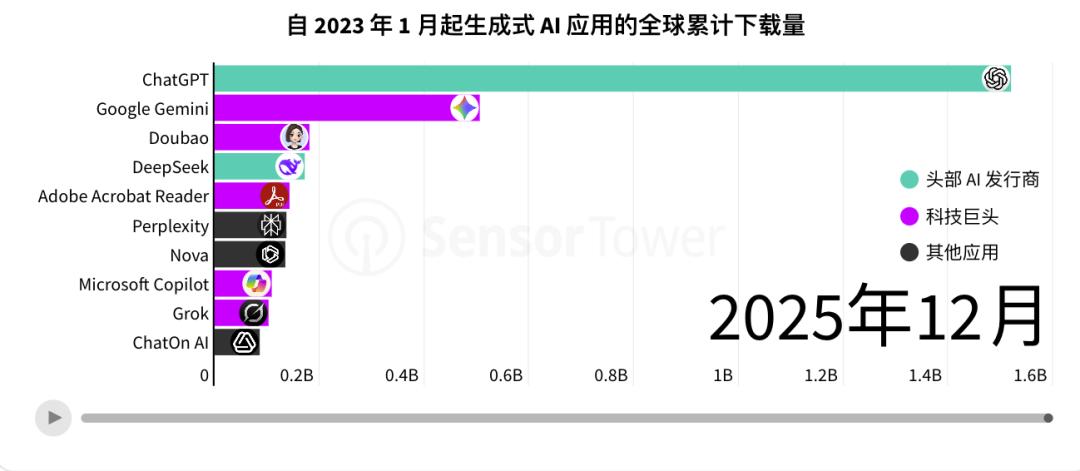
According to Sensor Tower data, from January 2023 to December 2025, ChatGPT's global mobile downloads exceeded 1.5 billion, which is three times that of Gemini (the second-ranked app) and nearly eight times that of Doubao (the third-ranked app). Such a level of dominance is perhaps only seen in Google Search in the history of the Internet.
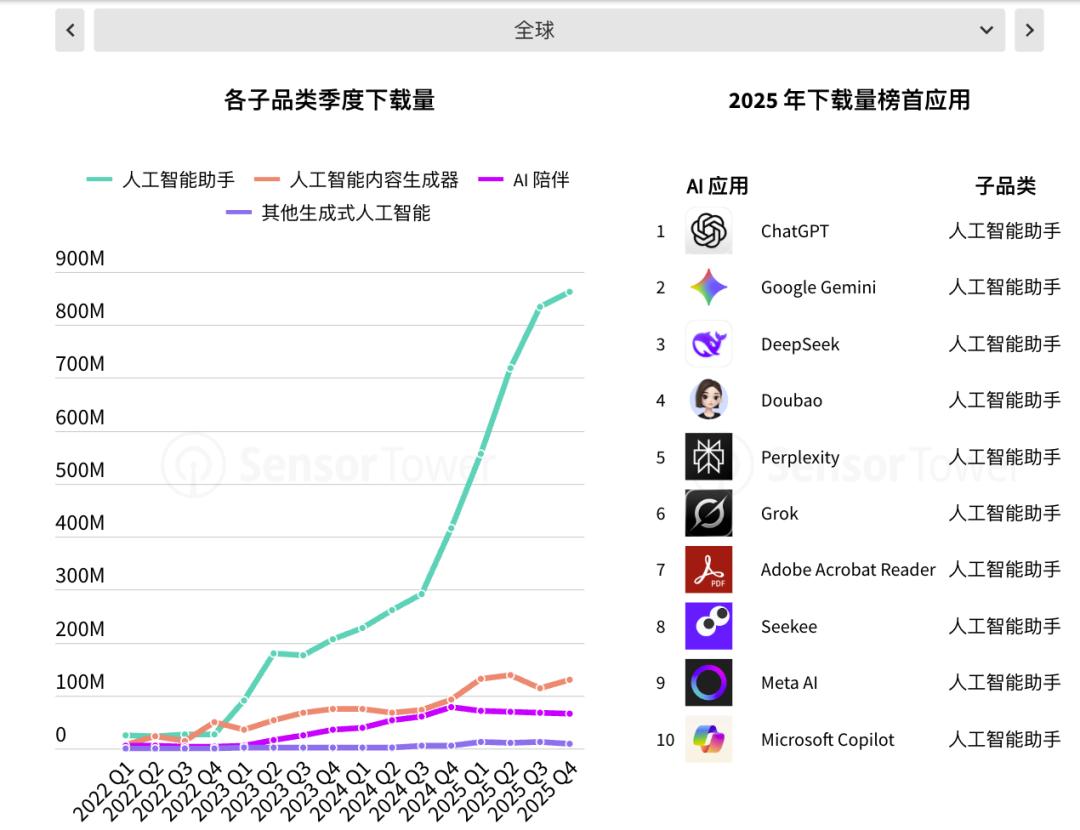
Using the same Sensor Tower data, but limiting the timeframe to global downloads up to 2025, Seekee, a product launched at the end of 2024, appeared among a group of major companies. If you're not in Latin America, you might not even have heard of this product. Developed by a Chinese team, Seekee, thanks to its precise understanding of the Latin American market, has broken into the Top 10 AI product downloads in 2025.
Following the signal of Seekee's entry into the rankings, when we carefully examine the data of more markets, we find that Seekee is not an isolated case. In the MAU rankings of AI products in various major markets, there are their own "exclusive ChatGPTs".
1. The unwavering ChatGPT & Gemini
Top 3 in Flowing Water
Looking at the AI ChatBot MAU rankings across 23 major markets, ChatGPT and Gemini dominate the Top 1 and Top 2 positions in almost all global markets, but there are significant differences in the third-place rankings across different markets.
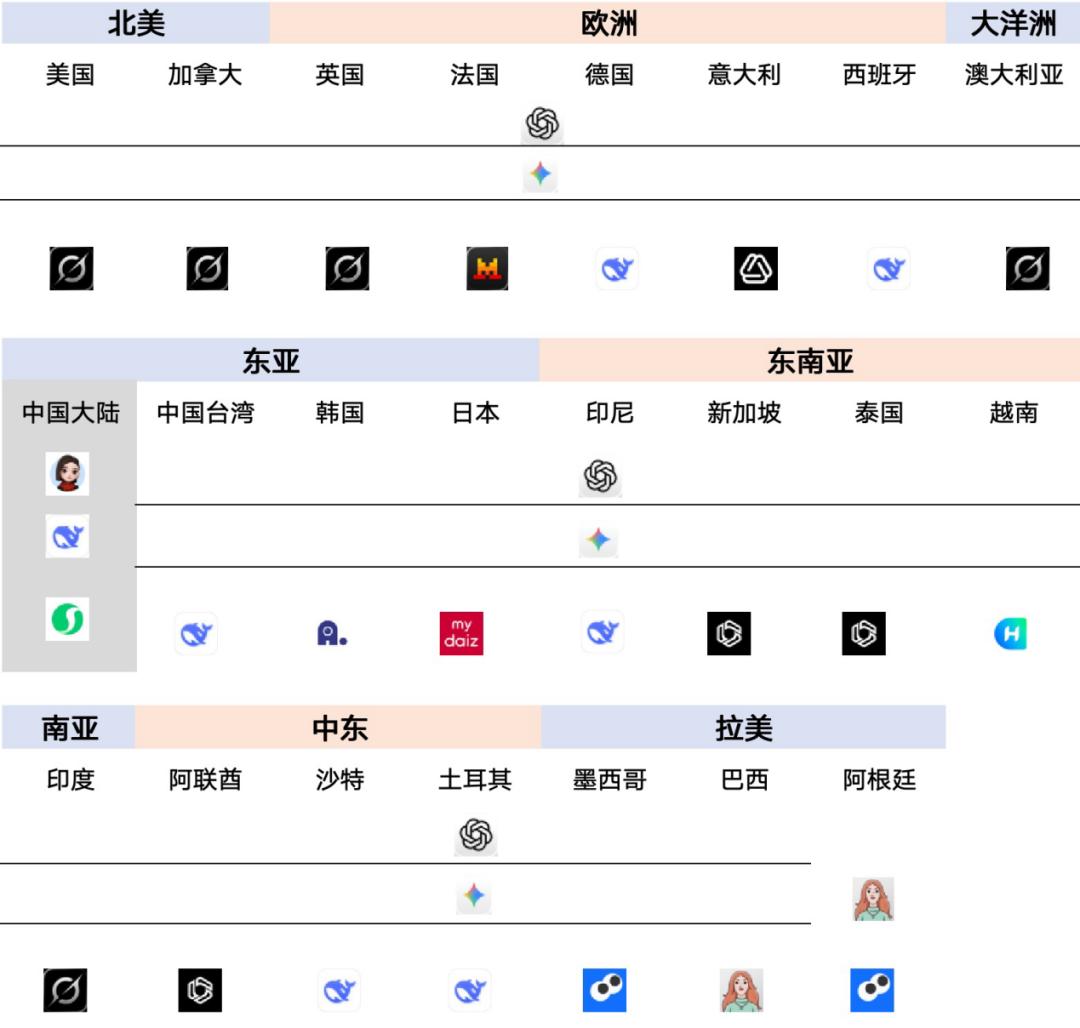
The ST report's Top 10 MAU rankings for each market only select ChatBot categories and include only the Top 3.
According to the data, Grok and DeepSeek secured the top 3 positions in the most countries. Grok is mainly distributed in markets where English is commonly used, such as the UK, US, Canada, Australia, and India; while DeepSeek has captured 7 markets, including mainland China, Taiwan, Indonesia, Germany, Spain, and Turkey and Saudi Arabia in the Middle East.
Moving down another tier, in Latin America, where regional characteristics are stronger and there are unique needs, Seekee and Luzia have found their niche. Luzia even surpassed Gemini in Argentina to take second place. In markets such as Japan, South Korea, Vietnam, Latin America, and France, local products occupy the top three spots.
The reasons behind these products' inclusion on the list vary, but they share a common thread: they have all found a barrier that global products cannot easily break down locally. (In this section, we focus on local apps from Latin America, Japan, South Korea, France, and Vietnam. Since Grok, DeepSeek, Nova, and ChatOn are considered "overseas products" from their respective countries, we will discuss them in detail in the second main heading, "Overseas Products.")
Japan and South Korea: Operators' Home Ground, Outsiders Not Allowed
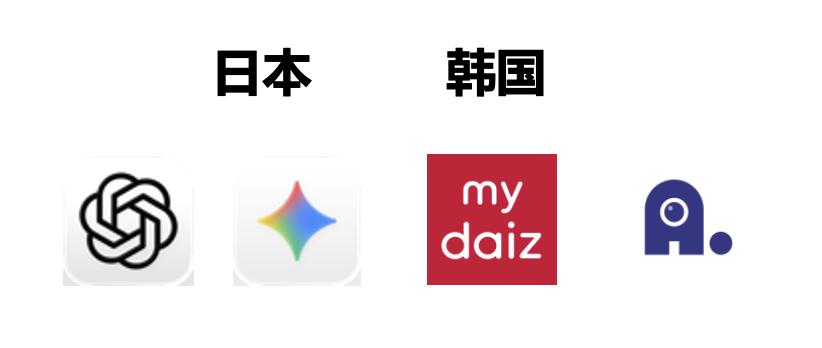
My Daiz and Adot rank third in the Japanese and South Korean markets, respectively. Both are from the largest local telecom operators and entered the market by "pre-installation" and "data access advantages".
Adot comes from SK Telecom, South Korea's largest telecom operator; My Daiz comes from NTT Docomo, Japan's largest telecom operator. The two operators have 30 million and 90 million users respectively, representing a penetration rate of over 70%. Moreover, in the Japanese and South Korean markets, operators have a high share of mobile phone sales channels, which is what we previously referred to as "contract phones." Pre-installing or recommending apps on phones is a natural advantage for operators, especially My Daiz, whose download numbers according to third-party data are very low, yet it ranks very high on ST's MAU chart.

Adot's app description regarding call translation: This feature supports four languages: Chinese, English, Japanese, and Korean. It enables two-way real-time translation, meaning that when a user speaks Korean, it is automatically translated into other languages, and when the other party speaks, it is also translated into Korean in real time. | Image source: DianDian Data
Based on this "carrier lineage," both products differentiate themselves by their ability to access data unavailable to other products. According to Adot's application description, Adot can directly access users' call content to record and summarize calls. Users of SK Telecom SIM cards can also use Adot's "translate call" function for real-time two-way translation. My Daiz, on the other hand, deeply integrates arrival information for public transportation throughout Japan. In the Japanese market, which heavily relies on subways and trains, this function is, to some extent, a necessity.
Vietnam: Localized ChatBot Benefiting from Demographic Dividend

ChatBot, ranked in the top 3 in Vietnam, is a local Vietnamese product called AI Hay. The developer is a startup located in Ho Chi Minh City, Vietnam. In July 2025, it just completed a $10 million Series A funding round, bringing its total funding to nearly $20 million.
From a financing perspective, it's the weakest among the weakest, but it still managed to secure a Top 3 position thanks to Vietnam's unique national circumstances.
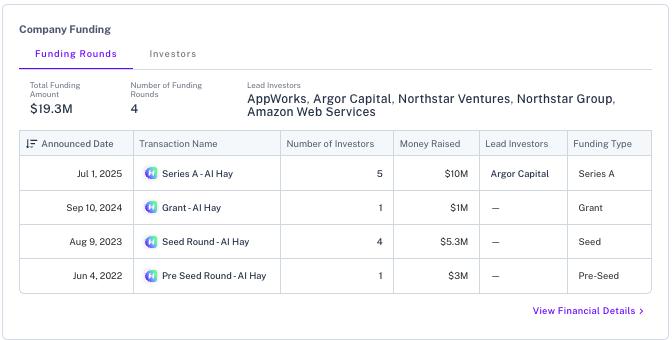
AI Hay Funding Status | Image Source: Crunchbase
Judging from the app screenshots, AI Hay is a fusion of "ChatBot + AI Search + AI Homework Assistant + AI Character Chat," following an all-in-one approach. According to the app description, AI-powered question searching is the core function, primarily targeting primary and secondary school students. Data shows that since its launch in 2022, AI Hay has accumulated 20 million downloads in the Vietnamese market.
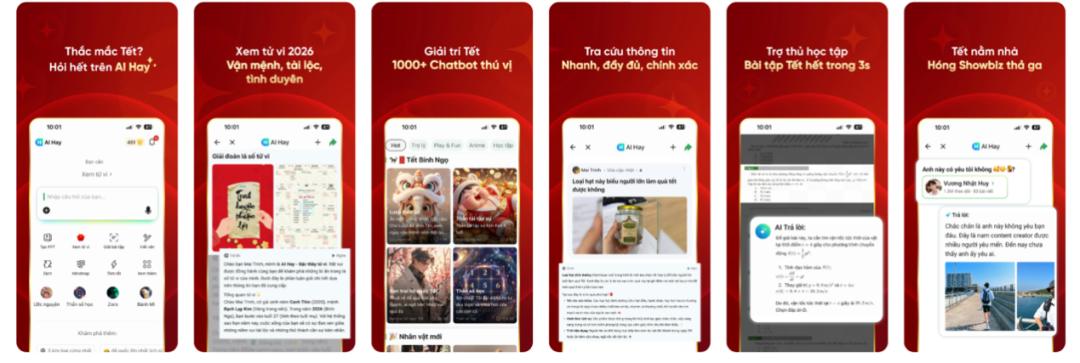
Whether domestically or internationally, homework help is a "must-have," but AI Hay is unique in achieving a Top 3 ranking in MAU within the ChatBot sector by simply helping children with their homework. However, this seems to have its own rationale in the Vietnamese market. According to official Vietnamese data, in 2024, the population under the age of 24 accounted for over 40% of the total population, and the number of primary and secondary school students reached 23.2 million, representing about one-fifth of the total population. Serving the student population well could support a "national-level ChatBot," which is not a pipe dream.
In terms of model and product capabilities, AI Hay has also undergone deep localization, with extensive adaptation for Vietnamese content and the establishment of a local cultural knowledge base. According to a report by Vietnamese local media in August 2025, AI Hay's penetration rate in the Vietnamese market was only 9%, significantly lower than products such as ChatGPT and Gemini. However, its user satisfaction rate reached 47%, only slightly lower than ChatGPT and ahead of Gemini and other products.
Latin America: From the "Spanish-speaking World"
Luzia and Seekee grew out of it

In the three major Spanish-speaking markets of Mexico, Brazil, and Argentina, Luzia and Seekee follow ChatGPT and Gemini.
Luzia is developed by a Spanish startup headquartered in Madrid. The product was tailored for the Spanish-speaking market by Spanish developers. As we observed in our previous article, "Acquiring 45 Million Users in One Year: Spanish-Speaking Users' Own 'ChatGPT'," Luzia initially launched as a third-party bot on WhatsApp, a platform widely used in Latin America, achieving a cold start. Users didn't need to download any new app; they could use it simply by opening WhatsApp. Once users were accustomed to it, a standalone app was then introduced, allowing Luzia to build a solid foundation in Latin America.
As for the product itself, Luzia emphasizes a "personal touch," making it feel like chatting with a friend rather than consulting an encyclopedia. This differentiation has allowed it to establish a foothold in Latin America. In May 2025, Luzia completed a new round of financing of $13.5 million and established an office in Brazil to accelerate its expansion in the Latin American market.
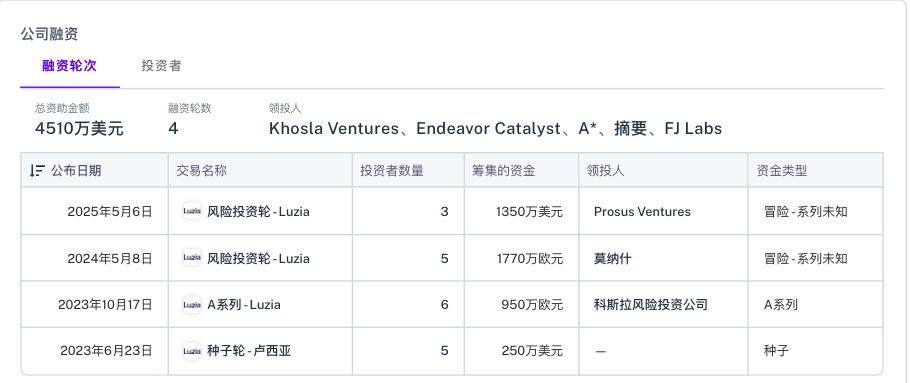
Luzia Funding Status | Image Source: Crunchbase
In comparison, Seekee is much younger, having only launched in December 2024. It is positioned as an all-in-one AI browser, including various functions such as search, cloud storage, raw image processing, document conversion, and chatbot, somewhat similar to Quark in China.
In our article, "Sweeping Across Latin America and Outperforming ByteDance, Is '4399 of the AI World' Becoming the New King of Overseas AI Applications?", we observed that Seekee's ability to penetrate the market stemmed from its grasp of Latin American users' strong demand for "entertainment content resources." According to advertising materials provided by Guangda, Seekee's top-ranked material is still film and television resource search, emphasizing that users can find the movies and TV series they want to watch for free using Seekee.
Latin American users have extremely high demand for content, so Seekee launched its core function of "finding resources" and then used other AI features to cover long-tail needs, securing a Top 3 position in the three Latin American countries. Although Seekee's download momentum has declined somewhat compared to its peak of 800,000 monthly downloads last November, it still has over 500,000 monthly downloads, and all of its Top 5 markets are in Latin America.
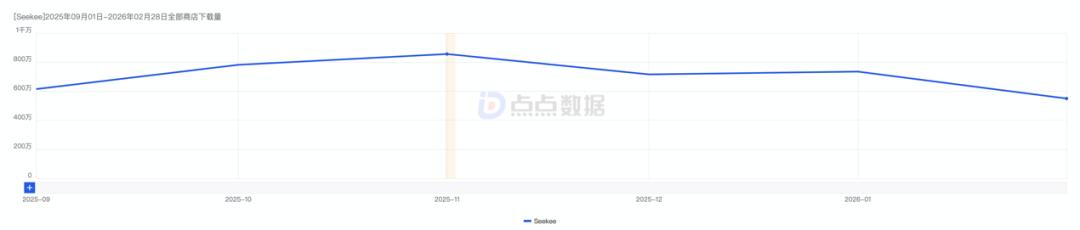
Seekee download data for the past 6 months | Image source: DianDian Data
France: The French love France ChatBot
The top 3 in France is Le Chat, produced by Paris-based startup Mistral AI.
Previously, in our article "Le Chat Reaches the Top, Hundreds of Billions in Investment: After China and the US, Is France the Third Strongest in AI?", we observed France's AI industry. Its most prominent characteristic is government leadership. Mistral has received substantial support from the government and established French investors, both in terms of funding and talent. Against this backdrop, Mistral secured €1.7 billion in Series C funding, led by the French national investment bank Bpifrance and Dutch lithography giant ASML.
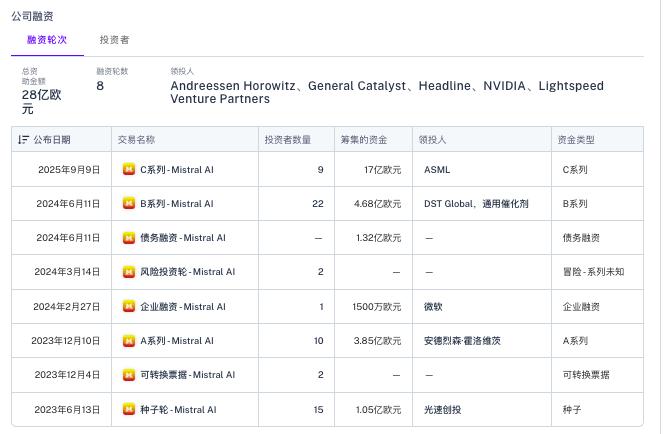
Mistral Funding Status | Image Source: Crunchbase
From the public's perspective, choosing Le Chat carries a sense of "local identity." In the narratives of French media and government, Le Chat is seen as a representative product in Europe that is comparable to ChatGPT. Against the backdrop of Europe's long-term emphasis on technological autonomy and reducing dependence on American technology companies, local AI products are more likely to gain public opinion and policy support.
II. In terms of going global, Deepseek is stronger than Doubao.
Returning to the perspective of "going global", DeepSeek, Nova, ChatOn, and Grok, whose developers come from China, Turkey, and the United States, lack the advantage of localization, yet they have achieved the Top 3 in non-native markets such as Europe, the Middle East, and Southeast Asia, each demonstrating their unique strengths.
DeepSeek: Advantages of being inexpensive, open-source, and multilingual.

DeepSeek's top three markets include mainland China, Taiwan, Indonesia, Germany, Spain, Turkey, and Saudi Arabia. From this perspective, DeepSeek outperforms ByteDance, which is known for its expertise in overseas expansion, in terms of ChatBot's overseas performance.
Aside from mainland China and Taiwan, the top three markets for DeepSeek are primarily markets using less commonly spoken languages. This trend is not coincidental but stems from DeepSeek's strong multilingual capabilities. According to tests conducted by the Harbin Institute of Technology team in the early stages of DeepSeek's launch (February 2025), the multilingual capabilities of the DeepSeek model were already approaching those of the then-most powerful closed-source models, OpenAI-o1 and o3mini. Furthermore, according to the DeepSeek-V3 paper, the model achieved a score of 79.4 in the MMMLU-non-English (Acc.) test, demonstrating multilingual capabilities close to mainstream models such as ChatGPT and Gemini.
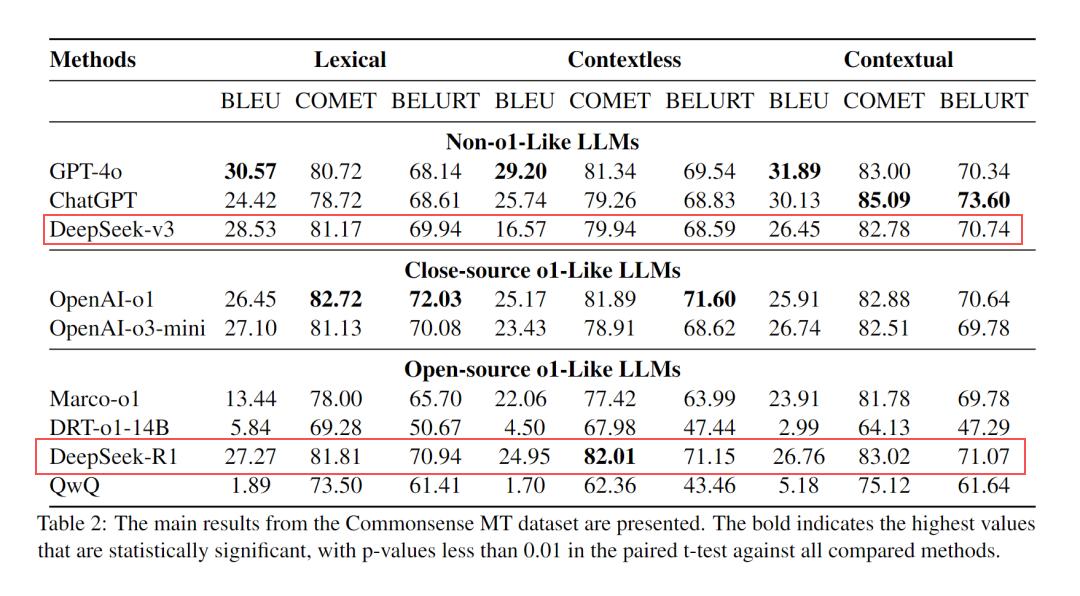
DeepSeek's performance in a commonsense translation test reflects its multilingual capabilities | Image source: Harbin Institute of Technology team paper "Evaluating o1-Like LLMs: Unlocking Reasoning for Translation through Comprehensive Analysis"
Beyond its multilingual capabilities, coupled with its free and compliant offerings, DeepSeek has made a strong entry into Europe and emerging markets. Since its launch, DeepSeek has been known for its cost-effectiveness. While other products have monetized through subscriptions, DeepSeek remains free and currently has no subscription revenue on mobile devices. In emerging markets such as Indonesia and the Middle East, its free service is a powerful advantage.
In continental European markets such as Germany and Spain, DeepSeek largely benefits from the compliance advantages afforded by its open-source architecture. European data regulations are notoriously stringent, with GDPR often resulting in hefty fines, and regulatory bodies are extremely sensitive to the data sources and training methods of AI models. In this environment, DeepSeek's relatively open technical approach reduces concerns about being a "black box model," a positive factor for both regulators and some users. This is especially important in markets like Germany, where data compliance is paramount.
Nova & ChatOn: 2025
There's still a world of shell apps.
Since ChatGPT's launch, reskinned products have consistently been among the top performers in the market and have been quite profitable. The two products that entered the Top 3 this time are Nova from Turkey's HubX and ChatOn from the US's AIBY. Nova secured the #3 spot in Singapore, Thailand, and the UAE, while ChatOn is the #3 in the Italian market.
Both products share the same underlying logic: they lack self-developed models, instead utilizing mainstream large-scale model APIs, and their icon designs are highly similar to ChatGPT. Their advantage lies in offering multiple models for a single payment, more flexible free quotas, and a plethora of multimodal features. For example, Nova integrates tattoo generation, logo generation, signature generation, AI filters, and more, making its "AI toolbox" truly exceptional.
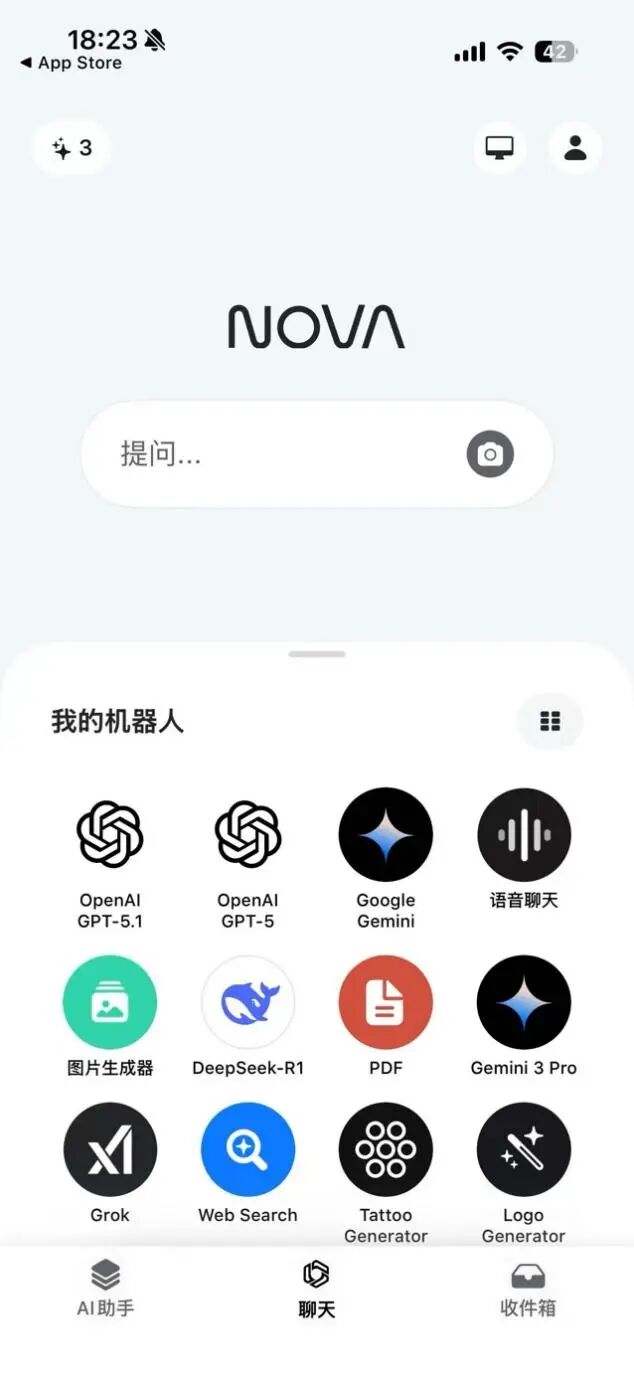
Their appearance in the top 3 of these markets is less a result of proactive expansion and more a natural spillover of demand. Markets like Singapore, the UAE, and Thailand share common characteristics: complex demographics and a coexistence of multiple languages and cultures. Singapore has a large Chinese, Malay, and Indian population, while the UAE is one of the most Westernized markets in the Middle East, with a very high percentage of expatriates.
This hybrid structure makes it difficult for domestic products to develop targeted localization advantages, and global leading products have no incentive to cultivate these non-core markets. Reskinned products, on the other hand, unexpectedly fit this type of market with its fragmented user structure because they don't rely on localization, offer rich functionality, and have flexible pricing.
Looking at the revenue structure, the main revenue for both products still comes from the United States, and the top three in these markets are more like byproducts.
Four years later, repackaged products are still thriving, and leading repackaged products such as Nova have not shown any obvious signs of decline. The different capabilities of each model, coupled with the gap between the demand of many people and the amount provided by the subscription fee of $20, make the existence of repackaged products reasonable.
However, in the future, the capabilities of various large models will gradually become more similar. When users can no longer perceive the differences between the capabilities of different models, and when leading large models launch low-priced subscription plans, shell apps will either disappear or evolve into another form.
Grok: Relying not on skill, but on bundled sales.

Grok has secured its top three markets: the United States, the United Kingdom, Canada, Australia, and India. English is either not their native language or is the mainstream language used in India (English is India's second official language).
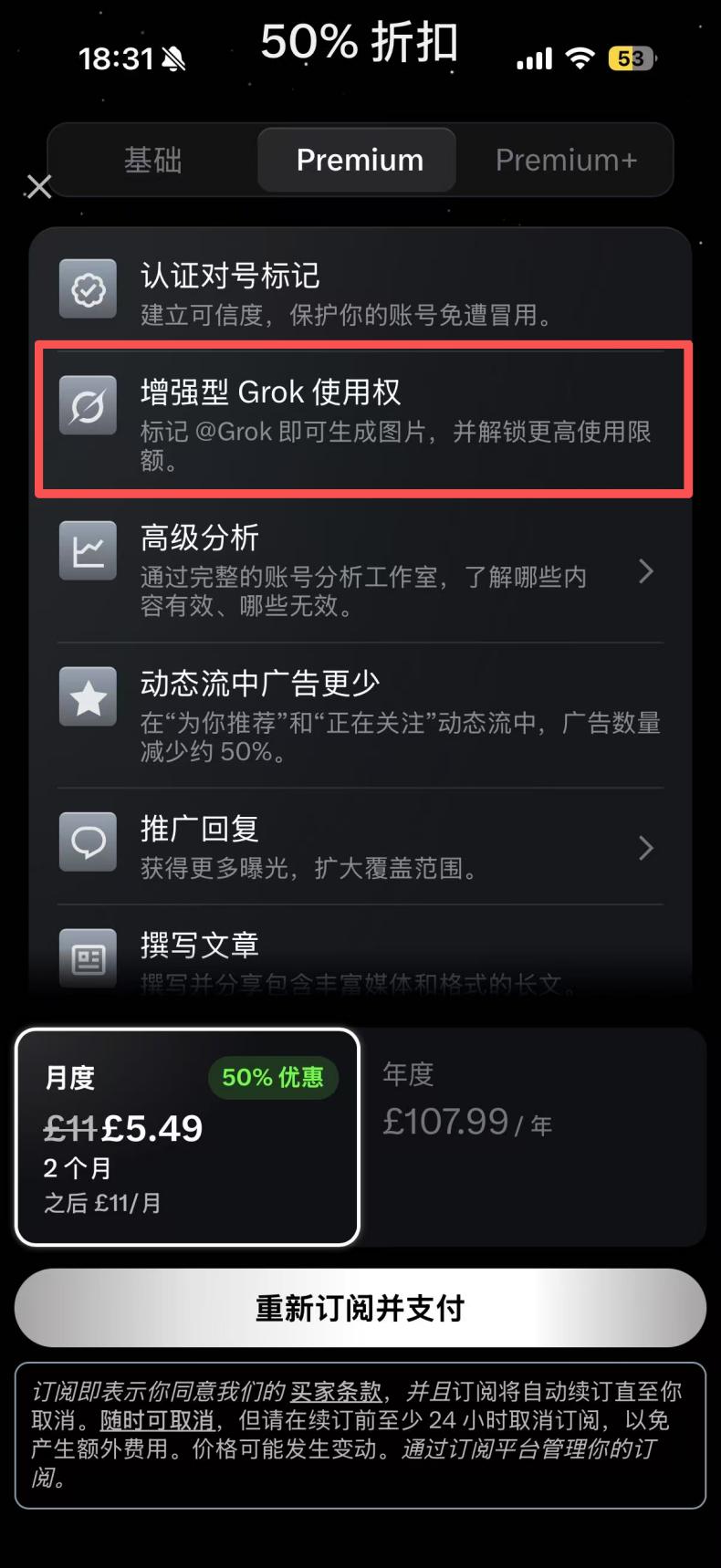
Frankly, Grok's rise to this position has little to do with its own capabilities, but rather with the channel advantage of being backed by X. Grok's paid subscriptions are directly bundled with X Premium, and X has a high penetration rate in the English-speaking market. When users subscribe to X Premium, they are essentially paying for Grok, so many users naturally start using it.
Taking Japan, the world's second-highest X-rated market, as an example, as a notoriously closed market, the third-ranked product in Japan is a local brand, My Daiz. Grok's MAU is only slightly lower than the former, ranking fourth, just a hair's breadth away from making the list.
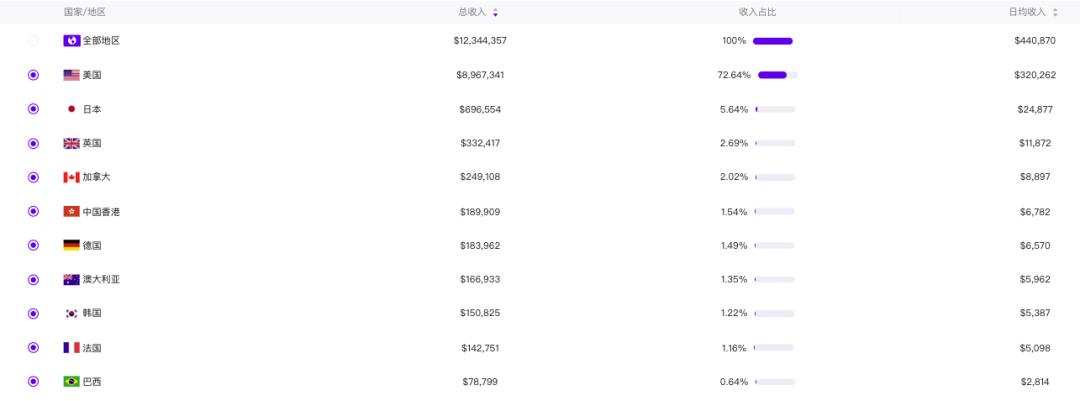
X Top 10 Markets by Revenue Source, largely overlapping with the listed countries | Image source: DianDian Data
In terms of user experience, Grok directly accesses X's full tweet database, allowing direct access to tweets on X and theoretically the ability to retrieve the latest content posted within 10 seconds. This is very attractive to X subscribers who are also creators.
In conclusion
Looking at ST's rankings, while ChatGPT and Gemini have dominated the Top 1 and Top 2 positions in almost all global markets, the Top 3 positions in each country actually reveal the demographic profiles and demand insights of each market.
The data comes from third-party platforms such as SimilarWeb, DianDian Data, Semrush, and Guangda, and may contain some errors compared to real data. It is for reference only.
This article is from the WeChat official account "Baijing Going Global" (ID: baijingapp) , author: Zhang Kairan, editor: Yin Guanxiao, published with authorization from 36Kr.