
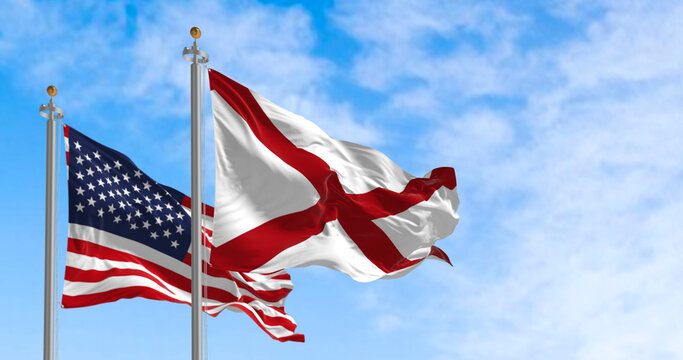
Alabama has become the second US state to grant decentralized autonomous organizations (DAOs) formal legal recognition, with Governor Kay Ivey signing the Alabama DUNA Act (Senate Bill 277) into law on April 1, 2026 – a move that hands Alabama crypto DAOs full legal personality, liability protection, and a clear path to tax compliance.
The legislation resolves one of crypto’s most persistent structural gaps: how DAOs operate legally in the real world.
With global DAO treasuries holding an estimated $24.5 billion in assets across 6.5 million token holders, the absence of formal legal standing has long been a liability risk for contributors and a barrier to institutional engagement.
Discover: Top Crypto Presales to Watch Before They Launch
What the Alabama Crypto DUNA Act Actually Delivers
Under the Decentralized Unincorporated Nonprofit Association framework, qualifying DAOs can own property, enter into contracts, open bank accounts, and sue or be sued as independent entities. Critically, individual members and administrators are shielded from personal liability, directly addressing the fallout from the 2024 Ooki DAO case, in which a federal court held DAO participants personally liable for CFTC violations.
To qualify, a DAO must have at least 100 members united around a common nonprofit purpose, such as governing a blockchain network or smart contract system. Governance can operate entirely on-chain, with voting, proposals, and consensus mechanisms recorded on the blockchain.
Miles Jennings, head of policy and general counsel at a16z crypto, called the bill’s passage a landmark moment, saying on Wednesday that “decentralized governance is essential to crypto’s future – it’s one of the core constructs in market structure legislation.” Jennings added the law gives communities “the certainty to build, govern, contract, and scale in the real world” while embracing innovation and protecting participants.
The House passed SB277 by an 82-7 vote with 16 abstentions on March 17, according to legislative records – a margin that signals broad bipartisan appetite for clearer DeFi regulation at the state level.
Wyoming vs Alabama: How the Models Differ
The Wyoming vs Alabama comparison is instructive. Wyoming pioneered DAO legal status in July 2021 with its DAO LLC law, which targeted for-profit entities.
Alabama’s DUNA Act is explicitly nonprofit-focused – meaning DAOs cannot distribute dividends in the traditional corporate sense, but can still generate commercial activity to support protocol growth. It’s a narrower but arguably cleaner legal wrapper for governance-first communities.
The development fits a broader pattern of crypto entities securing formal legal footing across US institutions, paralleling moves like Ripple’s pursuit of OCC national bank status and ongoing federal debates around stablecoin oversight frameworks.
As blockchain law at the state level accelerates, watch for potential DUNA registrations by major protocols like Lido in Q2 2026 and copycat bills in Tennessee and New Hampshire – while federal CFTC and SEC guidance on DAOs could test DUNA’s enforceability by mid-year.
Explore: Best Crypto Projects With High Growth Potential in 2026