The stablecoin wars may be the next stage in attracting market share and real-world utility.
Original title: "Stablecoin wars: analysis on the present and future of stables"
Written by: Chinchilla , Crypto Researcher
Compilation: Deep Tide TechFlow
Stablecoins are one of the greatest innovations in cryptocurrency. But after the new year comes, how will the pattern of stablecoins change?
· GHO
· crvUSD
· Dinero
· dpxUSD
Stablecoins can be used to attract users into DeFi. Moreover, liquidity can also be attracted to the native protocols that issue them. In fact, gaining dominance in the volume of native stablecoins may be crucial in order to increase the revenue of the protocol (and perhaps the token price).
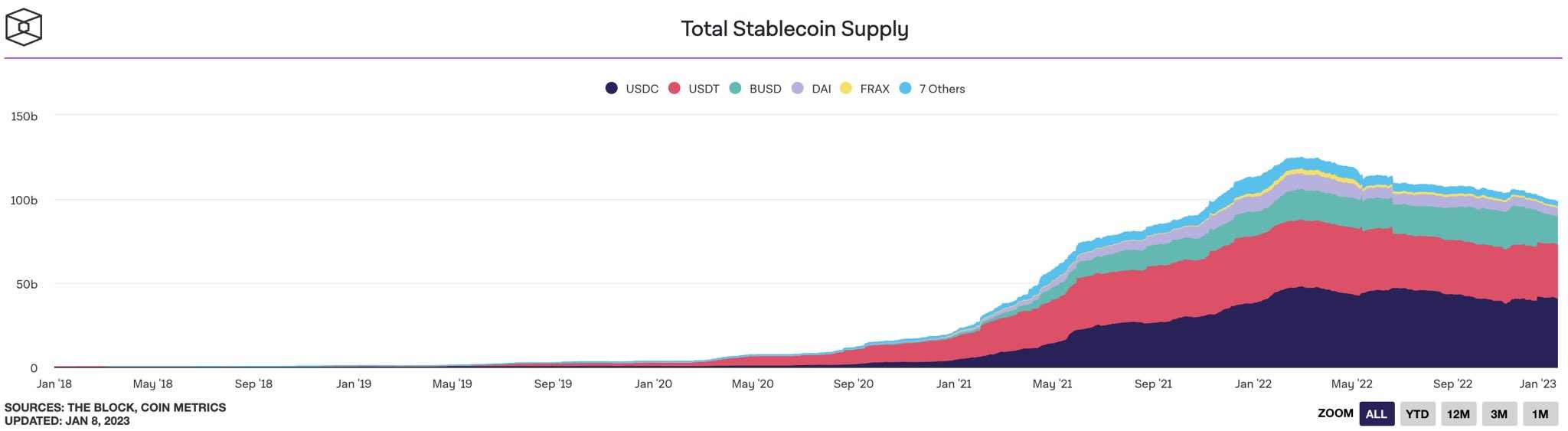
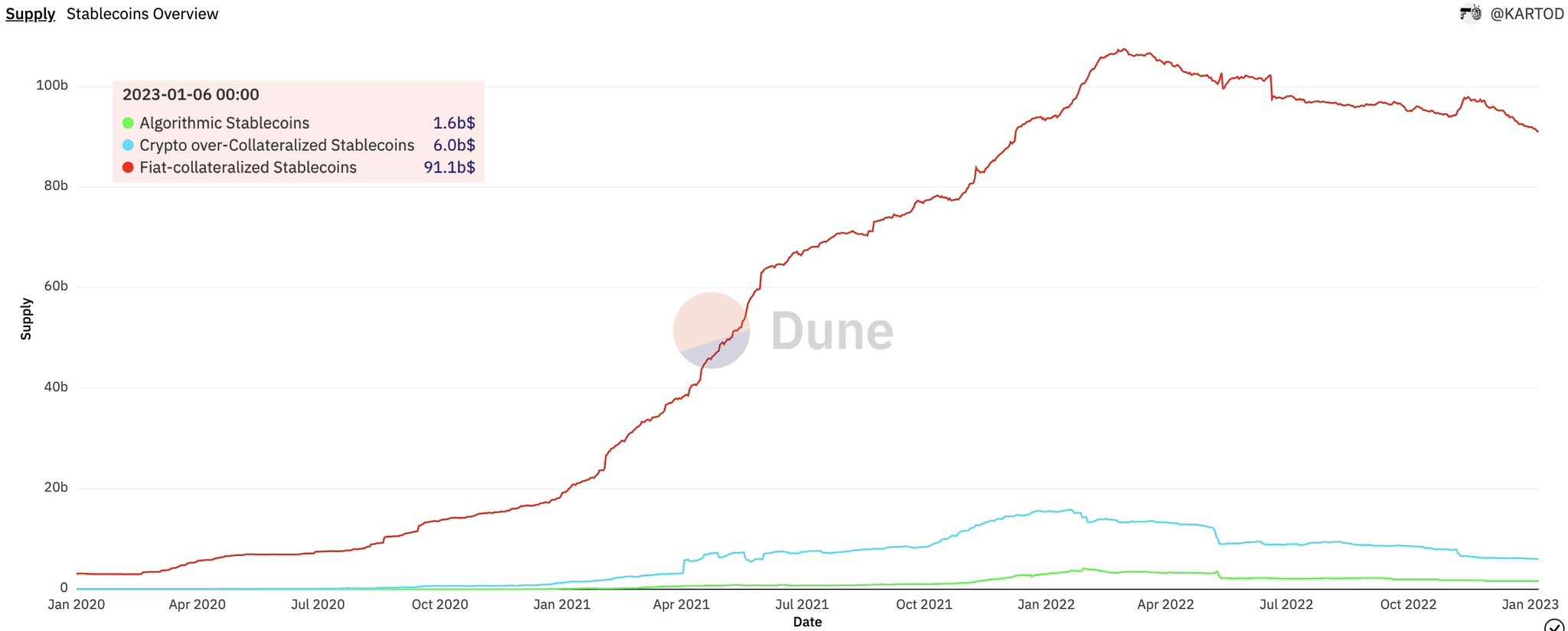
So first, a brief overview of the current situation. As the data analysis on Dune points out, fiat-collateralized stablecoins are by far the most widely used relative to crypto over-collateralized and algorithmic stablecoins.
But in a bear market, they still take a beating.
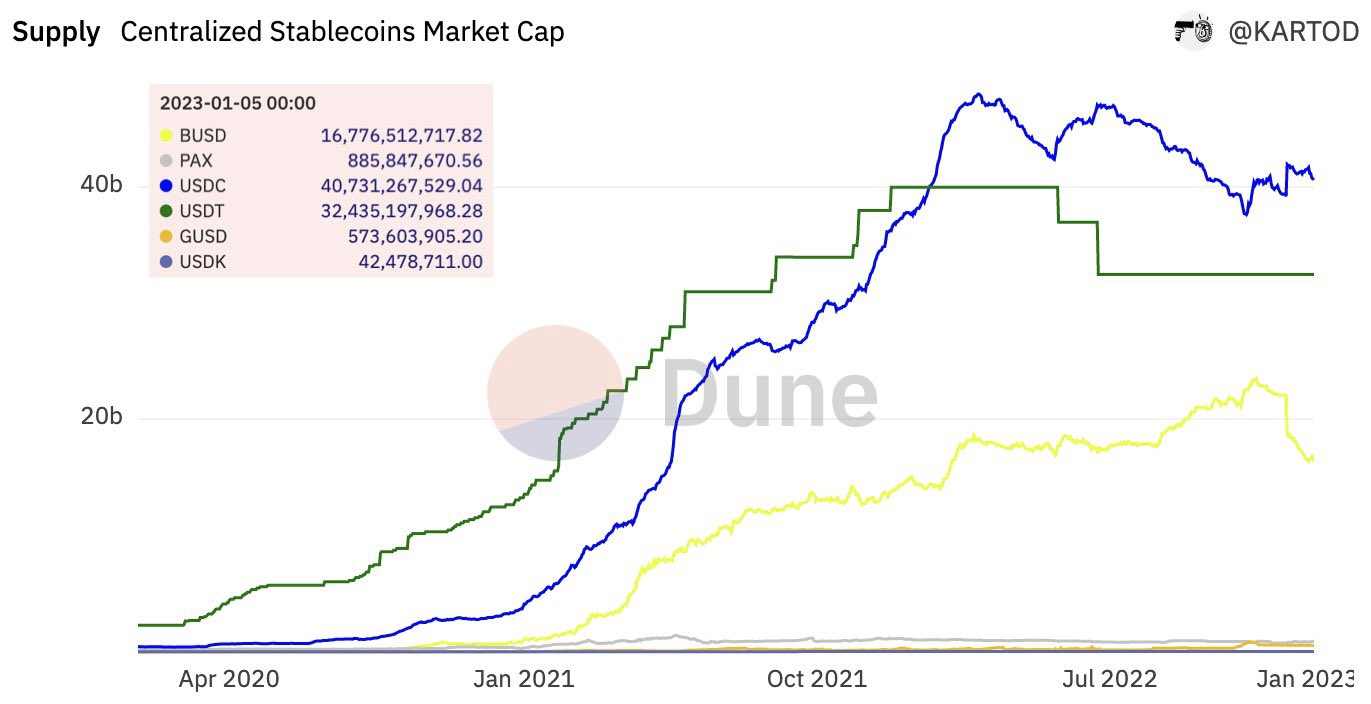
More specifically, while BUSD sees considerable gains in 2022, USDT and USDC are trending lower, and the recent FUD against Binance cost it billions of dollars in total supply.
Still, about 92% of USD-pegged coins are backed by centralized entities.
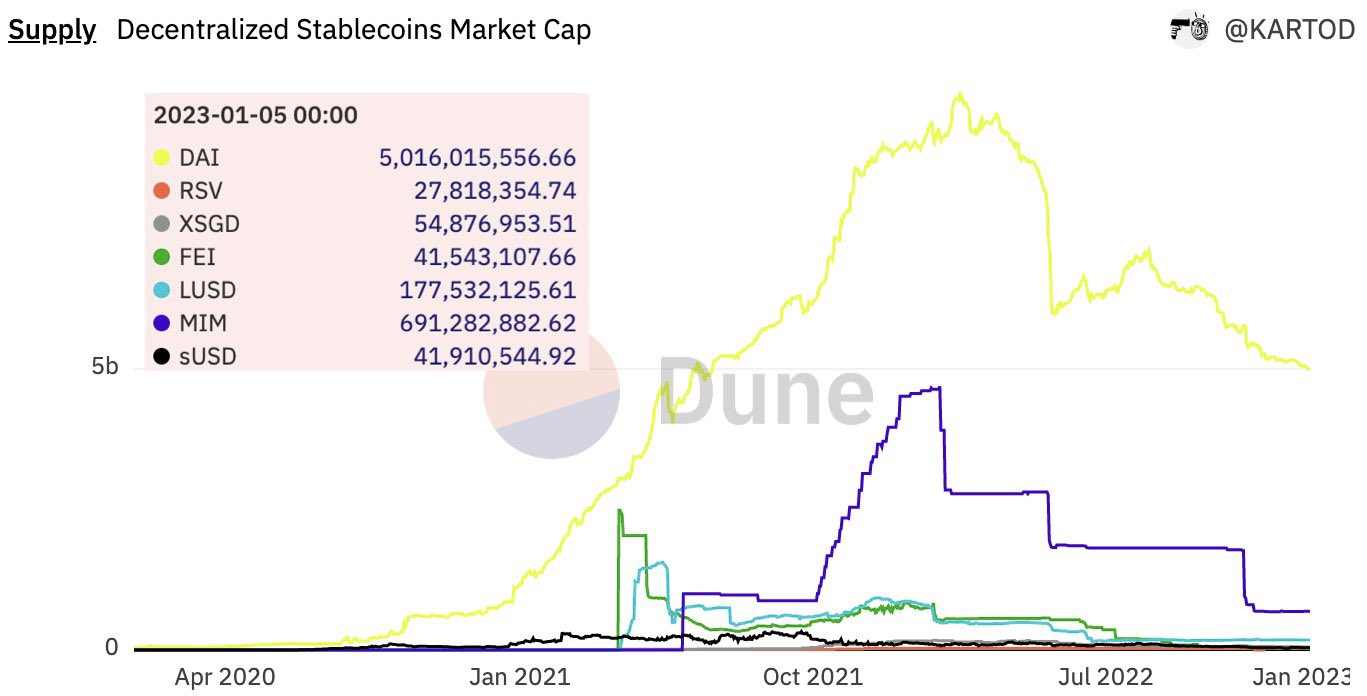
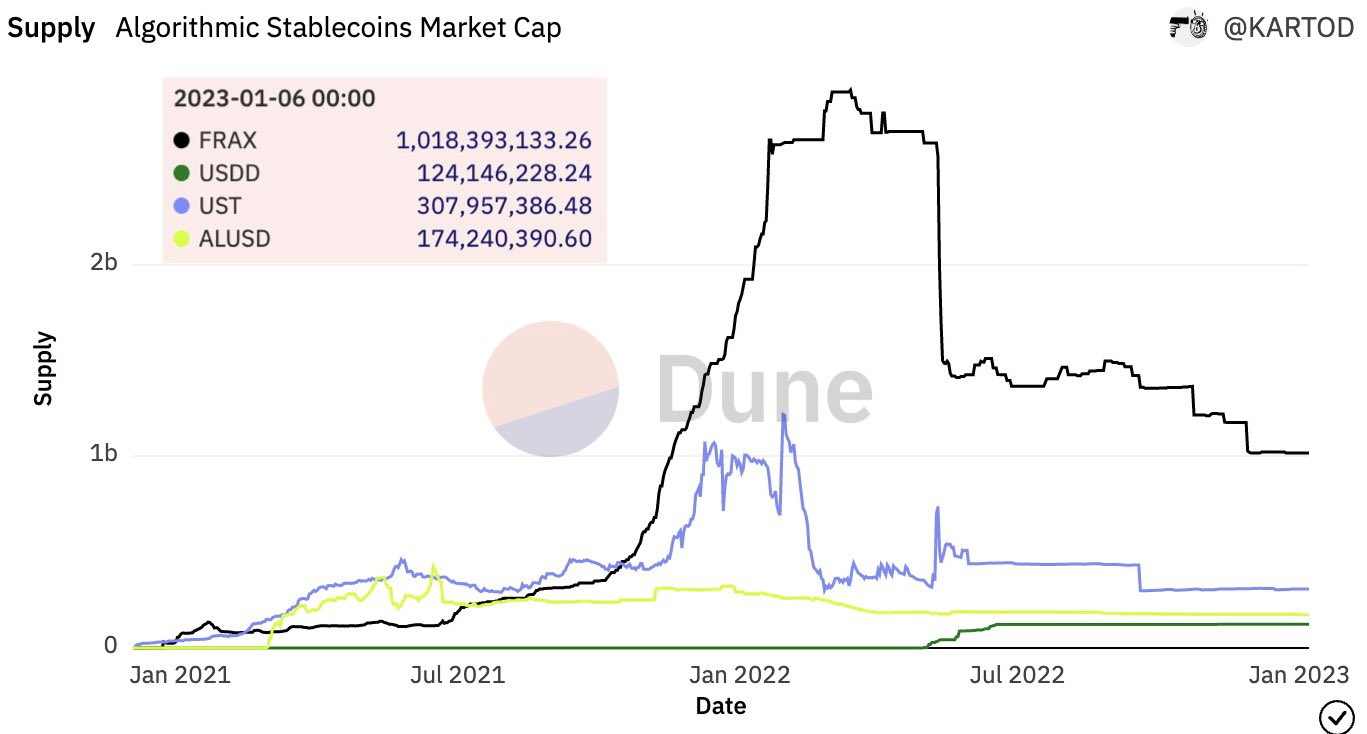
Additionally, decentralized and algorithmic stablecoins took a big hit in terms of trust following the Luna debacle. While their market caps are not on par with centralized coins, coins like DAI, LUSD, FRAX, and MIM have struggled to keep up.
Let's also not forget about other failures like:
Neutrino usd (USDN) from Waves;
USN of Near Protocol;
· Tron’s USDD.
So now that we’ve seen the current situation, let’s take a look at the protocols that aim to gain market share against centralized stablecoins.
AAVE 's $GHO
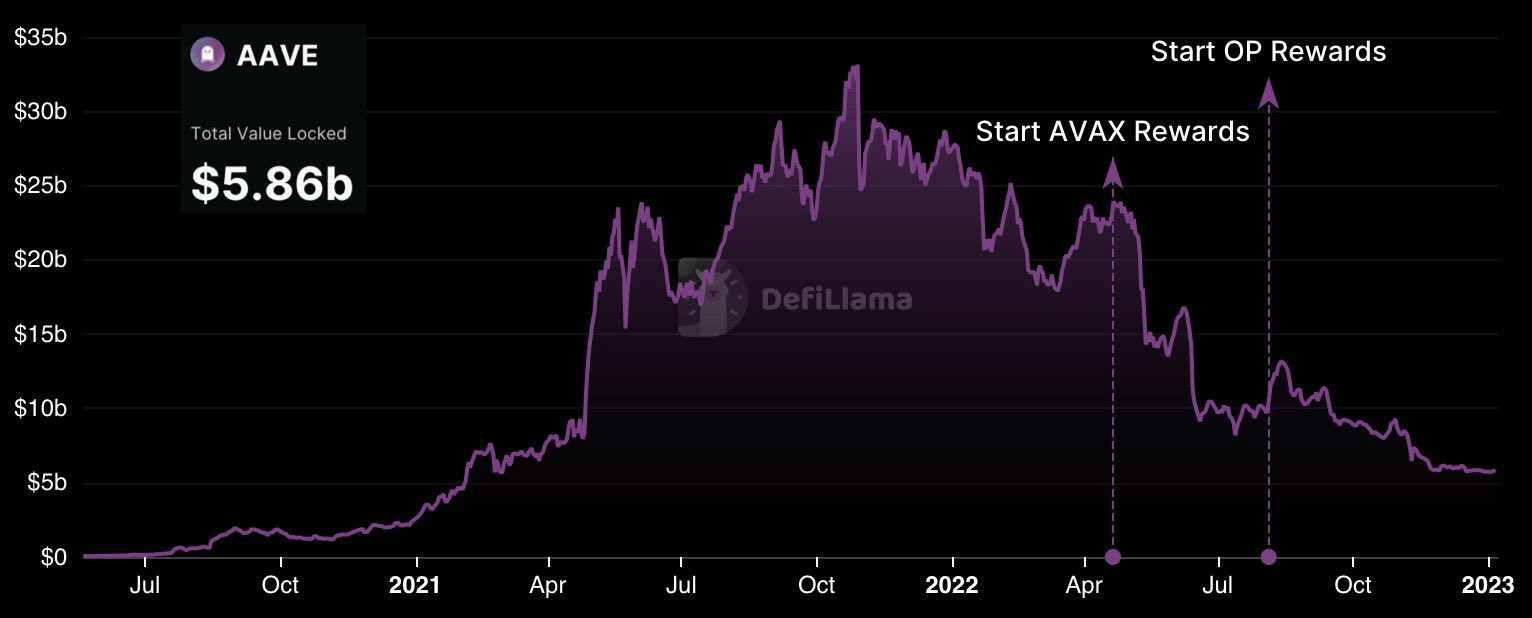
AAVE is one of the foundations of DeFi. Even at this stage of the bear market, its TVL can be maintained at $5.86 billion. In the summer, AAVE announced that they would launch a governance-managed stablecoin that supports overcollateralization, GHO.
"Facilitators" will be able to mint and burn GHO, and they will be managed by AAVE governance. Additionally, users holding AAVE Token will be able to mint GHO at a discounted rate. The agreement will be based on the idea of arbitrage to keep the price of GHO stable.
Also, it does not rely on external price oracles. I know it sounds scary after the UST crash, but the mechanics are quite different.
UST's arbitrage is based on its own balanced volatility asset (Luna), while GHO will be overcollateralized by a basket of Tokens.
Curve's $crvUSD
Curve is another milestone for the cryptocurrency ecosystem. It ranks second among all DeFi in terms of transaction volume, reaching $1.36 billion in 7 days, accounting for 22% of the total market.
Similar to AAVE , they announced a new stablecoin last summer called crvUSD.
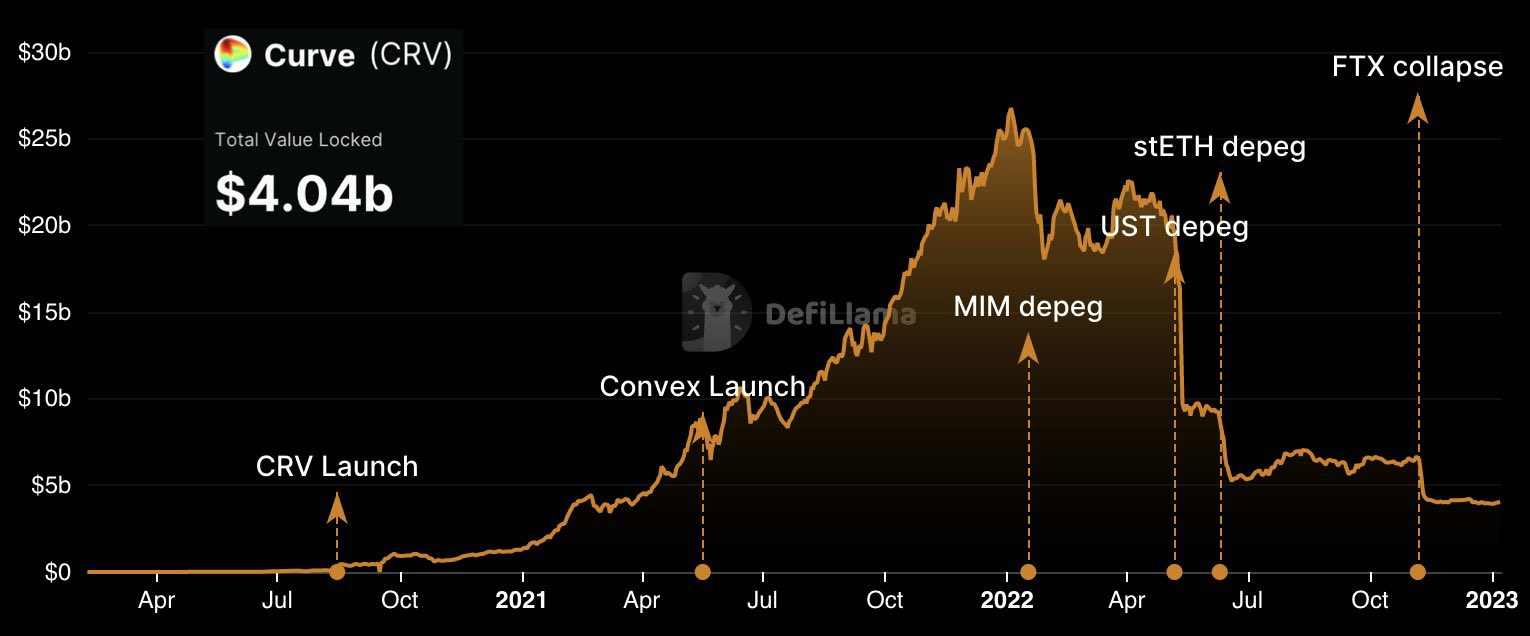
The founders confirmed that crvUsd will be overcollateralized. But the Curve team has two impressive innovations. One has been announced in the white paper, while the other is still rumored:
LLAMA (Lending-Liquidation AMM Algorithm);
· Supported by LP.
LLAMA will enable a continuous liquidation mechanism for debt positions (stablecoins). This means that, unlike Dai, in the event of a shock event, the collateral position will be gradually liquidated when the shock event occurs. This smoothing process prevents losses during market fluctuations.
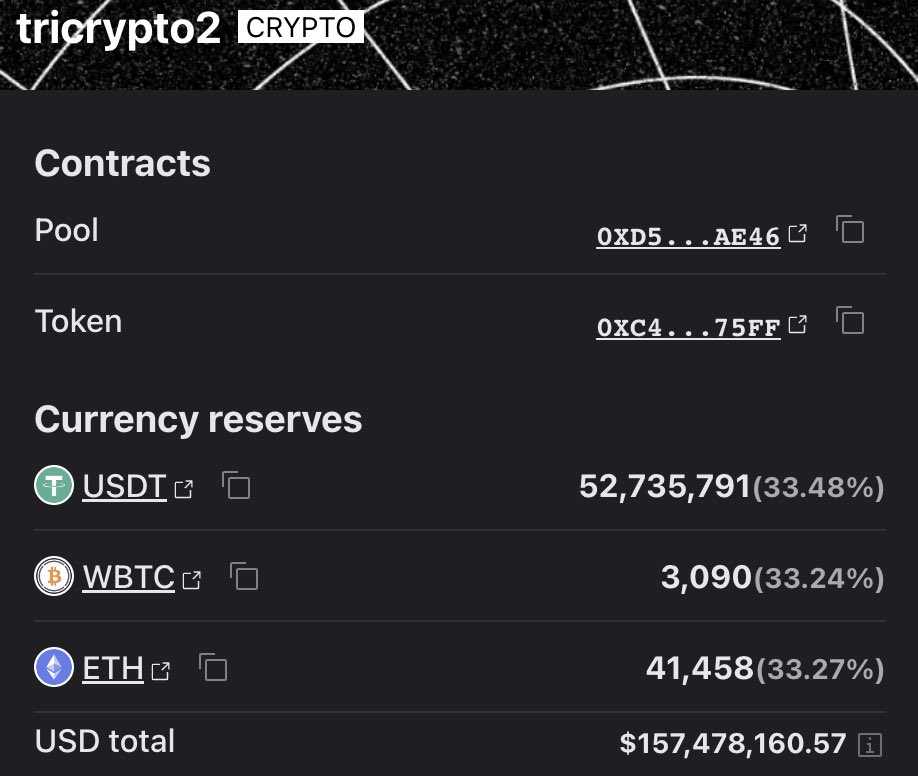
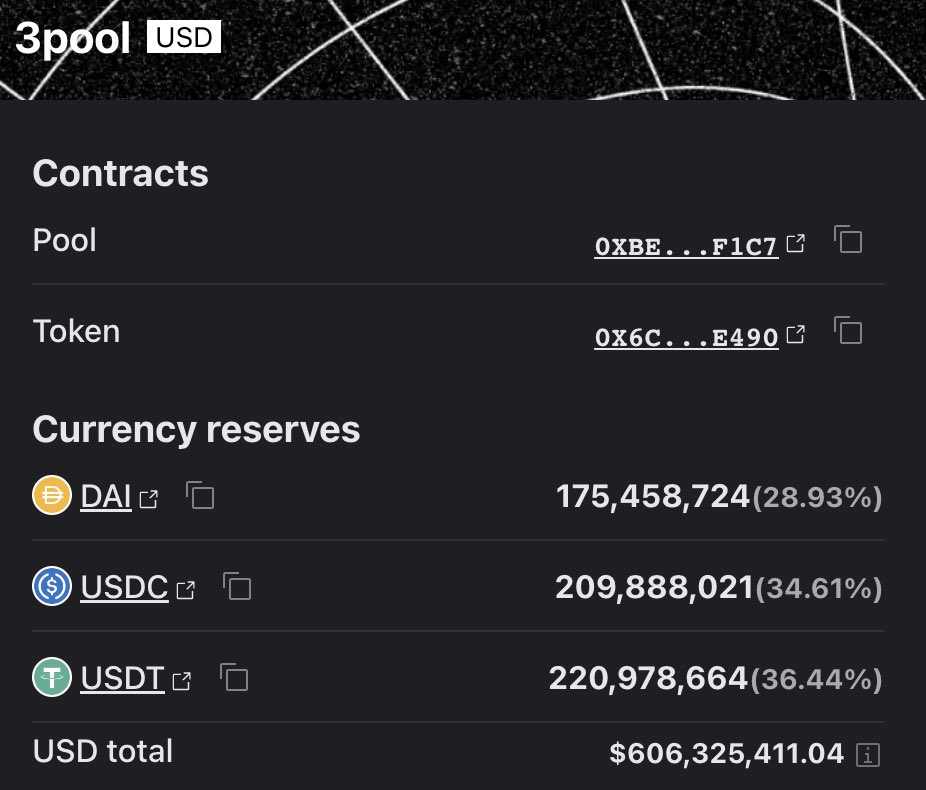
crvUSD is overcollateralized by tricrypto2 and 3pool. This is just speculation, but there are growing rumors that crvUSD will be backed by Curve's liquidity pool:
· tricrypto2: Composed of USDT, wBTC and ETH .
· 3pool: composed of DAI, USDC and USDT.
$Dinero from Redacted Cartel
The Redacted Cartel team announced a few months ago that they would be launching their first stablecoin: a stablecoin fully backed by Ethereum over-collateralization.
They say it will be done in phases, with the first phase being rolled out in 1Q23.

As you probably know, the Redacted ecosystem empowers DeFi protocols with on-chain liquidity, governance, and cash flow. So maybe incentives will be key for this stablecoin.
$dpxUSD from Dopex
Dopex is one of the most interesting options protocols in cryptocurrency. It's based on Arbitrum, and it keeps on innovating. While we don't know the exact timing, the team announced that dpxUSD will be available in the future.
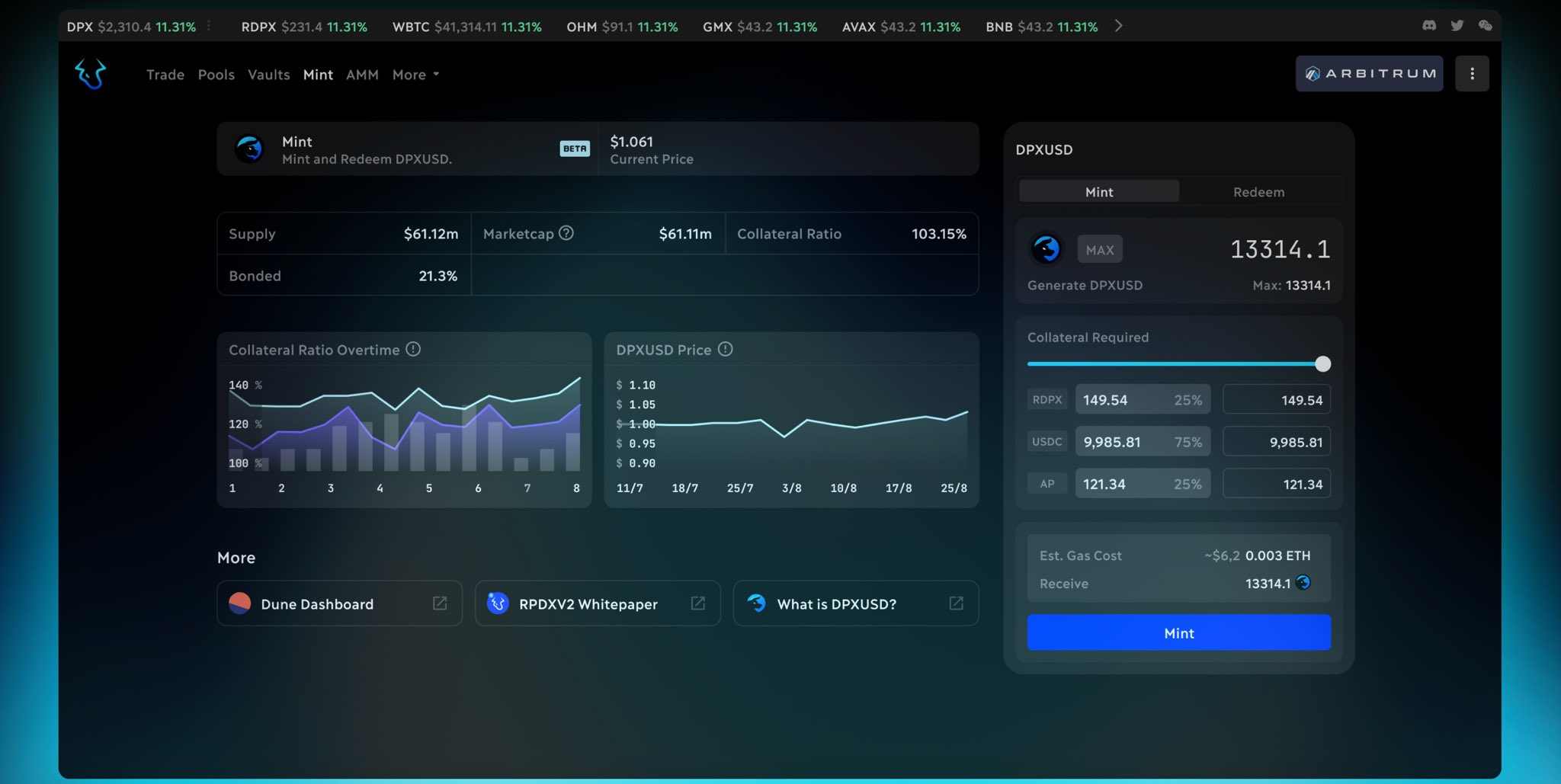
DpxUsd will be supported by:
75% USDC
25% rDPX
This stablecoin is minted by combining rDPX with USDC as a liquidity pair, providing an incentive for minting it in the form of a discount.
But what happens in the event of a decoupling event? There are three possibilities:
· The protocol removes dpxUSD from LP, forcing the pool to rebalance its peg.
· Whales intervene by buying dpxUSD, although this will be based on trust.
· In the event of an extreme event, dpxUSD will be redeemed at a discount to the underlying asset (0.75 USDC + 0.25 rDpx).
This last strategy will present an arbitrage opportunity as the underlying collateral has been earning yield and should be worth more than its dpxUsd USD value.
Summarize
That concludes the overview of upcoming stablecoins. But we should not forget projects that are already on the market recently, such as Frax Finance (FRAX) and Liquity (LUSD):
Frax is a stablecoin partially backed by collateral, partially backed by an algorithm;
· Lusd is backed by ETH .
In conclusion, history tells us that decentralized stablecoins often fail or have to change their mechanics. Or meet MakerDAO after DAI went bankrupt in the March 2020 crash. That's why they switched from 100% ETH backing to roughly 50% USDC.
So while some of these protocols have a "long" history of deploying incredible solutions for DeFi, we should always keep in mind that innovation is always risky. And, in the coming years, regulation of this asset class is also coming.
Still, all of the protocols I've listed try to fundamentally innovate cryptocurrencies. We haven’t seen a major Token-issued stablecoin before, or a lending/loaning dApp with billions of TVL launching a stablecoin. All of these innovations are trying to revolutionize the industry.
We are used to Curve wars for liquidity and voting rights. But the stablecoin wars could be the next stage in attracting market share and real-world utility. Our intent is to take power back from centralized entities and give it back to decentralization.