In February this year, the first TCG game of Parallel, a Web3 franchise brand led by Paradigm, will enter the Closed Alpha testing stage , and according to the proposal voting results of the Echelon Foundation, Parallel will also unlock the core assets of its chain game ecology on March 1 Prime tokens.
In this article, the author will analyze the "Trojan horse" strategy adopted by Parallel chain games from the perspective of participants, and how it uses sustainable design to get out of the Ponzi cycle of Crypto games. In addition, the composable game design provided by Parallel The method is also worth learning and drawing lessons from.
Before understanding Parallel's chain game ecological design, we need to briefly understand the background story of the entire game.
1. The background story of Parallel
Parallel's story begins not too long ago on Earth, where energy has become a scarce commodity as the planet's resources are depleting, and scientists, desperate for a solution, experiment with a new type of fission reaction using antimatter. But the experiment failed and triggered a global catastrophe known as "The Event", a new type of radiation began to spread across the earth, killing billions of humans and animals.
In the context of facing the crisis of survival, human beings built three spaceships called "Genesis" to take a large number of survivors away from the earth, one of them went to Mars, and the other went to Europa (the second satellite of Jupiter). ), and one went to the asteroid belt. After thousands of years, humanity avoided extinction and survived in five separate groups known as Parallels. Since then, the "shocking" event has been called "The Priming" by those survivors. And the earth has become livable again, and a new energy called Prime appeared here. The five Parallel groups finally clashed in order to control the earth and Prime energy.
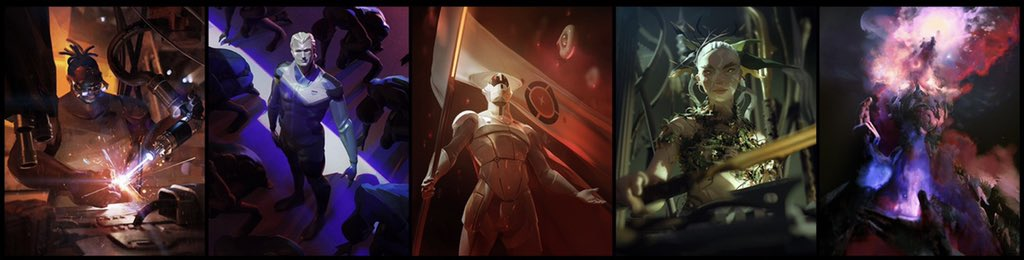
The Earthen : During "The Priming", some humans were found to have a natural immunity to radiation, and while billions died, these immune people survived, and the Earthen People (The Earthen) are the descendants of these survivors left on Earth. Earthlings are nature-oriented, and they have a deep connection to their environment. After hundreds of years of living on a highly irradiated Earth, the Earthlings have evolved to manipulate the energy Prime using only their own bodies.
The Marcolian : During the events of the Great Escape, the spaceship named "Soleil Rouge" traveled to Mars, where a scientific research colony already existed. Refugees from the Red Sun unite with the Martian colonists to form a new scientifically minded and military-oriented society. And the Marcolians are the descendants of these people.
The Kathari : The destination of the "Artemis Proxima" spacecraft is Europa (Jupiter II satellite). On Europa, refugees have built a city beneath the icy moon shell. An act of terrorism destroyed the colony's ability to grow any crops. The Cathars have turned to genetic engineering in order to survive, duplicating food and even human bodies. The Kathari are cloned descendants of Europa refugees.
The Augencore : The third ship to leave during the Great Escape was The Fortitude, the mission of the Fortitude was never to tie the ship's existence to a planetary body , so the ship moves from one asteroid to another to mine resources. Decades of low-gravity environments have taken a toll on the crew's aging bodies, so they're experimenting with selective surgical augmentation. Eventually, mechanical body augmentation became a standard way of life on the Endurance, which was renamed Caine-1, and Augencourt is a descendant of the original crew of the Endurance.
The Shroud : Long before the event, humanity had a mission to an Earth-like exoplanet called Kepler-1649c (Kepler-1649c). The spacecraft performing this mission is "The New Dawn" (The New Dawn). During the mission, the "New Dawn" was threatened by a black hole. Although it escaped from the black hole, its final destination in space is It is a mystery to everyone except the crew of this spaceship. Centuries later, when the New Dawn returned, its inhabitants, eternally changed in ways beyond human comprehension, became known as The Shroud.
2. Parallel's "Trojan horse" strategy
Looking back at previous chain games, such as Axie Infinity (AXS) or STEPN, game project parties often set up various thresholds to emphasize Web3 ownership. The most common is to force players to hold NFT to participate in the game, which inevitably brings The friction of user experience came and led to the Ponziization of the game. This kind of chain game is also called GameFi by us. They are characterized by attracting a large number of speculative players in a short period of time, so they show explosive growth. However, as the speculation ends, data such as the number of daily active users and game market value will all show a cliff-like decline.
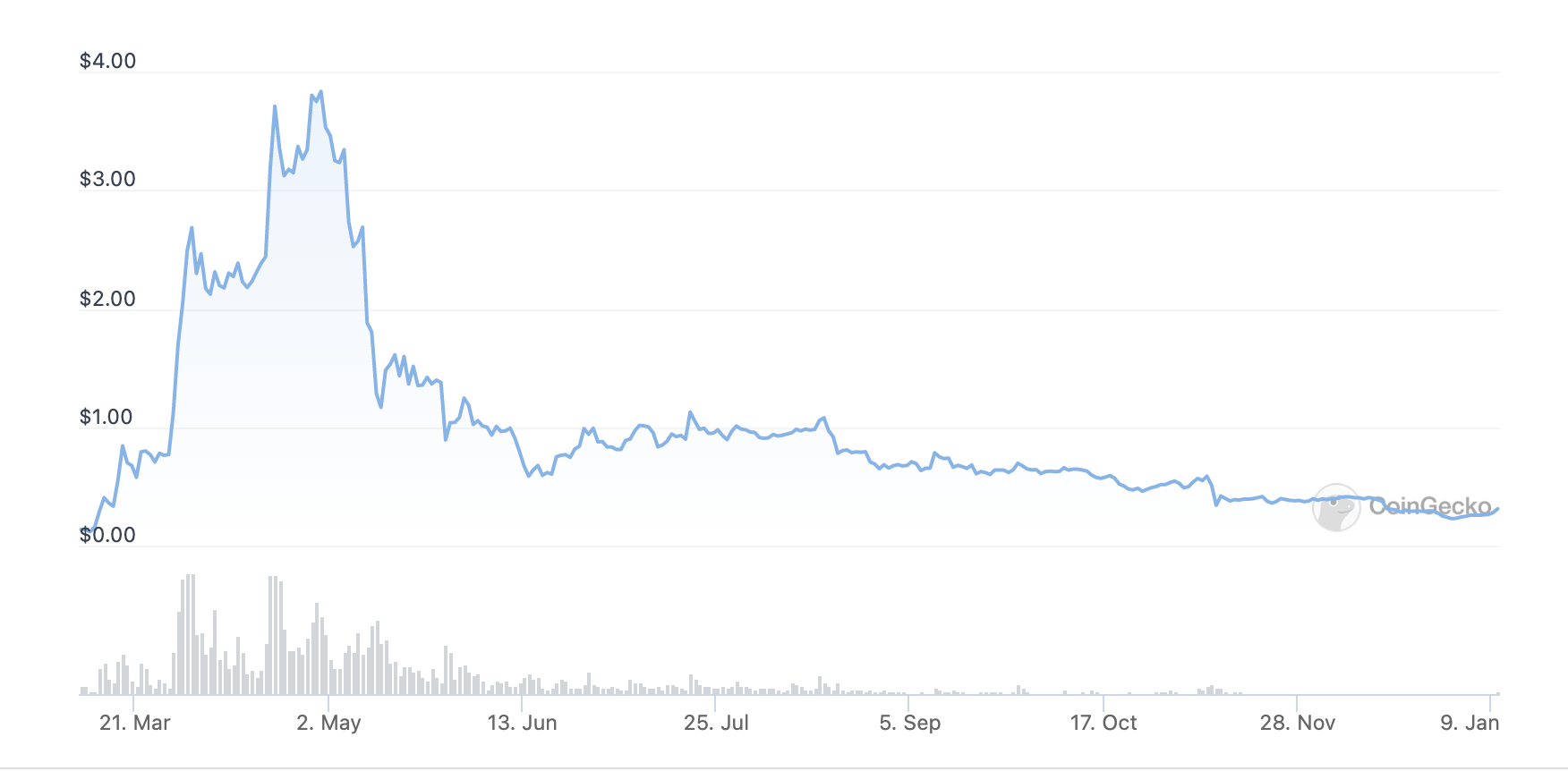
In order to improve the P2E mechanism, some chain games choose to join the free-to-play (F2P) strategy to expand the potential game player base. For example, card games such as Gods Unchained and Skyweaver all adopt this strategy. The game obtains non-NFT cards and upgrades them to NFT cards through tokens to participate in P2E games. However, the focus of this strategy is still P2E-based, and F2P is only used as a means of drainage.
Parallel's first TCG game, on the other hand, adopted a true "Trojan Horse" strategy, packaging itself as a traditional Web2 game to attract traditional free-to-play gamers and paid gamers, who can use payment methods such as credit cards to purchase card packs Draw cards (non-NFT) and consume various items such as skins that do not affect the balance of the game, just like traditional games such as "Hearthstone" and "MARVEL SNAP".
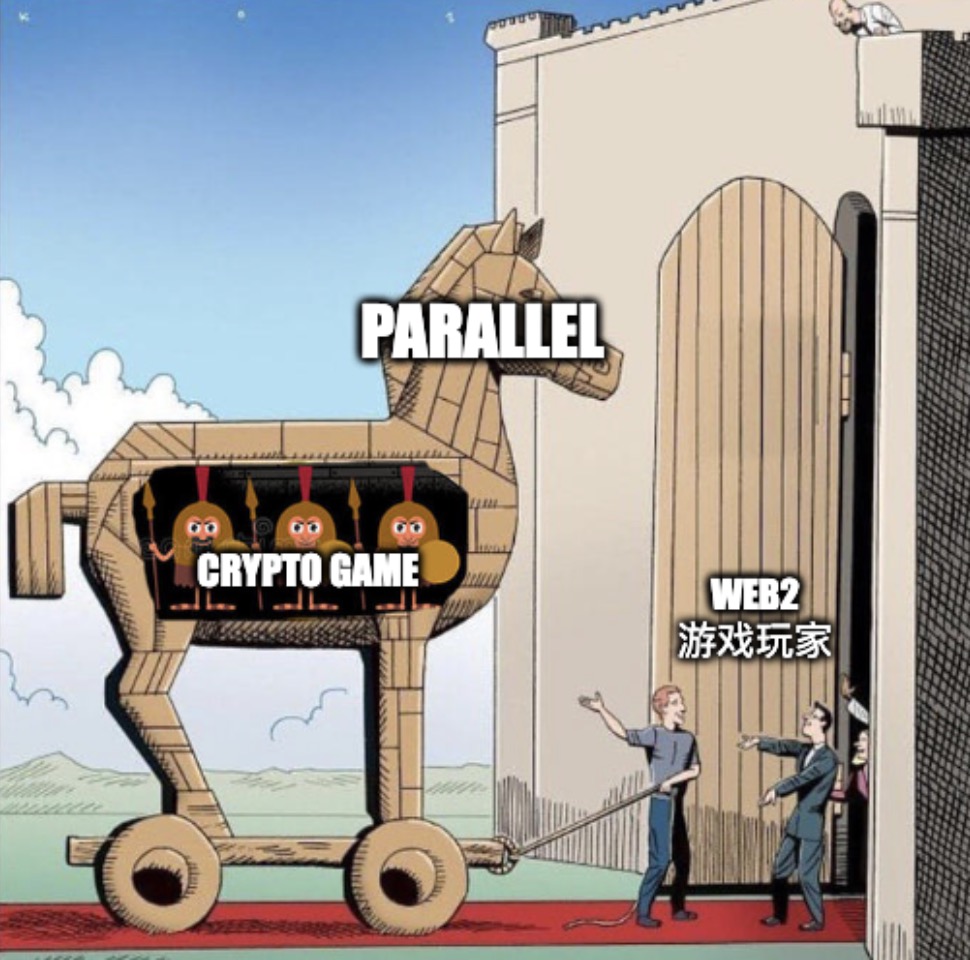
In this system design for traditional Web2 gamers, Parallel introduced a non-transferable in-game currency called GLINTS for players to spend in the in-game store, and 20% of the resulting revenue It will be transferred to the Echelon Foundation and used to support the Prime ecosystem, including repurchase and liquidity provision, while the remaining 80% will be used for the production of Parallel ecosystem follow-up games, comics, movies and other content.
For more advanced Web3 game players, Parallel adopts the win-to-earn (W2E) mechanism, which means that only players who hold NFT cards and win competitive games can get Prime token rewards, and each account There is a limit to the number of rewards per day, and in a deck (40 cards), the more NFT cards there are, the more complete the rewards won will be.
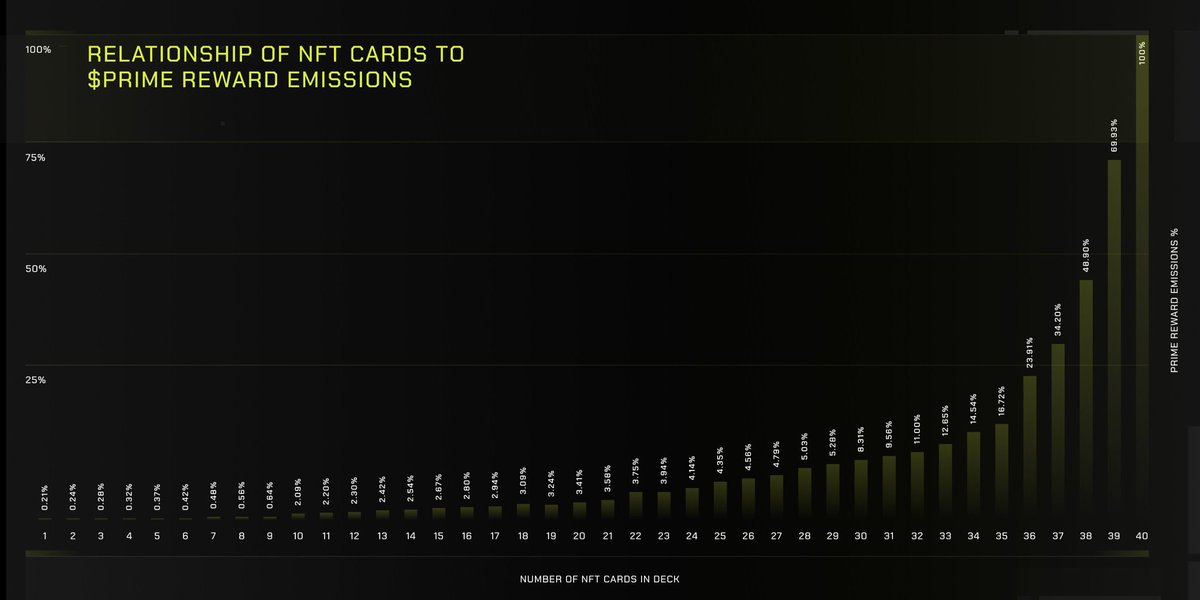
In addition, during the game winning process, players will also be prompted to use the advantages of advanced cards (NFT). This design actually motivates players to collect complete NFT card sets as much as possible, thus turning traditional Web2 game players into potential players. of Web3 gamers.
3. The sustainable path of Crypto games, how to get out of the GameFi Ponzi vicious circle
As mentioned above, in Parallel's two system designs, traditional gamers experience their familiar gaming environment and spend dollars for it, while Web3 gamers participate in more risky Crypto gameplay and Obtain a portion (20%) of game revenue from the traditional game player base.
This approach allows most players to avoid high-risk economic games and pay purely for the gaming experience. On the other hand, high-risk Crypto economic games can also increase the sustainability of the game through continuous external income.
In addition, designing various sink consumption scenarios for Crypto economic games is also the key to increasing the sustainability of the game. In the case of Parallel TCG games, this includes artist signatures, card draws, exchange for GLINTS (consumer skins), and copying NFTs Cards, payment P2P trading services, minting avatars and equipment, etc., these consumption scenarios are intended to keep the economic system healthy, thereby mitigating the negative feedback effects of Prime Token speculation.
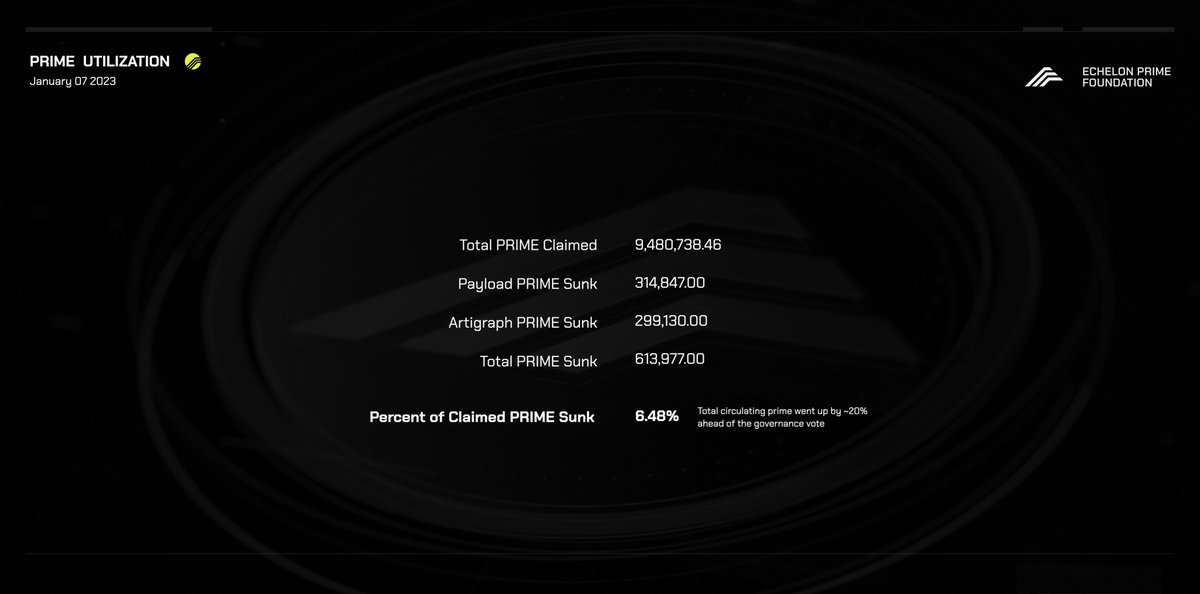
(Current Parallel participants have consumed 6.48% of claimed Prime tokens through 2 sink activities)
But what we need to pay attention to is that the premise of the success of these designs is the need for one or more games that can attract traditional players to participate. This will be the key to whether Parallel and other Crypto games can get out of the Ponzi vicious circle.
4. Another way of composability
We know that in addition to providing the benefits of ownership, Web3 games can also provide composability through on-chain games, which is a potential benefit pursued by many on-chain game explorers.
Parallel, which uses the offchain method, provides another idea of composability. Its developers create a 3D asset library for each NFT card for use in other types of games in the future.
For example, in MOBA game design, players can use units/equipment to build an army in PVP strategy competitions, and equipment and units can be combined. According to the proportion of NFT in the army, the proportion of PRIME that can be won is also will be different, this uses the same system as Parallel TCG and utilizes the same asset library.
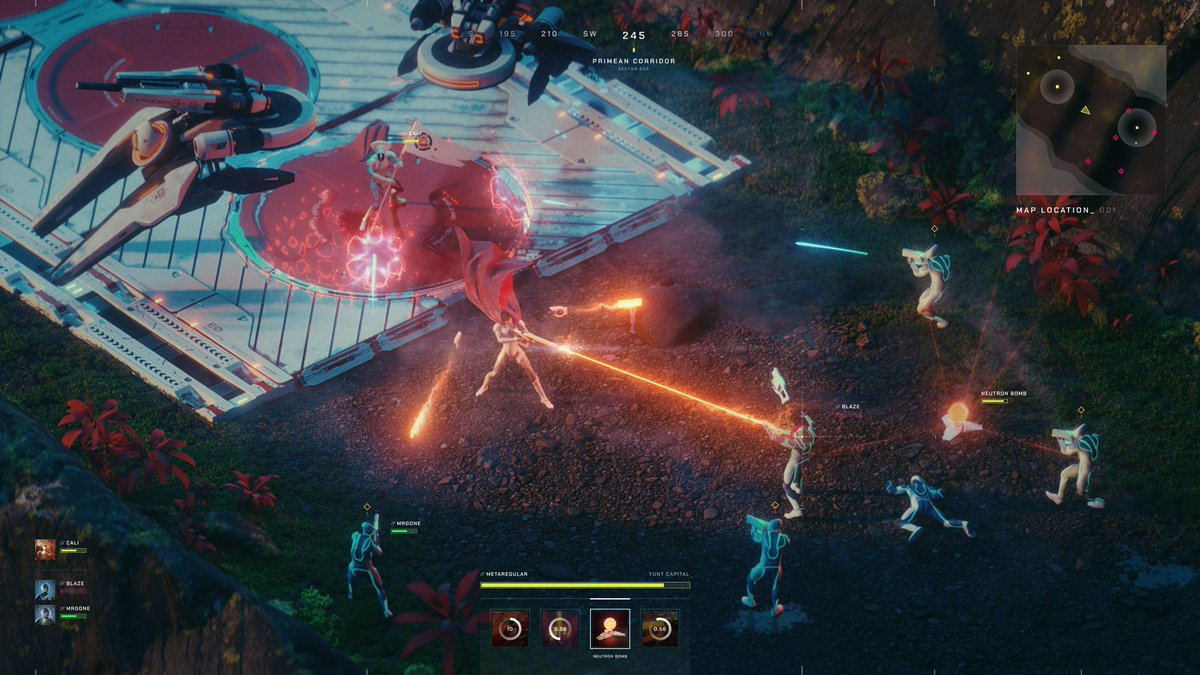
(Note: The Parallel MOBA game design drawing has not yet entered the development stage)
Other types of games can also be developed in the same way. This can be a game developed by Parallel Studio itself, or a game developed by an external developer. It only needs to be accessed through the Echelon Foundation vote.
This composability method is also an upgrade to traditional games.
5. Current status of the Parallel project
In October 2021, Parallel completed a round of US$50 million in Series A equity financing led by Paradigm. At that time, the overall valuation of the project was US$500 million.
On the Opensea platform, the current accumulated transaction volume of Parallel NFT is 73043 ETH. Since the royalties of its game assets are as high as 10%, this brings Parallel Studio a total fee income of about 7300 ETH , but considering that there are about 1% Allocated to MP card and The Core card holders, the NFT secondary market brought Parallel Studio approximately 6574 ETH in revenue.
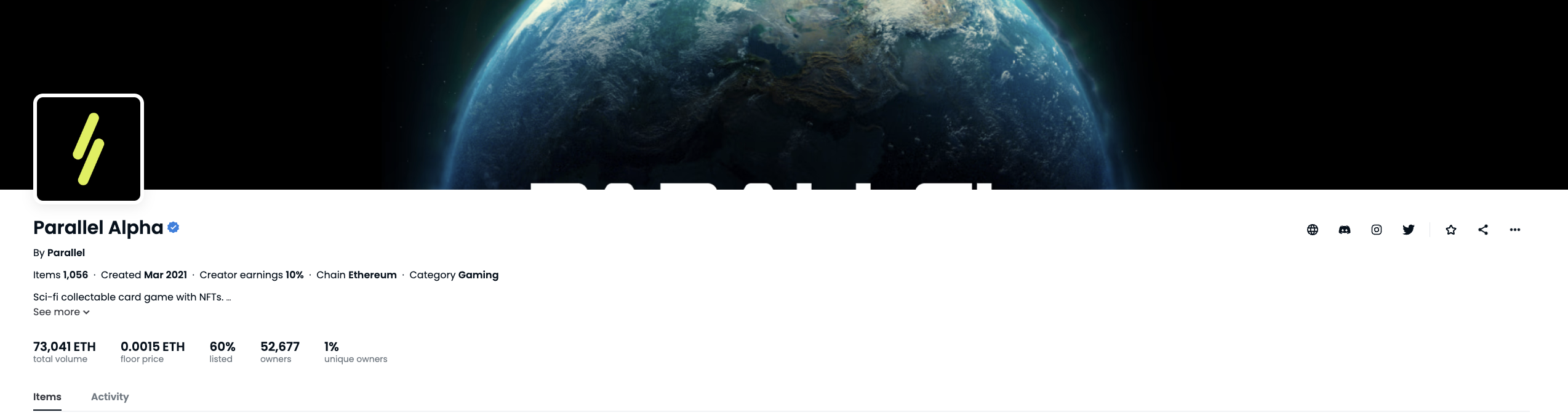
Besides that, Parallel also raised more than 10,000 ETH in 6 card pack sale events of presale (PS15) - PD5, and will raise about 1,500 ETH in the last PD6 event.
As of now, Parallel Studio already has the funds to develop 1-2 high-quality games. Since its development in early 2021, the Parallel TCG game has been polished for about 2 years, and is scheduled to conduct a Closed Alpha test in February this year. The official game is expected to be launched in the second half of this year.
In terms of the secondary market, after the first hype period after the Paradigm investment news was exposed in 2021, the unit prices of most non-rare NFT assets have fallen back, and have now fallen to a floor price of 0.0015 ETH(about $2).
The recent transaction price of Prime Key, the main NFT asset of the game, is about 13.5 ETH (currently worth $17,500).
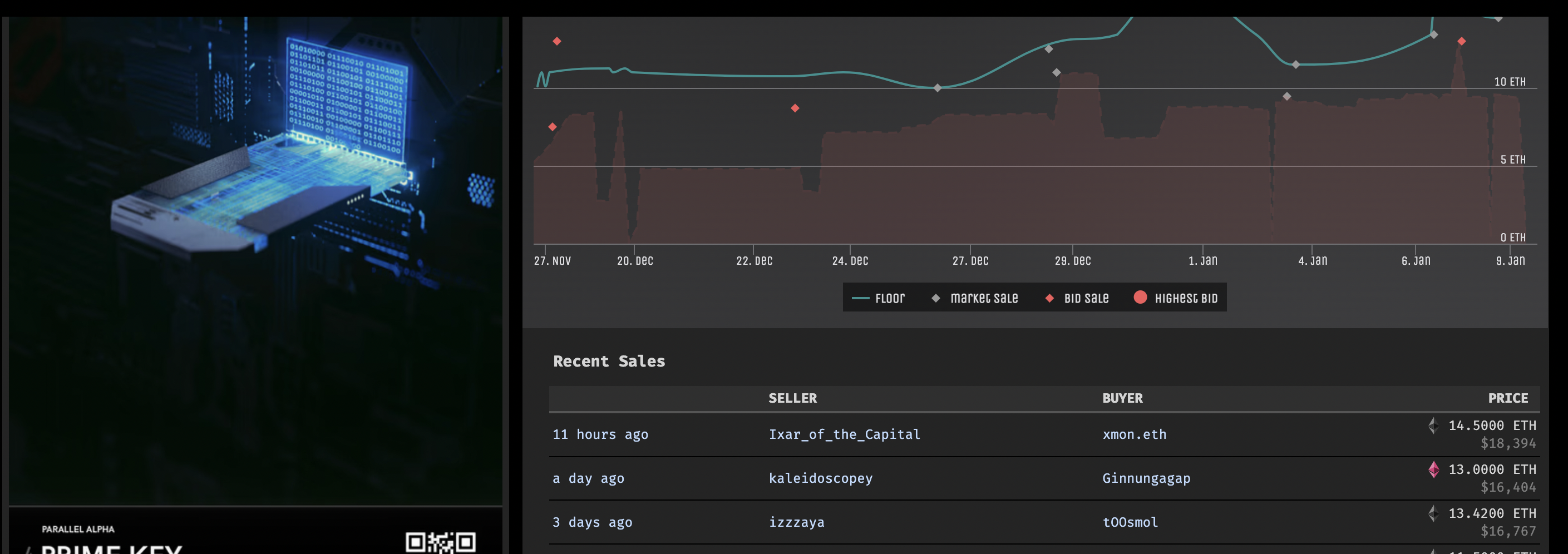
Considering that each Prime Key currently corresponds to approximately 4550 Prime ( note: PK card holders have received half of the prime tokens ), the secondary market currently estimates the overall FDV of the Parallel project ( note: the total amount is 111.1 million ) It is about US$426 million, which is only a 15% drop from the overall valuation at the time of bull market financing at the end of 21.
6. Final Thoughts
In view of the game-first design approach and unique "Trojan horse" strategy, Parallel has some conditions to attract a large number of traditional game players, and may convert some players into Web3 game players in the process of experiencing the game. On the other hand, since Parallel does not force players to adopt the Crypto game method, it may not achieve the same rapid growth in market value as the GameFi games we are familiar with, so it may not attract the attention of speculative players.
In the end, whether Parallel's game products can find a market fit will determine the development prospects of the project, and through the next game test, we can find the answer to this question.
Looking forward to the future, we expect to see more game-first Crypto game projects, whether offchain or onchain, so that more traditional players can recognize Web3 instead of GameFi, which is biased towards token economy games, destroying the industry .