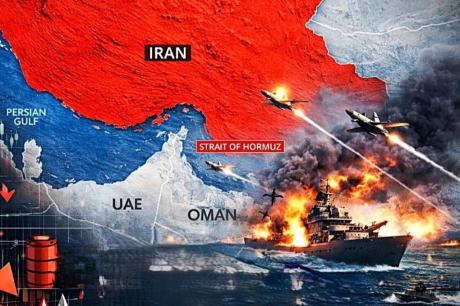
A US-sanctioned oil tanker with ties to China has left the Strait of Hormuz and entered the Gulf of Oman, thus challenging President Donald Trump's naval blockade.
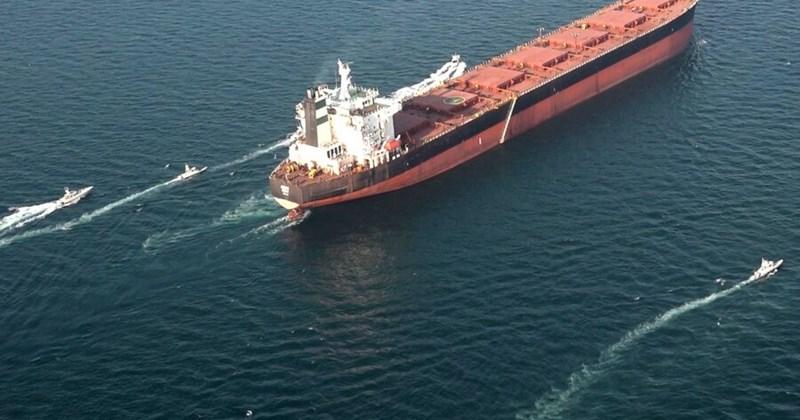
The Rich Starry, a medium-sized oil tanker formerly known as the Full Star, has been blacklisted by Washington since 2023 for assisting Tehran in evading energy sanctions. It is unclear whether the ship made any stops at Iranian ports before its voyage or was carrying cargo at the time.
This is the second time the ship has attempted to leave the area. Previously, it began its journey as soon as the US lockdown went into effect on Monday, but then turned back. A few hours later, the ship resumed its journey and by Tuesday had appeared in the area east of the Strait of Hormuz.
Shipowners, energy traders, and financial market investors are closely monitoring the vessel's journey through Hormuz to assess how the U.S. is enforcing its efforts to pressure Tehran and restrict its oil revenues – and how this blockade is actually working.
"The core issue isn't just whether the ship can pass through Hormuz, but what enforcement measures the U.S. will implement and where," said Charlie Brown, an advisor to the advocacy organization United Against Nuclear Iran.
Initially, Rich Starry signaled that the vessel was Chinese-owned and crewed – a common safety measure for ships transiting the area amid the current conflict in the Persian Gulf, and potentially a test of Washington's resolve to confront vessels linked to the world's largest oil importer. Tracking data later revealed the ship had changed its declared destination to the Omani port of Sohar.
Throughout the voyage, the ship's position signal was unstable. Ships in the area frequently experienced electronic interference, leading to inaccuracies in speed and position.
Another oil tanker, the Elpis, was also in the strait and heading towards the Gulf of Oman just as the blockade began. However, this vessel appears to have stopped outside the narrow strait and closer to the Iranian coast. Data from the ship tracking platforms Kpler and Vortexa shows that the Elpis had previously docked in Iran, making it a potential target for US Navy patrol vessels.
This ship has been under US sanctions since last year, formerly known as Chamtang, due to its involvement in Iran's oil trade.
Although information about the two ships' prior movements is unclear, signals suggest neither could have been in an Iranian port before 3 p.m. on Monday. This could be significant because the U.S. has allowed a "grace period" for neutral vessels to leave Iranian facilities, although this rule only applies to cargo ships, and both vessels are under sanctions.
Most of the shipowners Bloomberg contacted in the Middle East and Asia – who now need approval from both Iran and the U.S. to leave the Persian Gulf – said they would temporarily halt transits through the strait until the enforcement mechanism for the blockade is clarified.
Trump's blockade also raised concerns in Asian countries heavily reliant on energy from the Middle East. Chinese Foreign Minister Wang Yi called on all parties to promote peace talks between Tehran and Washington.
A Chinese Foreign Ministry spokesman said at a press briefing on Tuesday that he was not aware of the details of the Rich Starry's voyage. "Only when the war ends and peace and stability are achieved in the Gulf region can the safety and freedom of navigation in the Strait of Hormuz be guaranteed," said Guo Jiakun.
Any attempt to intercept a ship linked to China could further destabilize the market amid a global energy supply crisis.
“In the best-case scenario, Trump’s statement is merely a threat. In the worst-case scenario, it’s an escalation,” said Carlos Casanova, Asia regional economist at Union Bancaire Privee in Hong Kong.
Rich Starry claims to be flying the Malawian flag, but the landlocked African nation insists it has no official registration for international vessels.
The vessel is owned by Full Star Shipping Ltd., which shares the same contact information as Shanghai Xuanrun Shipping Co. Ltd., according to the Equasis maritime database. A call to Shanghai Xuanrun was unsuccessful, and the company did not respond to an email requesting comment. The company has also been sanctioned by the U.S. State Department.
The owner of the Elpis vessel is Chartchemical SA, using the contact information of its managing entity, IMS Ltd. A call to IMS in Malaysia was unsuccessful, and the company did not respond to emails requesting comment.