Do you remember the market downturn in 2022?
Bitcoin plummeted from 68,000 to 33,000, with a brief rebound to 48,000 before initiating its main downward trend, plunging to 16,000. Market movements are never linear; rebounds are merely part of a downward structure. This explains why many people are confused by shifts in their bullish and bearish views .
The current trend is similar. Prices are still trading within a defined range, having rebounded nearly 20% in the past two weeks with rising highs and lows, but have quickly fallen back after reaching key resistance. Structurally, the area around 70,000 is a crucial support level; if it breaks down, a further pullback to 60,000 or even lower cannot be ruled out. Meanwhile, the daily chart is approaching a death cross; if confirmed, this often signifies the start of a more complete downtrend.
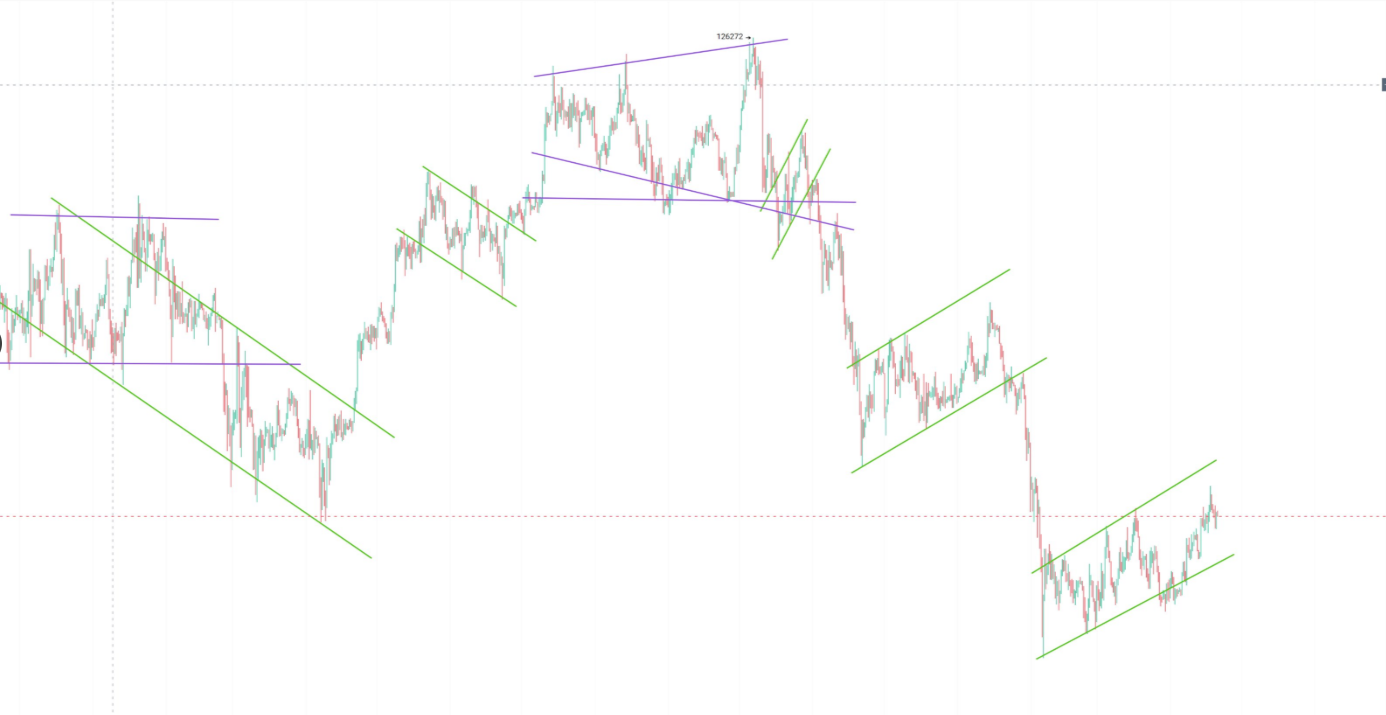
On the news front, there are short-term uncertainties. For example, if geopolitical negotiations release positive news, the market may surge again. However, it's important to note that such positive news is often priced in beforehand, and the actual implementation could easily become a temporary high – a classic case of "buy the rumor, sell the fact." Therefore, such rebounds are more suitable as opportunities to exit positions or establish short positions, rather than blindly chasing the upward trend.
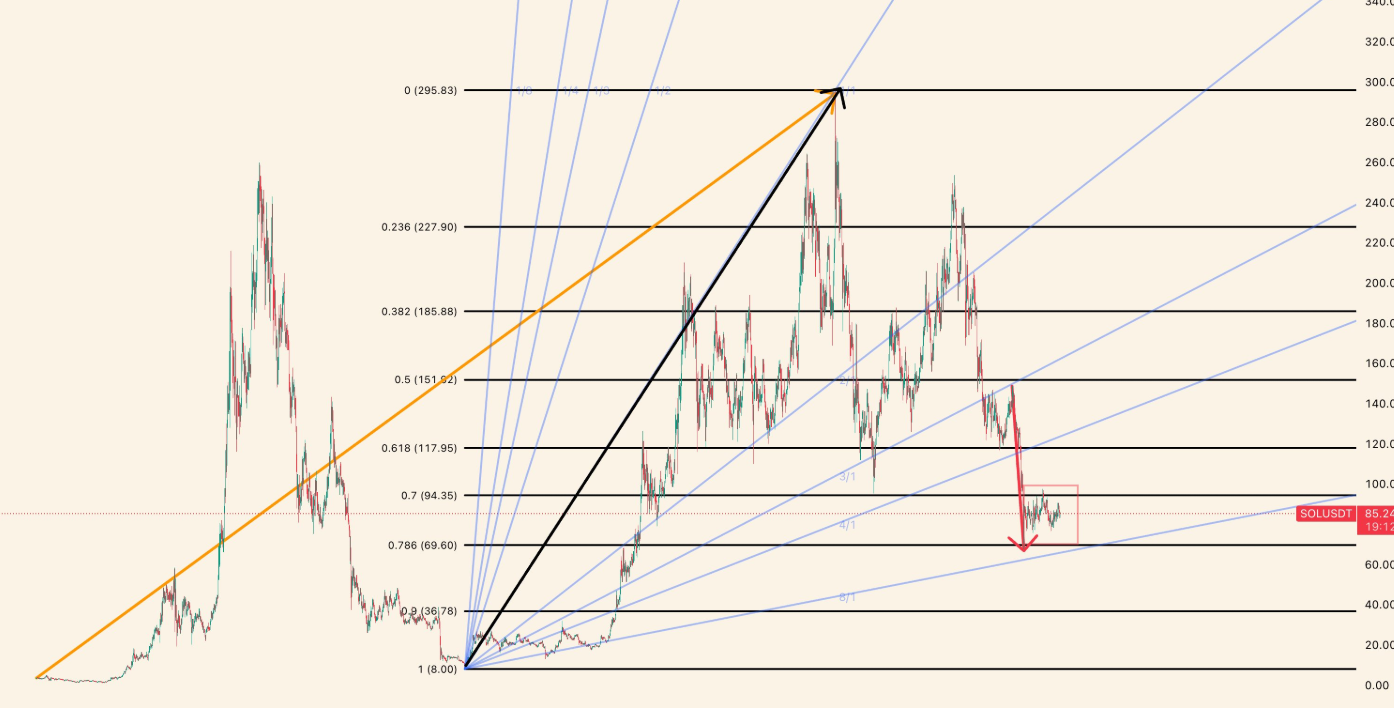
#SOL is currently still in a major correction phase. Since peaking at 295.83, the overall trend can be understood as a systematic pullback of the entire upward movement from the previous low to 295.83, which has been relatively long and significant.
The price rebounded after retracing to the key Fibonacci level of 69.6, but the rebound was significantly weaker compared to Bitcoin and Ethereum. It is more like a technical correction of the decline from 149 to 69.6 than a trend reversal.
Structurally, the 66-69 range is the most critical support zone in the short to medium term, and also the only remaining important support area. Once it is effectively broken, the correction is likely to be further amplified, evolving into a full correction of the larger cycle's upward movement (down to 295.83), at which point both the time and price range will be significantly extended.
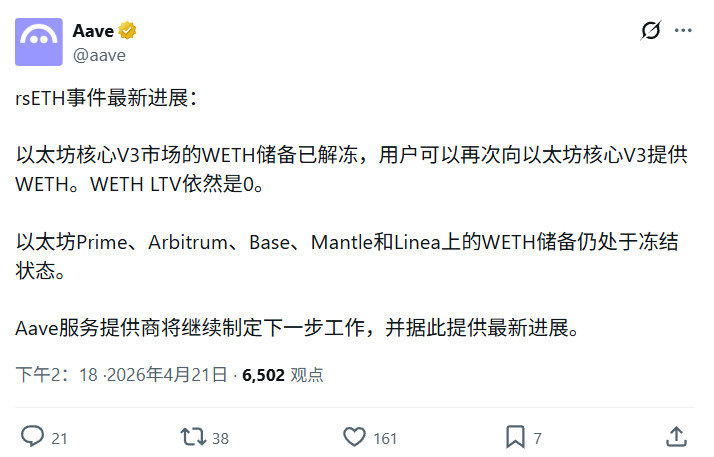
In addition, on-chain risks are also worth noting.
Recent events surrounding AAVE demonstrate that even without vulnerabilities in the protocol itself, manipulation of the underlying assets can still trigger systemic risks, ultimately leading to the withdrawal of funds. For ordinary investors, making money is never the hardest part; the key is to safely preserve capital for the next market upturn.
Let's look at the structural changes of a few more counterfeit lines:
Circle ($CRCL) is clearly under pressure from sentiment in the short term, stemming from anticipated litigation following the Drift Protocol incident, coupled with market concerns about profitability. However, the underlying data is not weak; USDC issuance continues to rise, and with the earnings season approaching, fundamentals and expectations are in a tug-of-war. In terms of price action, the rise from 49.9 to 136.64 represents the main upward phase, and the current movement appears to be a digestion of that rise. The rebound since 84.26 is more of a technical correction, and a similar level of pullback is still needed before a new round of upward movement can begin. The overall pace is slow, and a bottom is more likely to form gradually over a longer period.
The breakout of the symmetrical triangle on the 4 -hour chart has been confirmed. After the breakout, the price retraced to support and then rose smoothly, with the structure being quite standard.
The $TAO subnet has cooled significantly recently. The SN3 incident not only drained liquidity but also directly damaged confidence, currently exhibiting a "news-driven, but emotionless" state—positive news is difficult to amplify, and the market lacks sustainability. Even the release of a new model like SN24 failed to trigger a strong rally; most subnets performed flat, with only a few related sectors showing localized activity. The root cause is damaged trust, which will take time to repair and requires projects that truly establish a value loop to rebuild expectations. Short-term weakness is expected, but medium- to long-term potential remains.
The $CELO structure is relatively healthy and is still running along the upward trend line. Pullbacks are supported, and as long as the key support is not broken, the bullish pattern remains unchanged, and pullbacks still have value for participation.
$SSV shows signs of strengthening. After LDO was affected by the Aave-related events, some funds have shifted and gradually concentrated in SSV, which has the potential to create a larger-scale market trend.
Overall, the market pace is slowing down and the structure is becoming more complex. The differentiation among altcoins is intensifying, sentiment-driven factors are weakening, and funds are more inclined towards stocks with structure and support. Rather than chasing short-term fluctuations, it's more important to patiently wait for a more certain entry point, control positions, and manage risks, which is far more important than frequent trading.
Cryptocurrency markets are highly volatile; caution is advised when entering the market. This is just my personal opinion, not advice, and is for sharing purposes only.
Contact me via WeChat: Mixm5688 or QQ: 2234099968