This forum brought together more than ten experts from academia, industry, regulation and investment to present a panoramic view of the key pieces of the digital finance puzzle in the Web4.0 era, focusing on cutting-edge topics such as tokenized gold, smart agent economy, on-chain compliance and stablecoin payments.
Article author and source: ME News
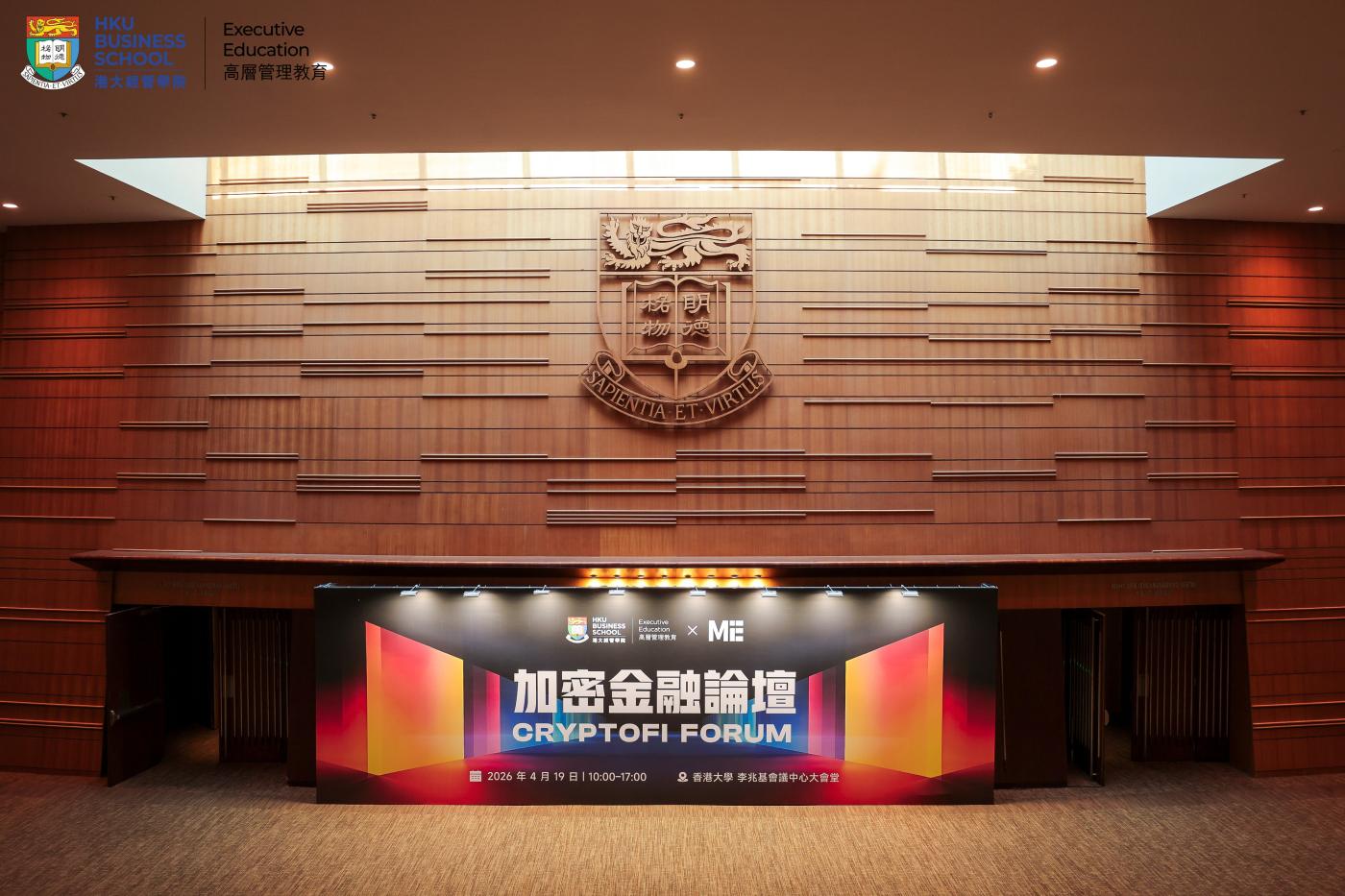
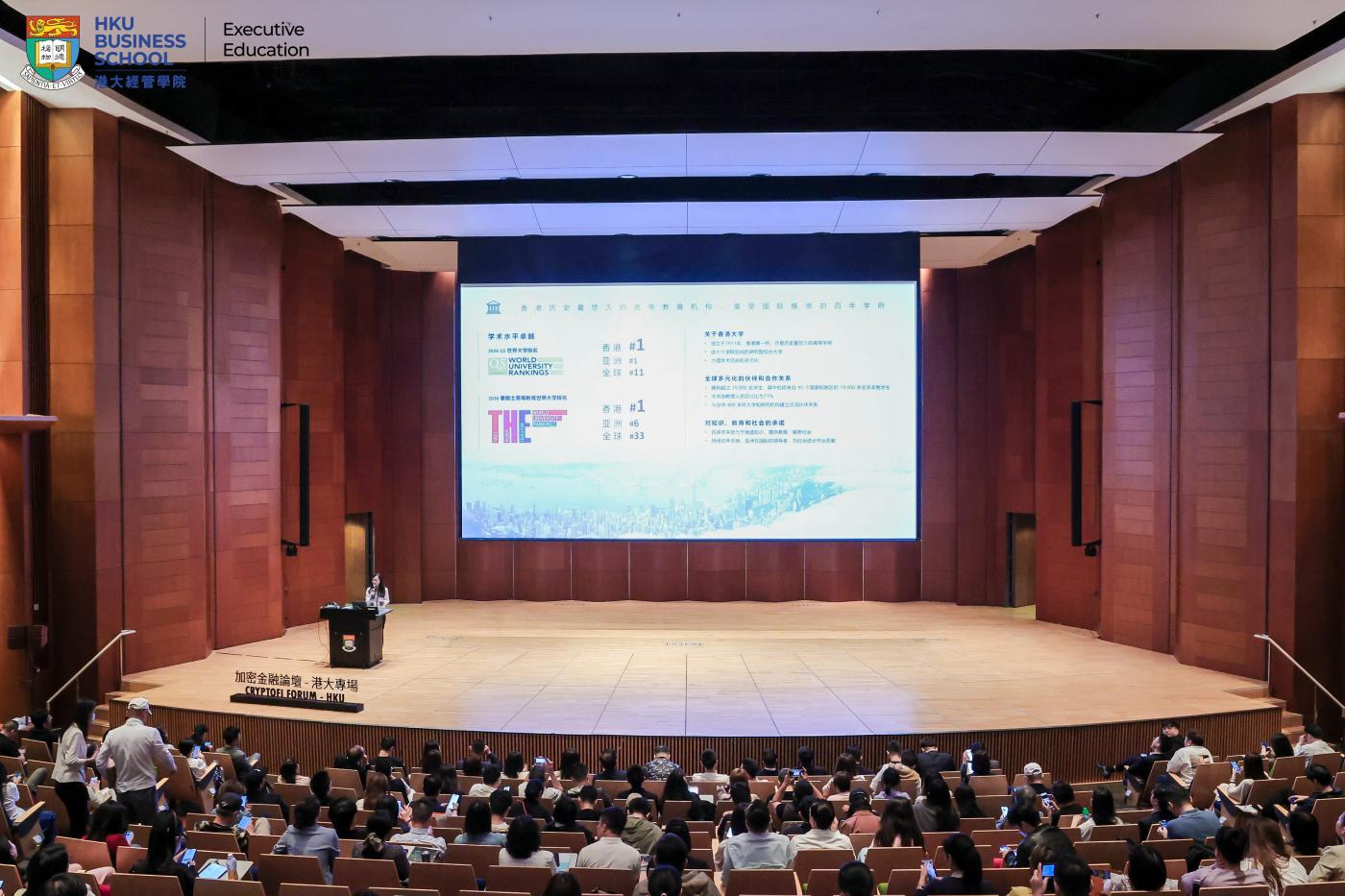
On April 19, 2026, the Crypto Finance Forum, co-hosted by ME Group and the Executive Education Department of the Faculty of Business and Economics at the University of Hong Kong, successfully concluded at the Li Ka Shing Conference Centre Auditorium of the University of Hong Kong. The forum brought together more than ten experts from academia, industry, regulation, and investment to present a comprehensive overview of the key pieces of the digital finance puzzle in the Web 4.0 era, focusing on cutting-edge topics such as tokenized gold, smart agent economics, on-chain compliance, and stablecoin payments.
The Trio of Compliance, Policy, and Ecosystem
At the forum's opening, three guests from the legal, policy, and investment promotion fields delivered speeches. Shen Haojie, a National People's Congress representative and managing partner of Shenhuang Law Firm, pointed out from a legal perspective that the core of Web 4.0 is the reconstruction of institutional and rule systems, and Hong Kong's mature common law system provides "certainty" for digital assets. Li Zhenqiang, a member of the National Committee of the Chinese People's Political Consultative Conference, a member of the Hong Kong Legislative Council, and vice-chairman of the Liberal Party, emphasized from a macro-policy perspective that Hong Kong is connecting mainland real economy resources with global capital markets through an "open and orderly" approach. Wang Junshun, Senior Vice President (Fintech) of InvestHK, extended an invitation to businesses, believing that the current clear policies and market growth present the best window of opportunity for investing in Hong Kong. All three agreed that the positive interaction between compliance and innovation will drive digital finance towards a more sustainable future.
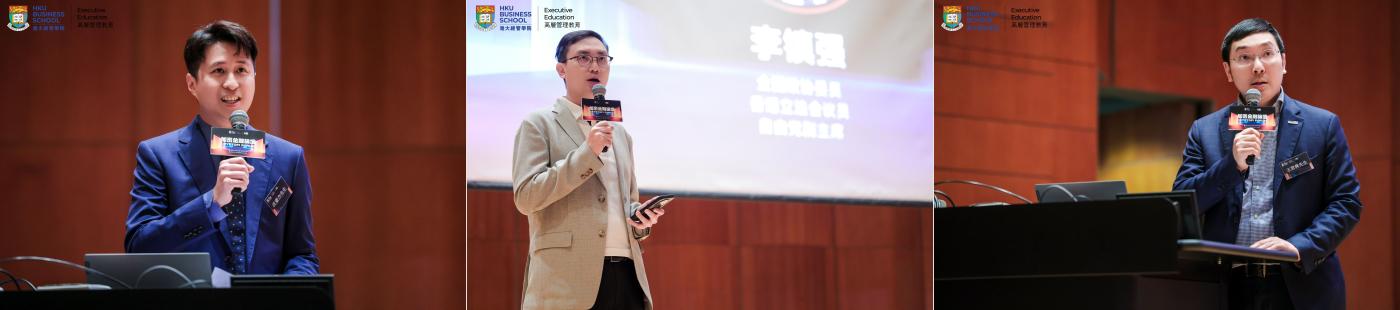
From left to right in the photo: Shen Haojie, National People's Congress Representative and Managing Partner of Shen & Wong Law Firm; Li Zhenqiang, National Committee of the Chinese People's Political Consultative Conference Member, Hong Kong Legislative Council Member, and Vice Chairman of the Liberal Party; and Wang Junshun, Senior Vice President (Fintech) of InvestHK.
Tokenized Gold: From Passive Investing to Programmable Financial Primitives
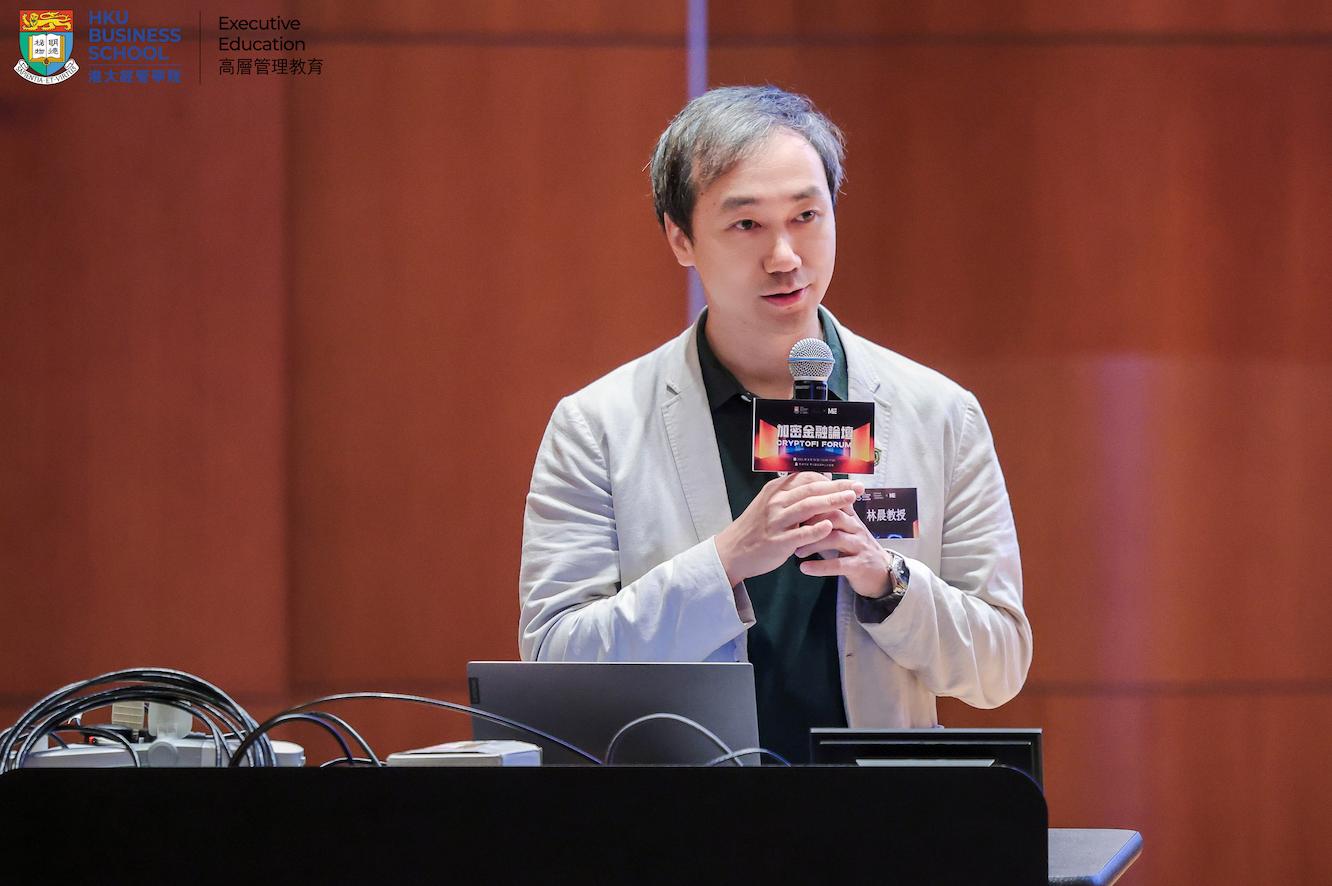
University of Hong Kong Vice-Chancellor Lin Chen delivered a keynote speech entitled "Tokenized Gold". He first used data to outline the grand picture of the gold market: as of the end of 2024, the global above-ground gold inventory was approximately 216,000 tons, while the total market value of tokenized gold had reached US$6.1 billion by the beginning of 2026, with trading volume increasing by 1550% in 2025.
Lin Chen highlighted his research paper with collaborators, demonstrating the market performance of tokenized gold through four dimensions: high price anchoring with rapid regression of deviations; continuously improving liquidity; exhibiting strong resilience under pressure during the "10 standard deviation gold crash" in January 2026 and the Iranian attack, even becoming the only safe-haven price discovery venue when traditional markets were closed; and deeply embedded in the DeFi ecosystem, used as collateral to generate stablecoin loans. He concluded that tokenized gold expands gold from a passive investment tool into a programmable financial primitive.
Smart agent economy, on-chain compliance and next-generation infrastructure
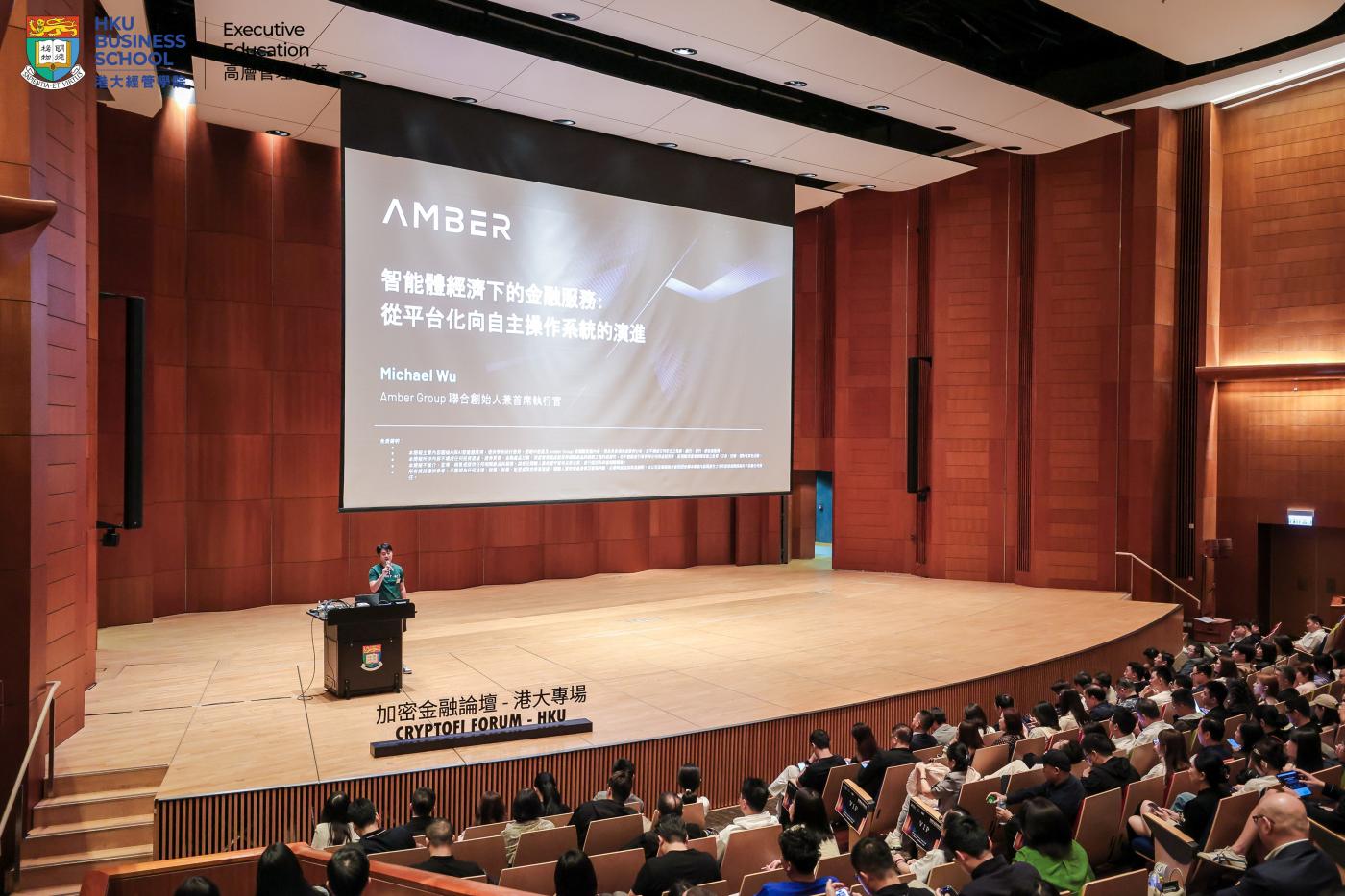
Michael Wu, co-founder and CEO of Amber Group , proposed that digital assets are becoming the underlying foundation of economic operations, AI agents are becoming the core engine of workflows, and financial services are leaping from "application platforms" to "operating systems." He presented a four-layer model of finance in the era of AI agents (distribution, service, transaction and risk, and governance), and illustrated the collaborative architecture between the automation layer and the core operating system layer with practical examples.
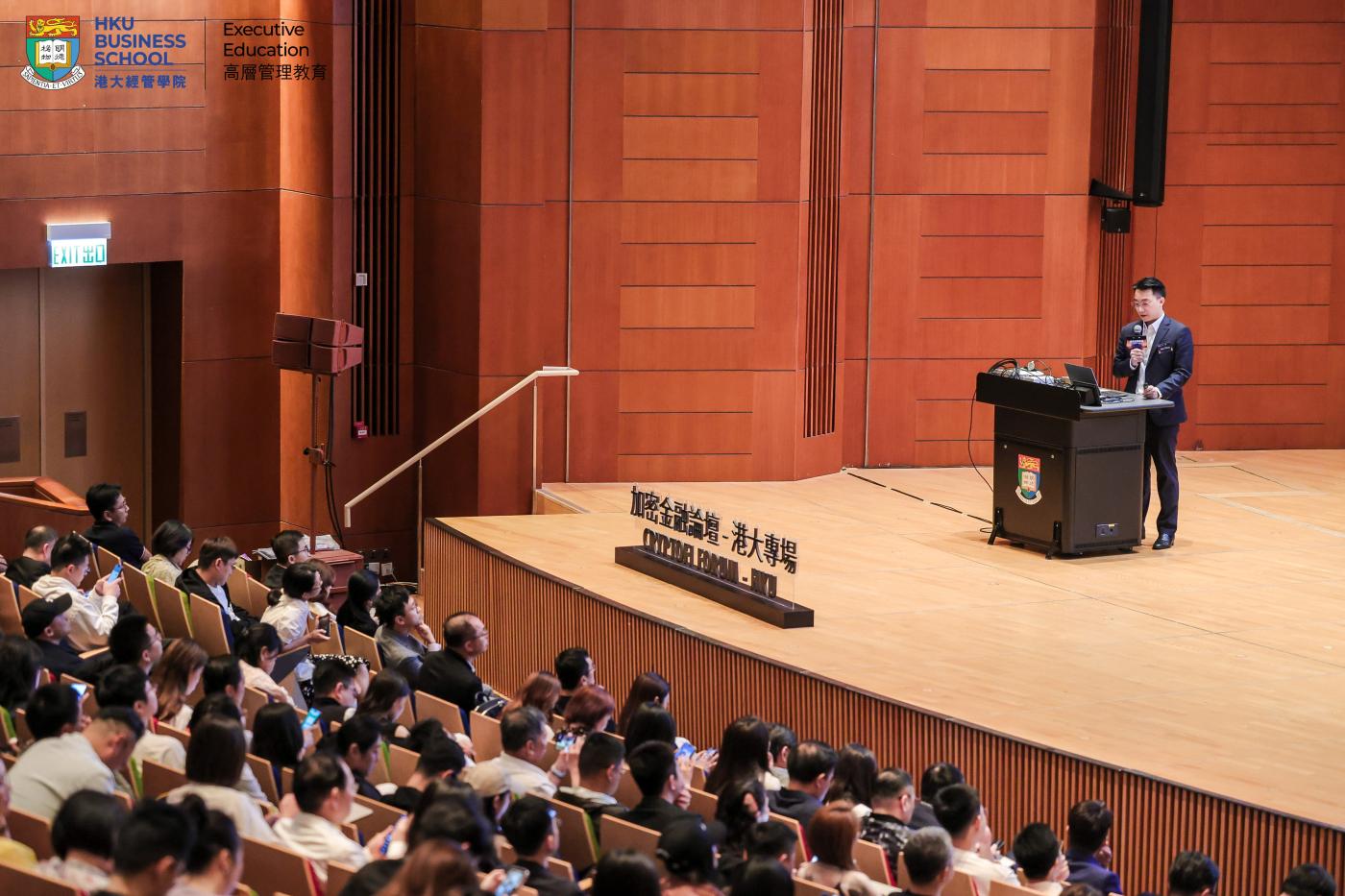
Beosin's Chief Operating Officer, Alex Cheng, systematically introduced the latest technological solutions for anti-money laundering in virtual assets, including a KYT/KYA platform with over 5 billion address tags, machine learning-based suspicious behavior identification, real-time monitoring and regular scanning capabilities, and an AI compliance assistant. This solution can automatically interpret risks, match regulatory provisions, and provide specific response suggestions, enabling the AI agent to conduct on-chain risk assessments like a professional analyst.
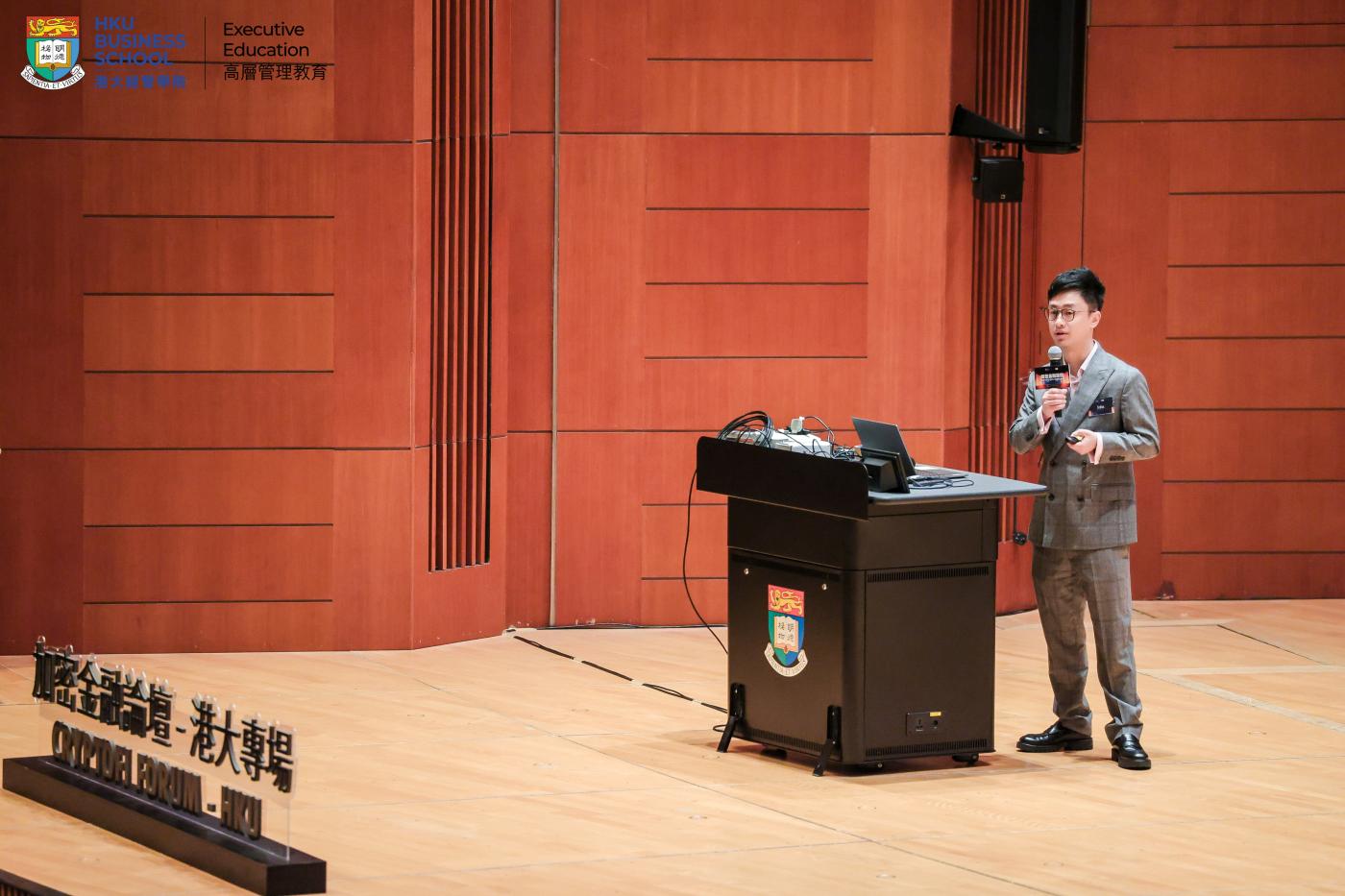
John, Head of Asia Pacific at the TON Foundation, focuses on the deep integration of instant messaging and blockchain. He points out that millions of AI agents have already entered mainstream instant messaging platforms, becoming a natural carrier of the agent economy due to their advantages such as instant online deployment, no review required, rich API interfaces, and built-in user systems. Meanwhile, the underlying blockchain provides financial and collaborative infrastructure for agents through privacy computing networks, on-chain authorized payments, and identity management.
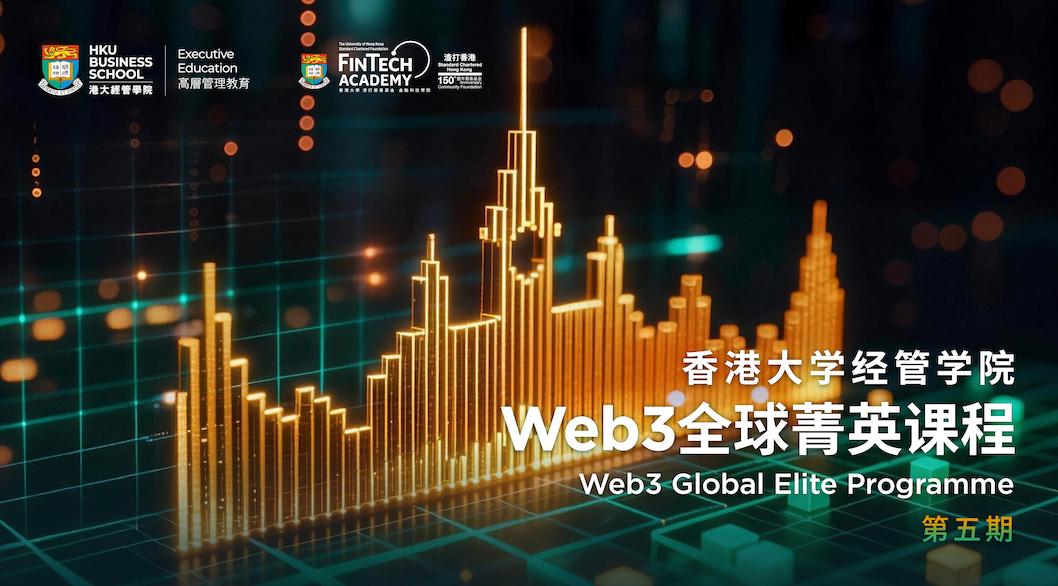
Dorothy Ying, Executive Director of Executive Education at the Faculty of Management and Economics of the University of Hong Kong, officially announced that the fifth cohort of the Web3 Global Elite Program will make a grand return in September 2026. The program has already cultivated 215 leading students. The fifth cohort will add cutting-edge topics such as compliance, the integration of AI and Web3, and will feature an immersive practical classroom experience called the "Web3 Carnival."
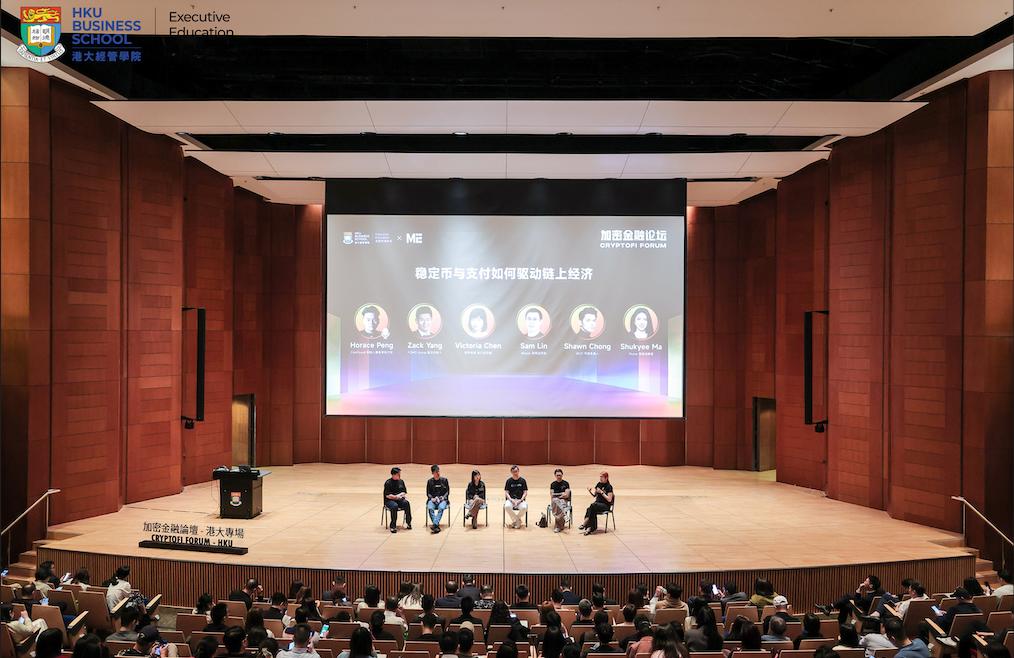
Roundtable Discussion: Stablecoin Payments and RWA Asset On-Chain Deployment – A Dual Driving Force
The first roundtable discussion revolved around "How Stablecoins and Payments Drive the On-Chain Economy." CoinFounder and CEO Horace Peng moderated the discussion , engaging with guests including Zack Yang , co-founder of FOMOGroup; Victoria Chen , Executive VP of Yuanbi Technology ; Sam Lin , COO of dtcpay; Shawn Chong , Head of Marketing at WLFi ; and Shukyee Ma, Chief Strategy Officer of Plume . The guests pointed out that by 2025, the global annual transaction volume of stablecoins will exceed $15 trillion, approaching the processing volume of the Visa network, but regulatory fragmentation remains the biggest obstacle. Programmable payments—conditional payments and streaming payments enabled by smart contracts—will fundamentally change supply chain finance; one logistics company has already reduced payment terms from 45 days to seconds. The guests also shared their experience with stablecoin projects that have received in-principle approval from the Hong Kong Securities and Futures Commission, whose core design includes 100% reserve assets, daily audits, and on-chain proof of reserves. All agreed that Hong Kong has the potential to establish a "stablecoin sandbox" to attract cross-border trade and digital asset liquidity.
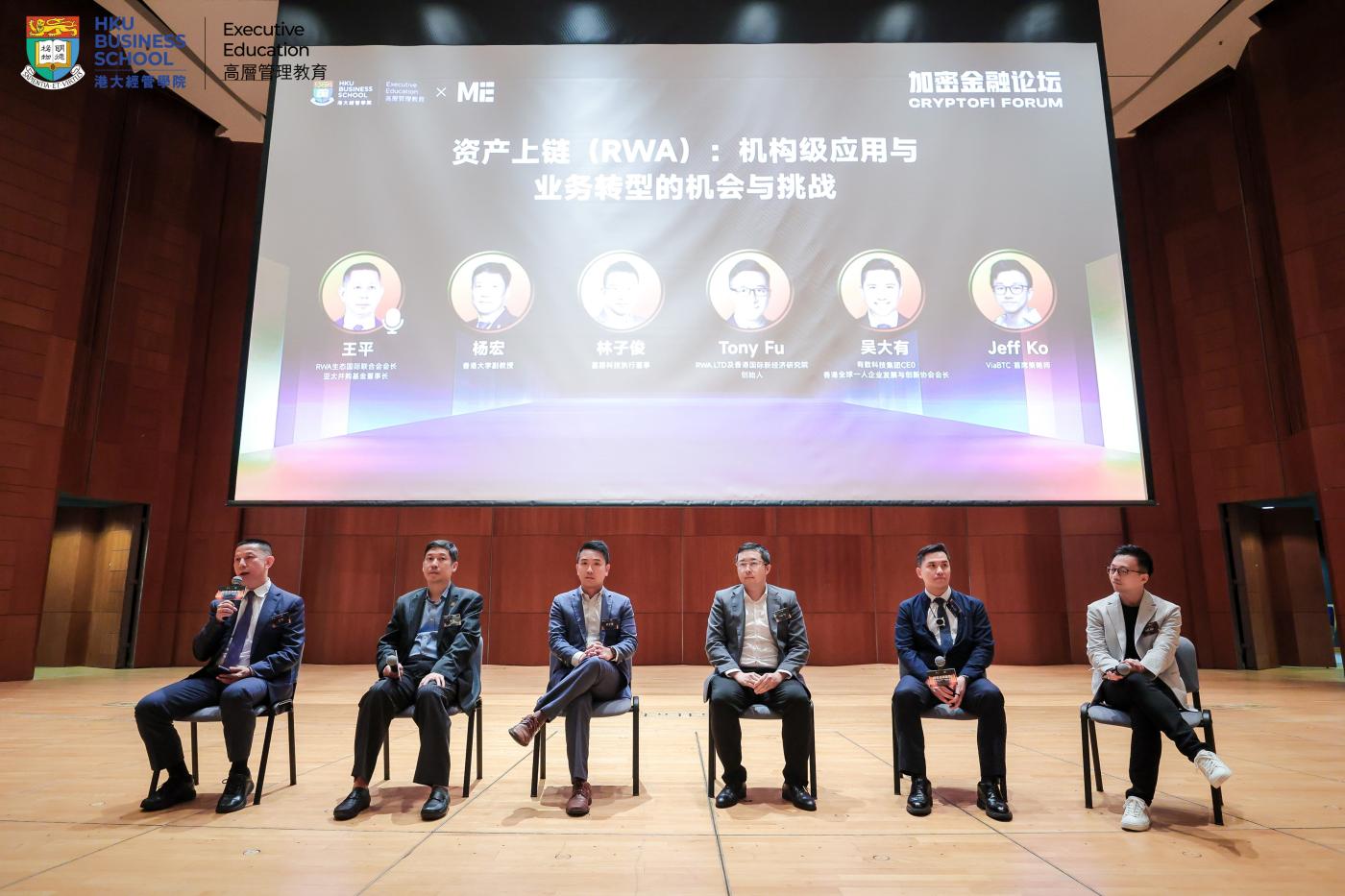
The second roundtable discussion focused on "Real Asset Tokenization (RWA): Opportunities and Challenges for Institutional Applications and Business Transformation." Moderated by Wang Ping, President of the RWA Ecosystem International Federation , the panel included Yang Hong , Associate Professor at the University of Hong Kong ; Lin Zijun , Executive Director of Starway Technology ; Tony Fu , Head of RWA.LTD and the Hong Kong International New Economy Research Institute ; Wu Dayou , CEO of YouShu Technology Group; and Jeff Ko, Chief Strategist of ViaBTC . The panelists agreed that RWA is becoming a crucial entry point for traditional financial institutions into the crypto space, with asset tokenization unlocking liquidity in trillion-dollar markets, from bonds and funds to art and real estate. However, asset authenticity verification, cross-jurisdictional regulatory coordination, and the seamless integration of on-chain and off-chain legal validity remain major challenges. Hong Kong, with its mature common law system and internationalized financial market, has the potential to become a key player in setting global RWA standards and rules.
Conclusion
From empirical research on tokenized gold to agent-driven financial operating systems; from the implementation of on-chain compliance technologies to stablecoins and agents reshaping payment and collaboration networks—this forum clearly outlines the key pieces of the digital finance puzzle in the Web4.0 era. Leveraging its rule of law, free capital flow, and unique advantages connecting the world, Hong Kong is transitioning from an international financial center to a key player in setting rules and standards for digital assets. We look forward to more innovative forces using Hong Kong as a starting point to jointly build an open, trustworthy, and efficient new digital financial infrastructure.
Highly recommended:
The fifth Web3 Global Elite Program is about to begin. For more information, please click the link: https://execed.hkubs.hku.hk/web3-global-elite-programme-tc/