BTC Supercycle Outlook Emerges
);)
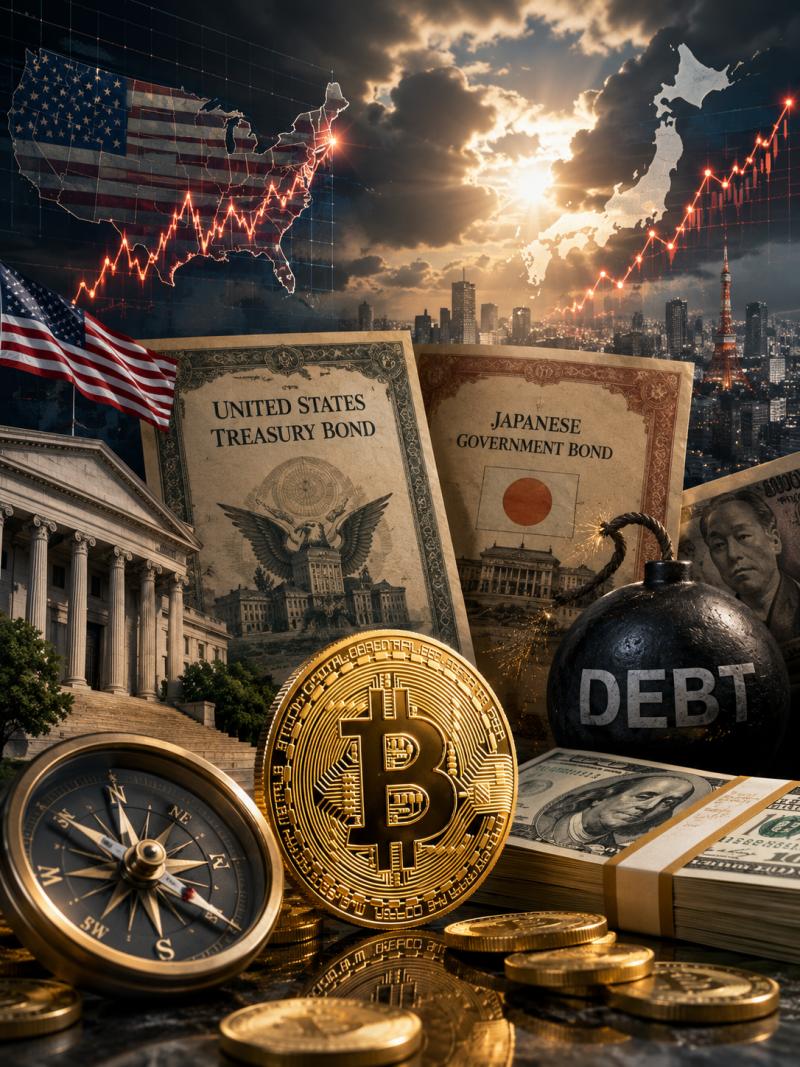
In an analysis released on the 25th, Wu Xiang, a senior analyst at BitMEX, stated that the surge in long-term U.S. Treasury yields signals a structural change in the global financial market. He assessed that central banks are highly likely to eventually choose currency dilution amidst growing government debt burdens.
Wu Xiang explained that the yield on 30-year U.S. Treasury bonds recently surpassed 5.14%, and the yield on 10-year Japanese Treasury bonds also rose to 2.8%. He added that it would be difficult to maintain current interest rate levels for a long period.
Wu Xiang argued that central banks around the world are faced with a situation where they must choose between the collapse of sovereign debt and the devaluation of their currencies. He analyzed that Bitcoin, with its limited supply, is more likely to benefit in the long term than fiat currency, which is susceptible to inflation.
He predicted that while market volatility may increase in the short term, it will serve as a structural tailwind for the Bitcoin supercycle in the long term.
This analysis comes as the U.S. national debt has surpassed $39 trillion (58,866.6 quadrillion won). On top of this, the possibility of a resurgence in inflation is growing as geopolitical tensions in the Middle East and concerns over rising energy prices overlap.
Wu Xiang pointed out that raising central banks' interest rates is no longer effective as a means to curb inflation. He explained that as interest rates rise, the government's interest burden also increases, intensifying fiscal pressure.
He warned that if high interest rates are maintained at the current level of U.S. national debt, the federal government's annual interest costs could exhaust most of its tax revenue.
Macroeconomic analysts Wu Xiang and Lyn Alden predicted that central banks are highly likely to eventually expand liquidity supply. They analyzed that measures such as yield curve control (YCC) and expanded government bond purchases could serve as de facto quantitative easing.
Reporter Jeong Ha-yeon yomwork8824@blockstreet.co.kr