Those who take context budgeting seriously will have a better AI-assisted experience than those who blindly stack skills.
Article author and source: 0x9999in1, ME News
TL;DR
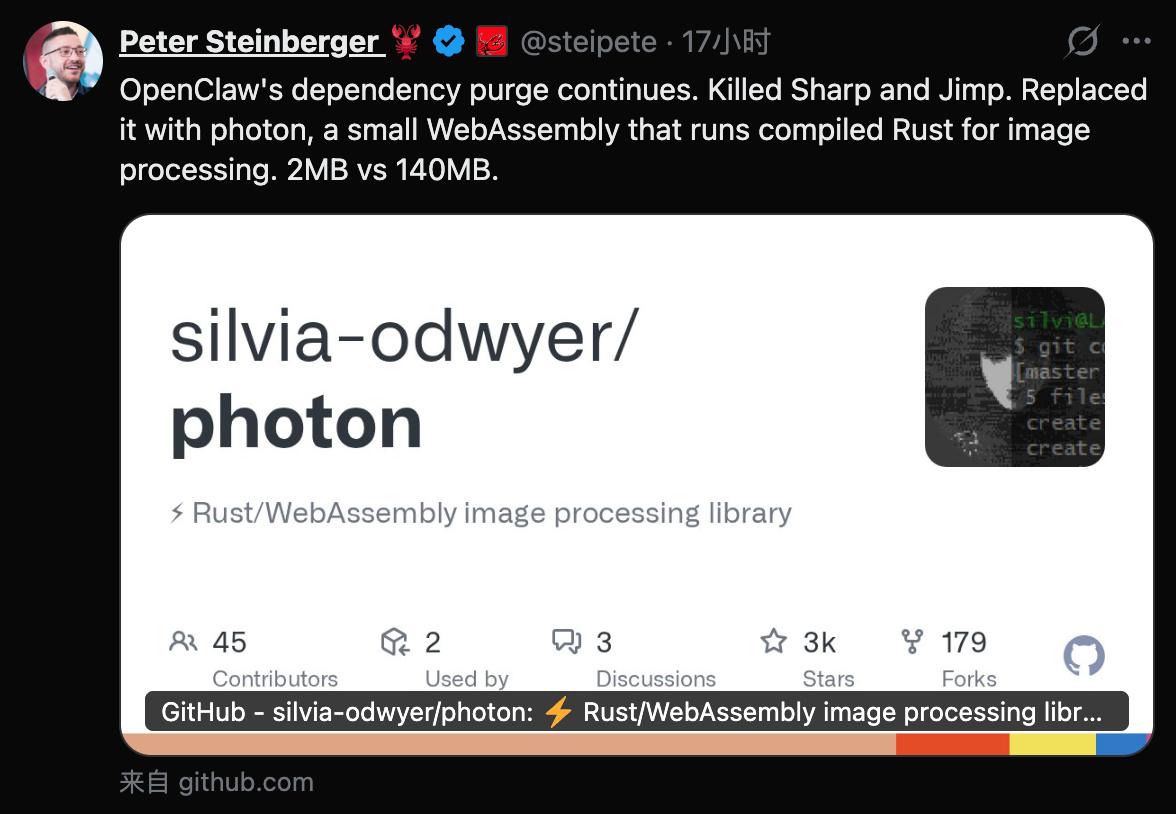
- The current mainstream AI programming assistant skill/plugin ecosystem is experiencing "indigestion after wild growth"—repetitive, redundant, and zombie skills are piling up, severely eroding valuable context window resources.
- Lobster Dad has open-sourced a meta-skill specifically designed to perform a "full checkup" on Skills, covering five core functions: budget auditing, duplicate detection, idle item screening, root directory auditing, and description simplification.
- Context windows are one of the scarcest resources in large AI models. The existence of every redundant skill is using meaningless tokens to occupy the inference space you really need.
- The core value of this tool is not "another skill," but rather using one skill to govern all skills—it is at the infrastructure level.
- The chaos in the Skill ecosystem is not an isolated phenomenon, but a structural problem. Plugin systems without auditing mechanisms will ultimately lead to increased entropy.
- Open source means that the community can iterate on this foundation, which may be the starting point for the standardization of Skill governance.
First, let's talk about the current situation: your Skill inventory might already be a dumping ground for junk.
That's harsh to say. But if you open your AI assistant's settings, count how many skills you have installed, and think back to which ones you used last time.
The answer will most likely leave you speechless.
Starting in the second half of 2025, AI programming tools such as Cursor, Windsurf, Codex, and Claude Code will collectively enter a "skill arms race." Community contributors will be producing massive amounts of content, official built-in libraries will continue to expand, and personal configurations will be layered on top of each other.
And what was the result?
A typical heavy user easily has over 50 skills. Of these, probably less than 10 are actually used daily. The remaining 40 lie there quietly, loaded into the context each time a conversation starts, silently consuming the token budget, and then—doing nothing.
This isn't a waste. This is a crime.
Why do I say this? Because the context window is not infinite. Even in 2026, the effective context length of mainstream models will be between 128K and 200K tokens. Sounds like a lot, right? But do the math: system prompts, dialogue history, code snippets, file content, tool definitions, skill descriptions... the space actually left for "thinking" is far less than you imagine.
Each additional useless skill description text occupies 200 tokens; 50 of them would amount to 10,000 tokens. Ten thousand tokens are enough for the model to read an additional 400 lines of code.
This is not a theoretical deduction. This is something that happens every day.
Why is no one doing anything about it? Because adding is a million times easier than subtracting.
Humans have a deep-rooted psychological bias: addition bias.
When faced with a problem, we instinctively think about "adding something" to solve it, rather than "subtracting something." A 2021 study published in Nature clearly points out that humans systematically ignore "subtraction solutions" when improving things, even if subtraction is more effective.
The Skill ecosystem perfectly replicates this deviation.
A community contributor wrote a new skill and released it. Users thought, "It might be useful," and installed it. The official team thought, "It has broad functionality," and included it in the game.
Who will delete them? Who will audit them? Who will say, "This skill is duplicated with that one, remove one"?
There is no one.
Deleting an old skill offers no incentive. Creating a new skill earns stars, community recognition, and a place on your resume. Deleting an old skill? Gets you nothing.
This is a structural dilemma. It's not a technical problem, it's a problem with the incentive mechanism.
Until someone decided: I don't care about motivation, I'll do this.
The father of lobsters takes action: Use one skill to govern all skills.
Who is the "Father of Lobster"? If you frequent AI programming tool communities, you'll be familiar with this ID. A long-time active player in the Codex and Claude ecosystems, he's known for his systematic thinking and meticulous engineering approach. The title "Father of Lobster" itself carries community recognition—being crowned with "Father" indicates that in a certain vertical field, he's an indispensable figure.
What he open-sourced this time is essentially a meta-skill .
What is a meta-skill? It's a "skill for managing skills." It doesn't write code for you, call APIs for you, or generate documentation for you. It only does one thing: it gives you a thorough, quantifiable, and actionable check-up on all your existing skills.
The five main functions are broken down one by one.
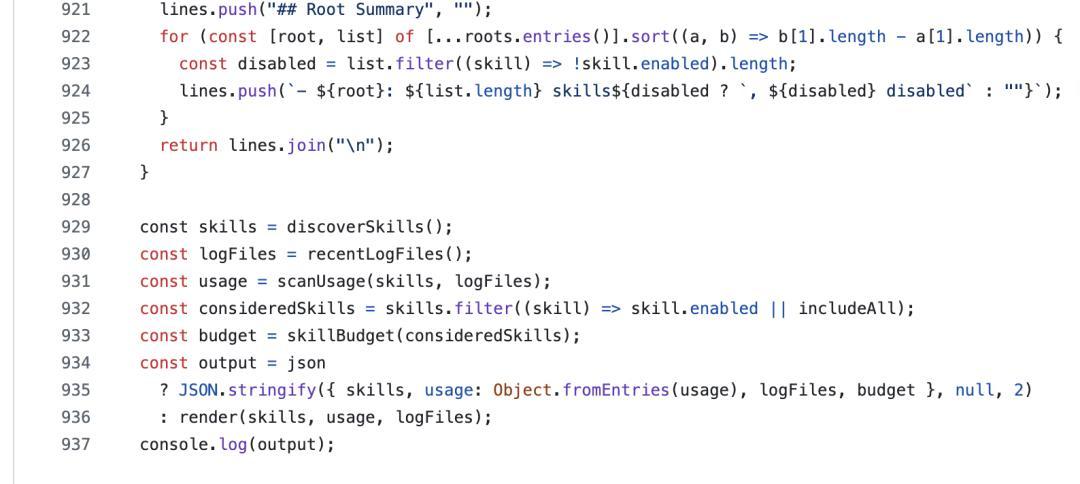
Function 1: Skill Hint Budget Audit
This is the most hardcore one.
What it does is very straightforward: calculate the context token space occupied by each Skill, determine the percentage of the total budget each Skill occupies, and then provide optimization suggestions.
Why is this important? Because the vast majority of users have absolutely no idea how many resources Skill actually consumes.
You might think that installing a Skill simply adds another feature. In reality, each Skill's description text, parameter definitions, sample code, and trigger rules must all be written into the system prompts. The model must "read" all of this information before deciding whether to invoke it for each inference iteration.
It's like carrying a backpack filled with 50 pieces of equipment. You think, "It's worth it," but for every extra kilogram, you expend more energy. By the time you really need to sprint, you're already exhausted.
What budget auditing does is open your backpack and tell you, "This Swiss Army knife weighs 3 kilograms but you've never used it, throw it away."
Function 2: Repetitive Skill Detection
The problem this feature solves may be more serious than you think.
Its scanning range covers four levels:
- Codex built-in library
- Plugin Cache
- code library
- Personal Skills Root Directory
Scan across levels for skills with the same name, similar descriptions, and overlapping functions, and mark redundant items.
Why are there repetitions? There are many reasons.
The official documentation includes a built-in "code formatting" skill, but you might not know that another skill with almost identical functionality was installed from the community. Two skills, doing the same thing, but using up two budgets.
Or, more subtly: You wrote a custom skill to handle JSON parsing six months ago, and later the official library was updated, adding a better one. Your old version is still there, and nobody told you to delete it.
Duplicate detection doesn't just look at the name. Items with different names but highly similar descriptions will also be flagged. This is the truly technical part—it performs semantic similarity comparison, not just simple string matching.
Function 3: Unused Skills Screening
Based on historical logs, identify "zombie skills" that have not been used for a long time.
The logic is clear: if a skill has never been triggered in the past 30, 60, or 90 days, it likely indicates one of two things—either your workflow doesn't need it, or its triggering conditions are poorly designed, causing the model to never select it.
Regardless of which one, the conclusion is the same: it's wasting the budget.
This feature outputs a "clean list of candidates." Note that it's "candidates," not direct deletions. The final decision rests with the user. This design is restrained and clever—it knows where its boundaries lie.
Some skills are indeed infrequent but crucial. For example, "database migration assistance" might only be used once every three months, but it can be a lifesaver when needed. Therefore, the screening results should be used as a reference, not a judgment.
Function 4: Skill Root Directory Audit
This feature leans towards "operations and maintenance," but it is extremely useful.
What it does: counts the source directories of all Skills, marks their enabled/disabled status, and traces the loading chain.
Why is this necessary? Because skills come from various sources. Some come from global configurations, some from project-level configurations, some from automatic plugin injection, and some from manual user creation.
When you have a small number of skills, you have a good idea of what's going on. But when the number swells to dozens, you lose track of "where this skill came from," "can I safely delete it," and "will deleting it affect other things."
Root directory auditing is like drawing a map for you. It tells you where each skill resides, who loaded it, and whether it is currently active or inactive.
With this map, you can perform surgery safely.
Feature 5: Description Simplification and Optimization
The last feature, which looks the "smallest," actually has tremendous leverage.
What it does: Identify skills with overly lengthy descriptions and recommend concise solutions.
Why is description length so important? Going back to what we said earlier: Skill descriptions are included in system prompts. Each word is a token. If a skill description can be compressed from 200 tokens to 80 tokens, the space saved, multiplied by the number of skills, becomes quite substantial.
Many skills contributed by the community are described like academic paper abstracts—background, motivation, applicable scenarios, precautions, example inputs and outputs, all very detailed. The writers put in a lot of effort, but from an engineering perspective, this is over-design.
The description a model needs is precise, unique, and distinguishable. It's sufficient to use the fewest words possible to make the model understand "what this skill does and when to use it." Every extra word is a waste of contextual resources.
The feature of simplifying descriptions is essentially a "reverse optimization of prompt engineering"—not writing better prompts, but compressing existing prompts to be shorter without losing information.
Where does its value lie? Not in its functionality, but in its mindset.
The five functions have been broken down. Individually, none of them seem particularly groundbreaking. But when combined, they represent a shift in thinking paradigm:
From "creating more skills" to "governing existing skills".
The significance of this matter lies not in the amount of code or the complexity of the algorithm, but in the fact that—finally someone has treated this problem as a "first-class citizen."
Over the past two years, the AI tool ecosystem has focused entirely on "adding features": more models, more functions, more plugins, and more skills. They've been running fast and aggressively, with no one looking back.
But anyone with engineering experience knows that if a system’s complexity increases to a certain extent, it will collapse without a corresponding governance mechanism.
It's not a possibility. It's a certainty.
In software engineering, there's a concept called "technical debt." Every temporary solution, every "let's leave it at that for now" decision, every lingering redundancy is a form of debt. The more you borrow, the higher the interest, until one day you find that all your energy is spent paying off the debt, leaving no energy for new things.
The technical debt within the Skill ecosystem has reached a point where it must be addressed.
The tool described by the father of lobster is essentially a debt auditor . It doesn't help you pay off your debts, but it tells you how much you owe, where you owe it, and which debts should be paid off first.
This is far more valuable than "I've written another useful skill".
The significance of open source: from personal tools to community standards
The decision by the father of the lobster to open source is itself worth discussing.
He could have easily made this tool a paid plugin. The market demand was clear, the pain point was real, and there would have been no shortage of paying users. But he chose to make it open source.
Why?
I suspect there are two considerations.
First layer: For this tool to truly realize its value, it requires community collaboration. Different AI platforms have different Skill loading mechanisms, log formats, and directory structures. One person may not be able to adapt it, but a hundred contributors can.
The second layer: He may want to promote not just a tool, but a standard . How should Skill governance be carried out? What are the dimensions of auditing? What are the best practices for budget allocation? These questions require community consensus to arrive at answers.
Open source is the best way to reach a consensus.
Looking back at the history of software engineering, ESLint became the de facto standard for JavaScript code style, Black for Python formatting, and Prettier for front-end code style because open source allowed the community to participate in the formulation of rules.
Is it possible for the "Father of Lobster" Meta-Skill to become an ESLint for Skill governance?
It's too early to make a judgment now, but the direction is correct.
A deeper question: Should the Skill system itself be redesigned?
Auditing tools address existing problems. But if we broaden our perspective, we'll discover a more fundamental issue:
Why did Skill go out of control?
The answer is: the current Skill system lacks lifecycle management.
Once a skill is created, it exists indefinitely. There is no expiration mechanism, no version elimination, and no activity decay. It's like a process that never dies, occupying resources until someone manually kills it.
Compare this to the process management of an operating system: it involves creation, scheduling, hibernation, and termination. It has a complete closed-loop lifecycle.
Let's compare the dependency management methods of package managers: npm audit checks for security vulnerabilities, npm outdated checks for expired dependencies, and npm prune cleans up unused packages. Governance tools are part of the ecosystem.
What about the Skill system? Creation → Use → ...that's it. A large number of steps are missing.
The tools developed by the father of lobster are essentially using external tools to compensate for deficiencies in the system design . They are useful, but they also expose the fact that the infrastructure for AI tool platforms in skill governance is still in its infancy.
This isn't criticism. It's an inevitable stage of development. From 2024 to 2025, the platform's primary goal was to "get the ecosystem running," with governance to be addressed later. But by mid-2026, the ecosystem will already be running. It's time to catch up.
In conclusion
Returning to the original question: How many skills in your AI assistant are actually active?
If you can't answer the question, it means you need to have a physical examination.
The father of lobster provided the tools. Free. Open source. Five dimensions, comprehensive coverage.
Whether you use it or not is your business.
But one thing I'm sure of: those who take context budgeting seriously will have a better AI-assisted experience than those who blindly stack skills.
Because AI is not omnipotent. It has limited attention, limited memory, and limited reasoning resources. The more accurate and clean the information you give it, the better the output it will provide in return.
This isn't metaphysics. This is information theory.
As early as 1948, Shannon told us that channel capacity is limited, and the more noise there is, the lower the effective information transmission rate.
Those zombie skills in your skill list are just noise.
Kill them.
References
- Adams, GS, Converse, BA, Hales, AH, & Klotz, LE (2021). People systematically overlook subtractive changes. Nature , 592(7853), 258–261.
- Shannon, CE (1948). A Mathematical Theory of Communication. Bell System Technical Journal , 27(3), 379–423.
- OpenAI. (2024). GPT-4 Turbo context window and token limits documentation. https://platform.openai.com/docs/models
- Anthropic. (2025). Claude model card: Context window utilization and system prompt overhead. https://docs.anthropic.com/en/docs/about-claude/models
- Cursor Team. (2025). Rules & Skills: How custom instructions are loaded into context. Cursor Documentation.
- npm Documentation. (2025). npm-audit, npm-prune: Managing package lifecycle. https://docs.npmjs.com/cli
- The father of lobsters. (2026). Skill Health Check Meta-Skill [Open Source Project]. GitHub Repository.
- Sculley, D., et al. (2015). Hidden Technical Debt in Machine Learning Systems. Advances in Neural Information Processing Systems (NeurIPS) , 28.