Today's top news highlights:
The US SEC's proposal to repeal Rule 611 of Reg NMS could clear obstacles for tokenized stocks.
The X platform will allow users to trade SPCX through brokers such as Coinbase and Robinhood.
EIP-8182 proposes introducing Ethereum-native privacy transfers in the Hegotá hard fork.
Michael Saylor: He said never to sell your own Bitcoin, never that companies can't sell it.
Regulation & Macro
An 11-nation joint law enforcement operation dismantled the AudiA6 cryptocurrency money laundering ring and the Dark2Web marketplace, which handled approximately $390 million in illicit funds between 2022 and 2025. On June 10, authorities arrested two Russian and Ukrainian administrators in Georgia, seizing 25 domains, more than 30 servers, 80 vehicles, and freezing approximately $900,000 in cryptocurrency. AudiA6 operated on a "mixing-as-a-service" model, charging a 3% to 10% commission and "laundering" cryptocurrency in about an hour. Chainalysis reported that since 2021, the AudiA6 wallet had received approximately 10,333 BTC, with a transaction value of approximately $389 million. The investigation involved the United States, Australia, France, Poland, Georgia, Iceland, Canada, Germany, Japan, Switzerland, and the United Kingdom, and was coordinated by Eurojust and Europol.
South Korea's Ministry of Finance and Economy stated that tokenized stocks are considered securities rather than virtual assets. If the Financial Services Commission confirms their securities status, they can be taxed immediately under the existing Capital Markets Act, possibly as early as the second half of this year. Although tokenized stocks are virtual assets in form, they are more closely similar to securities in substance. Offshore transactions on overseas platforms are also subject to taxation. Regardless of the place of issuance, as long as the economic value and rights structure are substantially securities, they can be subject to dividend income tax.
The European Central Bank raised its deposit facility rate from 2.00% to 2.25%, the first rate hike in nearly three years, in line with market expectations. The main refinancing rate and marginal lending rate were raised to 2.40% and 2.65%, respectively.
The US SEC's proposal to repeal Rule 611 of Reg NMS could clear obstacles for tokenized stocks.
Alex Thorn, Head of Research at Galaxy Digital, stated that the U.S. Securities and Exchange Commission (SEC) has proposed repealing Rule 611 (Order Protection Rule) and Rule 610(e) (Lockdown/Cross-Market Restrictions) of Reg NMS. Rule 611 is one of the biggest obstacles to trading tokenized stocks in DeFi, as automated market makers (AVMs) cannot comply with it. The repeal would be replaced by the "best execution" principle, which applies at the broker level and is compatible with AFMs. Thorn stated that this is part of the SEC's "Crypto Project" initiative, first removing the most difficult market structure barriers, and then addressing venue registration issues through "innovation exemptions."
U.S. Attorneys for the Eastern District of Pennsylvania have charged Ruslan Igorevich Tkachuk and Alexander Vladimirovich Ledenev, residents of Batumi, Georgia, with operating a cryptocurrency money laundering service called AudiA6, allegedly laundering over 10,333 bitcoins, approximately $390 million, since 2021. The two are charged with conspiracy to launder money and "entrapment" of money, and are currently in Georgian custody; the United States will seek their extradition. In a coordinated multinational operation, law enforcement seized servers and domains, froze related crypto assets, confiscated electronic devices, and replaced the AudiA6 website and its advertising Dark2Web forum page with a law enforcement seizure notice. If convicted, the two could face up to 20 years in prison.
Project Updates
The X platform will allow users to trade SPCX through brokers such as Coinbase and Robinhood.
The X platform will allow users to trade SPCX through Coinbase, Robinhood, and other brokerages.
EIP-8182 proposes introducing Ethereum-native privacy transfers in the Hegotá hard fork.
Ethereum developers are evaluating EIP-8182, a proposal that plans to introduce native privacy transfers for ETH and ERC-20 tokens via a Hegotá hard fork. Created by Facet co-founder Tom Lehman on March 3, 2026, the proposal's core is the creation of a canonical shielded pool system contract at the protocol layer. Users could deposit tokens and spend them using zero-knowledge proofs, employing a UTXO model and a separate proof architecture. If incorporated, it would be one of Ethereum's most significant privacy upgrades, but core developers still need to assess risks such as cryptographic assumptions and state growth.
OpenAI announced its acquisition of Ona, a cloud development and AI agent platform, and will integrate Ona's secure cloud execution and orchestration technologies into the Codex ecosystem to support agents running continuously over extended periods in customers' on-premises cloud environments. The Ona team will join OpenAI to collaborate with the Codex team, providing enterprises with agents that can run in their own clouds, enhancing control over runtime locations, access permissions, credential scope, audit logs, and audit processes. This year, weekly usage of enterprise-grade Ona agents in production environments has grown approximately 13-fold, with clients including the oldest bank in the US, major European pharmaceutical companies, and Asian sovereign wealth funds.
Coinbase CEO: The platform processes nearly $1 trillion in stablecoin flows annually.
Coinbase CEO Brian Armstrong disclosed that Coinbase processes $1 trillion in stablecoin flows annually, holds $20 billion in USDC on its platform, and processed over 160 million proxy payments through the x402 proxy payment protocol in the past year. The $1 trillion annual stablecoin flow figure refers to transfers made through Coinbase's payment infrastructure, which is different from the exchange's trading volume. Furthermore, the Coinbase blockchain has processed $19 trillion in stablecoin transactions so far this year. Previously, Coinbase's Q1 financial report showed that the platform held $19 billion in USDC, representing over 25% of the total circulating supply of USDC.
At its Kalshi Perpetuals event today, Kalshi announced new developments regarding its perpetual contract product, which is now publicly available and currently supports 11 tokens. Its proprietary trading terminal, Kalshi Pro, will also launch later this summer.
The Bitcoin Core team has stated that the `-privatebroadcast` feature introduced in Bitcoin Core version 31.0 contains a privacy vulnerability that could potentially leak the sender's IP address to the receiving node under certain network conditions. A fix is forthcoming and will be released with version 31.1.
Bloomberg analysts: BlackRock Bitcoin Premium Yield ETF (BITA) may launch within a week.
Bloomberg ETF analyst Eric Balchunas said that BlackRock has filed an 8-A document for its Bitcoin Premium Income ETF (BITA). This step typically means a formal launch within a week, and he expects the product to go live next Thursday.
Coinbase urges blockchain developers to begin quantum-resistant migration preparations immediately.
Coinbase's Quantum Advisory Committee released a report urging blockchain developers to immediately begin preparations for quantum-safe migration, warning that unresolved issues with abandoned and vulnerable tokens could become one of Bitcoin's biggest challenges. The report estimates that approximately 7 million Bitcoins are vulnerable to future quantum attacks due to public key exposure and address reuse. While no quantum computer can currently break blockchain encryption, the possibility of such a computer emerging as early as 2030 is high. The report proposes three options for handling tokens that have not been migrated to quantum-safe addresses: permanently freezing or destroying them after a deadline; doing nothing and letting users decide; and taking a compromise, such as limiting the number of vulnerable tokens that can be moved per block, or allowing users to pre-commit to migration. The Ethereum Foundation has formed a team to coordinate the post-quantum-safe transition, and Vitalik Buterin outlined a quantum upgrade roadmap in February. The Stellar Development Foundation released a roadmap for users migrating to quantum-safe encryption on Tuesday.
Coinbase launches Coinbase for Agents, a platform for creating AI-powered agent accounts.
Coinbase launches Coinbase for Agents, a platform specifically designed for creating accounts and sub-accounts for AI agents. These AI agents will be able to seamlessly handle trading, fund management, and payments, eliminating the need for users to manually top up separate wallets. Users can instruct agents to execute repetitive strategies such as weekly portfolio rebalancing via natural language commands. The service has built-in support for the x402 open AI payment standard, enabling machine-to-machine micropayments for accessing paid content, APIs, and data. Over 10,000 online merchants have already integrated x402. Coinbase for Agents will launch with spot trading access, equity trading within the next three weeks, and prediction markets in early July. Users can set up independent sandbox environments, trading limits, and withdrawal limits for their agents to manage risk.
Fidelity's stablecoin FIDD has chosen Uniswap as its liquidity infrastructure.
Asset management firm Fidelity Investments has selected Uniswap as the liquidity infrastructure for its stablecoin FIDD, and FIDD liquidity pools are now available on the Uniswap protocol. This follows news in February that Fidelity's stablecoin FIDD officially launched, open to both retail and institutional investors.
LG Electronics is launching a new blockchain based on Arbitrum for use in advertising and sales.
LG Electronics is launching a new blockchain based on Arbitrum for the placement, purchase, sale, and management of digital advertisements, as well as recording user interactions with ads. Developed by LG's internal blockchain research lab, the chain has already been piloted with a Japanese advertising company. This is not LG's first foray into blockchain; the company previously launched the enterprise blockchain Monachain and the crypto wallet Wallypto, and participated in the Han River project of the Bank of Korea. LG closed its NFT marketplace, Art Lab, last year. The ARB token is currently trading at $0.08331, up 7.7% in the last 24 hours.
Binance will launch five bStocks trading pairs from 01:00 to 02:00 Beijing time on June 12, 2026, including Circle (CRCLB), Micron (MUB), NVIDIA (NVDAB), Sandisk (SNDKB), and Tesla (TSLAB), and will simultaneously launch its spot algorithmic trading bot service. Maker (order placement) fees for the above bStocks trading pairs will be waived until 07:59 Beijing time on September 1, 2026. Meanwhile, users can now tokenize their directly held eligible US stock assets into corresponding bStocks for on-chain trading.
Avalanche Treasury Company (AVAT) officially listed on Nasdaq.
Avalanche Treasury, a treasury focused on the Avalanche ecosystem, has officially listed on Nasdaq under the ticker symbol AVAT. Led by former Susquehanna and AllianceBernstein executive Bart Smith, the company went public through a $675 million merger with SPAC Mountain Lake Acquisition Corp. Unlike most reserve companies that simply hold crypto assets, Avalanche Treasury allocates its funds to Avalanche network infrastructure, applications, and ecosystem projects, rather than simply accumulating AVAX tokens. It aims to generate additional returns through staking rewards, ecosystem investments, and capital allocation. AVAT currently holds approximately 15 million AVAX tokens, representing about 3.5% of the circulating supply.
NFTfi, the NFT-backed lending platform, will shut down its front-end website on August 31.
NFTfi, an NFT-backed lending platform, announced it will gradually shut down its operations over the next few months and plans to close its front-end website, app.nftfi.com, on August 31, 2026. Effective immediately, the platform will cease issuing new loans. Existing loans can be refinanced for up to 30 days per cycle until July 31, and borrowers can repay at any time before August 31, 2026. The official statement indicates that the shrinking NFT market has resulted in insufficient potential revenue to cover operating costs. However, deployed smart contracts will continue to operate independently on-chain, allowing users to still repay loans and withdraw staked NFTs through these contracts. Further operational guidelines will be released before the shutdown.
Investment and financing news
Prometheus, the AI startup co-founded by Jeff Bezos, has raised $12 billion in Series B funding, valuing the company at approximately $41 billion. Investors include JPMorgan Chase, BlackRock, Goldman Sachs, DST Global, and Arch Venture Partners. Prometheus aims to create "general AI engineers," using AI tools to accelerate the physical product development process from design to manufacturing. Bezos revealed that the company may acquire some manufacturing companies that can benefit from its technology. This is Bezos's first time as CEO since stepping down as Amazon CEO in 2021. The company currently has approximately 150 employees and is headquartered in San Francisco.
Canton developer Digital Asset has raised $355 million in funding, led by a16z crypto.
Digital Asset, the developer of the Canton network, has completed a $355 million funding round led by a16z crypto. Investors include a subsidiary of the Abu Dhabi Investment Authority, Apollo Funds, BNP Paribas, Citadel Securities, CME Ventures, Coinbase Ventures, HSBC, S&P Global, SBI Group, SoFi, and Tradeweb. CEO Yuval Rooz stated that this was an equity funding round, with most institutions being potential Canton users. The funds will be used to accelerate collaborations with institutional partners, mergers and acquisitions, and participation in related projects. Canton is a public, permissionless Layer 1 blockchain for institutional finance, supporting privacy-configurable and asset tokenization workflows. The network already supports approximately $6 trillion in asset issuance, and JPMorgan, DTCC, Visa, and others have deployed applications or participated in validation on it.
Opinions & Analysis
Michael Saylor: He said never to sell your own Bitcoin, never that companies can't sell it.
Strategy founder Michael Saylor responded to the company's sale of Bitcoin, stating that his previous statement of "never sell" referred to individual investors not selling their Bitcoin, and he never said the company couldn't sell. Anyone who has followed the company's earnings calls or disclosures over the past five years knows that the company will certainly sell Bitcoin when necessary.
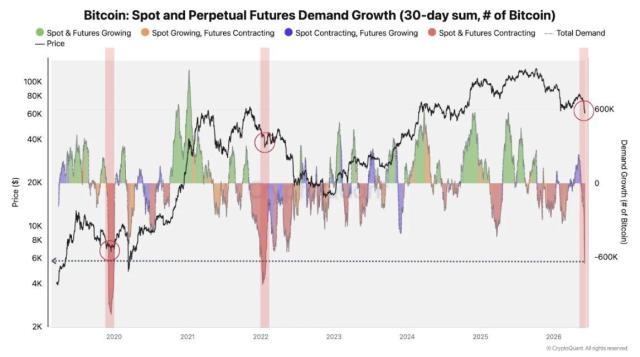
Nikolaos Panigirtzoglou, head of the analyst team at JPMorgan Chase, stated that the retreat of fiat currency hedging trades has continued, with the pace of this retreat accelerating recently. Gold ETFs saw outflows of approximately $20 billion in the week ending June 5th, while Bitcoin ETFs have seen a gradual increase in outflows over the past four weeks. Depreciation hedging trades refer to investors buying Bitcoin and gold in response to geopolitical uncertainty, inflation, rising government debt, and the need for dollar diversification. The correlation between Bitcoin and the 10-year US Treasury real yield has recently turned negative, and the correlation between gold and the S&P 500 is closer to the positive correlation between Bitcoin and stocks, indicating that both have recently become more like risk assets. Analysts reiterated that a stronger second half requires clear dividend plans from Treasury companies and the passage of the Clarity Act, which currently has a less than 50% chance of passing. However, the current market weakness may ultimately become a "contrarian bullish signal."
Strike founder: Bitcoin's current price reflects the true state of the global liquidity crisis.
Jack Mallers, founder of Strike and CEO of Twenty One Capital, stated that Bitcoin's current price reflects the true state of the global liquidity crisis. He pointed out that the University of Michigan Consumer Sentiment Index is at a historic low, while the S&P 500 is at a historic high, indicating that central bank intervention has distorted the value of the stock market as a signal. Mallers stated, "Bitcoin is the closest thing we can get to the truth about money." Mallers believes that with countries simultaneously financing wars, AI development, and deficit spending, and individuals defaulting on credit cards and rent, the world is in a cash-raising mode, selling the most liquid assets. Regarding Strategy's sale of 32 BTC, Mallers stated that this was to force the market to accept the reality that its "never sell" stance is no longer viable. He questioned Strategy's perpetual priority instruments, which create a permanent liquidity obligation, forcing them to choose among different stakeholders every time liquidity is needed.
Important data
An address on the Tron blockchain with a balance of over 72 million USDT has been frozen.
An address on the Tron chain with a balance of 72,030,295 USDT (approximately $71,967,245) has been frozen.
A certain whale has increased its long position on SPCX to $21.1 million, with a buy price of $168.
A whale has been continuously adding to its long positions in SPCX, bringing its total long position to $21.1 million, with an opening price of $168. Currently, the pre-market price of SPCX has risen to $176, a 30% increase from its IPO price of $135, corresponding to a total market capitalization of $2.27 trillion.
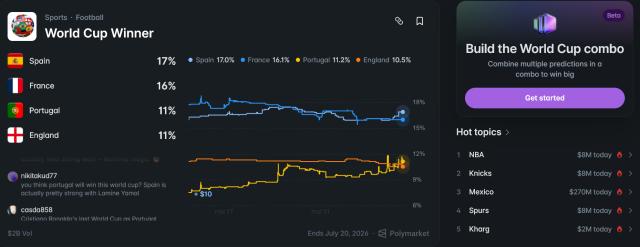
The perpetual contract SPCX tracking SpaceX's IPO on Hyperliquid rebounded to $176-$183, with open interest at approximately $216 million and 24-hour trading volume exceeding $150 million. The current implied first-day premium is approximately 36%, up from Wednesday's 16%, but down from the May high of 60%. IG International derivatives value SpaceX at approximately $2.4 trillion, a premium of over 35% over the IPO price of $1.77 trillion. Polymarket traders estimate a 70% probability of SpaceX closing at over $2 trillion on its first day of trading.
The Binance Wallet SpaceX IPO subscription has ended, with a total of approximately $557 million in participating funds from 27,689 addresses. Addresses investing more than $20,000 accounted for 81.48%, but collectively represented only 18.39% of the total funds; addresses investing between $20,000 and $100,000 accounted for 16.69%, contributing 57.67% of the funds; and 114 addresses invested more than $500,000, representing 10.23% of the total funds.
Fortune magazine released its "Crypto 100" list, covering the top ten companies in ten major sectors. The top three in CeFi are: Coinbase, Binance, and Kraken; the top three in TradeFi are: Franklin Templeton, JPMorgan Chase, and Nasdaq; the top three in Fintech are: Robinhood, Stripe, and Visa; the top three in DeFi are: Hyperliquid, Aave, and Lido; the top three in venture capital are: a16z, Paradigm, and Dragonfly Capital; the top three in stablecoins are: Tether, Circle, and Sky; the top three in crypto services are: Chainalysis, MoonPay, and Consensys; the top three in DAT and ETFs are: BlackRock, Strategy, and Grayscale; the top three in mining are: MARA Holdings, Bitmain, and CleanSpark; and the top three in blockchain and protocols are: Bitcoin, Ethereum, and Solana.
Deribit: Approximately $2.51 billion worth of Bitcoin and Ethereum options will expire today.
Approximately $2.51 billion worth of cryptocurrency options will expire this Friday. Of this, Bitcoin options have a notional value of $2.23 billion, a put/call ratio of 0.68, and a maximum pain point of $66,000; Ethereum options have a notional value of $291 million, a put/call ratio of 0.62, and a maximum pain point of $1,750. Despite recent market volatility, positioning in both assets remains biased towards call options. Both Bitcoin and Ethereum are trading above their respective maximum pain points before expiration, with put/call ratios below 1.0, indicating that the market still favors call options.