The narrative framework of Web4.0 is far from being fully formed, but one logical chain is already quite clear: Agentic AI needs a settlement layer, the settlement layer needs stablecoins, stablecoins need scenarios, and scenarios need real demand from the real economy.
Article author and source: Monera
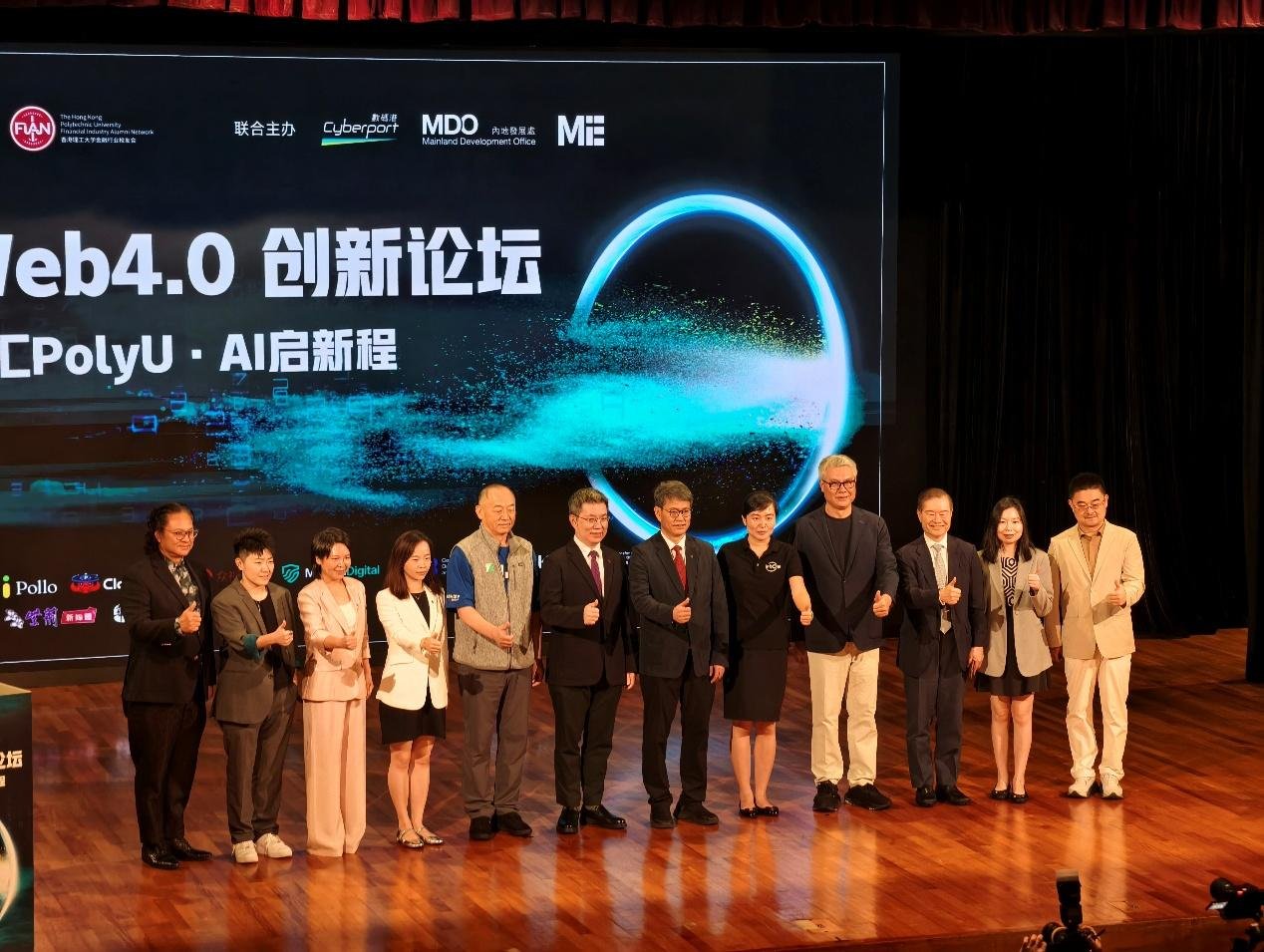
Hong Kong, June 13, 2026 – As AI evolves from an auxiliary tool to Agentic AI with autonomous decision-making and execution capabilities, the underlying reconstruction of Web4.0 is quietly taking place. Today, the "Web4.0 Innovation Forum – PolyU·AI Starts a New Journey," hosted by the Hong Kong Polytechnic University Financial Industry Alumni Association and co-organized by the Hong Kong Polytechnic University Mainland Development Office (MDO), Hong Kong Cyberport, and ME Group, successfully concluded at the Hong Kong Polytechnic University.
This forum brought together top figures from the political, academic, and business sectors to jointly explore the new intelligent paradigm in the Web 4.0 era.
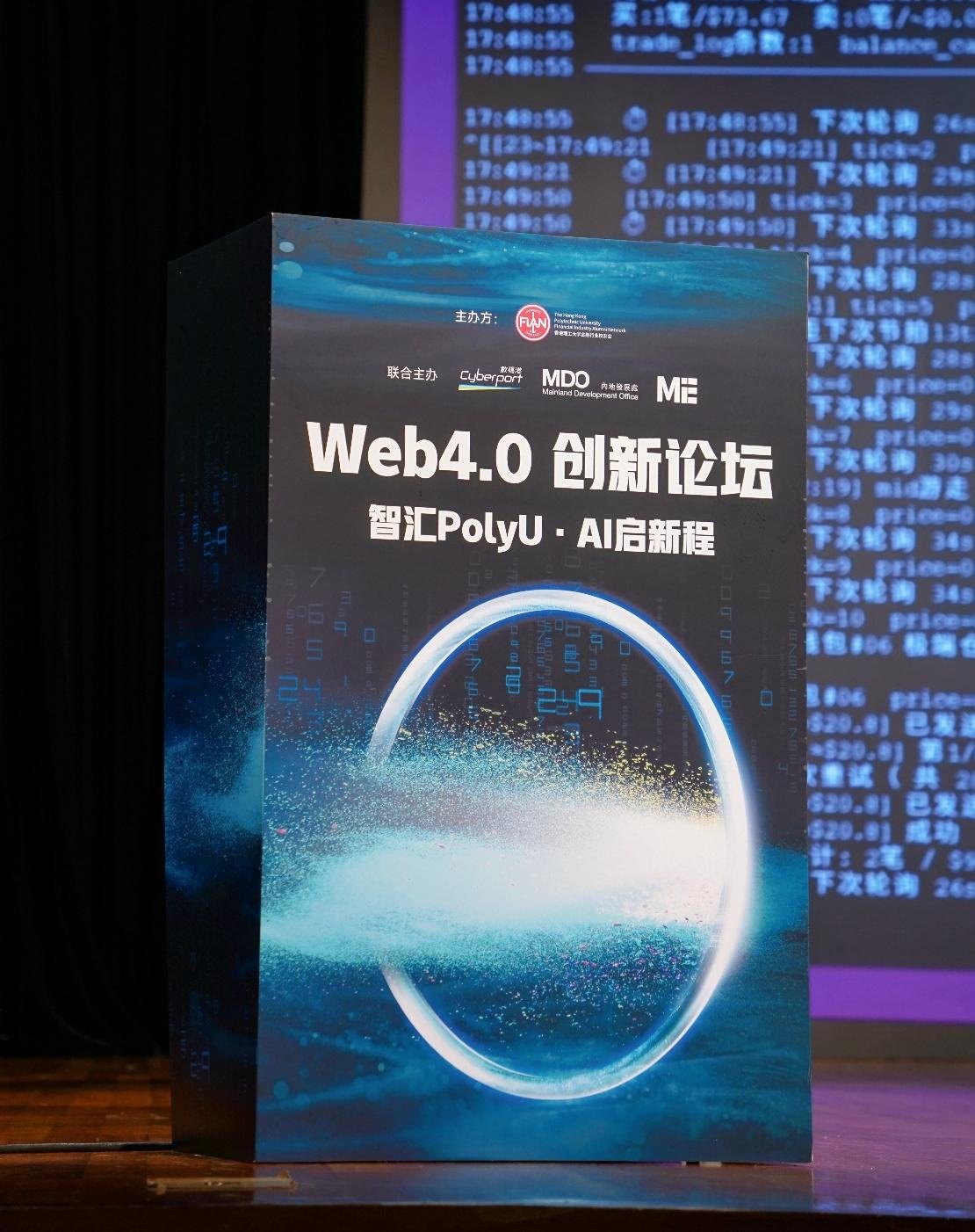
This forum brought to the forefront an issue that has long been obscured by technological narratives: When AI agents truly begin to perform tasks autonomously—what do they use for payment?
This is not a philosophical question, it is an engineering question, and it is also a business question.
1. The "super brain" has no bank account.
Over the past two years, the discussion surrounding Agentic AI has rivaled that of NFTs in 2021. Various organizations have been vying to demonstrate how autonomous and intelligent their AI agents can be—capable of calling tools, executing code, and making decisions.
But an analogy from the forum hit the nail on the head: an AI agent without a blockchain settlement network is a super brain without a bank account.
It can formulate strategies, but cannot pay for API calls; it can analyze opportunities, but cannot complete transactions; it can collaborate, but cannot pay other agents for their services.
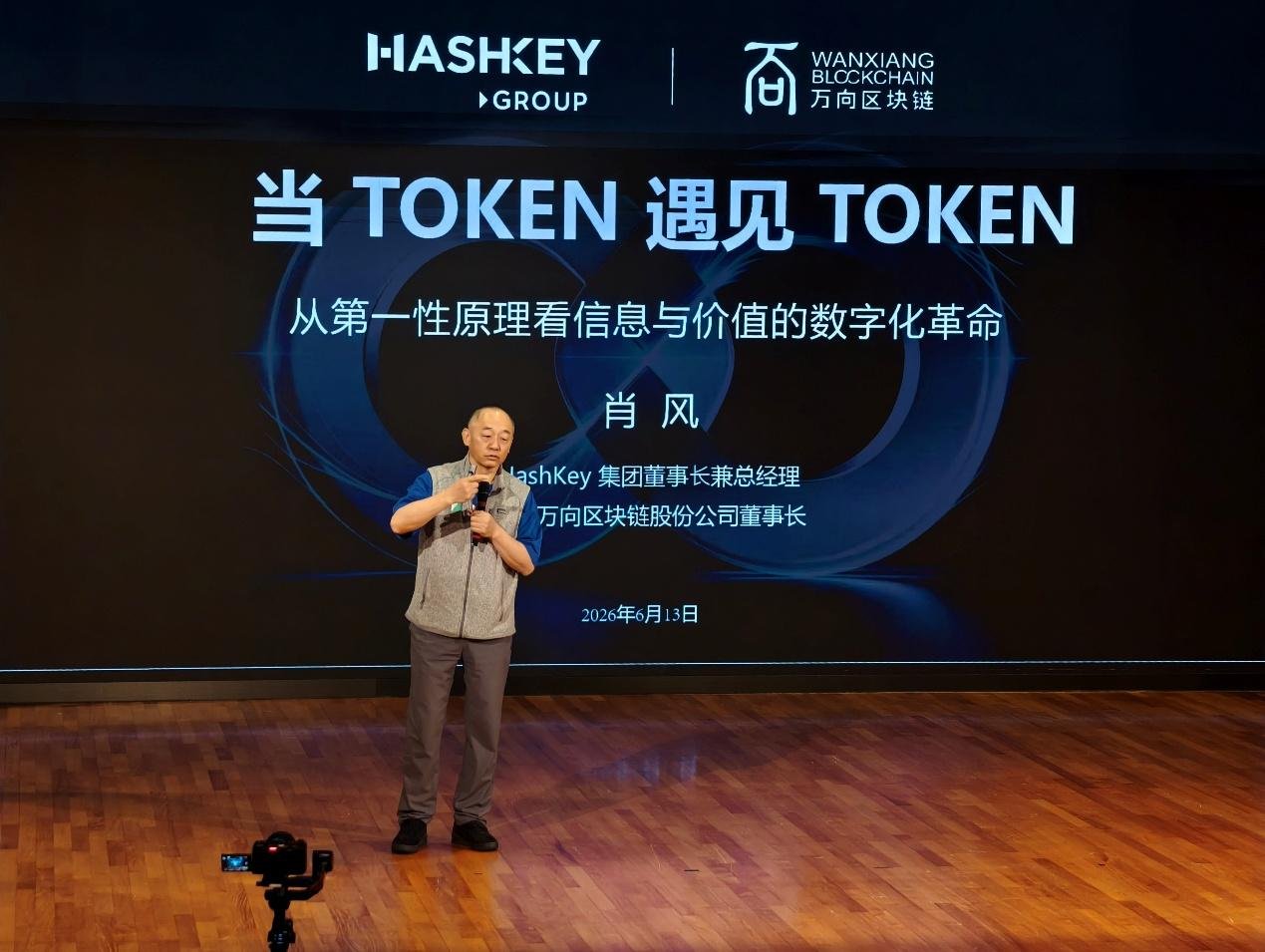
In his speech, Xiao Feng of HashKey Group pointed out this relationship: AI's "autonomy" can only be truly realized by relying on a trustless value network. Otherwise, the so-called "autonomous execution" is just more complex information processing, rather than genuine economic behavior.
This suddenly makes the positioning of stablecoins clear—they are not just a channel for funds to enter the crypto market, but a native currency layer in the era of Agentic AI .
II. Institutions are already placing bets.
During the afternoon session of the forum, several practitioners from the primary market delivered more convincing signals than PowerPoint presentations.
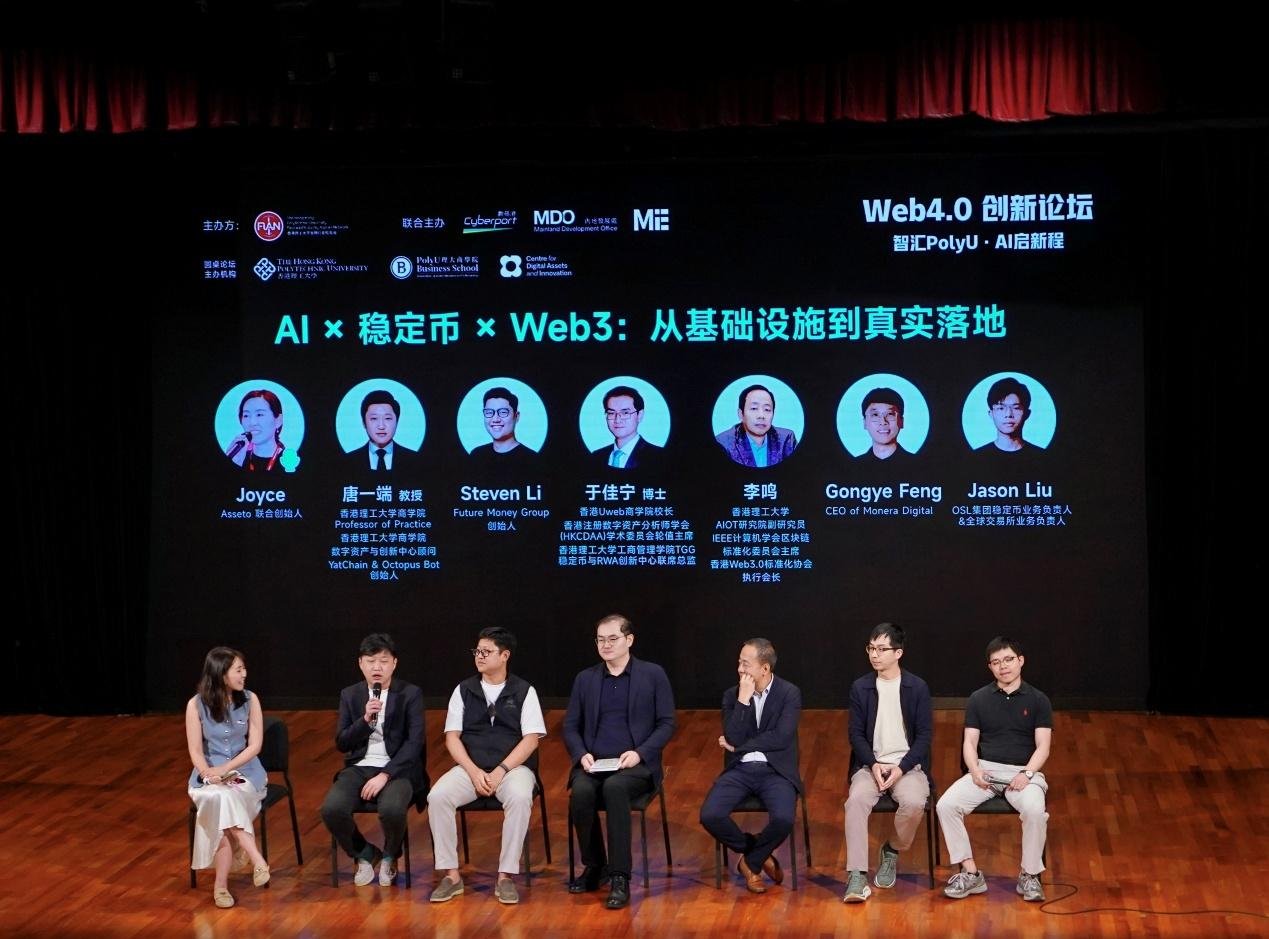
During the roundtable discussion, Monera Digital revealed that the most cutting-edge trend in the current private equity market is for institutions to hand over "end-to-end management control" to AI—not just quantitative factor assistance, but the entire process of strategy design, fund deployment, and post-mortem optimization is handled independently by AI. According to their observations, some leading private equity firms are already preparing fully AI-driven closed-end private equity funds.

This isn't something that will happen in 2030; it's happening right now.
The same trend is unfolding in a different form on the consumer side. A number of "Web Trading" projects have emerged in the Asia-Pacific market, with the core logic being to enable ordinary investors to obtain end-to-end capabilities at the level of professional traders through AI tools. The common underlying need of these projects is a low-friction, high-efficiency, and compliant settlement asset—and among the existing options, only stablecoins meet these requirements.
Third, the real bottleneck for stablecoins is not regulation, but the application scenarios.
This is the most valuable cognitive correction from this forum.
The industry has long attributed the challenges of stablecoins to "regulatory uncertainty," but the reality presented at the forum roundtable was more concrete: the problem with compliant stablecoins has never been about issuance, but rather the lack of sufficiently strong real-world use cases to support their circulation value.
Discussions among academic and industry representatives, including Professor Tang Yiduan of PolyU, Dr. Yu Jianing, and Li Ming of the IEEE Blockchain Standards Committee, all point to the same conclusion: stablecoins are scenario-driven , not supply-driven.
The case Monera presented at the roundtable was quite representative: Many Chinese companies across the entire industry chain have long been trying to build a closed loop of value circulation using a points system internally, but they have always been stuck at the two hurdles of compliance and interoperability, preventing them from scaling up. The emergence of compliant stablecoins is theoretically the breakthrough point for this kind of demand—from supply chain settlement to accounts receivable and payable period management, these are real pain points in efficiency.
The analogy is familiar: cross-border settlements that typically take SWIFT several days to complete can be done in minutes at extremely low cost with stablecoins. However, for large enterprises, this efficiency advantage can only be adopted when compliance is clearly certain. This is the core obstacle to its current adoption, not a technical issue.
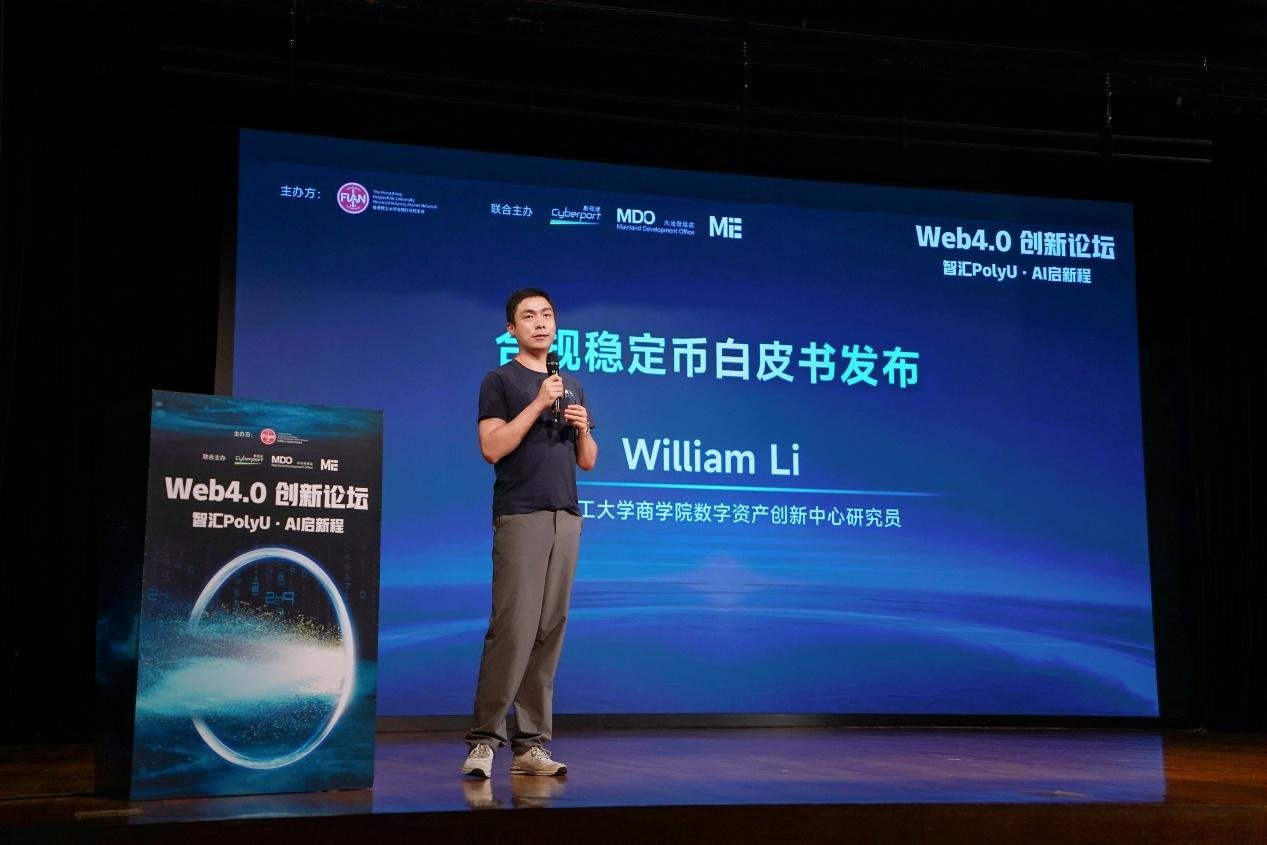
The "Compliant Stablecoin White Paper" jointly released by the Digital Asset Innovation Center of the School of Business at the University of Science and Technology of China and OSL at the forum is, to some extent, a positive response to this supply-demand mismatch—the involvement of academic institutions helps to provide a reference point for the formation of a regulatory framework.
IV. RWA is not the end point, but the connector.
Behind the discussions about stablecoins lies the accelerated implementation of RWA (Real-World Asset Tokenization).
By 2026, RWA will no longer be in the proof-of-concept stage. The tokenization of government bonds by large institutions and the on-chain circulation of real estate shares will begin to enter the actual operation track.
This relationship with stablecoins is mutually reinforcing: RWA tokenization provides on-chain assets backed by physical assets, while compliant stablecoins provide a liquidity medium for the trading and settlement of these assets. Together, they constitute an infrastructure that is more efficient than traditional finance and more compliant than early DeFi.
From an investment perspective, the improvement of this infrastructure, in turn, provides a more solid foothold for the financial activities of AI agents—the entire chain begins to form a self-consistent positive feedback loop.
V. Hong Kong's Window of Opportunity
The choice of Hong Kong as the venue for this forum is not merely due to geographical convenience.
Hong Kong's role in this infrastructure game is becoming clear: it serves as both a policy testing ground for compliant stablecoins and a structural node connecting the mainland business ecosystem with the international digital asset market. The presence of Hong Kong government representatives, academic institutions, exchanges, and emerging asset managers on the same stage at the forum speaks volumes—all parties are seeking a common ground.
For institutions hoping to enter this market, the current window of opportunity will not remain open indefinitely. Once the compliance framework is finalized, the architectural advantages of first-mover advantage will be difficult to overcome.
Conclusion
The narrative framework of Web4.0 is far from being fully formed, but one logical chain is already quite clear: Agentic AI needs a settlement layer, the settlement layer needs stablecoins, stablecoins need scenarios, and scenarios need real demand from the real economy.
At each node of this chain, there are organizations making arrangements, and there are also problems that need to be solved.
The forum has ended, but the discussion continues.
This article is based on publicly available content from the "Web4.0 Innovation Forum - PolyU·AI Starts a New Journey" held on June 13, 2026, and does not constitute investment advice.