While we are keen to find Alpha returns in the crypto market, beta returns are also worthy of attention.
So, which beta assets in the crypto market are worth investing in? Maybe everyone has their own evaluation criteria. Among these evaluation criteria, the KVQ (K33 Vinter Quality) quality index released by K33 caught our attention:
The index is a Smart Beta index for cryptoassets, consisting of an equal weighted mix of the most promising tokens from the top 30 cryptoassets. Among them, for the quality of tokens, K33 will set multiple assessment standards for detailed and objective evaluation.
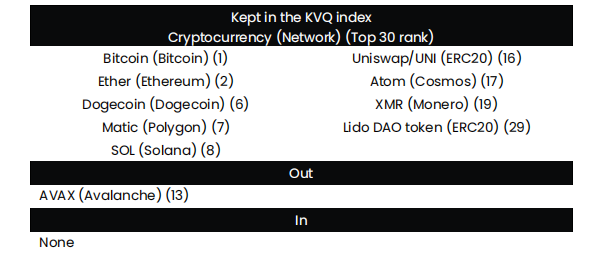
The results of the latest report show that among the top 30 tokens by market value, only 9 tokens, namely BTC, ETH, Doge, Matic, SOL, UNI, ATOM, XMR and LDO , were selected, while AVAX was selected due to token inflation and Factors such as concentration of holdings are excluded.
Additionally, many tokens that we would normally consider valuable were surprisingly excluded from the report.
Any standard has its evaluation limitations, but a dialectical reference to a certain standard is beneficial to provide enlightenment and insights for our investment decisions.
Therefore, Shenchao TechFlow Research Institute has interpreted and sorted out the specific content of the report for your reference.
Background: About the establishment criteria of K33 and KVQ indices
About K33:
K33, formerly Arcane, is a research-led digital asset brokerage wholly owned by Nasdaq First North listed Arcario AB (formerly Arcane Crypto AB).
The firm provides investment services to help clients in the EMEA region make decisions, access markets, and invest in related funds, supported by digital asset research.
KVQ index calculation ideas:
K33 Vinter Quality Index, is a cryptocurrency index based on market capitalization ranking, which is updated every quarter.
Overview of calculation methods:
Pre-selection: Select the top 30 tokens with encrypted market capitalization;
Classification: Classify the Top 30 tokens according to the same track;
Exclusion: Tokens with wrong economic models, lack of information and transparency will be excluded
Evaluation: Comprehensive evaluation based on 5 dimensions of lasting network effect, practicality, regulatory risk, ecological prosperity and token inflation/concentration
Ranking: Ranking according to the score of the evaluation to select cryptocurrencies that meet the criteria
General conclusion:
Nine tokens, BTC, ETH, Doge, Matic, SOL, UNI, ATOM, XMR , and LDO , were selected, which are the current high-quality Beta assets considered by K33.
AVAX is excluded due to future token inflation and unlocking too large.
A list of other top 30 tokens by market capitalization:
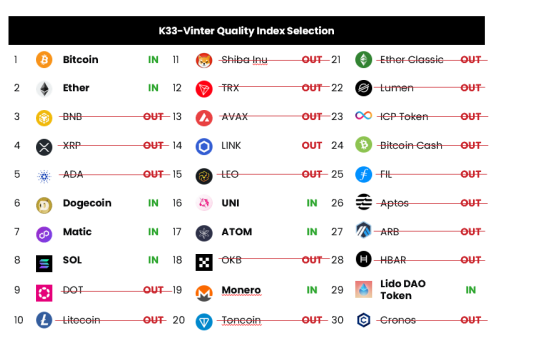
*Note: The calculation time of the Top 30 market value is as of 9:30 am on April 24
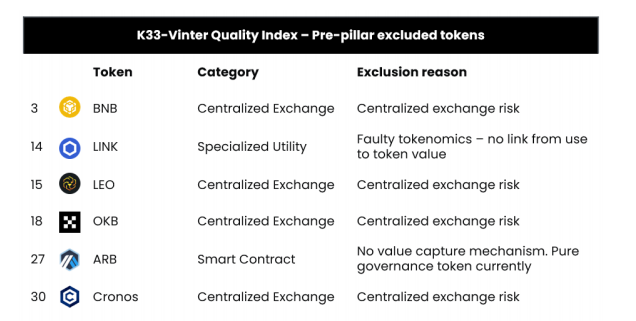
Pre-excluded tokens: Among the Top30, 6 tokens that are not considered first: BNB, LINK, LEO, OKB, ARB, and CRONOS.
reason:
BNB & OKB : Excluding CEX tokens, most of the value proposition is entirely dependent on trust in the exchange, in light of the recent FTT (FTX) story, K33 has decided to remove all exchange tokens from the index for now, this stance may change in the future Change.
LINK : The oracle machine data is easy to provide, and the way of providing it is not advanced, and the oracle machine service is a type that is easily replaced. In addition, there is no direct connection between the users of the price feed service and the subscription price feed service, and K33 believes that LINK is not worth such a high price.
ARB : It has also been running for over a year without an ARB token, with transaction fees paid in Ether. K33 considers ARB to be an unnecessary token with no value capture mechanism .
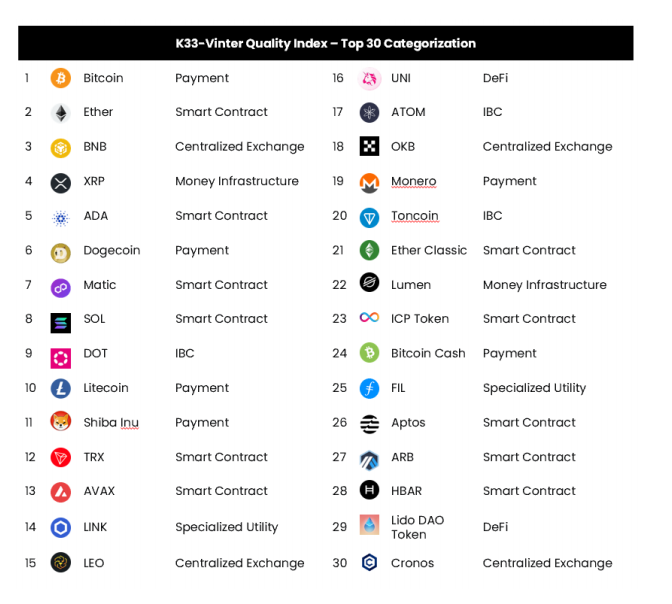
Classification of TOP30 Token Tracks:
According to the track, it can be divided into several directions such as payment, smart contract, CEX, currency infrastructure, inter-chain communication protocol, special utility, and DeFi.
Payment track : BTC, XMR and Doge win.
Composite score table assessed by durable network effects, utility, regulatory risk, ecological prosperity, and token inflation/concentration:
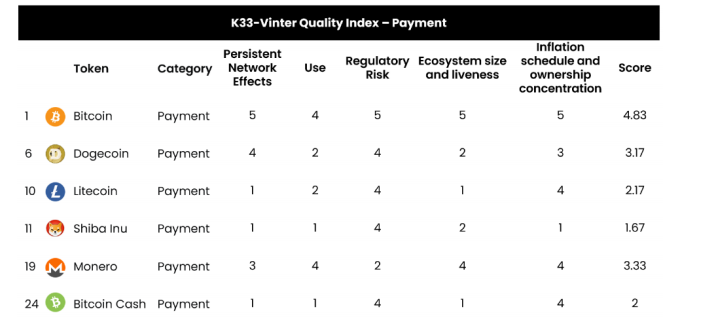
Long-lasting network effects : BTC has the longest consensus; XMR has the need for confidential transactions; Doge has meme effects; while BCH and LTC are replicas of BTC ; Shiba is a replica of Doge , and K33 thinks its value is average.
Practicality : Most coins are speculative, but outside of transactions, BTC and XMR obviously have a more obvious role.
Regulatory risk : BTC is the only token that is characterized as a commodity, and POW also means that it is difficult to completely supervise. XMR has been under heavy regulatory scrutiny due to its privacy features.
Ecological prosperity : The developers of BTC and XMR are still relatively active. In addition, the meme effect of Doge makes it present another ecological vitality, although the development activity is very low.
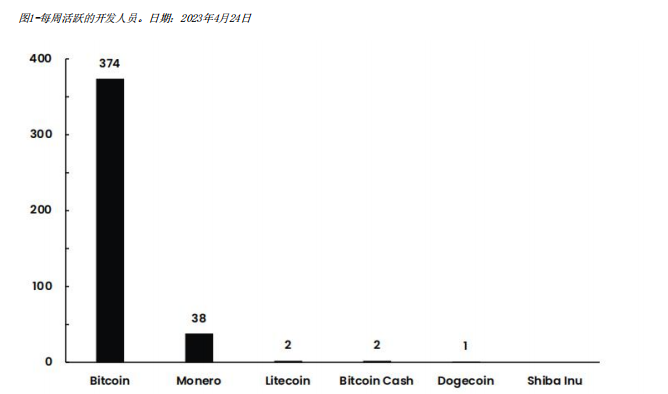
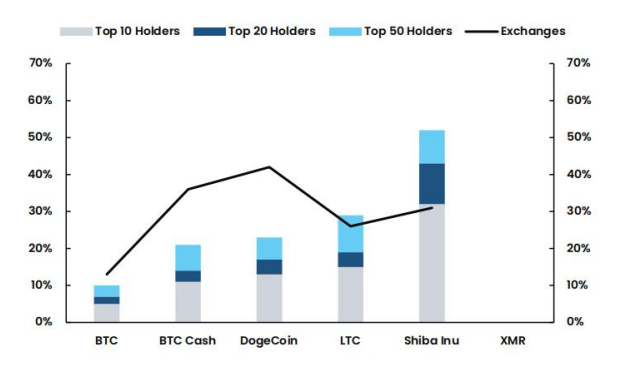
Inflation and token concentration : BTC has the lowest concentration, BCH, LTC and Doge have a similar distribution concentration, Shiba is highly concentrated, XMR is difficult to count because of its privacy features, but K33 believes that as a medium of exchange, its distribution should be relatively dispersed.
Smart contract track: ETH, Matic and SOL win, AVAX loses.
Composite score table assessed by durable network effects, utility, regulatory risk, ecological prosperity, and token inflation/concentration:
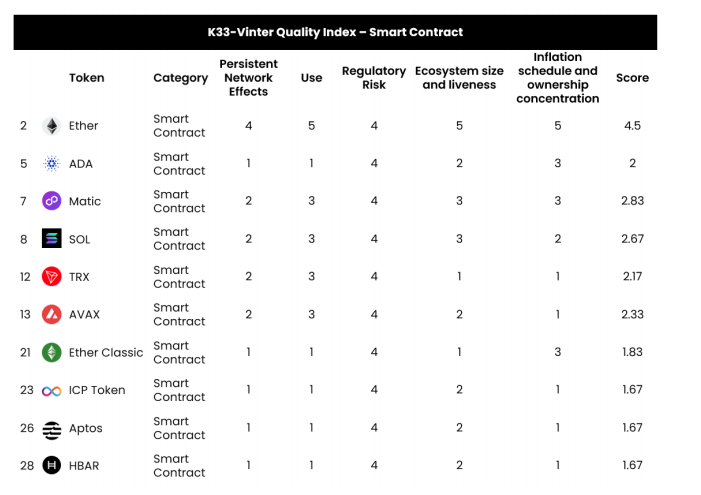
Persistent Network Effects: K33 believes the concept of being the "new Ethereum" is enticing, but as the market weakens, the persistence of demand for an alternative Ethereum appears to be very low. Therefore, most Ethereum alternative projects may not be as good as Ethereum itself in terms of network effects.
Practicality: Considering the use and transaction volume of DeFi, NFT and other applications, the ranking is as follows:
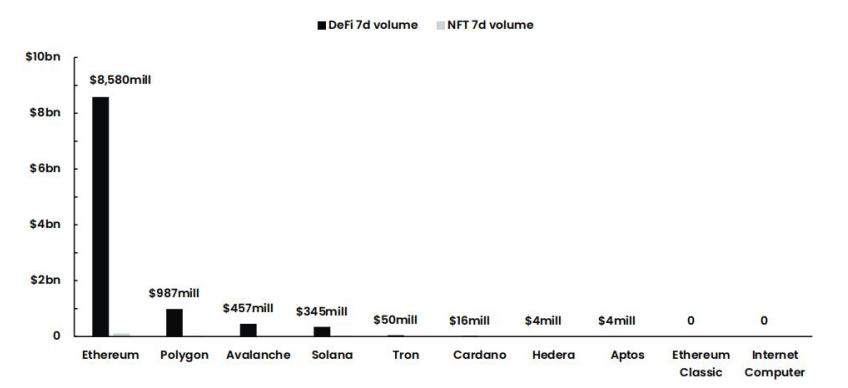
Regulatory risk: There is little difference between smart contract blockchains, and there is debate about whether they should be defined as securities.
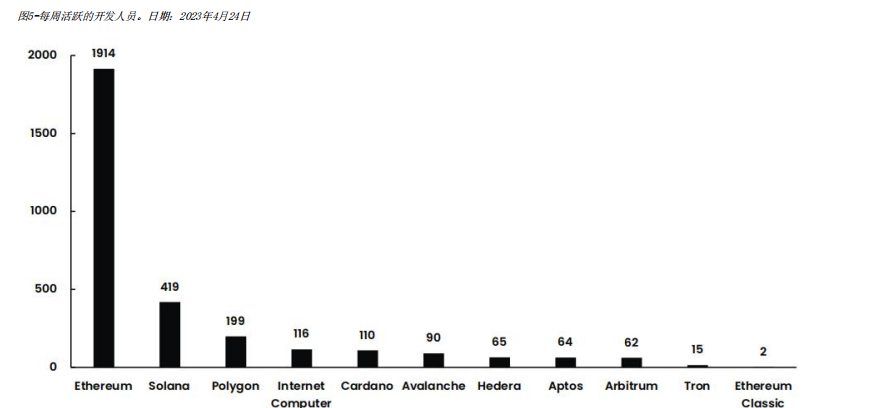
Ecological prosperity: ETH is thriving, SOL is in the second echelon, Matic and other chain developments are active at the same level.
Inflation and Token Concentration:
Ethereum has the best combination of expected inflation and decentralized ownership;
SOL(Solana) is one level above the others. Solana has some sizable power players in terms of token holders, which is considered a significant risk, but the remaining issuance is lower than other tokens;
TRX has no inflation because the supply is fixed, but a large concentration of token ownership is considered a considerable risk and thus scored the lowest;
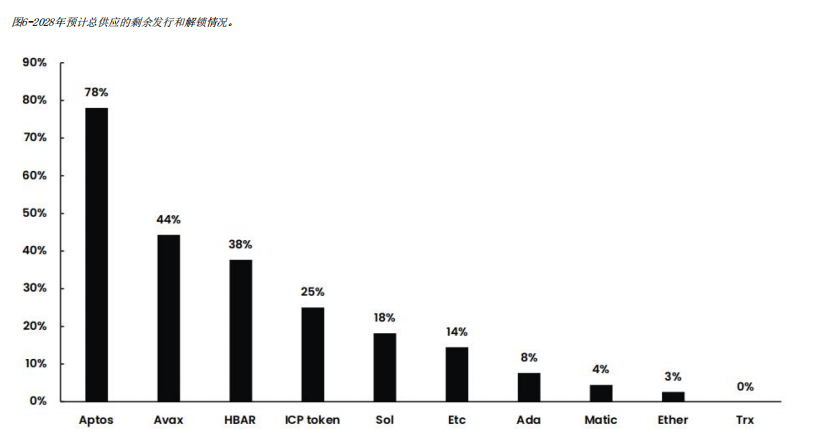
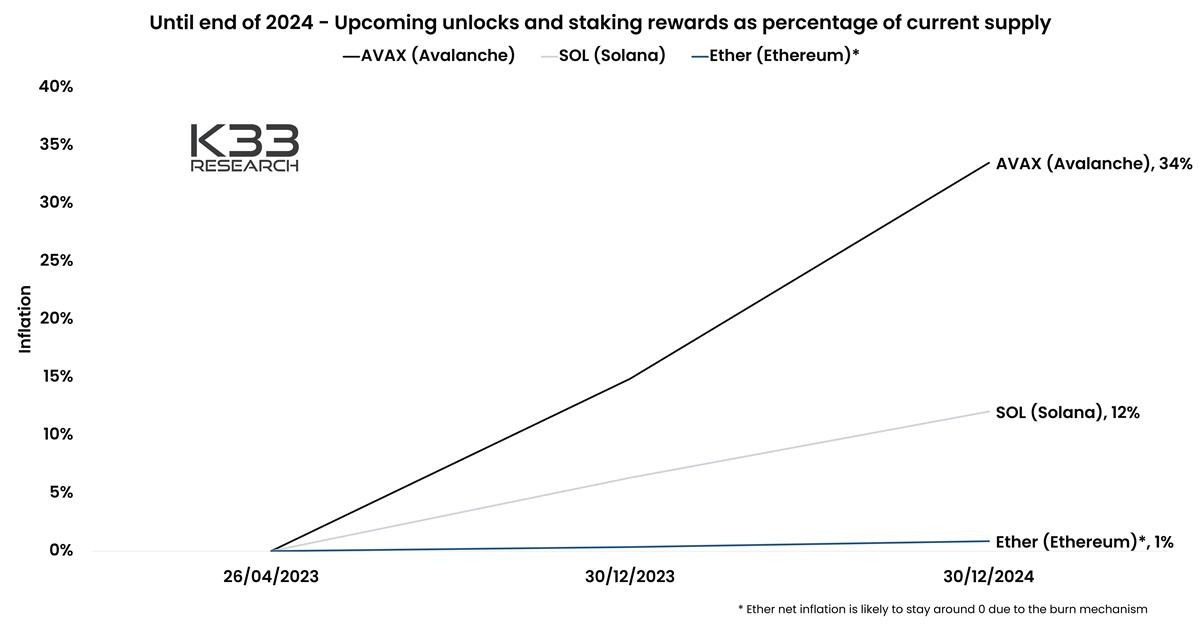
AVAX faces relatively more significant problems in the emission of unlocking and staking rewards.
Inter-Blockchain Communication (IBC): ATOM Wins
Composite score table assessed by durable network effects, utility, regulatory risk, ecological prosperity, and token inflation/concentration:
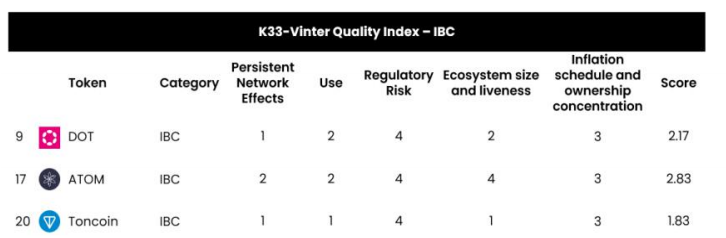
Enduring network effects: Evaluating these tokens is different from evaluating the ecosystems of these networks. K33 believes that for DOT, the two are consistent, but for ATOM, even if ATOM is not successful, the Cosmos ecology may be successful. Overall, K33 believes that Cosmos has a higher survival rate than Polkadot
Ecological prosperity:
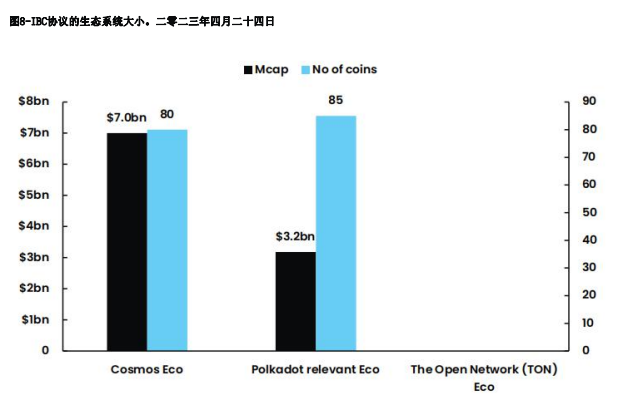
A natural starting point for assessing the ecosystem size of different IBC protocols is to look at the market cap and number of tokens in the ecosystem. The results show that the market value of tokens in Cosmos is still 3 times that of Polkadot (excluding ATOM and DOT);
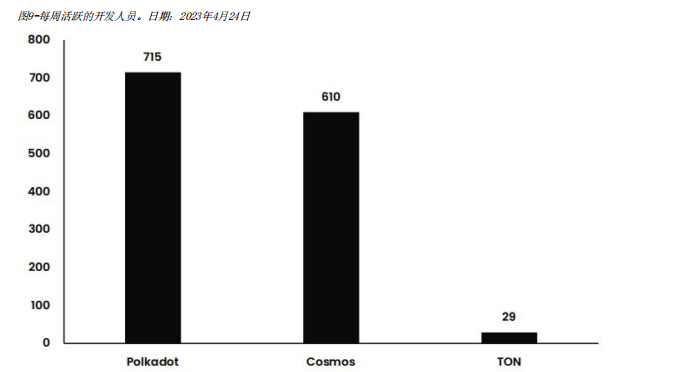
Considering the activity of developers, the figure below shows that Polkadot seems to be even better:
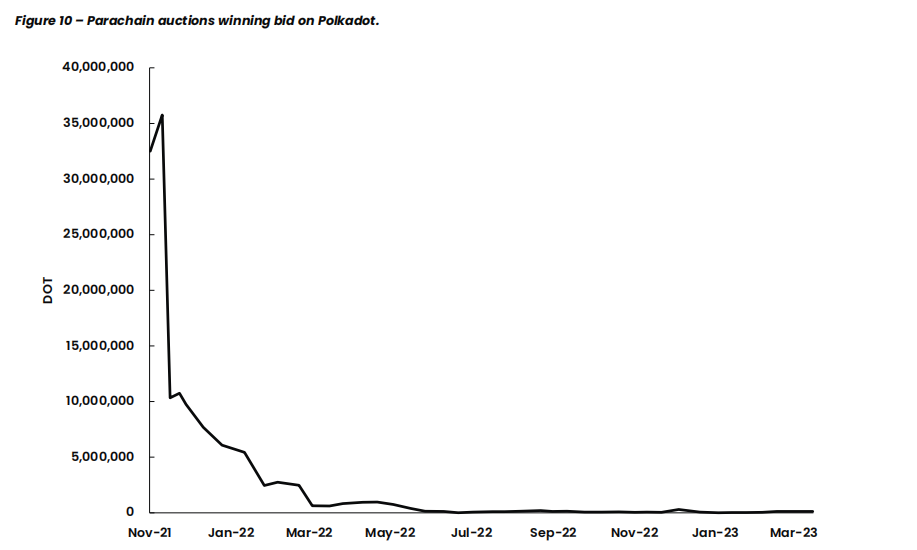
But it feels like the buzz around Polkadot has completely died down. The Polkadot parachain auction situation in the figure below is more intuitive. A year ago you needed hundreds of millions of dollars to
Get a slot slot right now while they're virtually free. In a world of money negotiations, people are unwilling to tie up a lot of capital to develop on Polkadot.
Regulatory risk: There is not much difference between several IBCs, and the scores given by K33 are consistent
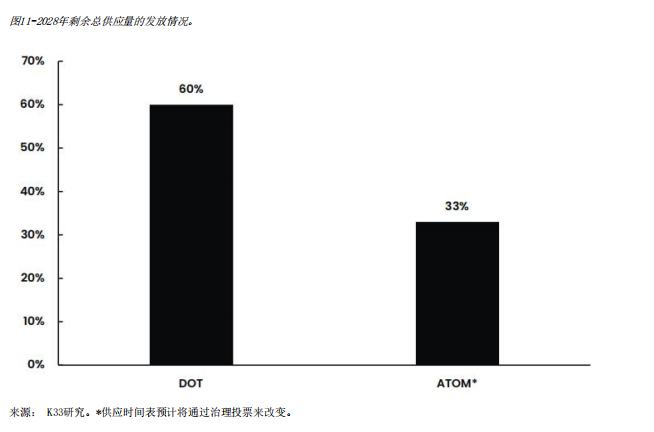
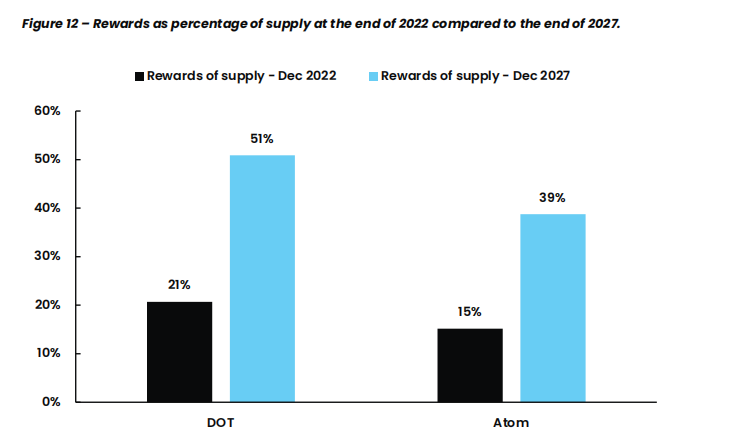
Inflation and token concentration: K33 believes that there is not much difference between ATOM and DOT , but the current rules show that DOT will emit more tokens;
Other categories: UNI and LDO win
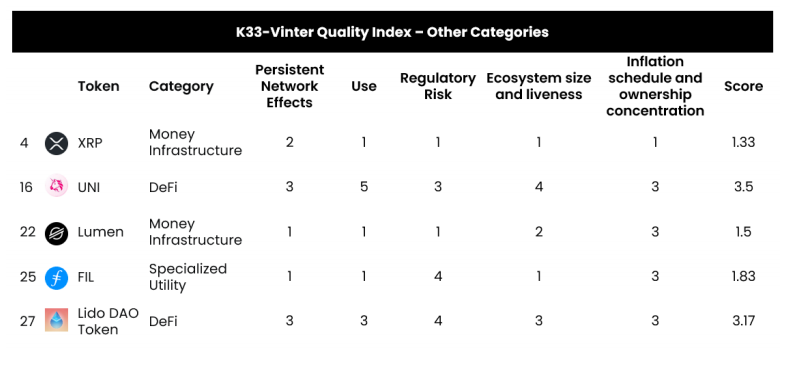
Composite score table assessed by durable network effects, utility, regulatory risk, ecological prosperity, and token inflation/concentration:
Why exclude LUMEN FIL and XRP:
XRP and Lumen's network acts as a bridge between traditional financial companies, but has been operating for a long time without particularly many use cases.
FIL has also been around for a long time, and there is no evidence that people use it to store anything reasonable, nor that usage is increasing.
Why choose UNI and LDO:
Easier to value than more general payment and smart contract tokens, closer to classic stocks. K33 tends to assess their real revenue and business.
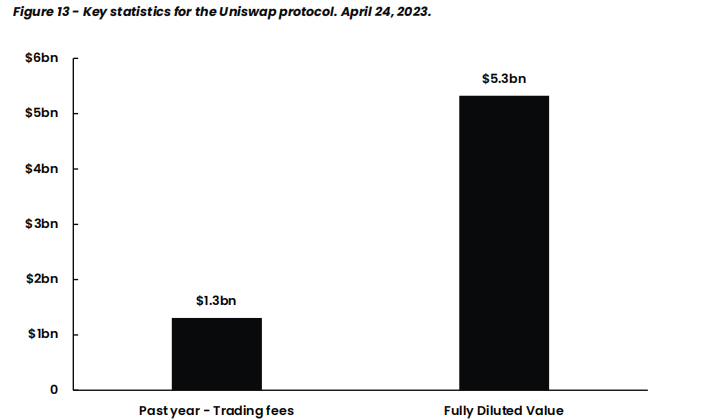
UNI: The total transaction cost in 22 years is 1.8 billion US dollars, and the FDV is close to 5.3 billion US dollars. It is not impossible that the cash flow created by UNI tokens in the future may reach or exceed the current market value.
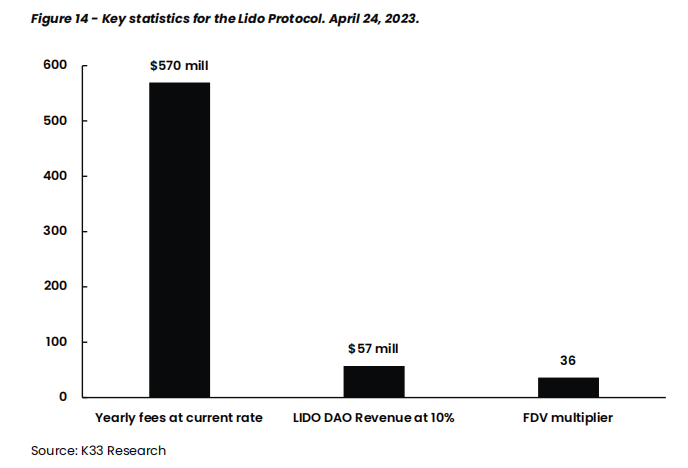
LDO: 10% of protocol revenue has gone to Lido DAO token owners. According to the current total locked value and pledge rate, plus the 10% share of LIDO DAO, the ratio of FDV to annual revenue is slightly higher than 50, and the indicator can be compared with the price-earnings ratio of stocks. In the stock sector, 50 would be very high (negative).
This suggests that the stake in the protocol must grow in the future, or the DAO share must increase.
Given the possibility of growth, K33 believes that LDO are at low risk of permanent financial loss and will not be excluded from the index.