Written by: Stader Ethereum
Compilation: Deep Tide TechFlow
Tokenized vaults, as an emerging digital asset management method, have been widely used on Ethereum. However, the lack of uniform standards among different protocols makes their integration difficult. Fortunately, the emergence of EIP-4626 will change this situation. This article will detail the role of EIP-4626 and the benefits it brings.
Tokenized vaults on Ethereum are actually nothing new.
Protocols like Yearn allow you to deposit tokens in a vault. During the period when these tokens are locked, you can earn income. Similar examples include AAVE and Compound, which do similar operations through their lending protocols.
What do all these agreements have in common?
When you deposit tokens, you receive a "vault token". These protocols accumulate more "vault tokens" as you keep your tokens locked. When you decide to get your tokens back, you simply exchange "vault tokens" for the original tokens and rewards.
So far so good, isn't it? However, there is a problem: there is no uniform standard. This means that integration between protocols is nearly impossible, forcing protocols to implement their own adapters.
This is where EIP-4626 comes in - EIP-4626 will be the rules of the game for tokenized vaults.
It sets the standard for Ethereum with the goal of achieving interoperability between different tokenized vaults, and EIP-4626 is a universal adapter for tokenized vaults.
EIP-4626 specifies the standard interface that every tokenized vault should follow.
First, every tokenized vault should default to an ERC-20 token . Additionally, ERC-4626 adds a series of methods that can be called on this contract. For example:
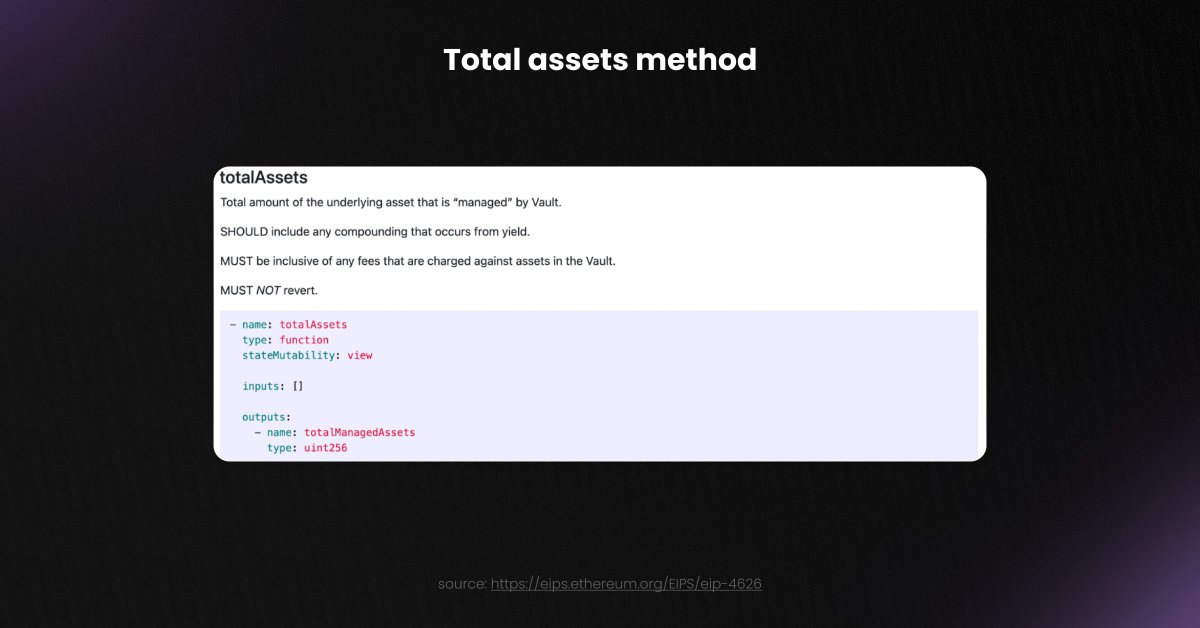
“Total Assets” : This will display the total amount of underlying tokens managed by the vault.
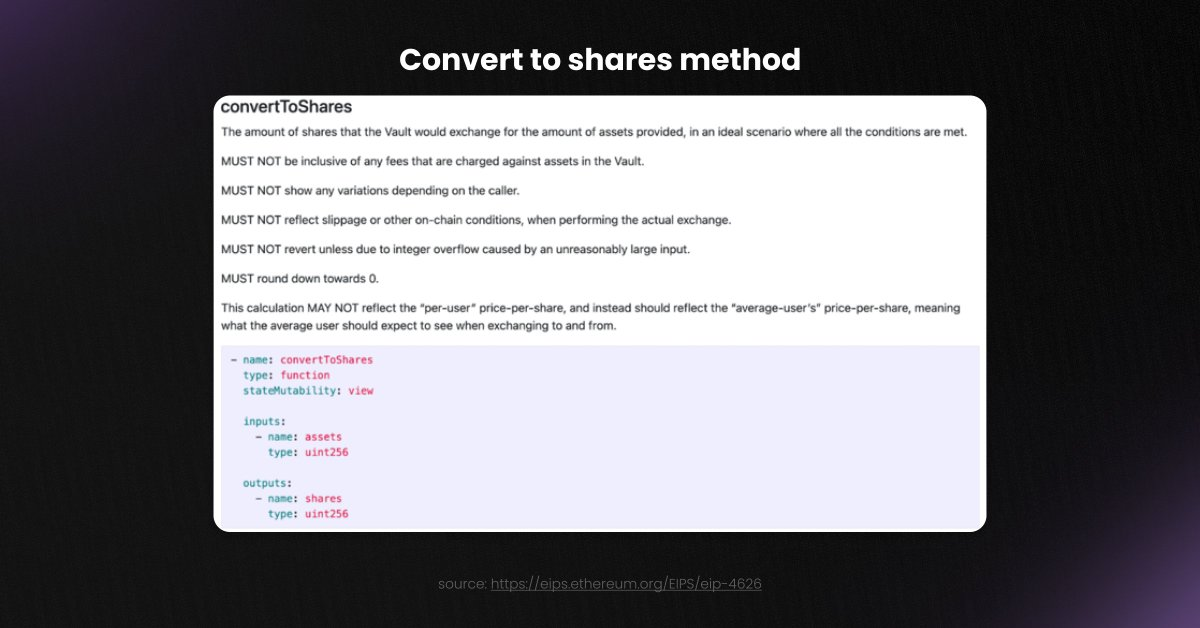
“Convert To Shares” : This lets you know how many yield tokens you will receive when exchanging base tokens.
As more and more protocols start to adopt the standard, we can expect to see:
▻ Improved interoperability: because each protocol uses the same standard;
▻ Reduced development time: no need to write new adapters;
▻ Safer: Helps auditors know where to look for vulnerabilities.
In summary - EIP-4626 is an important development for the Ethereum community. It provides a set of standards for tokenized vaults, making them more secure and interoperable.