Written by: Nate | eatsleepcrypto.eth
Compiled by: TechFlow TechFlow
I've been thinking a lot about token design lately and made a list of token economic tiers. This article will rate and analyze the token designs of several well-known Defi protocols, and explore the elements that a good token economic model should have, including capturing value, governance rights, economic security, etc., which are essential for understanding tokens. Intrinsic value matters. Let’s take a look at which tokens are well designed and which ones could use some improvement to get inspired.
Of course, these are not investment recommendations - a good token economic model is necessary, but not a sufficient condition for long-term gains, and high rankings do not guarantee the economic security of these protocols.
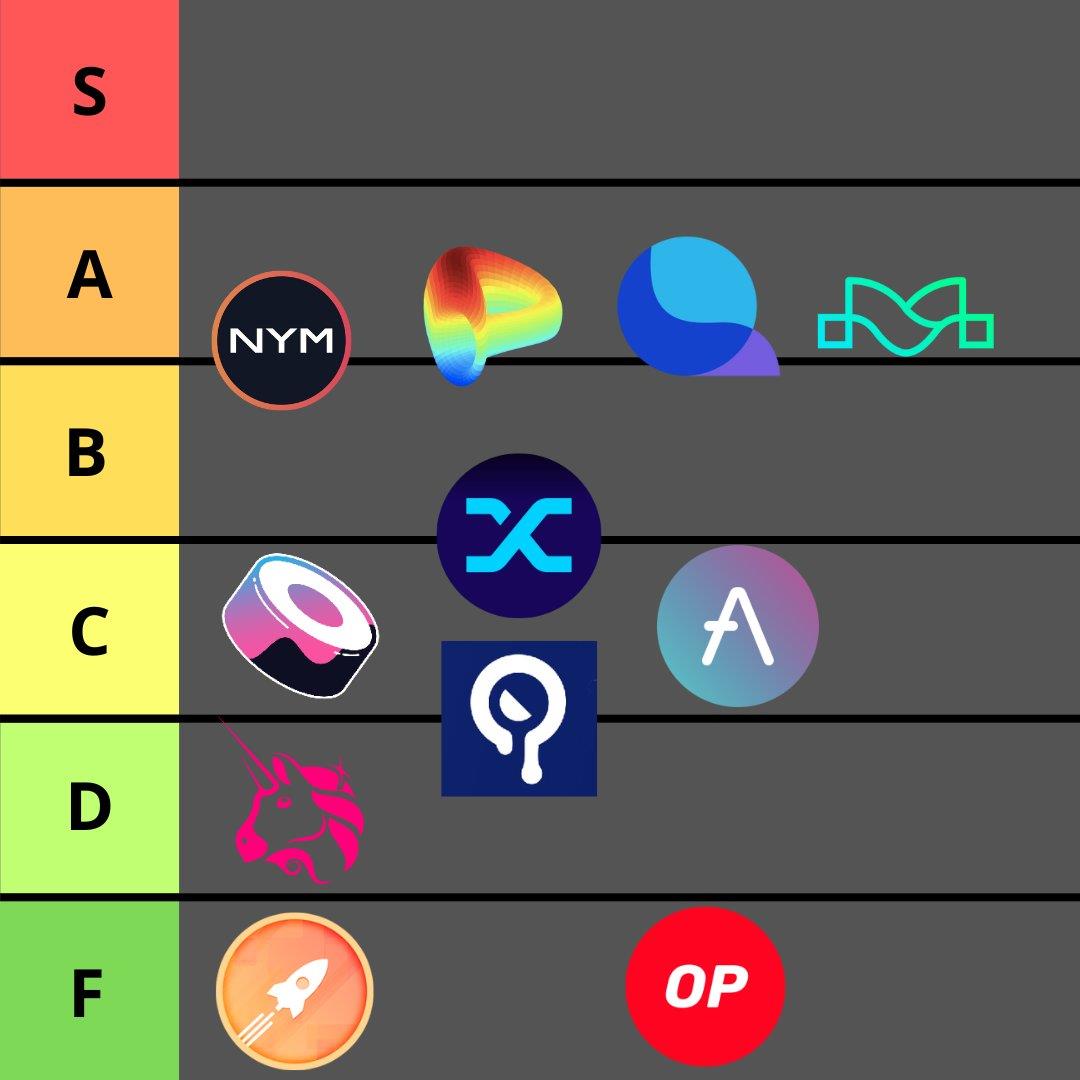
In S level, I excluded all tokens because...
1) I will never give full marks;
2) I even feel hesitant to give A;
3) I am not familiar with the "S" grade.
The criteria for the rating in this article are: protocol practicality, value capture and economic security each account for 30% - these are demand-side factors; the remaining 10% is based on supply-side factors.
I would give Curve Finance an A- .
$CRV has supply issues, some of them bad but neatly solved with veTokenomics, but I'm more focused on demand than supply because demand is what matters in the long run. The demand for $CRV is directly proportional to the liquid value of bribes paid to $veCRV holders.

The fundamental innovation of Curve Finance is not token economics, but the bribery system.
Liquity Protocol is also grade A.
Liquity uses the amount of over-collateralized $ETH to mint $LUSD. LiquityProtocol’s $LUSD is a secure decentralized stablecoin in a way that protects its peg.
$LUSD is not without risks, but it is as close as it can get to solving the stablecoin trilemma. Additionally, Liquidity rewards $LQTY holders with real yield
The Maya protocol is also at level A.
Maya has a dual-token system, $CACAO for liquidity pairs and $MAYA to capture the system's fees.

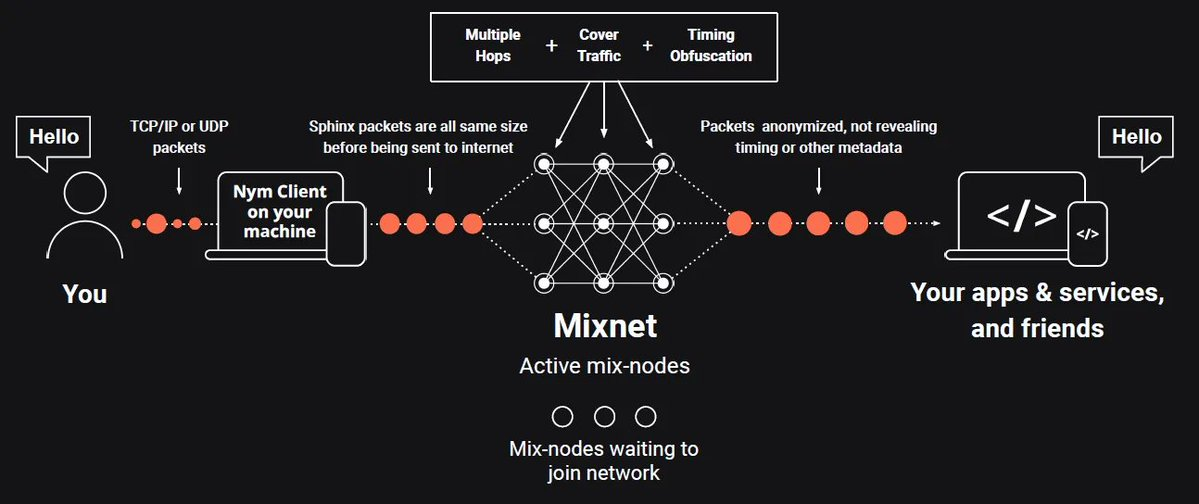
Nym Project has Grade A demand token economics. The supply side is another story, and once they stop issuing $NYM tokens to miners, the price will rebound. It is recommended that Nym give these incentives to community managers who recruit real users in online workshops.
Synthetix I would rank it at C+ .
$SNX captures a lot of value, but its usefulness is limited because it is not private and has a public founder. If its DAO stopped manipulating monetary policy, everything would fall apart.
Synthetix operates similarly to Mirror on Terra, but with less asset diversification. Since the founders of $SNX are not anonymous, Synthetix cannot issue synthetic forms of commodities or traditional assets (such as $TSLA, $GOOG, etc.).
The resulting lack of diversification also makes $SNX more fragile and susceptible to economic security vulnerabilities, as was the case with Terra's Anchor protocol.
I went back and forth between the B grade and finally decided to put SushiSwap in the C grade.
Sushi got lucky with its vampire attack on Uni, and it really hasn't innovated since. The real yield are pretty good, $SUSHI outperforms $UNI, but the bar is set very low. Additionally, real yield is not only the easiest way to capture value, it’s also one of the worst because it doesn’t leave much of an economic moat.
Aave is ranked C.
Frequent bad debts and a governance committee full of Degen really don't do it any favors. Especially after the recent GHO release, the current price of $GHO is still $0.97.
GHO's central bank strategy reminds me of several funds' USDJPY carry trades before the Bank of Japan announced its intention to raise interest rates, and I will be interested to see how this develops when Aave raises interest rates.
Uniswap is ranked D grade.
I often write about the failure of Uniswap. As expected, v4 doesn't solve UNI's apparent lack of value capture, and then there's the Impermanent Loss...
Rocket Pool ranks F. I was going to give it a D, but it has a really bad flywheel design, especially next to the competition. $RPL is inserted as an arbitrary staking requirement and even its rewards are not $ETH but its native token.
Optimism is also ranked F by me.
The price of $OP is driven entirely by speculation and there is no action from Optimism. Optimism wants to be able to capture the value through the sorter - I bet it doesn't do that. In the end, $OP relies on continued speculation to maintain its price, just like Meme coins. But unlike $DOGE, OP is not even used in the circular economy.