Written by: Web3 Characters
You can briefly introduce yourself
Hello everyone, I am Mirro, the shrine manager. I graduated from the London School of Economics and Political Science (LSE) with a major in finance and worked in an investment bank in the traditional financial field. Later, I worked for a while at Huobi Exchange during Li Lin’s period, and then I mainly worked with some institutions as an independent consultant.
Can you share how you got involved?
From finance to Web3
Early in my career, I entered the financial field, focusing on investment banking and asset management in traditional finance. However, under the influence of some coincidences and mentors and friends, I began to turn to the Web3 field. These mentors provided me with valuable guidance and helped me gain insights into the unique aspects of Web3’s financial markets. In this field, I found it interesting. It not only provided me with more direct and reliable market information, but also deepened my understanding of market openness and asymmetric games. This is a market where I am better able to leverage my strengths, including my understanding of market models and expertise in liquidity and trade execution.
Over time, I spent a lot of time working in this industry. At first, I mainly engaged in industry analysis, and then gradually turned to cooperating with some large project parties and friends to explore common cooperation opportunities. I often spend a lot of time studying liquidity issues and analyzing and finding solutions to liquidity and asset issuance challenges. In the future, I think it is very important to solve the problem of uneven liquidity and assets in the entire blockchain market. Although the market has performed well recently and the price of BTC has skyrocketed, I think what is more critical is how we can discover high-quality assets, issue them in a more fair and efficient way, and be able to carry large-scale funds. This is a challenge that continues the last bull market and is an area we have been exploring.
FT brings new revelations
Friend Tech is a good example. They use a joint pricing curve to release liquidity. Of course, this method is also accompanied by greater friction and losses, but it provides us with a lot of inspiration. They tried to issue each Twitter account as an asset, which triggered me to think new about asset issuance.
In other aspects, I am not a fan of currency speculation. Although I have been involved in the trading field, NFT and DeFi were the areas I paid more attention to in the early days. However, whether I can profit from it is another matter, and I am not suitable for trading in the secondary market. As for the projects I have participated in, there are indeed many, including participation in play and exploration projects, as well as cooperation with project parties and large institutions. I paid attention to projects such as "Milady" in the early days, especially their curation and liquidity aspects. I had provided liquidity to these projects for a period of time out of interest, but without a formal agreement. Additionally, I spent a lot of time researching and learning about other projects. I was fortunate enough to interact with the founders of a few projects over a period of time, and despite not being physically involved, I gained a deep understanding of their gameplay and design.
Core content : In the early days, I worked in investment banking and asset management in the traditional financial field. However, under the influence of my mentors and friends, I turned to the Web3 field and studied the characteristics of the market in depth. I invested time in industry analysis and later worked with large project parties to explore solutions to liquidity and asset issuance challenges. I think it is critical to address liquidity and asset quality issues in the blockchain market, and this is an area we have been exploring. Friend Tech's approach provides us with inspiration. They use a joint pricing curve to release liquidity, which triggered my new thinking about asset issuance.
What is your deepest feeling in Web3?
People tend to only look at the surface and ignore the essence
First of all, I have observed that most people in the market often have contradictory mentality, starting point and expected results. This manifests in the fact that they are lazy, and although they may work diligently, this diligence is based on their desire to be lazy. This has led to many unethical behaviors, such as cutting leeks, PVP battles and fraud, as well as the sudden withdrawal of some projects. In my opinion, courage is needed in this market, especially for the Chinese, because on the one hand, they are subject to legal constraints, and on the other hand, the evaluation of projects in the market is often polarized. People often just see a project rising in price and think it is good, without considering important factors such as valuation and liquidity.
Secondly, I noticed that some projects that have experienced huge increases have even increased tens of thousands or hundreds of thousands of times. Although some people think that they are money laundering or other problems, in fact, they have indeed made many people make money. However, many people are always full of illusions and hope that these projects will skyrocket again, without paying attention to valuation and liquidity issues. Ultimately, when the prices of these projects fall, they still complain, which tells us something: there are many people in the market who do not truly understand the nature of risk and the market.
In fact, I think many successful project entrepreneurs are not the so-called "dragon slayers who eventually become dragons", but more like entrepreneurs who understand the true nature of players and users in the market. They understand that it is impossible to make a profit for everyone, not even for the vast majority of people, because even if most people make a profit, it is meaningless. This is why many good projects end up attracting a different set of people, whether at the beginning, at the peak, or at the bottom of the project. This phenomenon gave me a revelation, that is, in the Web3 market, it is not a fair thing to judge what is good or bad.
In my opinion, when we evaluate this market and industry, we should pay more attention to the contribution a person or entity has made to the industry. It’s not just about money, it’s more about actual contribution and impact. In this market, there are many excellent developers who have open sourced many excellent tools and projects and conducted a large amount of open source data analysis, all of which have contributed to the industry. But they are not directly involved in resource and production allocation, and their contributions are more indirect.
Look at the market with rational thinking
In contrast, those directly involved in the allocation of resources and production tend to be emotionally driven rather than truly rational actors. Although they may not contribute directly to the industry, they bring funds into the market, which can be considered a contribution. However, I think the influx of capital does not necessarily represent rationality. In fact, I think the vast majority of people in this market are irrational, including project parties and institutions. The market lacks true rationality.
This market tends to follow the "Law of the Dark Forest", which is that the larger your field of vision, the more likely there will be bigger fish to eat you. This is very typical for BTC. Some people may make money by BTC’s daily trading, and some may make money by weekly trading, but there will always be people holding tens of thousands of BTC waiting to compete with you on the monthly line. They are ready to compete with you on the monthly line. Powerfully liquidate your positions online. Therefore, in this market, no one is always right, everyone makes mistakes, so we should analyze everyone's behavior with an inclusive and rational attitude.
We should consider the experience of project parties and founders. Even if they have launched some junk projects or had problems before, they may learn a lot of lessons through these experiences, so they may create phenomenal products. Similarly, some so-called "native dogs" may also become "dragons". They may have had some negative experiences before but ended up creating impressive products. This is the nature of the Web3 market, full of uncertainties, but also full of opportunities.
This market actually directly reveals the truth about the financial market. In the financial market, we often see some very poor listed companies. I once asked my mentor that their chairman was a liar in the past and was even involved in online gambling, but now they are engaged in big data and artificial intelligence, and the company can be listed. I feel like doing this is against my conscience, as if I'm helping a bad guy condone his crimes. But my mentor told me that there is no point in analyzing these past events. Just like when you were a child, you may have made fun of others, insulted teachers, and fought with friends, but this does not affect your ability to become a president in the future. For example, Alexander Hamilton, the founding father of the United States. He also did many things that were not well evaluated when he was young, but this did not prevent him from becoming a hero in people's minds. This story gave me an important revelation, and it took me a lot of time to truly understand this concept. However, I think more than 95% of people still do not understand the truth, that is, how you should view the people and projects in this market, and the basic logic of how this market operates.
Core content : In the Web3 market, I have observed that most people's mentality and expectations are often contradictory, manifested as laziness and illusion. Unethical behavior and sudden project withdrawals are common in the market. Many people only look at the rise and fall of project prices, while ignoring key factors such as valuation and liquidity. Successful project entrepreneurs usually understand the true nature of players and users in the market, and they understand that it is impossible to make everyone profit. When evaluating the market, one should focus on the actual contribution and impact a person or entity brings to the industry, rather than just looking at money. The influx of capital does not represent the rationality of the market. The market lacks real rationality. Uncertainties and opportunities coexist in the market, and we should analyze everyone's behavior with an inclusive and rational attitude. Past experience does not completely determine the future, and there is uncertainty in the development of projects and people. These views also apply to financial markets. We should look at people and projects more rationally, as well as the basic logic of the market.
When did you start paying attention to FT?
I heard about FT at the end of August. Many friends told me that it is a very powerful product. One of my mentors also highly recommended it. He said that this product is excellent and solves the liquidity problem we have been studying. I considered trying to get involved, but there were a lot of different voices in the market at the time. Some people say it is a "three-no product", and others are worried that continuing to get involved in this field may have an impact on personal reputation or legal security, because it is well known that involving crypto assets is a higher-risk activity. So, during that time, I wasn't actively involved but had some backup investments.
Later, I realized that FT is not as described by some voices. It has its own characteristics and potential. Although I had very much hoped to join the PD team, I had some communication with them and participated in an interview. Unfortunately, our concepts did not seem to fit well, and they were not very satisfied with me, so no agreement was reached at that time. However, I will continue to pay attention to products invested by companies that I admire. Just like the last market cycle, I spent a lot of time writing blur to provide everyone with knowledge on how to arbitrage or gamble with miners. FT has a similar logic.

Core content : I learned about FT for the first time at the end of August, and it was highly recommended by friends and mentors. Although there were some negative voices at the beginning, I did not actively participate, but made backup investments. Later, I realized that FT had potential. Although I considered joining the PD team, we did not reach an agreement due to a mismatch in concepts.
What do you think of FT?
I think the most critical point is that FT solves the problem of asset issuance and clarifies the concept of asset issuance. In the past, we may have thought that it was very difficult to create an asset pool on platforms such as Uniswap. It required technical knowledge, the ability to write smart contracts, an understanding of how asset pools are calculated, price calculations, etc. FT solves this problem through a clever binding curve, making asset issuance more perfect. However, it also comes with a price. Just like BRC20 in the BTC ecosystem, it also solves the problem of asset issuance, allowing you to only set parameters such as the total supply, the amount of each asset that can be issued, and the total handling fee. Quickly conduct asset issuance.
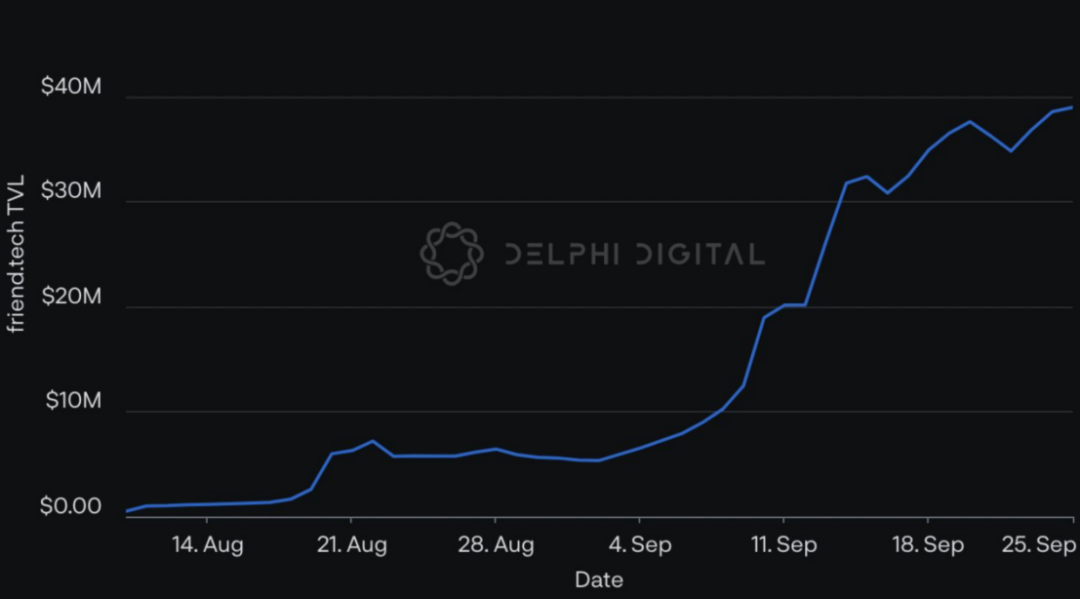
FT is presented to us in a more violent way, but related to it is that the curve of its bounding curve determines its upper limit. If you have calculated the curve, you will understand that in the top 100 transactions, the fluctuation of each purchase and sale may be as high as 60% to 70%, while with each subsequent inflow, it only improves 1% to 2% The fluctuation is even less than 2%. This may affect the inflow of large funds. I often discuss this issue on Space, and I say that FT may need to take some new measures if it wants to attract large capital participation. But I'm not sure if the project team has considered this. If that's their intention, perhaps they could add some mechanisms into contracts or other aspects to allow big money to more easily participate in the open game. But I think the current situation is that FT has not put much energy into attracting large capital participation. So, rather than seeing it as a social financial product, I personally don't like it being called "socialfi". I think FT is not a social financial product. Including NBC, they may have various functions, but essentially they are more like exchanges. Compared with exchanges such as Binance, there is no gap in their functions and performance, but they do not have customer service support and BD teams, nor do they have as large a team as exchanges to support the entire system. However, this does not prevent them from being a free open market. At present, FT focuses more on liquidity mining, which is also accompanied by higher risks. Currently, FT prefers an on-chain exchange with liquidity mining, and it is currently the only one that can continue to operate under this type. project. This is my understanding of FT.
Core content : FT solves the problem of asset issuance and simplifies the process. However, the shape of the curve determines volatility and may pose a challenge to attracting large funds to participate, but currently FT does not seem to be focusing on attracting large funds. And, rather than calling it "socialfi", I think it's more appropriate to think of it as a free open market rather than a social financial product.
Do you have something you would like to share proactively?
I feel that in the field of Web3, I don't have much preference at all. I think Web3 is about ideology and geography. China's Web3 and North America's Web3 are two completely different worlds. The gap is too big. Anyone who has been to the Bay Area or Silicon Valley will realize this. The market conditions, users, and infrastructure developers in mainland China are completely different from those in North America. I'm not talking about the issue of high or low, but that we are not in a circle at all and it is difficult to reach a consensus among each other.
But this does not mean that we should imitate the consensus in North America. Their models are digested and absorbed by us, and then reassembled and packaged in a form that suits our own national conditions. This phenomenon has actually existed for a long time. It has been like this since the US period, then to last year's free mint period, and then to this year's FT period. You can also see that it is not a structure at all.
Therefore, I feel that many times when we discuss this industry, we are not discussing the industry itself, but more like exploring the differences between two cultures and two symbols. There is indeed a difference in what you communicate with North Americans. Therefore, I hope that myself, and my friends around me, can contact and communicate with foreigners, understand their ways, and discover the meaning and purpose of what they do behind the scenes. Why are they able to create phenomenal products and why can’t we? We may need to consider these issues.
Core content : In the field of Web3, there are significant differences in the development of Web3 in China and North America, not only in terms of geography, but also in culture and symbols. This makes it difficult to reach consensus. However, this does not mean that we should imitate the North American approach. We should absorb their experience and rebuild the Web3 ecosystem according to our own national conditions. This phenomenon existed a long time ago and has manifested itself at different times. So rather than discussing the industry, we’re discussing the differences between the two cultures and symbols. So I encourage myself and my friends to get in touch with foreigners and understand their ways and the meaning behind them, why they can create excellent products and why we don’t. This is something we need to think about.