With the recent emergence of a U.S. spot Bitcoin exchange-traded fund (ETF), leading crypto-asset exchange Coinbase is at a critical juncture. While this development marks a mainstream breakthrough for cryptocurrencies, it also thrusts Coinbase into a spotlight filled with potential rewards and significant risks.
The U.S. Securities and Exchange Commission (SEC) has approved and launched the first spot exchange-traded funds to directly invest in Bitcoin, marking an important moment in Bitcoin’s journey towards mainstream acceptance.
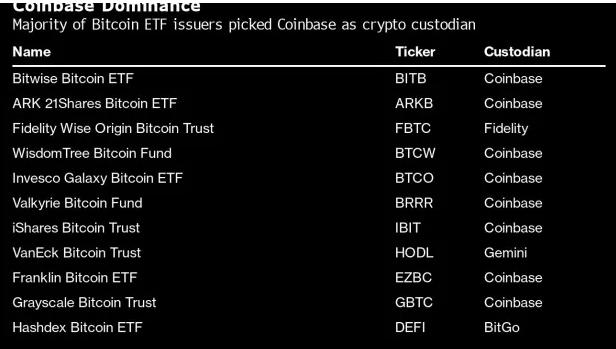
The move puts Coinbase at the center of the action as many spot ETF issuers, including industry giants like BlackRock and Ark Invest, rely on the exchange for basic services such as custody, trading and lending. The Double-Edged Sword of Centralization Coinbase’s emerging dominance in the spot Bitcoin ETF market is a double-edged sword. On the one hand, the company stands to benefit significantly from its central role in a new era of Bitcoin trading. On the other hand, this centralization has raised concerns about “concentration of risk,” according to Bloomberg.
David Schwed, COO of blockchain security company Halborn, highlighted the potential dangers of entrusting a single entity with multiple key functions in financial market infrastructure, stating:
By design, our financial market infrastructure is divided into different roles. When you have one entity responsible for the entire lifecycle of a transaction, I think that raises concerns.
Bloomberg reports that Coinbase is already the world’s “largest cryptocurrency custodian” and is the first choice for spot Bitcoin ETF custody. However, spot ETF issuers note the risk of exchange “service limitations” or curtailments in their risk disclosures.
Dave Abner, principal at ETF advisory firm Dabner Capital Partners, also expressed concerns about concentration risk. Abner pointed out the dangers of relying heavily on Coinbase as a cryptocurrency custodian and suggested that "multi-custodians" may be a safer option for investors and issuers.
Despite these concerns, Coinbase CFO Alesia Haas assured that the company "strives to avoid conflicts of interest," claiming that traditional securities market structures may not be fully applicable to the cryptocurrency space.
Coinbase balances growth and market dynamics As the exchange takes on an influential role in the ETF space, it also faces challenges from emerging funds offering lower fees on Bitcoin investment vehicles.
This competition threatens the revenue of Coinbase’s main trading platform. Although the company's shares surged more than 100% last year, analysts at leading Japanese bank Mizuho Bank estimate the new spot ETF may only add 5% to 10% to revenue.
Potential changes in customer behavior further complicate Coinbase's market position. Some existing customers may switch to buying Bitcoin through spot ETFs, which typically have lower transaction fees than exchanges.
As Mizuho’s Dan Dolev outlined, the situation could lead to fee compression across the cryptocurrency space, impacting Coinbase’s revenue stream. Despite these challenges, the company remains optimistic.
Haas expects spot ETFs to benefit the cryptocurrency market and Coinbase. Meanwhile, Coinbase head of institutional products Greg Tusar believes that spot ETFs will diversify over time, using multiple custodians.
Related Reading: Bitcoin ETF Under Fire As Prominent Investor Calls It 'Useless' While it could reduce Coinbase's market share, this strategy could mitigate the risks associated with over-reliance on a single custodian.