Uniswap, the leading decentralized exchange, announced late yesterday (15th) that the much-anticipated Uniswap v4 version is tentatively scheduled to be launched on the Ethereum mainnet in the third quarter of 2024.
Erin Koen, head of governance at the Uniswap Foundation, said in July last year that the launch of v4 depends on the successful implementation of the Cancun upgrade. In addition, a comprehensive code audit process needs to be completed, so the launch time may fall four months after the Cancun upgrade. months.
Uniswap v4 is launched on the mainnet in the third quarter
As the Ethereum Foundation recently announced that the Dencun upgrade has been finalized and will be launched on the Ethereum mainnet on March 13, 2024, the Uniswap Foundation also updated in a tweet on Thursday that the launch date of v4 will be tentatively scheduled for Q3 this year. At the same time, the foundation also announced an audit roadmap that is expected to take several months before v4 goes online, and stated that they believe v4 should be the most rigorously audited code on Ethereum.
Phase 1: Code Freeze (in progress)
Core code completion, testing, gas optimizations, security enhancements, and minor parts finalized.
Previously, Koen said that the "code freeze" phase would include incorporating changes from Ethereum proposal EIP-1153 into the v4 code. EIP-1153 introduces a "temporary storage" system that disappears after the transaction is completed to further reduce gas costs.
Note: "Code Freeze" refers to a stage in the software development process where the protocol's code is fixed and no large-scale changes are made. At this stage, the development team stops adding new features or modifying existing features to the protocol to ensure the stability and reliability of the protocol.
Phase 2: Review and Testnet
There will be a comprehensive audit and community audit competition among multiple audit companies. At the same time, v4 will be deployed to the testnet and final adjustments to the code will be made.
Phase 3: Start mainnet
v4 is expected to be launched on the Ethereum mainnet in the third quarter
v4 three major technical highlights
Since v1~v3, Uniswap has gone through a series of important changes, gradually establishing its position as a pioneer in the field of automated market makers (AMM) and the cornerstone of decentralized finance (DeFi). For example, v3, which will be launched in 2021, introduces the concept of "concentrated liquidity", allowing users to provide liquidity within a specific self-defined price range, allowing liquidity to be allocated more effectively and potentially improving capital efficiency.
The upcoming v4 version aims to provide a more customizable, flexible and efficient AMM. Among the high-profile technical reforms include: Hooks, Singleton Contract, Lightning Record Accounting system (Flash Accounting).
Hooks
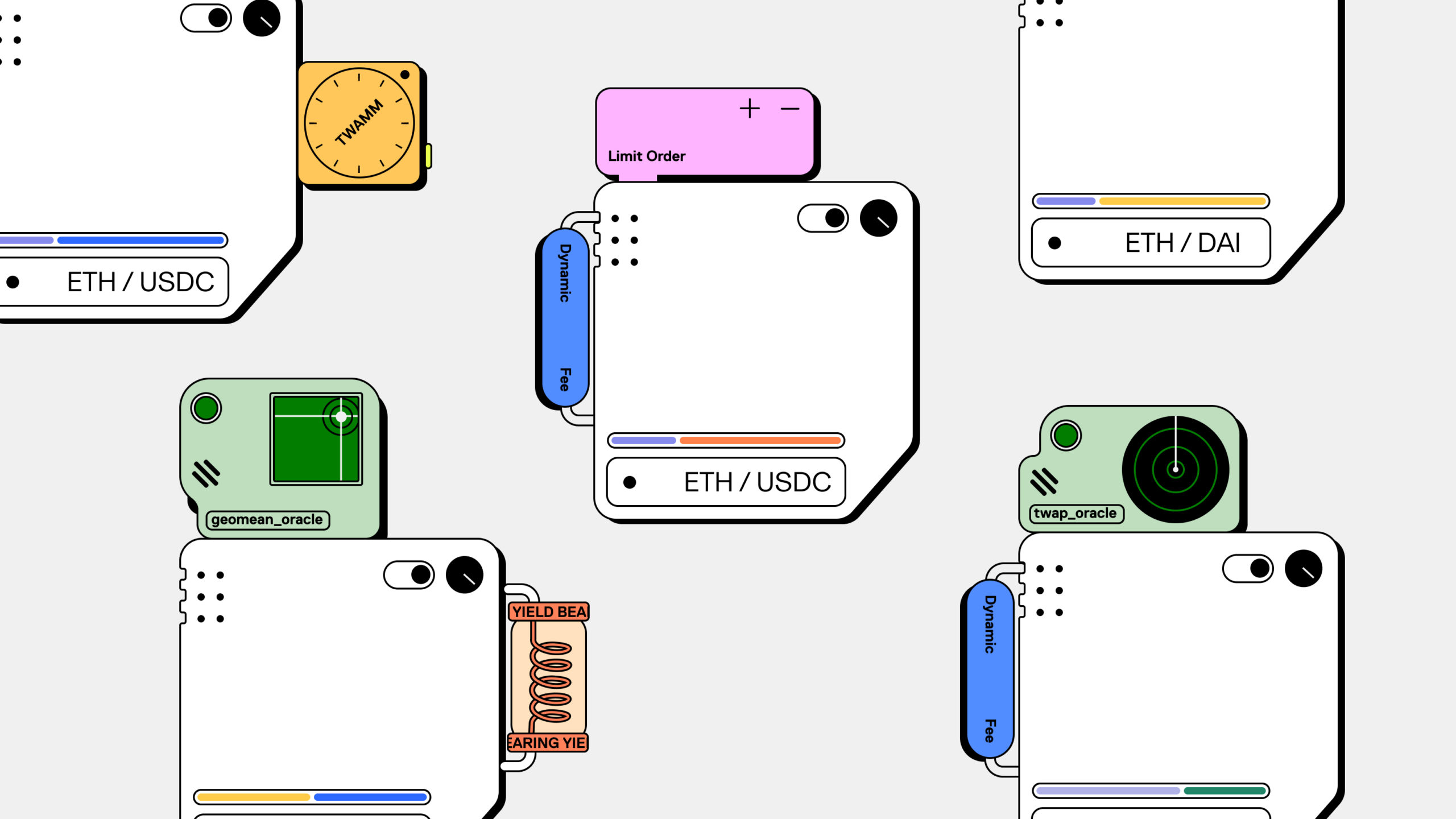
The main axis of Uniswap v4 is to move towards a more modular trading structure, which is mainly achieved through the introduction of "hooks". Hooks will allow liquidity pool deployers to add custom code to the liquidity pool so that users can execute it. Features such as dynamic fees, on-chain price limit orders, and custom on-chain oracles
 Singleton Contract
In v4, both the singleton contract and the lightning accounting system will help significantly reduce gas costs.
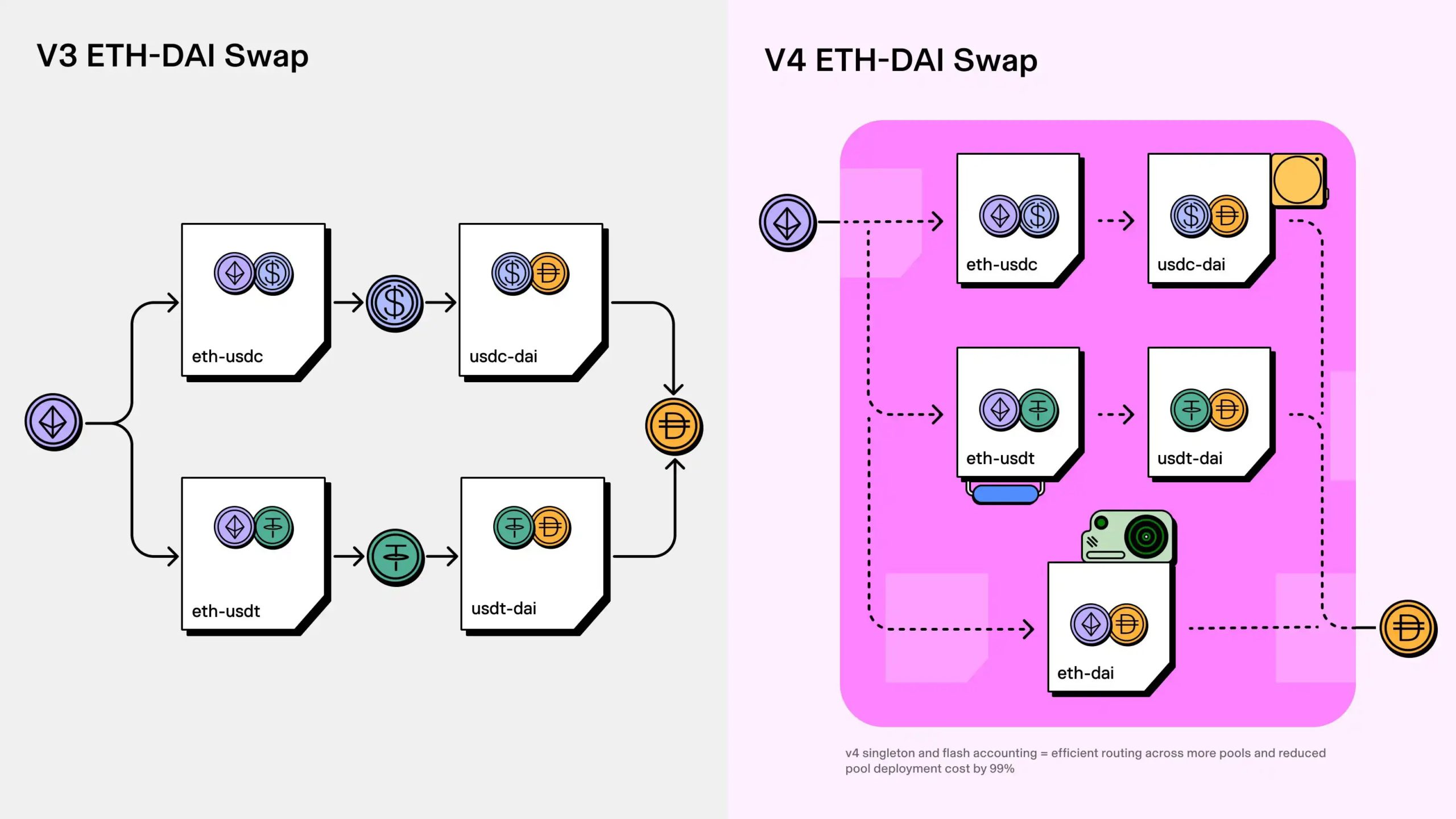
Originally in v3, a new contract needed to be deployed each time a liquidity pool was established, which made it expensive to create a pool and execute multi-pool Swap; while in v4, Uniswap saves all pools in a singleton contract (Singleton Contract ), so that when exchanging tokens, there is no need to transfer tokens between different contracts. Official research shows that v4 reduces the Gas cost of creating a mining pool by 99%.
Lightning accounting system
The lightning accounting system of v4 will help further reduce the Gas cost of transactions, because the net balance of Tokens in the pool will only be transferred when the Swap is completed, and each operation in the process will only cause the internal balance to be updated, while v3 During the Swap process, all assets involved in the transaction are transferred into/out of the pool.