While interest and investment in DAO tokens are growing, their utility and application are still limited by a range of technical, regulatory and operational challenges.
Our main goal is to explore potential use cases for the DAO token and propose a roadmap for its future development. Through this collaborative research, we hope to help deepen the understanding of DAO tokens, promote innovation, and drive stronger, more versatile, and fairer applications in the crypto-economy.
Current status of DAO tokens
Many DAO tokens help incentivize, coordinate, and manage communities in various ways.
Cryptoassets can play both sides when it comes to finances. Whether positive or negative, the value of a token affects how people view a project. When a token rises in value, it creates a positive feedback loop of positive sentiment.
Conversely, when a currency depreciates, it can have a negative impact on the morale of communities with a financial stake in it, and ripple through the wider industry. Therefore, it is crucial to establish a DAO token that can maintain a balance between supply and demand. We explored various use cases for DAO tokens to determine the most efficient way to build DAO tokens in the future.
The DAO's token is usually the most important financial source of the DAO. The majority of a DAO's financial reserves typically consist of its own tokens. These tokens can be used to reward contributors, pay operating costs, and support the growth and operation of the DAO. However, as mentioned before, it is crucial to build token utility to achieve a balanced token spend.
Access permissions and memberships
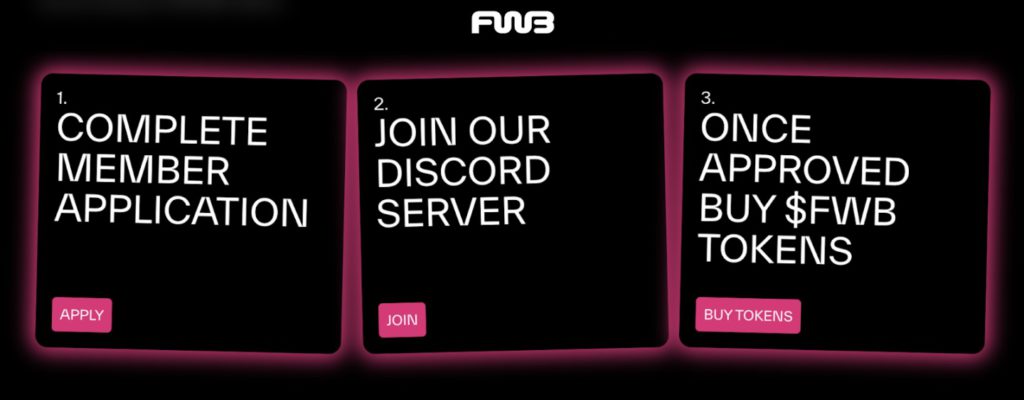
Token ownership can be multifaceted, in some cases it represents the right to participate in the governance of a project or community treasury, in other cases it represents liaison with the community as a whole.
Taking Friends With Benefits as an example, having at least 75 FWBs is a prerequisite for applying to join the private and token-gated Discord server, which is the community’s private “town square” where members can share information, Organize projects and coordinate community governance. In addition, activities organized by FWB require a small amount of FWB to participate. This mechanism effectively expands the membership of the DAO rather than being limited to community members of the Discord server.
Requiring community participants to own tokens is an effective way to generate initial demand for the tokens and coordinate interests. However, this approach is unsustainable as a stand-alone strategy because it only requires users to “buy once and hold” and does not induce repeated demand for the token itself.
governance
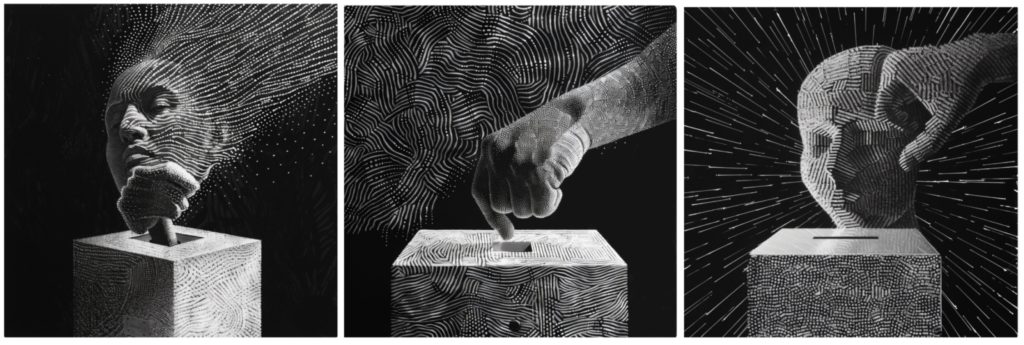
DAO tokens usually include governance rights, giving holders the power to make suggestions and vote on all aspects of the DAO. These matters may include decisions about new organizational structures, initiatives, partnerships, team compensation, and even financial asset allocation.
Some tokens grant voting rights without any additional obligations, while other token designs require DAO tokens to be "locked" for a period of time before voting rights can be obtained. For example, FWB and GCR tokens can be used for voting purposes without any lock-up period.
In contrast, Curve’s popular voting hosting model is different. Under this model, CRV tokens are locked for up to 4 years to gain voting rights. The longer CRV tokens are locked, the more voting power holders receive.
Unfortunately, most DAOs only vote on sporadic proposals, and voting participation rates are often low. Charmverse estimates that most DAOs have voting participation rates in the single digits.
value growth
One way a token generates demand is by making it a financial asset worth investing in or having speculative demand for. This is most common among DAOs that govern DeFi protocols. For example, Curve Finance has a revenue sharing mechanism similar to dividends. Other DAOs have adopted buyback and burn mechanisms to accumulate value.
These value accrual mechanisms typically apply to projects that generate fees or revenue. Community DAO tokens may not have this option. Token issuers should first conduct legal considerations to ensure that the value accumulation model does not cause DAO tokens to be deemed securities by regulatory agencies.
pledge
Some projects offer the option of staking tokens, usually in order to earn an income by contributing economic resources to the project. For example, Aave allows users to stake AAVE tokens into its security modules in exchange for a portion of the protocol fees. By staking AAVE, you can act as a backup when bad debts occur in the agreement, providing financial protection for the project.
However, poorly designed staking mechanisms occur when the act of staking provides no economic purpose or benefits paid to stakers resulting in dilution of the circulating supply of the token.
In this case, staking serves no purpose other than to incentivize token holders not to sell. Cryptocurrency opinion leader Cobie has previously opposed this staking design. Since the last bull market, many projects have abandoned dilutive returns in favor of "real returns," or returns generated by real economic activity.
Potential use cases
In the previous example, we introduced the current status of DAO token utility. However, we are still in the early stages of experimentation. In subsequent sections, we will explore the many different options for DAOs to deploy their tokens in innovative ways.
Start a custom blockchain
One potential use case is launching community-specific custom blockchains. These blockchains can generate transaction fees, which generates demand for the tokens. There are many services and SDKs that make launching a custom blockchain easier, but it can still be a daunting task.
In order to justify the cost of launching and maintaining a blockchain, there must be a sufficiently large and engaged community. While launching a blockchain provides greater control over the user experience for existing members, it also creates challenges for new members to come on board, such as the need for new wallets, gas tokens, and cross-chain bridges. All of these factors must be carefully considered.
Token migration
Many DAOs were initially launched on the Ethereum mainnet. Gas fees on Ethereum may be too high, which increases the barriers to developing the community and trying more experimental token designs and mechanisms.
While using the OG smart contract chain (Ethereum) will certainly bring some reputation bonuses, migrating tokens to cheaper L1 or L2 can help unlock new use cases. This is a great alternative to launching a custom chain that is expensive to maintain.
Build token utility around core community activities
Creating additional utility for DAO tokens is important to maintaining demand for the tokens. For example, Global Coin Research (GCR) recently passed a proposal to allow members to purchase DAO tokens to reduce the commissions they pay on syndicated investments.
If members are optimistic about their early investment through GCR, they can choose to purchase additional GCR tokens to be burned in exchange for reduced fees. The motivation behind this mechanism is to tie additional token utility and demand to the quantity and quality of early-stage investment facilitated by GCR.
The purpose of unbundling tokens
Does a token have too many uses tied to it? In Web2, each use case has its own separate corresponding asset. If you want to own equity in a company, you buy shares. Sometimes there are even different voting share classes.
Starbucks will give you loyalty points for frequenting their coffee shops, rather than an ownership stake. In Web3, all use cases are bundled in a token. We think this is a good thing: users are also stakeholders and should have ownership of the business they contribute to. But does a token need to represent all of these? Or will this limit growth? With the rise of semi-fungible tokens, we need to explore different dynamic use cases.
Airdrop to your community
Many Web3 communities are more than just a club. They are on a mission to promote the development of the Web3 industry. If successful, this mission will create value in the form of incubation projects.
The value of these incubation projects can be accumulated into a vault managed by DAO tokens, but what happens if you airdrop this value to token holders? Crypto Oracle Collective (COC), a DAO co-founded by Crypto Mondays’ Lou Kerner, intends to do just that. They will start with the airdrop of Crypto Monday tokens and plan to promote this method in projects incubated by COC.
Rewards and Gamified Engagement
A community token should be easily accessible so that it can spread widely and build attachment to the token and the community. People interested in the community can get a small gift of tokens to build relationships. Members who attend community events should be rewarded with a small amount of tokens. Communities should explore rewards and gamified engagement. The greater the number of tokens, the higher the social status within the community is given to the holder.
It should be noted that token farming may destroy the community, so some lock-up period should be set, and the unlocking mechanism will refer to the holder's contribution to the community. In this way, first place does not mean getting the biggest reward, but those who contribute to the community can actually get rewards, and the tokens of those who extract will be redistributed.
In terms of rewarding community members with greater contributions, the Optimism PGF (Public Welfare Fund) model may be a good choice. Community members will be incentivized to make meaningful contributions, knowing that their contributions will be retroactively rewarded.
Of course, airdrops may increase selling pressure on the token. On the other hand, with micro-rewards for small participants, selling tokens makes less sense. This approach can establish an emotional connection between the token and the community. Some people may still sell tokens, but the mechanism can self-select community participants who do not sell tokens, so it is more in line with the long-term vision of the community.
Summarize
The emergence of DAO tokens created one of the best coordination mechanisms in the world. Tokens incentivize and enable complete strangers to pool their resources to accomplish a common mission. Having said that, we are still in the early stages of the development of the tokenization community, and we should all continue to experiment and explore new token mechanisms and use cases.