Recently, Binance launched SAGA, which once surged and attracted market attention. So what is the innovation of SAGA? Further observation shows that crypto modularization + GameFi is becoming a new narrative in the crypto market. So besides SAGA, what other projects are worth paying attention to?

What is the innovation of SAGA despite its popularity?
Recently, Binance Launchpool launched SAGA, which attracted great attention from the market. According to information released by Binance, the initial circulation of SAGA is only 4.5% of Launchpool shares and 1.5% of airdrops, while the ecosystem and foundation shares are basically negligible. After SAGA was launched, SAGA soared. So, what is the innovation of SAGA?
SAGA is a Layer 1 protocol that allows developers to automatically launch parallel, interoperable dedicated chains (Chainlets) for different virtual machines. In fact, Saga is equivalent to providing modular infrastructure, supporting developers to launch chains with one click and unlimited expansion. The official also cooperates with Layer 1 protocols such as Polygon, Avalanche, and Tia to expand its infrastructure on a larger scale.
From a business model perspective, the essence of SAGA is to distribute block space to downstream demand parties. A key issue involved is how to set prices. SAGA uses a unique "musical chairs pricing": (1) Assume that there are a = 12 validators in the initial state, and SAGA hopes to select 8 of them for delegated verification; (2) First, SAGA selects a certain number of validators from the ranking of pledge rates to enter the bidding phase. For example, if p = 10, then the 11th and 12th validators will be eliminated; (3) Then 10 validators make bids, and they are sorted from low to high according to the bids. 8 of them are selected as delegated validators. At the same time, the price is determined according to the highest price among the 8 validators. Validators No. 2 and No. 7, who bid $6 and $8, are eliminated. The remaining 8 validators are shortlisted and agree to set a price of $5. This mechanism looks very complicated, but it can achieve one goal: to provide the cheapest possible block space (or effective pricing) through involution.
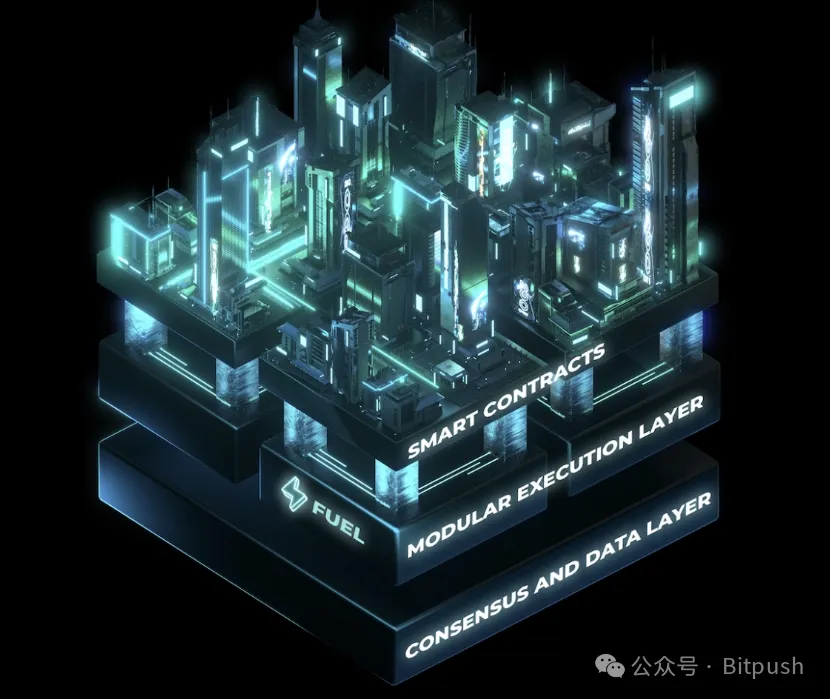
Modularity + GameFi becomes a new direction for encrypted narrative
As of April 1, 2024, SAGA's incentive testnet Saga Pegasus has hundreds of agreements. The plan includes 350 projects, of which 80% are games, about 10% are NFT and entertainment, and 10% are DeFi. SAGA's modular public chain features attempt to complete a public chain breakthrough through GameFi. In addition to SAGA, modularization + GameFi is becoming a new crypto narrative direction. This article introduces several mainstream modularization + GameFi narrative projects.
GALA
Gala Games is a blockchain game development company founded in 2018, aiming to build a decentralized game ecosystem. Gala Games is both a game development platform and a game aggregation platform. Gala has established a dedicated network node to maintain and ensure system security. The node system will provide decentralized computing power support, transaction verification and storage services for the game ecosystem. The entire game ecosystem runs on a distributed node network, rather than on a centralized server controlled by a single entity. Gala's founder node will power the operation of the Gala ecosystem. Well-known games in the Gala ecosystem include: Town Star, Spider Tanks, Mirandus, GRIT, Gala Music and Gala Film, and VOXverse.
RON
Developed by Sky Mavis, a technology-focused gaming studio, Ronin Network is an EVM-compatible chain designed specifically for gaming. Unlike previous Ethereum sidechains, Ronin aims to completely solve key issues in gaming, such as Ethereum’s high gas fees and slow transaction speeds, providing players with a smoother and more seamless gaming experience.
In January 2023, Ronin released the desktop game aggregation platform Mavis Hub 2, and in March, it launched the RON staking function. In April, it switched to the delegated stake (DPoS) mechanism and upgraded the function of Ronin Wallet. In May, it launched the NFT market Mavis Market (and integrated Ronin Wallet). In September, the blockchain game project Pixels migrated from the Polygon network to the Ronin network (also foreshadowing the further expansion of the Ronin partner program). In October, it announced the launch of the Lucas (v2.6.2) upgrade and Shillin hard fork on its mainnet. In November, it reached a cooperation with the Korean game production company ACT Games, which plans to migrate all its games to the Ronin network. In December, it reached cooperation with world-renowned game studios Foonie Magus, Directive Games, Bali Games, Tribes Studio and Bowled.io, further expanding Ronin's game ecosystem.
ARB
Arbitrum is currently the largest Layer2, and it is building a new narrative of Layer3+GameFi through Orbit. Orbit is the Arbitrum stack, which allows anyone to launch their chain on Arbitrum One or Nova without permission, which is equivalent to the OP Bedrock stack. This is similar to the function of modular public chains, that is, one-click chain launch. On the evening of March 27, the Arbitrum Foundation announced that it would work with popular NFT brands Azuki and Weeb3 Foundation to jointly create a Web3 network AnimeChain that attracts anime fans. In addition, other projects that build L3 based on Orbit include XAI, Apechain, Cometh, SyndrHQ, polychainmon, meliorafnd, etc.
In essence, SAGA belongs to the modular crypto narrative direction of Layer1+GameFi, which is similar to Arbitrum Orbit's Layer2+GameFi. GALA and RON are specialized game public chains, and their game quality is relatively high and more professional. Overall, the development strategy of public chain+GameFi is becoming a new crypto narrative.
How will GameFi break out of this bull market?
The GameFi industry has been developing for many years. From the initial simple CryptoKitties to the Axie that became popular during the last bull market, the overall development of GameFi is constantly moving forward. With the launch of a number of high-performance public chains such as SAGA and RON, the underlying infrastructure of GameFi is gradually maturing. So, how will GameFi break through this round? DAW may be the most promising development direction at present.
DAW (decentralized Autonomous Worlds) is a type of game that is open and has no preset gameplay on the entire chain. It allows players to freely create, enhance and expand the game experience within the boundaries of this digital physical reality by providing publicly accessible programmable interfaces, further expanding the game's plot. In Web2, the typical representative of autonomous world games (CAW) is "Minecraft".
At present, DAW is still in its early stages of development. In its short development history, the most noteworthy one is OPcraft. In October 2022, OPcraft, a fully chained 3D Minecraft-themed game created by the Lattice team. In OPCraft, a simple set of rules is formulated. Players can only perform four in-game operations, including destroying blocks, synthesizing blocks, placing blocks, and claiming a 16 x 16 piece of land (becoming the highest diamond pledger of the block). In just two weeks of going online, it attracted more than 1,500 participating players and more than 3.5 million on-chain records, and also triggered various user-generated pixel art, individual player-made plug-ins, and a series of spontaneously formed competitions, games, group governance activities, and even some malicious and friendly player behaviors.
Summarize
Overall, SAGA's Layer 1 + GameFi and Arbitrium's Layer3 + GameFi have similarities. These two projects are moving towards GameFi from a technical perspective; GALA and RON are more similar, as they are better at developing Web3 games and then began to delve into public chains based on game needs. However, the general direction of these two categories is actually the same; in the future, crypto modularization + GameFi is expected to become the main narrative in the crypto industry.