The TON2024 roadmap will cover upgrades in multiple areas including decentralized finance, aiming to expand the user base and influence of TON through sharding technology and other means.
Original article: TON Roadmap For 2024 Explained: Gas, DeFi, and Staking
Author: Tonstakers
Compiled by: Vernacular Blockchain
Cover: Photo by Dima Solomin on Unsplash
TON’s development roadmap has many interesting plans, such as a stablecoin toolkit, sharding tools, and native bridges for BTC, ETH, and BNB . Although there is no release date, we expect them to be live in 2024. In this article, we will explain the upcoming features, how they will affect the network, and whether they will change TON’s staking rewards.

We’ve grouped the most interesting points into three categories to better understand their combined impact. Let’s dive in!
1. No transaction fees
This is the most notable milestone in TON’s roadmap for 2024. No other major chain offers fee-free transactions, so TON has the potential to revolutionize the blockchain space and attract more users from other ecosystems.
In every blockchain, users must pay gas fees for their transactions. Blockchain protocols cannot eliminate gas fees because they prevent spammers from sending thousands of transactions per second and clogging the network.
Maybe TON will subsidize gas fees in certain cases, such as Telegram wallets or USDT transfers, to attract more users to use TON in their daily needs. Imagine that you can send $5 to your friend in Telegram without asking for his credit card number or wallet address, and more importantly, it's free .
2. Changes in Staking Rewards
1) Separation of validators and consensus
This is a major upgrade in TON’s scalability. Consensus refers to the process of collecting transactions, validating them, and combining them into a block. To do this, nodes store and constantly monitor all balances of all addresses in the TON blockchain.
TON plans to bring in 500 million Telegram users by 2028 and use sharding technology to provide sufficient transaction execution time and low transaction fees. Through sharding, the blockchain is divided into several shard chains. 2 shard chains provide 2 times the throughput, 4 shard chains provide 4 times the throughput, and so on.
Each shard chain will have its own subset of validators to collect and validate blocks. To ensure security, these validators must rotate randomly between subsets frequently. Herein lies the problem: with random rotation, validators will have to store the state of every shard, not just their own. Storing the state of 1 million accounts requires powerful servers, and storing the state of 5 million accounts in one place is impossible.
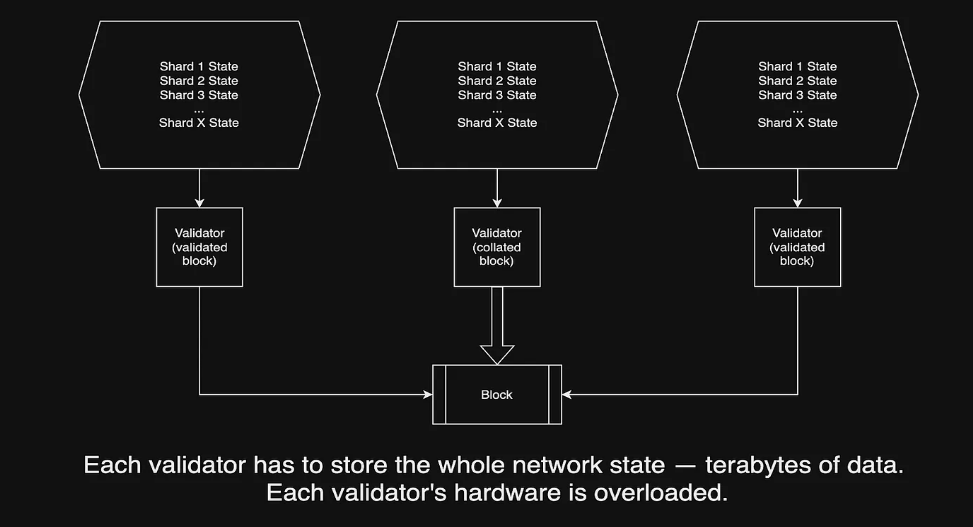
To solve this problem, the TON team proposed to split verification and collection into two roles: Collators may only store the state of their shard chain and collect blocks, while Validators are only assigned to that shard chain for a period of time to verify and sign blocks . The load and risk will be evenly distributed, and TON will be able to scale to meet the needs of billions of users.
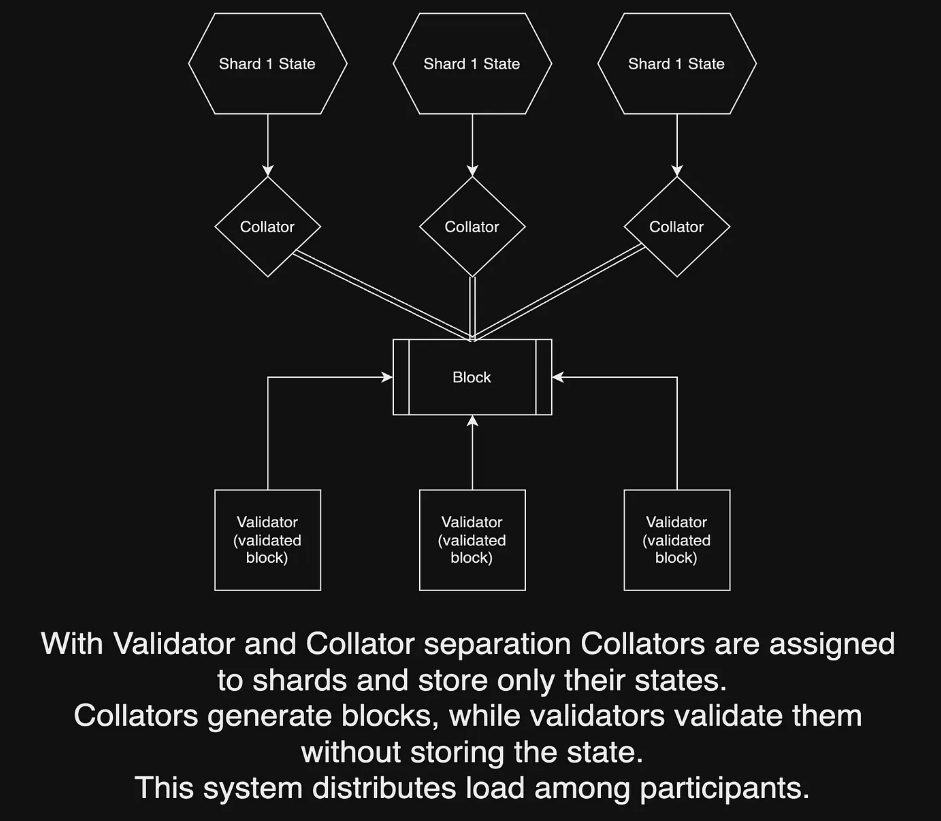
In the official documentation, there is no mention of staking rewards. Although only validators take risks in block verification, collectors should also be rewarded for storing status and generating blocks.
Although the verification process becomes more complex, TON’s staking annualized rate of return will not change, and liquid staking for Tonstakers will remain as profitable as it is now.
2) Sharding Guide and Tools
Thanks to the outstanding developers responsible, TON will be one of the first blockchains to effectively utilize sharding. Centralized exchanges, payment systems, and even TON’s services and applications will need special tool sets and documentation to implement sharding support, as this is a technology they are not familiar with. This is why TON developers hope to release such a tool in the near future.
3) Penalty optimization
Slashing is a way of punishing validators for poor performance: missing blocks, being offline too often, or even trying to get fraudulent transactions into blocks.
Currently, TON uses a complaint mechanism to punish misbehaving validators. Any network participant can provide evidence and hold bad validators accountable.
Penalty optimization should lead to a better system for detecting and punishing misbehaving validators, enhancing the robustness of TON. This will be implemented in several steps: First, the Liquid Staking Protocol will not be affected by validator penalties, and user rewards will be guaranteed. Then, penalties will be distributed across TON provided by the Liquid Staking Protocol, slightly reducing the average annualized rate of return.
4) Voter and configuration contract updates
TON staking, liquid staking, and on-chain governance are all enabled through smart contracts. Tonstakers also use these contracts to pool TON, provide TON to validators, and distribute rewards among our users.
Updates to the Voter and Configuration contracts will allow our users to vote on network proposals, making the network more open and increasing value for every user.
3. Decentralized Finance
We group these changes together because, if combined, they will have a positive impact on the DeFi ecosystem.
1) TON Stablecoin Toolkit
Apart from the name, the document does not explain what exactly it is. We can guess that the Stablecoin Toolkit will allow anyone to issue algorithmic stablecoins pegged to local fiat currencies, such as the British pound, euro, New Zealand dollar, etc.
Considering TON’s integration with Telegram, its built-in wallet, and its recent decision to share TON’s advertising revenue with channel owners, we can assume that Telegram may add the ability to pay for built-in services using local stablecoins.
2) Jetton Bridge
TON has established bridges with Ethereum and BNB chains to bridge $TON and popular currencies such as ETH, BNB, and USDC.
The Jetton bridge will allow users to send TONTokens similar to tsTON to other chains. Why not add tsTON on Uniswap?
3) Ethereum, BNB and Bitcoin Bridge
Although we have third-party bridges, launching an official bridge would be a logical step in issuing additional currencies.
4) Additional Currency
$TON is the native token: used for staking and paying gas fees. For example, the function code for trading $TON is built into the TON protocol, and the balance is kept in the account.
Jettons (regular tokens like USDT and tsTON) operate through third-party smart contracts and cannot replace gas fees and staked $TON. Users' balances are stored in these contracts.
Extra Currency will allow TON users to create tokens similar to native tokens, which will also be stored in accounts. The most significant difference between Extra Currency and Jettons is that transactions in Extra Currency should be 2-3 times cheaper than Jettons because they will occur without contract calls.
Issuing major tokens like Bitcoin and Ethereum or native USDT as additional currencies will make working with TON more advantageous and will attract more new users to TON. Want to buy Bitcoin, Ethereum and BNB? TON will offer them on one platform.
4 Conclusion
The roadmap of TON looks promising and brings many new tools to make TON more popular among the masses.
We believe the most impactful updates are the native currency, bridge, and stablecoin toolkits, which together will expand TON’s use cases for everyday payments and allow more people to start building their own crypto portfolios.
At the same time, we at Tonstakers are interested in the separation of validators and collectors, penalty optimization, and staking contract updates. Separation and sharding will not affect the annualized rate of return on staking, while contract updates will bring more value to liquid stakers as they will get voting rights on TON update proposals.
Can’t wait to see what the future will bring us in 2024!
Disclaimer: As a blockchain information platform, the articles published on this site only represent the personal opinions of the author and guests, and have nothing to do with the position of Web3Caff. The information in the article is for reference only and does not constitute any investment advice or offer. Please comply with the relevant laws and regulations of your country or region.