avatar
CM
50,508 Twitter followers
Follow
陈默 build https://t.co/sUxN5UgoWD DeFi OG. Core LUNAtics. 中文 CRYPTO 投研/影片/社群
Posts
Signal Clone Analysis
avatar
CM
12-16
Thread
In the past week 1/ Let's start by talking about the overall market sentiment. From the market's perspective, the general consensus is bearish. In groups that rely solely on chart analysis, losses have already fallen below 50,000. Investment research analysts are also very pessimistic, generally believing that it's difficult for any truly innovative products to emerge, and that attention and capital are being severely drained by the AI ​​sector. I bought both BTC starting with 8 and ETH starting with 2. Although the market thought it could reach 7, I still acted first. Starting in December, most altcoins migrated to Ethereum and Ethereum, leaving only a few projects with cash flow, such as AAVE LINK. Compared to the previous cycle, I feel I've become much more conservative. During the bear market after LUNA, I bought a lot of altcoins at the buy the dips. Although I ultimately made a profit and some projects even had a second rise, I also experienced too many stories of things going back to zero. The situation is a bit different this cycle. I think there are very few counterfeit products that have been wrongly killed. The market's calculation and evaluation capabilities have improved, and it's not so easy to "pick up bargains". In particular, this cycle has a large number of projects without actual business operations, as well as projects that were created to complete previous financing tasks; these projects are very risky. Of course, I would still buy if a good opportunity came along, but it's practically impossible to find one now.
ETH
7.18%
avatar
CM
12-12
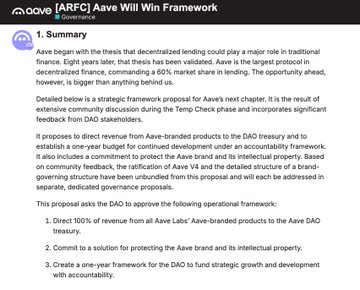
Aave just released an upgrade to its liquidation engine in V4, which perfectly addresses my needs. Anyone with experience in Aave liquidation will likely know that the old system used a fixed close factor. Simply put, even if only a small portion of your position needed to be liquidated to bring your health factor back above 1, the liquidator could still liquidate at a fixed percentage. This resulted in liquidated individuals forcing them to forfeit a significant amount of collateral, a form of over-liquidation. In V4, liquidators don't always repay a fixed percentage. Instead, they only allow liquidation of the amount that "just" brings the borrower's health factor back to a target value (set by governance). In practice, the protocol calculates how much debt needs to be repaid to raise the position's health factor from its current level to the target value. The liquidator can only liquidate up to this maximum amount. This reduces over-liquidation and is much more favorable to liquidated individuals. Furthermore, the liquidation reward has changed from static to dynamic. In V3, the reward didn't automatically adjust with the position's risk level. This had a drawback: it discouraged liquidating the most vulnerable positions first. In V4, liquidation rewards are dynamic and linked to the health factor. The lower the health factor, the more dangerous the position, and the higher the liquidation reward, incentivizing liquidators to prioritize liquidating the most dangerous positions.
AAVE
8.7%
loading indicator
Loading..