Let me answer this. First, I believe the US stock market and the RWA market are large and complex enough that they are not a winner-takes-all structure.
Just like in traditional markets, there are exchanges like Nasdaq and the New York Stock Exchange, as well as user-facing brokerage systems like Futu, Tiger Brokers, and Interactive Brokers. The future structure of RWA/US stock tokenization will be similar, only the underlying layer will be a blockchain:
1) Issuance End (Asset Source)
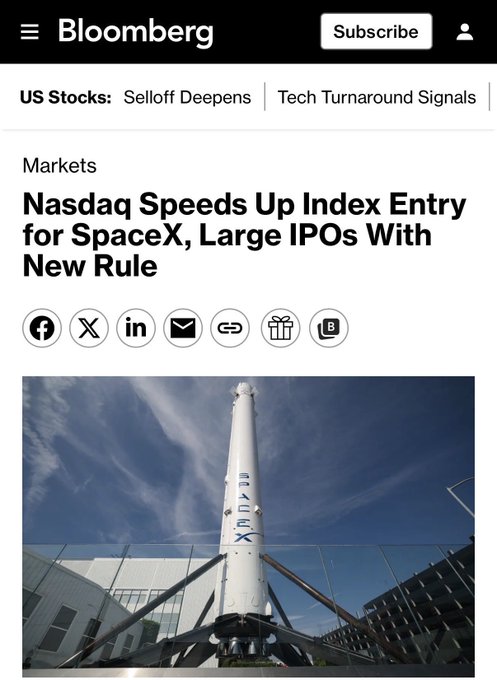
In the future, it will still be controlled by traditional systems, such as Nasdaq and the New York Stock Exchange, which will decide which assets can be mapped and how they can exist compliantly. (Currently in the early stages, each company issues its own US stock tokens; it's estimated that this will unify in the future.)
2) Clearing and Settlement Layer (Central Hub)
Institutions like the Depository Trust & Clearing Corporation (DTCC) may use chains like Canton Network to complete on-chain clearing and settlement.
3) Distribution and Trading Layer (User Entry Point)
This could be a "super liquidity pool" like BN/OKX, with users choosing "vertical blockchain brokers" currently tokenizing US stocks.
So, back to the question, where exactly does the edge lie for vertical players?
I think there are three points:
First, asset representation capabilities. Large exchanges tend to focus on "standardized asset listings,"
but vertical platforms can handle a wider range of assets.
US stock spot trading + leverage structure
Industry baskets (AI/military/energy)
--- Second, user mindset and trading scenarios. The first-mover advantage allows for a vertical early user base, and product iteration advantages will be more distinctive.
Third, compliance scenarios
Licenses + structure
In general, the entry of large exchanges like BN and OKX is a good thing; it helps educate users and expand the market. For example, last year, the market was saying that tokenization in the US stock market was a false demand, but this year the tide has turned.
Just like when online brokerages emerged, it wasn't that the emergence of leading brokerages eliminated opportunities for smaller brokerages; rather, it activated the entire market.