Today
Intel
Market
Earn
Settings
Account
Theme Selection
Light
Dark
Language
English
简体中文
繁體中文
Tiếng Việt
한국어
Followin APP
Mine Web3 Possibilities
App Store
Google Play
Log in
THEDEFIPLUG
50,248 Twitter followers
Follow
DEFI & NFT | Crypto Enthusiast | NFA | Influncer • My bag @Propchainglobal ( $PROPC) • Learn to DYOR • DMs opened
Posts
THEDEFIPLUG
02-06
Thread
#Thread#
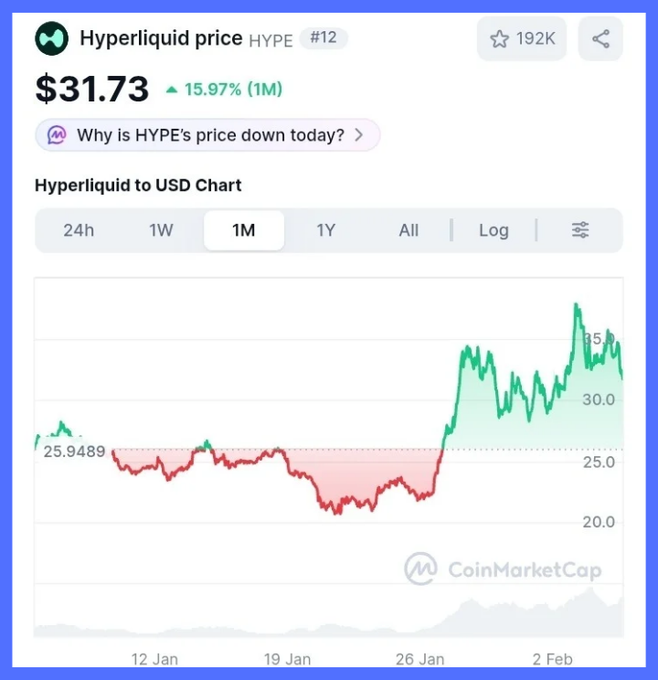
market down. $800m liquidated. $hype up 15% in last 30d. that divergence isn’t narrative. it’s mechanical. when volatility spikes, activity compresses into a single surface. ➤ volume accelerates ➤ fees expand ➤ revenue is realized instantly @HyperliquidX isn’t an exchange sitting on top of a chain. it is the chain. execution, liquidity, and settlement collapse into one loop. in stress phases, capital doesn’t want optionality. it wants immediacy. general-purpose L1s lose throughput when risk comes off. chains that are the application absorb it. price action is secondary. behavior under load is the signal. if this holds while $btc retests lows, market is repricing what “infrastructure” means.
XZK
0.13%
THEDEFIPLUG
02-02
Thread
#Thread#
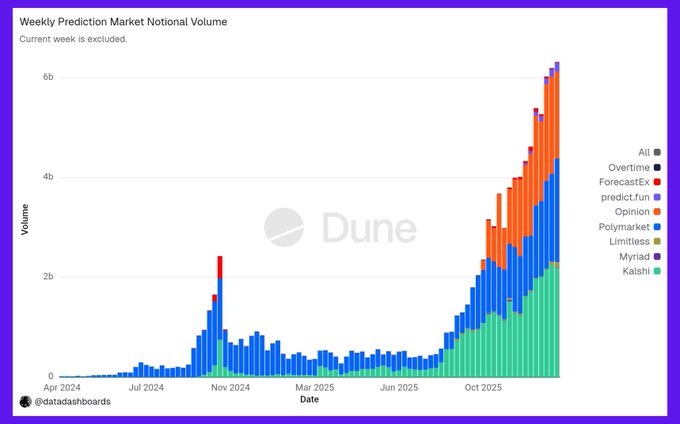
Zoom out for a second. @Polymarket on @JupiterExchange isn’t a feature. It’s an execution re-route. Prediction markets don’t need awareness. They already clear over $6B in weekly volume. What they’ve lacked is proximity to liquidity. By embedding Polymarket contracts directly inside Jupiter, probability trades now clear on the same surface as spot execution. No context switch. No friction. That changes the flow profile: ➤ Event risk clears alongside spot routing ➤ Conviction expresses as size, not commentary ➤ Latency drops, turnover rises This isn’t narrative adoption. It’s mechanical adoption. When uncertainty can be traded without leaving the execution surface, it competes directly with spot and perps for attention. That’s how volumes scale. Infrastructure wins when behavior doesn’t have to change.
JUP
7%
THEDEFIPLUG
01-29
Thread
#Thread#
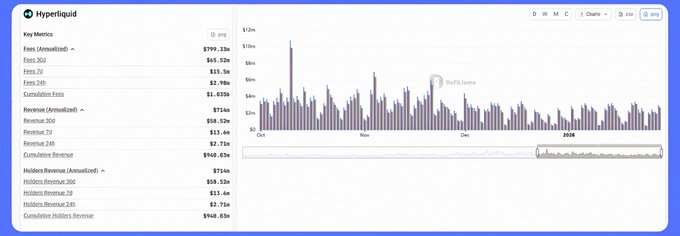
An $800M on-chain derivatives engine is not a bull-market anomaly. It’s what happens when liquidity stops leaving crypto rails. @HyperliquidX now operates at roughly that scale. ➣ Annualized gross fees: $799M ➣ Annualized holder revenue: $714M ➣ Open interest: $8.6B ➣ 30d perp volume: $173B+ ➣ Daily buybacks: $2M ➣ Fee capture: 89% What stands out is not growth. It is control. Fees are being discounted through HIP-3 while absolute revenue keeps expanding. That only works if volume elasticity is real. Lower taker costs are not compressing margins because execution is internalized. There is no external chain extracting rent. This changes the risk profile. Liquidity is no longer subsidized through emissions. It is being maintained through fee recycling and buybacks. The Assistance Fund converts throughput directly into token demand, which reduces float while volume stays high. The setup is mechanical. Lower fees pull flow. Flow funds buybacks. Buybacks tighten supply. Tight supply improves depth. Depth attracts larger clips. The question is not whether fees can grow. It is whether volume remains sticky once incentives normalize. When execution and incentives sit on the same layer, competition shifts from marketing to latency and depth. That is where dominance becomes structural.
HIP
0%
Loading..