avatar
고로치
28,460 Twitter followers
Follow
지혜로움에 관심이 많고 solana와 jupiter 그리고 ai에 관심 많습니다. 생각을 만드는 글을 씁니다. virtual referral - https://t.co/LPnlJcLsfK
Posts
avatar
고로치
My timeline is currently flooded with a three-line screenshot of Siong's tweet: > "Regarding Jupuary, we are waiting for the last ASR to finish claiming first. Then we will do it." The sentence is short. But the market reaction is long and harsh. "Another notification?", "Jupuary after all the ASRs?", "They don't even treat users like human beings." But let's pause for a moment. Are you really upset because of the "ASR ends, then Jupuary" sequence? Or because the airdrop and price movement you were hoping for collapsed? This article isn't intended to defend Siong or cover up Jupiter. It's simply to examine our perspective on this matter. I. Role and Words: Don't Ask a Genius Developer to Be a TED Talk Let's start with the facts. - ASR (Active Staking Rewards) is a quarterly reward paid to those who stake JUP (and participate in governance). - Jupuary is an airdrop season for a broader user base, and the 2026 airdrop has already faced controversy due to reduced supply and changed conditions. - In this context, Siong stated in just three lines, "Jupuary will be held after the final ASR claim." If you were to ask me if this is appropriate for someone in a leadership position to say, I would say "no." Because... 1. The context is omitted. - The technical and operational reasons for why Jupuary can only be held after the ASR is over are not explained at all. - To a community already suspicious, it can only be interpreted as, "The priority is not us (users), but you (the team)." 2. The language is light for the position. - The words a co-founder uses in front of hundreds of thousands of people aren't just personal account scribbles; they can be signals that influence market structures. - A leader's words aren't just "texts I'm solely responsible for," but system calls that touch the assets and emotions of countless people. So, let's delve a little deeper. 'Why does Siong speak this way?' My guess is simple. Siong is a Meow type of person. He's incredibly skilled at development and possesses exceptional technical leadership skills. However, his market psychology and public communication skills are entirely different stats. Meow was like that in the past. He used to be a frequent presence on social media and YouTube, but at some point, he drastically reduced his exposure. This was after he realized that his words and actions don't always have a positive impact. Since then, he's been much more cautious in his approach. Siong is also in that category. His development stat is 99, and his communication stat is 40. The problem is that the market demands a "superhuman who is both 99 in development and 99 in speaking." That kind of leader exists in legendary characters in games, but not in reality. Leadership isn't about being "good at everything," but rather about creating a "structure that allows everyone to do what they do best." - People like Siong focus on code and architecture, - and strong communicators like Kash engage with the market from the front lines. This setup actually raises expectations for the entire organization. So, I'd like to summarize it this way: > "Siong's tweet was clearly a miscommunication, but to dismiss Jupiter as a whole, beyond his technical achievements, is to confuse roles with stats." Aren't you caught up in that confusion right now? II. The Mirror of Short-Termism: Are You an Investor or an Event Hunter? You call Jupiter's several-month delay "no big deal." I'm in the same boat. Because, if you're going to hold onto it for years, whether you receive it now or three months from now is practically irrelevant. But looking at the timeline, most of the people shouting the loudest right now are - those who jumped in just before the airdrop date, - those who expected quick profits from this event. The important thing here isn't moral judgment. Whether short-term or long-term, each person's strategy is their own. The problem is the attitude of blaming others while forgetting their own strategy. So, I'd like to ask: - "If your investment logic is overturned just because the Jupuary is delayed by a few months, wasn't your logic based on three weeks, not three years, in the first place?" - "What you really wanted was the project's growth, or the pumping chart immediately after the airdrop?" If you want to answer, "No, I'm a true long-term investor," then your current anger stems from one of two reasons: 1. You don't want to admit that your true intentions were short-term, or 2. You claim to be a long-term investor, but your actual actions were motivated by a short-term price action. Neither is bad. However, there's no need to be confused. Let's look at the ASR structure. - It's a quarterly reward based on staking (governance participation), - If you miss the claim period, your stake reverts to the DAO treasury. In other words, the system itself is designed to reward "long-term alignment + active participation." For those who understand this structure, a slight discrepancy between the claim timing and the Jupuary point isn't enough to shake the investment rationale. So, let's summarize it this way: > "The people most affected by this current chaos are those who have no choice but to leverage short-term events. > While that sentiment is understandable, it's dangerous to use it as a criterion for determining the overall direction of a project." III. Not judging a project based on a single tweet We don't evaluate people that way in everyday life. - Just because a normally conscientious friend is late for a meeting, we don't label them as "a person who never keeps promises." - Just because a boss, who was usually a jerk, was a good boss for a day, we don't reassess them as "actually an angel." What we're looking at isn't a single event, but a cumulative pattern. In soccer terms, it's the average performance over several seasons, rather than the mistakes made in a single game. Jupiter is no different. - Good scores: Results from infrastructure deployment, routing and liquidity aggregation, governance experiments, and the launch of Jupuary Season 1. - Bad scores: Jupuary volume reductions and condition changes, ASR claim UX and security controversies, and recent communication methods. The average of all these scores represents the current status of the Jupiter project. Siong's latest tweet is clearly a negative score. That's undeniable. However... - If this one tweet, - reduces all previous positive scores and potential for future improvement to zero, then it's not because the project is doing this; it means they've already formed a conclusion and are only looking for evidence. In psychology, this is called confirmation bias. Because they're already disappointed with Jupiter, any comment they make is interpreted with a "See, that's the same." So, I'd like to say this: > "It's true that Siong, as the founder of Jupiter, must be careful with his words and actions. (Siong's social media activity deserves serious consideration.) > However, anyone who generalizes his single three-line tweet as the essence of Jupiter as a whole, > is likely viewing it this way not because Jupiter is like that, but because their own emotions are already distorted." Ultimately, we judge based on data accumulated over a long period of time. This incident is just one example of that data. IV. Three Questions to Ask Yourself in Times Like These (Protocol) Finally, I leave you with a simple self-assessment protocol that can be used whenever the community is shaken, like this one. 1. "What timeline am I on?" - If a three-month delay undermines your investment logic → You're effectively a short-term player. - If you're looking at a three-year horizon → This incident is a "need for improvement + subject to monitoring," not an immediate trigger for departure. 2. "Do I view people/projects as events or patterns?" - Is my timeline currently focused solely on Siong's three lines? - Or am I viewing Jupiter's past activities and this mistake on the same timeline? 3. "Does my anger stem from facts or losses?" - Facts: Objective information such as the ASR structure, Jupiter schedule/volume changes, and voting suspensions. - Losses: My average price, my position, my leverage. Honestly, write down which of the two influences your interpretation more. In most cases, you already know the answer. It's just difficult to admit it. V. Conclusion Siong's sentence is clearly a mistake. But that mistake doesn't have to replace all your judgment. - Leaders' language needs to be more weighty, - the Jupiter team needs to be much more transparent about the ASR-Jupuary structure and priorities, - and at the same time, each of us needs to be honest with ourselves about our own positions and timelines. Ultimately, the question boils down to one thing: > "Are you judging Jupiter by looking at Siong's three lines, > or are you interpreting Siong's three lines by looking at the multi-year story of Jupiter?" The answer you give will reveal what kind of investor (or speculator) you are.
SIONG
@sssionggg
regarding Jupuary, we are waiting for the last ASR to finish claiming first. then we will do it.
ASR
11.08%
avatar
고로치
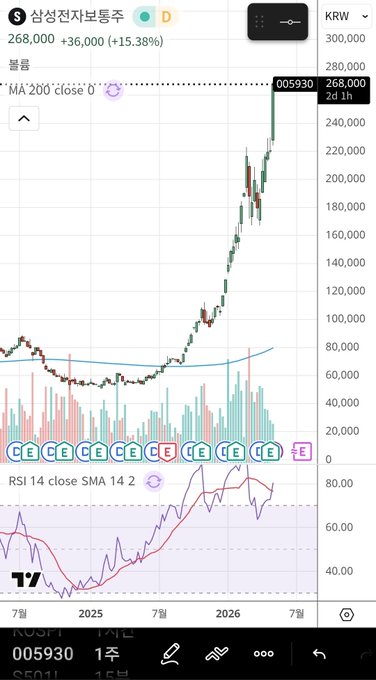
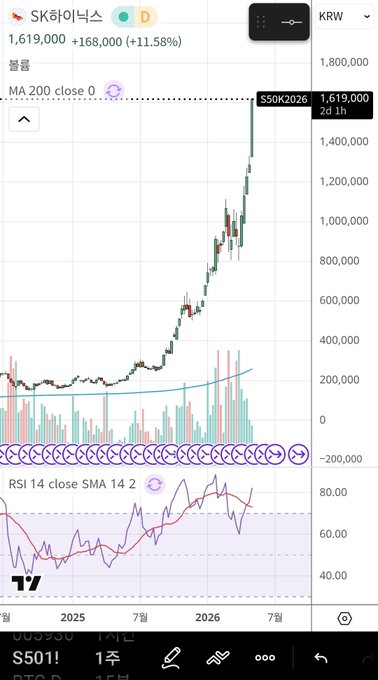
Andrew Kang: Anyone who has experienced at least one market cycle has developed an instinct to be wary of price increases that significantly outpace historical performance. Watching the dot-com bubble, the 2008 global financial crisis, and all the sudden surges in cryptocurrencies, a pattern-recognition alarm system is built into our brains. We feel reluctant to enter the market because prices are too high, or we want to sell our existing holdings. However, it's important to recognize that we are in one of the most profound and unique moments of asymmetrical change in history. The only thing we can do now is broaden our time horizon and completely abandon short-termism. It's foolish to worry too much about bubbles. It's also foolish to try to time the market. Short-term fluctuations and corrections will always occur, but given that we're so close to the Singularity, they're nothing more than noise. We will witness unstoppable growth in AI, robotics, energy, and innovation. Within the next decade, billions (or more) of AI agent workers, humanoid robots, space data centers, multiplanetary colonization, and vastly improved medical treatments will emerge, fundamentally altering the pace and throughput of technological breakthroughs across all domains. We will achieve more technological progress and economic growth in the next 20 years than in the entire history of human civilization combined. We are already in the steepest part of the J-curve, but this is difficult to discern when zoomed in on a daily or weekly basis. Currently, 100% of Anthropic's product code is written by Claude. Product managers (PMs) have virtual teams of software engineers who can practically transform their time. Companies that effectively leverage AI have increased their product iteration speeds by triple digits, not single or double digits. And the capabilities of these tools are improving at an even faster rate. It doesn't matter whether we officially reach Artificial General Intelligence (ASI) in 2027 or 2029. It will happen. By the time it's officially declared, the assets you want to own will already be several times more expensive. In a highly feasible scenario, real economic growth over the next three to ten years could be recorded as a "20-sigma" event (20 times the standard deviation) under any historical distribution. Unprecedented second- and third-order changes will enable growth previously considered nearly impossible. Traditional valuation models are ill-equipped to price this change. The unstoppable upside potential is so vast that conventional present value calculations are simply too difficult to capture. The pace of asset appreciation will be as astounding as the cryptocurrency boom that created countless billionaires and millionaires in a short period of time, but the scale will be incomparably more extreme. Without exposure to the asset, it will be very difficult to buy in at such a rapid pace. However, unlike previous bubbles, real economic value creation will be able to keep pace with the vertical asset price increase much better. Those who understood and acted on the Exponential Horizon over the past three years have benefited greatly. If you haven't yet embraced this understanding, it's not too late. While it's essential to always consider downside risk, it's also the greatest upside risk the world has ever seen. Learn to tolerate risk longer. Now is not the time to trade. While investing generally outperforms trading for most people, the gap between trading and the expected value (EV) of investing will be wider than ever. What is the value of the implied call option called the Singularity? This is not investment advice. twitter.com/gorochi0315/status...
AI
0%
avatar
고로치
[Jupiter Catlumpurr Final] I. The Essence of Envy: A System of Collaboration The biggest emotion I felt in Catlumpurr was envy. It wasn't simply envy of their success. I envied the fact that a single leader had staked hundreds of millions of tokens and tied the future of his teammates to his own. To use a video game analogy, it's like the Meow and Jupiter teams are clearing a boss raid together. If they fail, everyone dies, but if they succeed, the experience is shared across the entire party. With each battle, team members level up, their skill trees expand, and they collectively earn the title of "talented" in the blockchain world. On the other hand, what about the Korean blockchain scene? Upbit and Bithumb are only filling their own inventories. Jang Hyun-guk and the Kimchi Coin founders... were solo players from the beginning, and countless Kimchi communities are also playing their own games. A game board without party play. A structure where experience isn't shared. The essence of my envy wasn't "success," but the absence of a "system for leveling up together." "Hey, can I get a bus?" II. The Conditions of a Leader: Token Stakeholders vs. Token Sellers The Rules of the Game Are Different Meow's bet of hundreds of millions of tokens on a project means more than just "investment." It's a declaration that "I (Meow) cannot escape this game." From a game theory perspective, Meow eliminated its own exit option. If your team members fail, you fail, and if your team members grow, you grow. In economics, this is called "aligned incentives," but more simply put, it's "people in the same boat." On the other hand, Upbit and Bithumb are different. They operate casinos, not bettors. They live off commissions, and they don't care whether you win or lose. Not only Upbithumb, but almost all the Kimchi Coin founders around us initially aimed for "token sales," not "projects." Kimchi communities are no different. The Psychology of Leaders: Why Meow Is Different Psychologist Erik Erikson divided human development into eight stages. Stage 7 is "Generativity vs. Stagnation." People who reach this stage are more interested in "raising the next generation" than in their own success. Meow shares his experiences with his teammates not because he's kind. He's already experienced personal success and is now at the stage where he wants to "create something beyond himself." Jupiter's success becomes his legacy. His team members' ability to become competent is the process of completing his work. What about Korean blockchain leaders? Most people still seem stuck in Erikson's Stage 4 (Industry vs. Inferiority, Achievement vs. Inferiority) or Stage 5 (Identity vs. Role Confusion, Establishing a Identity). They're obsessed with "How much have I earned?" and "How will I be remembered?" Team development is of no concern. III. Structural Problems in the Korean Blockchain Scene: Why Isn't Meow Coming? Cultural Conditions: "Hurry, hurry" vs. "Slowly, together." Korean startup culture aims for "quick success and an exit." In a structure where IPOs and M&As are the goals, long-term team development is considered inefficient. The cryptocurrency market is even worse. Once a token is listed and liquidity is secured, the founders are already wealthy. There's no need to spend 10 years leveling up their team. Jupiter is different. It's playing a long-term game in the Solana ecosystem, and most of Meow's tokens are locked up in the project. He chose "slowly building an empire" over "quickly selling and leaving." This structure itself is rare in Korea. Investors want quick returns, and founders want rapid success. "Growing together" is just a slogan, but in reality, it's "earning quickly and each person surviving." Economic Conditions: A structure that survives on fees, not tokens. Upbit and Bithumb have a clear business model: transaction fees. They don't care whether a coin succeeds or fails; all they care about is high trading volume. This is the same structure as a casino. Jupiter's business model is different. The value of the JUP token directly determines the project's success. Team members and the community hold JUP. Everyone is in the same boat. Upbit collects fees even if the ship sinks, but Jupiter dies when the ship sinks. The structural problem in Korea is that "leaders don't share the same boat as their followers." Leaders only collect the fare from the safe shores, and only followers board the ship. Social Conditions: Jealousy and Tall Poppy Syndrome Korean society tends to bring down successful people. It's what Australian culture calls "Tall Poppy Syndrome." This is one reason why Dokwon is so far away. In Korea, the more successful you are, the more criticism you receive. Meow is a hero in the Solana community. Even if you fail, you're applauded, and even more so if you succeed. In Korea? If you fail, you're criticized, and even if you succeed, you're suspected of being behind someone. Leaders need followers, but in a society where followers don't trust leaders, leaders can't emerge. IV. My Choice: Deciding to Board a Boat From Envy to Determination After returning from Catlumpurr, I kept thinking about it for several days. What should I do with this envy? Should I live lamenting the structural problems of the Korean blockchain scene, or should I make a different choice? The answer was clear: I decided to board the boat Meow built. Becoming a leader yourself is also a good thing. But I lack the skills, capital, experience, and network. But I can board the right ship and learn how to sail together. The Jupiter is currently sailing the fastest in the Solana seas. The captain has staked his fate on this ship, and the crew is gaining experience and becoming more capable every day. This is an opportunity. Something you'll never experience in Korea. Choosing a long-term game When I decided to contribute to Jupiter, I made one thing clear: this isn't a short-term game. Those familiar with the Korean blockchain scene are optimized for "getting in fast and getting out fast." They enter before the token listing, sell when the price spikes, and then exit. But that's not Jupiter's game. Meow is looking ahead 10 or 20 years. Its vision is to build a super app that dominates the Solana ecosystem. Beyond being a simple DEX aggregator, it aims to become Solana's very own infrastructure through Perps, Ape Pro, and countless other upcoming products. I want to be a part of that journey. Five or ten years from now, when Jupiter is at the center of the Solana ecosystem, I want to say, "I was there too." Contribution: Small but Meaningful "Contributing to Jupiter" doesn't mean anything grand. I'm not a Jupiter team member or a core developer. However, there are various ways to contribute. First, I can actually use the product and provide feedback. I try out Jupiter Exchange, Perps, and Ape Pro myself, find bugs, and share UX improvements on Discord or Twitter. Second, I can spread Jupiter's vision to the Korean community. While the Korean blockchain scene is still obsessed with short-term speculation, projects like Jupiter can demonstrate how to create long-term value. It demonstrates what a proper leader, proper team, and proper vision are. Third, I can build something directly within the Jupiter ecosystem. Whether it's a tool leveraging the Jupiter API or content for the Jupiter community, I add value in any way I can. Get on board, but don't just sit there; row. Gaining Experience What I gain by contributing to Jupiter isn't simply a rise in the price of the JUP token. It's the experience of becoming a powerful player in the blockchain scene. Just as Jupiter team members are welcomed everywhere with the title of "Jupiter native," community members who are deeply involved in the Jupiter ecosystem earn a similar trust. They gain a reputation as someone who knows how Jupiter works, understands Solana DeFi, and thinks long-term. If I can write "Contributed to the Jupiter ecosystem during the 2025-2030 growth phase" on my resume three or five years from now, that might be more valuable than any career at a Korean blockchain company. V. Joining the Same Boat Party Play: Community One of Jupiter's unique strengths is that it treats its community like true team members. At events like Catstanbul and Catlumpurr, Meow meets community members in person, listens to their opinions, and plans the future together. This isn't just marketing. It's a strategy to bring the community on board. Everyone who holds JUP tokens has a stake in Jupiter's success, and the more actively they contribute, the stronger the project becomes. I've decided to become a part of that community. I want to be active on Discord, share Jupiter updates on Twitter, and serve as a bridge between the Korean and global communities. How to Get on the Winning Boat Investors often say, "Bet on the winner." But more importantly, "Get on the winning boat early." Jupiter is already Solana's leading DEX aggregator. But Meow's vision doesn't end there. Jupiter's journey is just beginning. Rather, it's the real voyage. As Solana moves toward mainstream adoption, Jupiter will be at the center of it. I want to be a part of that journey. When I look back in 10 years, I want to say, "In 2026, I chose the right boat." VI. Final Thoughts: Turning Envy into Action The envy I felt at Catlumpurr has now become a clear direction. Instead of lamenting the lack of leaders like Meow in Korea, I've decided to follow the example of Meow, who already exists. If you're not ready to become a leader yourself, learning from a proper leader is the first step. The ship Jupiter is sailing steadily through the storm. It grew even during the bear market of 2025, and it won't stop in 2026. Meow has staked hundreds of millions of its tokens on this ship, and its team members and community are on board. I'm now a part of that ship. Five years from now, when I become the leader and build a new ship, I'll remember what I learned at Jupiter: - Betting, not selling tokens - Binding my team members' futures to my own - Playing the long game, not the short term - Treating the community as true team members, not mere decorations Until then, I will contribute to Jupiter's further success. Even small contributions are meaningful. Because everyone on the same boat arrives at the same destination. Envy has now become action. Meow, the Jupiter team, and the community. I'm now on the same boat. Let's sail the blockchain sea together.
고로치
@gorochi0315
02-01
[Jupiter Catlumpurr 둘째날 : 복잡함을 끌어안는 자들] "위대한 프로토콜은 두 얼굴을 지닙니다. 뒷단에서는 모든 것을 집요하게 연결하고, 앞단에서는 '찰칵' 소리 하나로 끝낸다." 어제는 J커브가 교차점에서 폭발한다는 이야기를 했는데.. 오늘은 그 다음 질문입니다. 13개의 x.com/gorochi0315/st…
MEOW
1.32%
loading indicator
Loading..