✅ The Era of Tokenized Stocks: Why Korea Is Lagging Behind
View Original
Despite the rapid global growth of the tokenized stock market, Korea is being left behind in this trend due to regulations.
1. What are Tokenized Stocks?
Simply put, it involves turning stocks into coins. Stocks like Apple or Nvidia are broken down into tiny fractions using blockchain technology, allowing them to be bought and sold anytime, anywhere, 24 hours a day, for as little as $1.
The global market capitalization has surpassed $1 billion (approximately 1.4 trillion KRW) for the first time, growing 2.5 times in just one year.
➜ Ondo Finance holds the top spot in market share at 59.6%, followed by xStocks (22.8%) and Securitize (9.4%).
2. Large Financial Institutions Leading the Market Overseas
While the past was a feast for fledgling blockchain companies, traditional financial giants are now leading the market. BlackRock (World's largest asset management firm): Raised trillions of won in capital by launching 'BUIDL,' a tokenized fund.
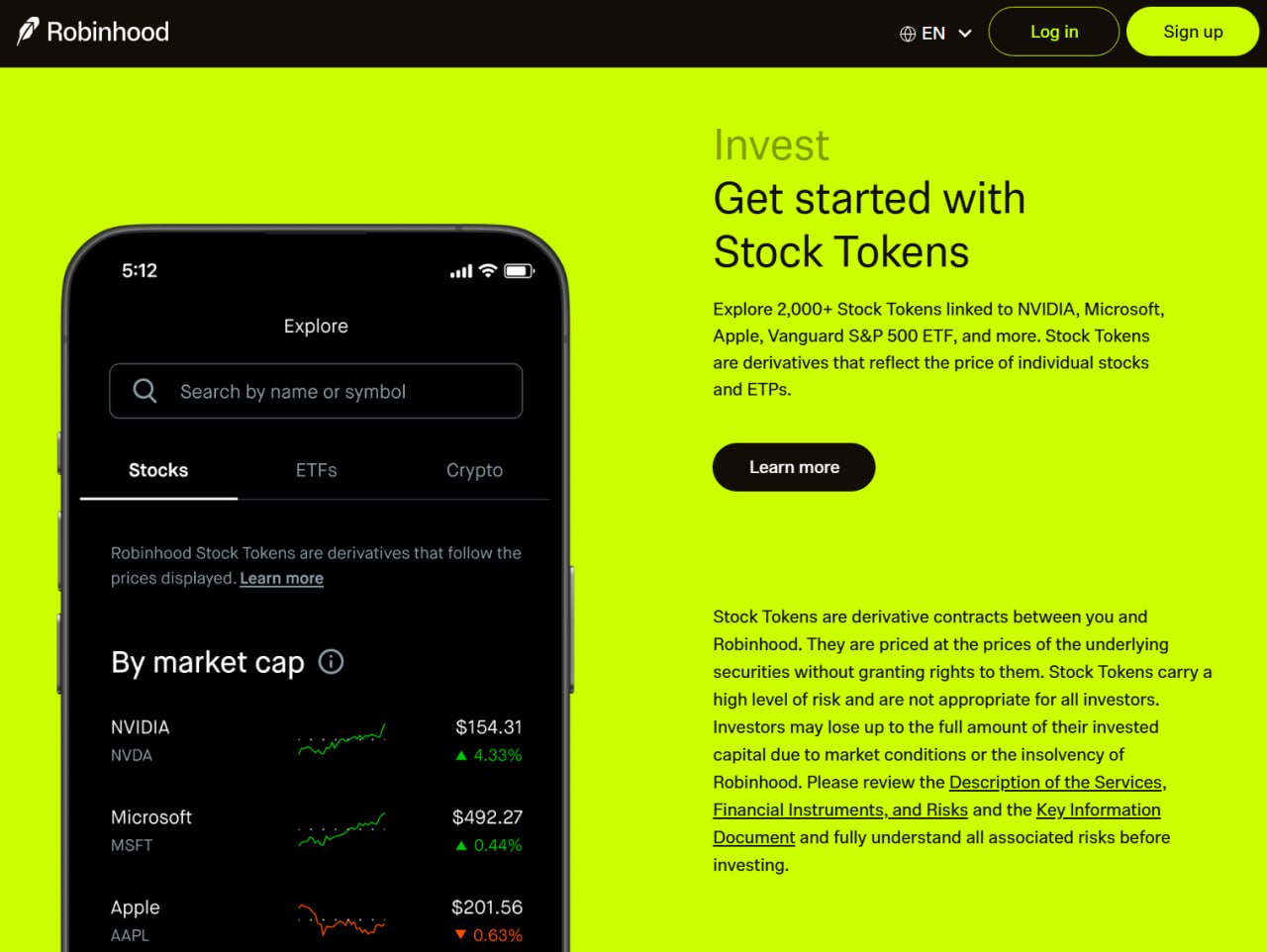
Robinhood (US stock platform): Plans to tokenize over 200 types of US stocks in Europe and trade them with no fees.
Franklin Templeton (Global asset management firm): Launched five ETF tokens in partnership with Ondo Finance that can be traded 24 hours a day on cryptocurrency wallets.
✔️ Reasons why Korea has become a spectator
① Legal and institutional barriers: The principle of financial separation
It was pointed out that due to this principle, introduced in 2017, financial companies have been blocked from entering the virtual asset industry for nine years.
② Inability of large financial institutions to participate
Korea's market is open only to small-scale investments, such as artwork, resulting in a lack of global competitiveness.
➜ Nevertheless, doors are gradually opening as the government has recently begun allowing the tokenization and issuance of physical assets, such as real estate and artwork, through the institutionalization of Security Token Offerings (STO) and amendments to the Capital Markets Act. ③ Authorities’ Conservative Guidelines
Financial authorities are highly wary of the adverse effects on the financial system caused by the indiscriminate expansion of Big Tech or regulatory gaps.