Since its inception, Bitcoin has been positioned as a peer-to-peer payment system, however, its biggest problem is that the price volatility is too large, which has led to its inability to serve as a payment currency in specific application scenarios, and the emergence of stablecoins can just make up for Bitcoin's shortcomings.
Stablecoin Application Scenarios Explode
In October 2024, Stripe acquired the stablecoin platform Bridge for $1.1 billion, setting a record for the largest acquisition in the crypto field, indicating the imaginative space created by the combination of stablecoins and payments. In addition, the EU, Hong Kong, the US, the UK, Singapore and other countries have also introduced policies related to stablecoins, providing policy guarantees for the development of the market. As of December 16, 2024, the total issuance of stablecoins has exceeded $200 billion, and according to VanEck's forecast for 2025, the global stablecoin daily settlement volume is expected to reach an astonishing $300 billion, and the potential of DeFi applications based on stablecoins is increasing day by day.
Foreseeable Future Stablecoin Payment Market Size
According to World Bank data, the proportion of the global population aged 15 and above with a bank account or mobile account is only 76.2%, which also means that there are still 23.8% of the population (aged 15+), about 2 billion people, who do not have a bank account. This group of people can enter Web3 through applications like PayFi and become users of CEX, DeFi and other applications, greatly promoting the progress of Mass Adoption.

Global population with bank accounts in 2021 Source: World Bank Database
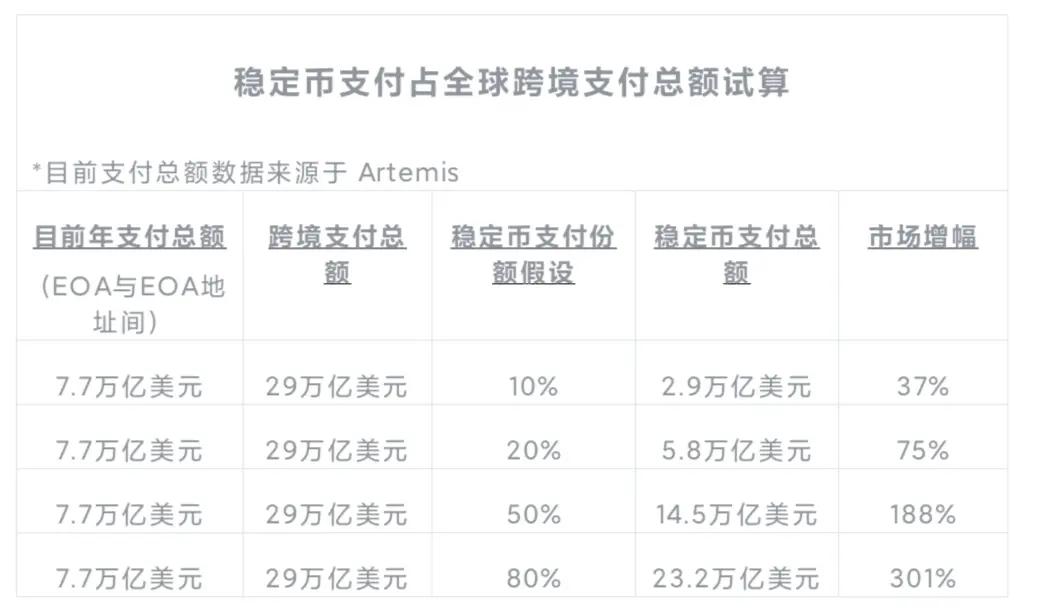
In addition, in the field of cross-border payments, stablecoin cross-border payments also have great potential. According to statistics from the Bank for International Settlements (BIS), the global cross-border payment amount exceeded $29 trillion in 2022. Traditional infrastructure is expensive and slow, while blockchain-based stablecoin cross-border payments are fast, low-cost, and can provide 7/24 service.
We believe that stablecoin payments will gradually occupy a larger share of cross-border payments, and if they occupy 50% of the share, it will expand the overall volume of stablecoin payments by 1.88 times; and if they occupy 80% of the share, it will expand the payment volume by 3 times.
Non-USD Stablecoin Market Also Has Great Potential
Recently, a report from Standard Chartered Bank also pointed out that non-USD stablecoins are also gradually gaining attention, including some economies with relatively large foreign exchange fluctuations, such as Turkey, where developing stablecoins can reduce exchange rate volatility. At the same time, it can also reduce dependence on the US dollar. In addition to issuing USD stablecoins, the BenFen ecosystem also issues stablecoins pegged to other currencies to occupy this market, such as BJPY and BINR.
The First Decentralized Native Stablecoin that Can Directly Pay Gas Fees
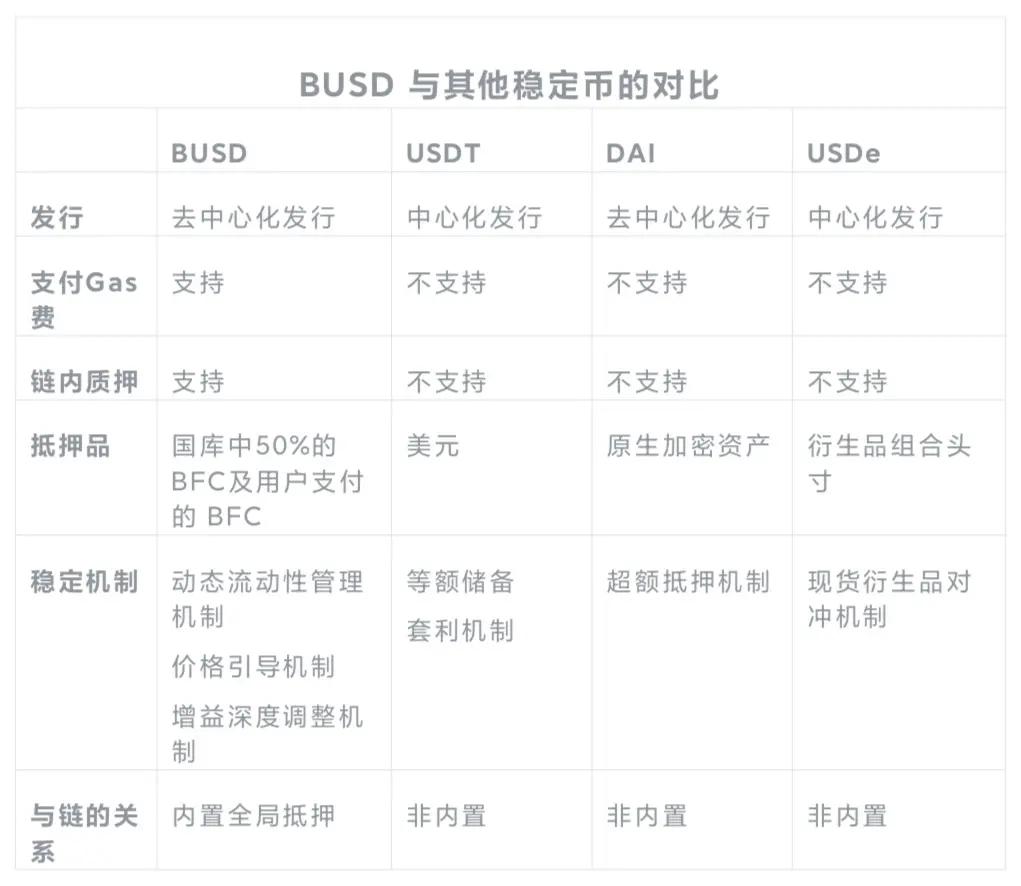
This sub-chain uses a completely new decentralized global collateral method to mint multi-currency stablecoins such as BUSD, and endows stablecoin holders with the status of "first citizen", that is, the native stablecoin BUSD supports gas fee payment, without the need to hold the native token of the chain like other public chains in order to transfer or trade, truly realizing for the first time in web3 the traditional payment and transfer habits of most web2 users, making it more smooth and convenient. Compared to the centralized issuance model of USDT and other stablecoins currently in the market, BUSD adopts a decentralized issuance method, forming a differentiation from USDT, DAI, and USDe. In addition to BUSD, this sub-chain will also issue stablecoins pegged to other major currencies based on oracles, such as BJPY pegged to the Japanese yen and BINR pegged to the Indian rupee.
Issuance Mechanism: 50% Treasury Asset Collateral
During the initial public chain, BenFen will permanently use 50% of the BFC as the treasury for the collateral of the issued stablecoins, which can greatly improve the security and stability of the system, which is something that other public chains do not have. For example, it's like Ethereum permanently putting ETH tokens into the treasury to issue stablecoins. After the user's wallet is connected, they can choose to pay BFC to mint the stablecoin BUSD, and when they exit, they can burn the stablecoin and redeem the BFC. Off-chain users can also use their own USDT/USDC to exchange BUSD at a fixed 1:1 ratio, and when they cross out, they can also exchange at a fixed 1:1 ratio.
Stability: Multiple Efficient BUSD Price Stabilization Mechanisms
BenFen has designed multiple price stabilization mechanisms, such as the elastic money supply mechanism, which dynamically adjusts the money supply based on market demand fluctuations to maintain price stability. The BenFen stablecoin protocol automatically executes this through specific algorithms and trigger conditions to dynamically increase or decrease the circulating BUSD. There is also an exchange rate reversion mechanism that relies on the price difference between the assets in the stablecoin treasury and the secondary market. When there is a significant price difference between the two, traders can profit by buying the asset at a low price and selling it at a high price, which not only provides profit opportunities for traders, but also helps maintain market price stability and ensure the stablecoin value is close to its anchor value.
The First Public Chain Born for Stablecoin Payment Scenarios
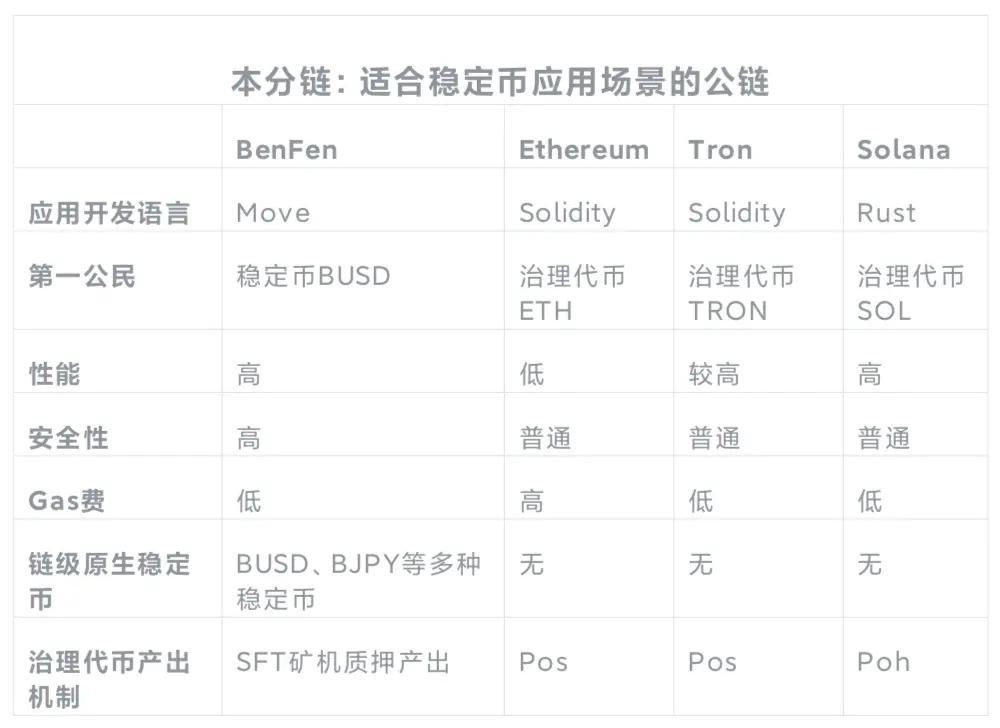
In terms of technical performance, compared to other commonly used stablecoin transfer public chains, BenFen chain also has outstanding advantages in various aspects, truly becoming the first public chain born for stablecoin payment scenarios: in addition to the fully embedded decentralized stablecoin, it also has better security, higher performance, lower gas fees and a robust consensus mechanism.
More Secure: Adopting a Safer Programming Language (Move Language)
BenFen chain uses Move language to write code, Move has a strict type system that can capture many common errors at compile time, such as type mismatches and null pointer references, thereby improving code security. In addition, Move manages assets through the concept of resources, and these resources have strict lifecycle management, ensuring that resources can only be used and transferred as intended, avoiding many security vulnerabilities such as reentrancy attacks and resource leaks. In addition to the above advantages, Move also has its own advantages in terms of permission control, immutability, and formal verification, greatly improving its security.
Higher Performance: Adopting an Enhanced Consensus Mechanism to Achieve Sub-second Latency and Tens of Thousands of TPS
BenFen chain innovatively adopts an enhanced consensus mechanism, combining DAG-based consensus and non-consensus methods, achieving low latency and high TPS, while still maintaining the ability to support complex contracts, generate checkpoints, and reconfigure the validator set across epochs.
In terms of latency, the BenFen chain can achieve a latency of 0.5 s, far faster than Ethereum's 12 seconds, and also faster than Tron and Solana.

Latency Comparison of Different Chains
In terms of TPS, the BenFen chain can achieve tens of thousands of transaction processing capacity, also higher than Ethereum, Tron and Solana.

TPS Comparison of Different Chains
More Convenient Login: BenFen Chain Provides Users with a More Convenient and Secure Login Experience through zkLogin
BenFen innovatively introduces the design of zkLogin, providing users with a way to generate addresses and sign transactions based on third-party authorization. Users can quickly log in through Apple and Google accounts without the need for a seed phrase, making it more convenient and faster.

BenFen Chain's zkLogin login interface
Lower Gas Fees: Reducing Gas Fees in Multiple Stages
This sidechain has optimized Gas fees in multiple stages to achieve low Gas fees. For example, each validator node submits their minimum bid to process transactions in each epoch. This sidechain will automatically sort the bids submitted by each validator node and select the price at the 2/3 position calculated based on the staking ratio as the reference price.

Additionally, when the Gas price submitted by the user is higher than the reference price, the difference is considered a tip paid to the network, and paying the tip can give the user a higher priority. Different transactions require different amounts of computation time to process and execute.
Finally, the storage mechanism of this sidechain provides a refund of storage fees when transactions delete previously stored objects.
The First Blockchain Focused Solely on Expanding the Stablecoin Application Scenario
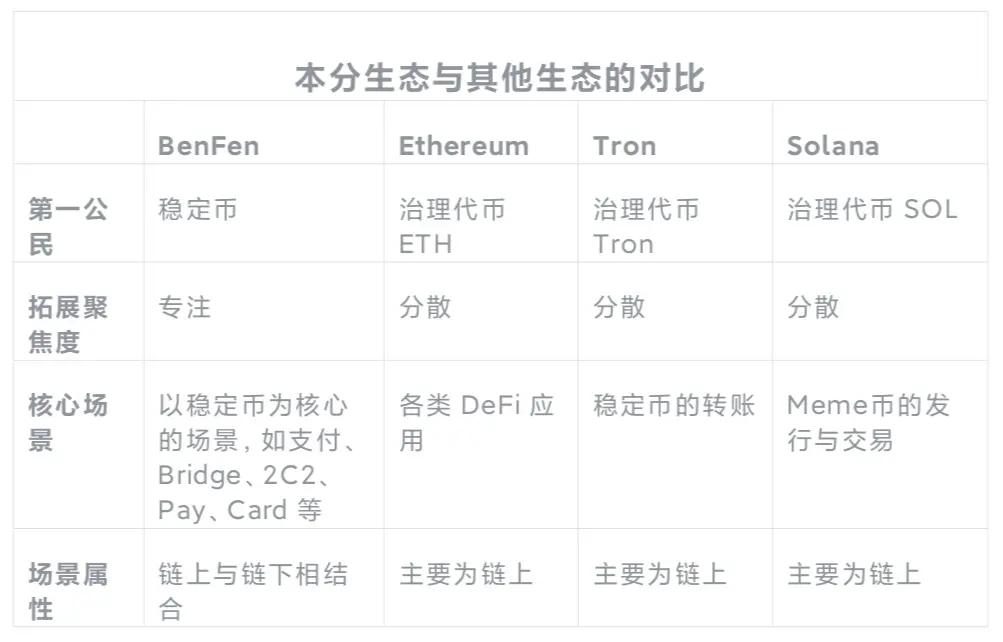
Compared to other chains that focus on multiple ecosystems, this sidechain is more dedicated to the ecosystem scenario based on stablecoin applications.
- BenFen Bridge is the native asset cross-chain bridge planned to be launched on this sidechain in the near future
- BenFen Card is a compliant payment solution integrated into our daily consumption
- BenFen Pay is a comprehensive payment ecosystem that can realize direct cryptocurrency payment, seamless exchange between digital currency and fiat currency, and on-chain escrow payment and other diversified functions
- BenFen KYC is an on-chain identity authentication and authorization system that realizes one-click query of multi-platform KYC records and point-to-point identity information verification channel by aggregating the authentication results of various KYC providers
- BenFen C2C is an innovative decentralized escrow trading platform
In addition, we will also work with partners to develop various ecological applications for users, promote the ecological development and prosperity of this sidechain, and provide greater value for users.