Nvidia CEO Jensen Huang was asked about Nvidia's quantum computing strategy at CES on Tuesday, and he said that Nvidia can manufacture traditional chips that work with quantum computing chips, but the number of qubits required for a useful quantum computer is currently 1 million times more than what is available.
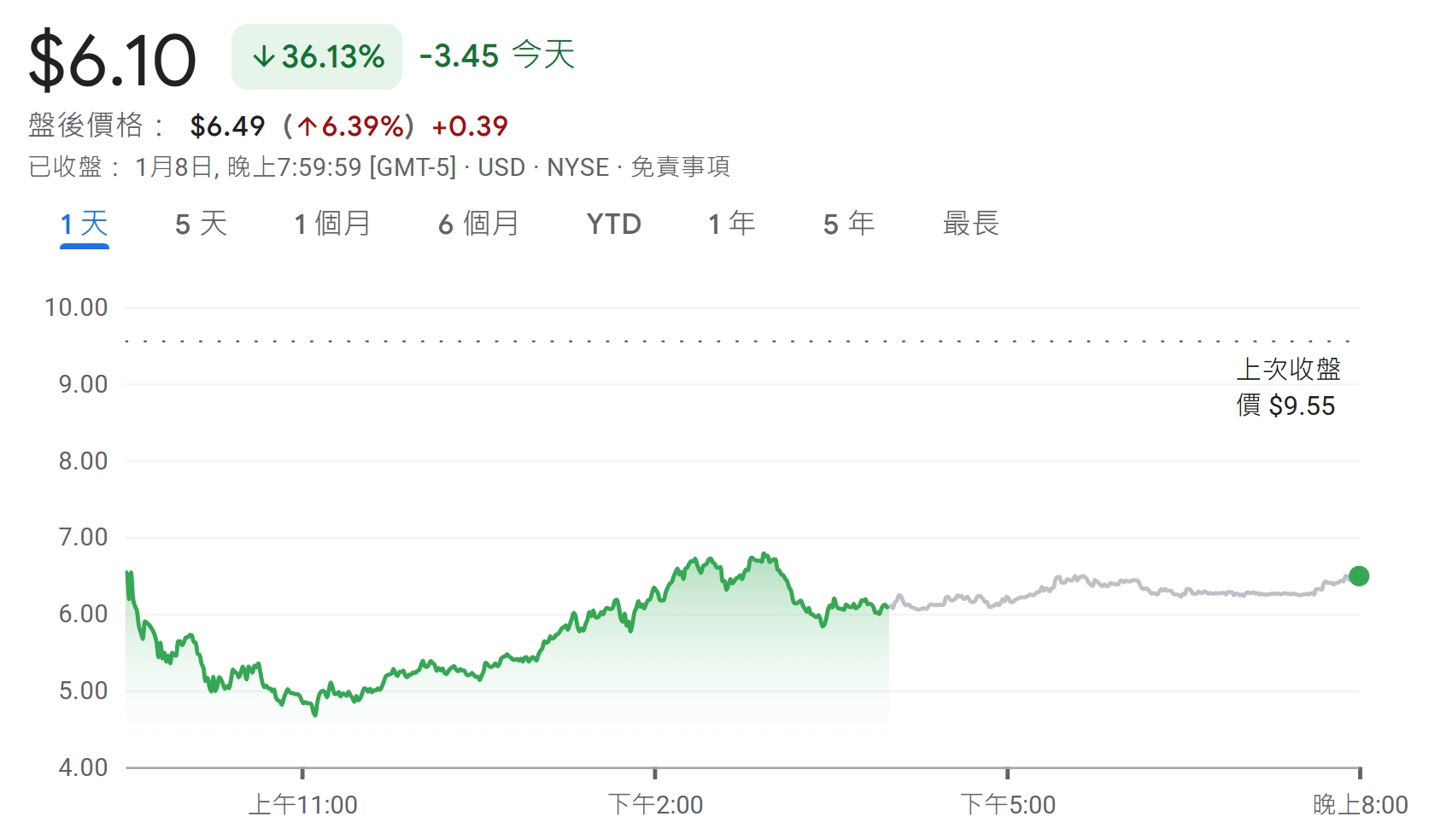
Therefore, Huang told analysts that it may take 15 to 30 years to bring a "truly useful quantum computer" to market. As a result, his comments caused a sharp drop in the stock prices of quantum computing concept stocks, with Rigetti Computing plunging 45%, IonQ dropping 39%, and D-Wave falling over 36% on Wednesday.
D-Wave CEO Fights Back
However, in response to Huang's comments on quantum computers, D-Wave CEO Alan Baratz gave an interview to CNBC on Wednesday to fight back, stating that D-Wave has already achieved quantum computing for commercial use, with companies like Mastercard and Japan's NTT Docomo using D-Wave's quantum computers to improve their operations:
Not in 30 years, not in 20 years, not in 15 years, it's happening now.
Quantum computing is believed to be able to solve problems that are difficult for current processors, such as decrypting encryption, generating random numbers, and performing large-scale simulations, and technicians have been researching it for decades, with companies like Nvidia, Microsoft, and IBM also collaborating with startups and university researchers.
Last December, when Google announced a major breakthrough in its quantum research, D-Wave was one of the companies that attracted renewed investor attention. Google then unveiled a new 100-qubit quantum chip called Willow, the second step in its six-part strategy to build a computer with 1 million qubits.
Is Huang 100% Wrong?
Alan Baratz acknowledged that "gate-based" quantum computing technology may take decades to realize, but D-Wave's "annealing" quantum computing method is already available for use:
While Huang's comments on gate-based quantum computers may not be entirely wrong, he is 100% completely wrong when it comes to annealing quantum computers.
D-Wave's stock price soared 178% in December last year, and even after the Wednesday plunge, D-Wave's stock price has still risen about 600% over the past year, with a current market capitalization of $1.6 billion. Alan Baratz stated that D-Wave's system can solve problems that cannot be solved by the fastest systems running Nvidia chips:
I would be happy to meet with Huang anytime, anywhere, to help fill in those knowledge gaps.