DAWN
DAWN is a decentralized broadband network that allows users to sell their unused broadband, or internet speed, to people around them and earn from it, whereas in the past, the right to sell broadband resources was only in the hands of centralized operators.
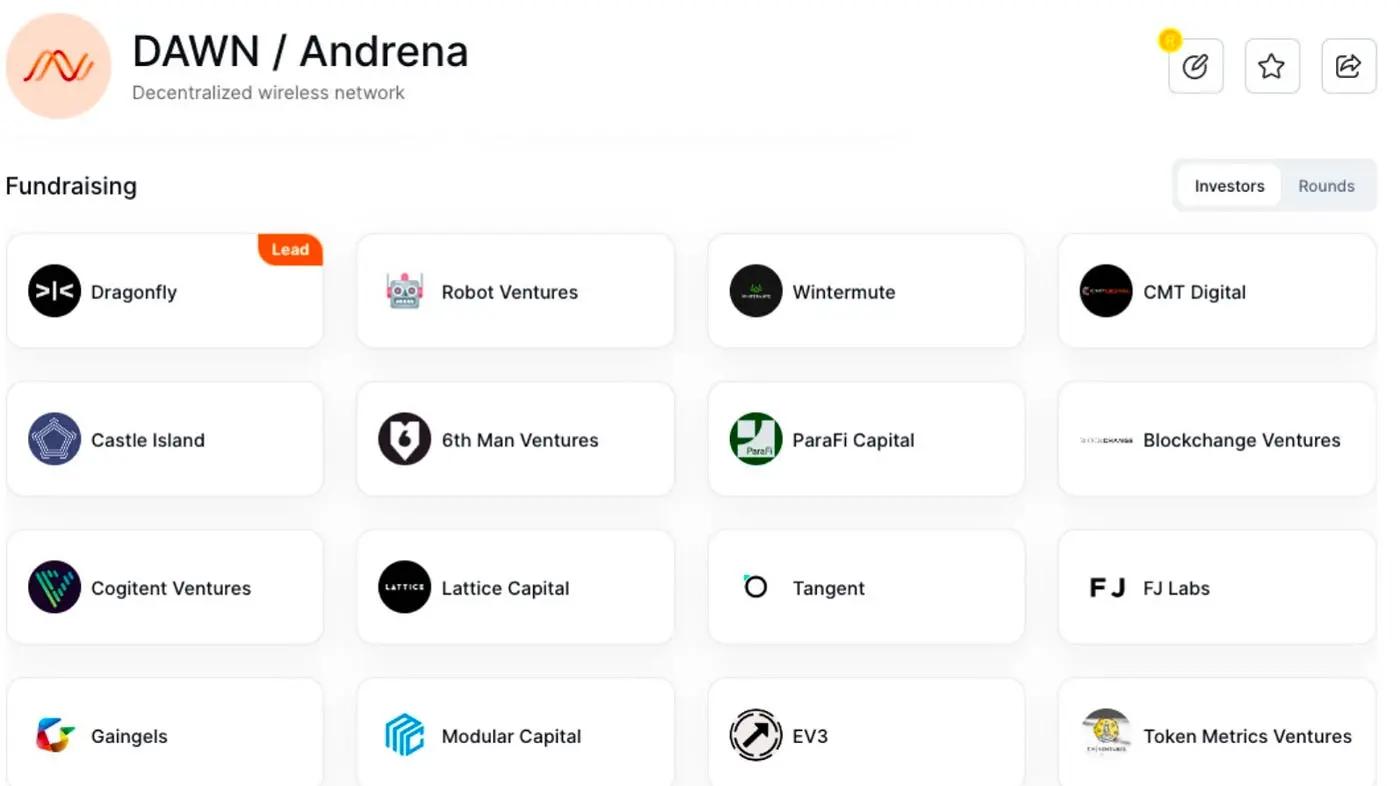
DAWN is very similar to grass, but the investment lineup is more excellent. It has currently raised a total of $33 million in funding, and the lead investors in both rounds are Dragonfly - a top-tier investment institution in the crypto space. The reason it was able to raise so much funding is likely closely related to the success of grass, which has expanded the valuation imagination of this track.
Objectives
The purpose of DAWN is to enable existing users to sell their network bandwidth. For example, if I don't have the money to subscribe to an expensive broadband package, but my neighbor has unused bandwidth, my neighbor can sell the excess network bandwidth to me through the DAWN project, so I can use the internet at a cheaper price, and my neighbor can also get some subsidies, resulting in a win-win situation.
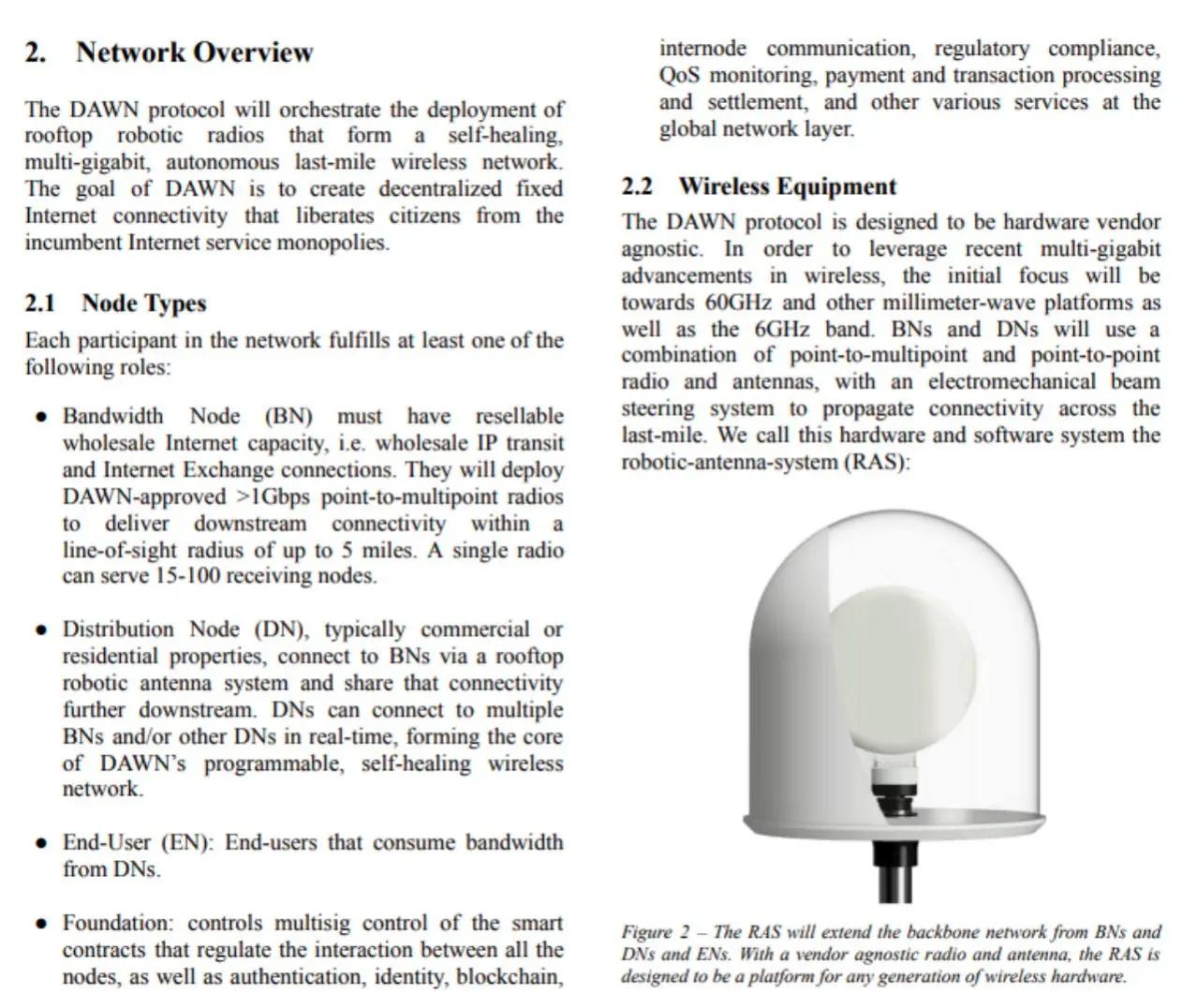
Specific implementation methods:
Role 1: Users sharing network bandwidth
In their plan, there are several roles. The first role is the users sharing network bandwidth, who have two devices. Depending on whether you are a professional in this business or a household user, if you are a professional, you need to buy an RAS device, and if you are a household user who wants to participate in the network, you can use your own router at home, which is like building small network base stations in different places, and everyone can sell and provide broadband services.
Role 2: Users purchasing network bandwidth
The second role is the users purchasing network bandwidth, i.e., the consumers. Currently, these services are only available in the US and are still in the pilot stage. Of course, the prices for selling different network speeds will vary in different regions, and using the DAWN service will be much cheaper than the original service providers.
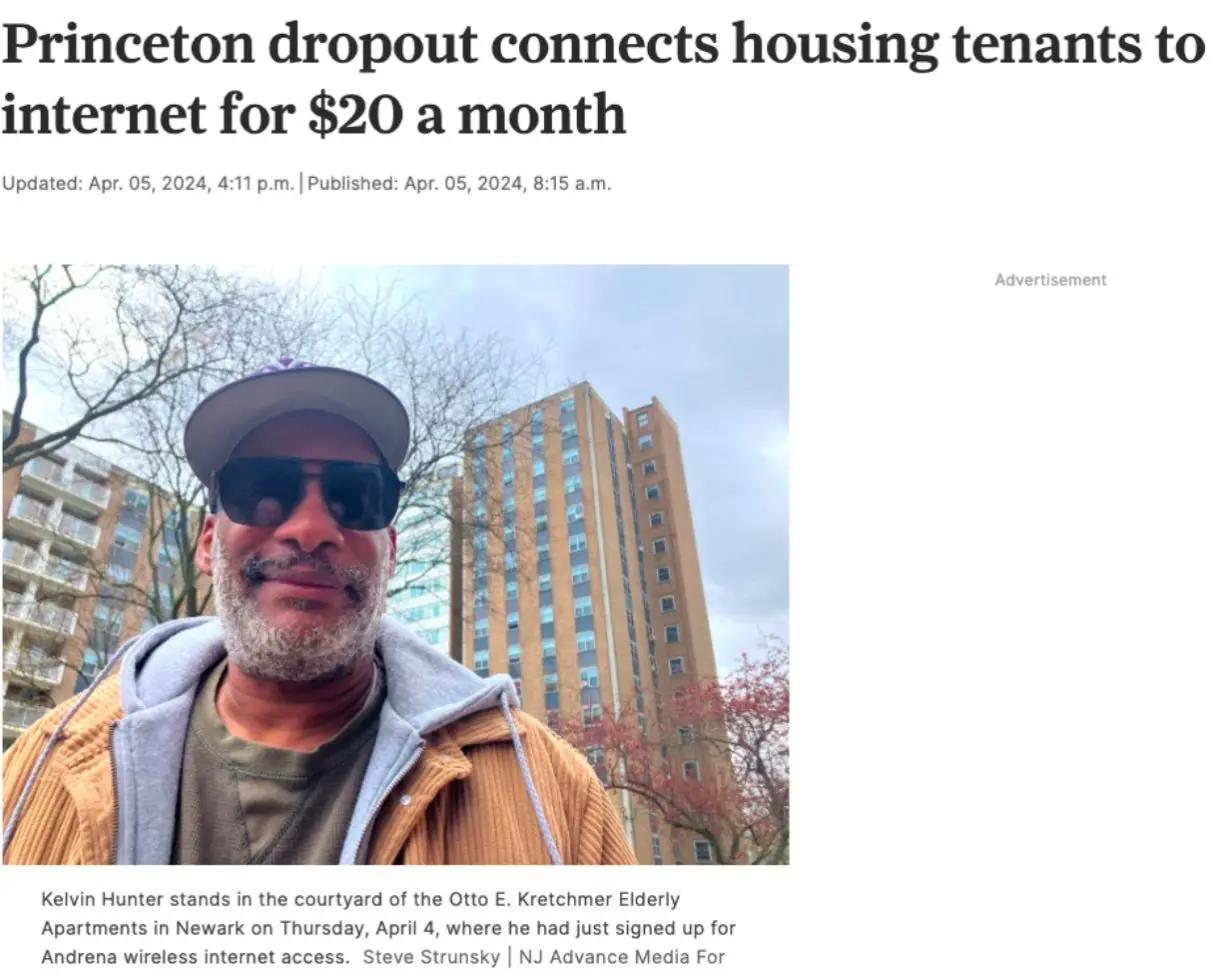
How much cheaper will the DAWN service be compared to the original service providers? The official example is that for a gigabit network speed, it will be $20 per month, about three times cheaper than the $70 local package in the US.
Role 3: Validators
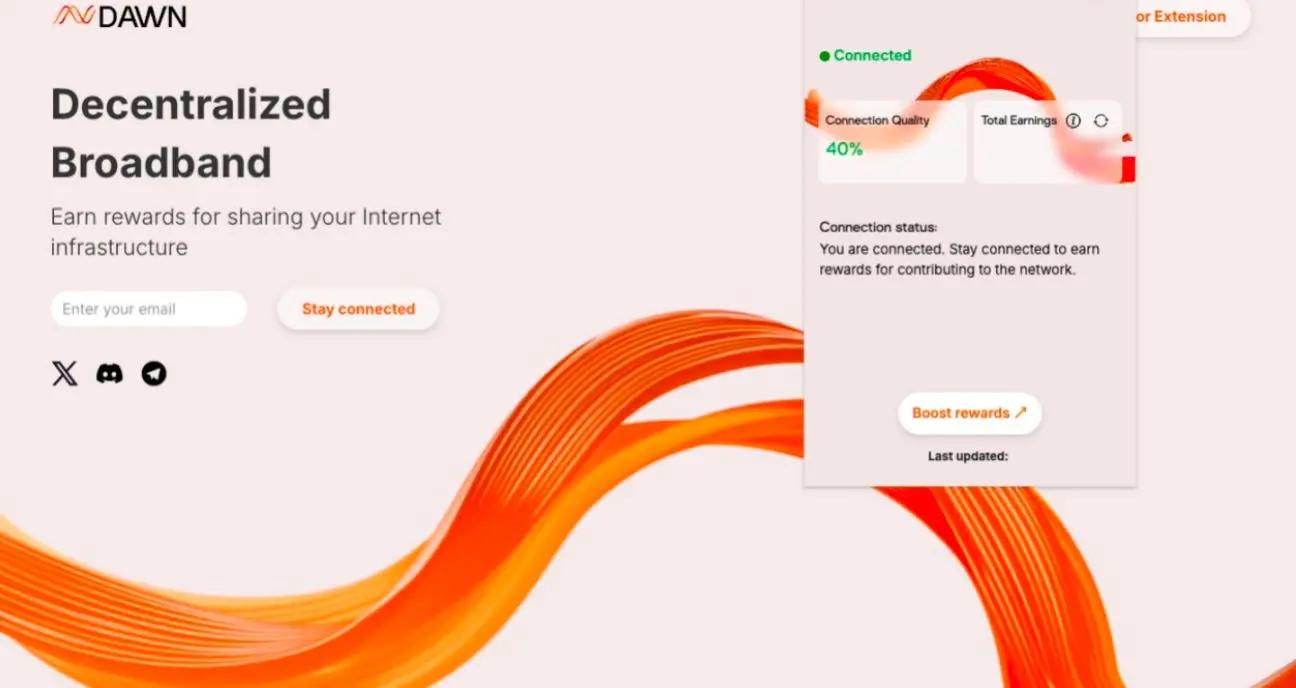
The third role is the validators, which is the way we can currently participate. Now everyone cannot sell their own network bandwidth unless you are in the US pilot area, but the project has opened the role of validator to everyone, and there is an airdrop activity. You only need to install the plugin from the official website on your Google browser.
Validators play the role of supervisors, ensuring that the transaction process between buyers and sellers is fair enough. For example, if a user buys a package claiming to be a gigabit network, the validator needs to monitor whether the network speed can be stably provided for the whole month.
Sogni
Sogni plans to become a decentralized Midjourney, using open-source models to allow every user to contribute their computers, CPUs, and GPUs to participate, and creators can use this computing power to render their own works, while users who contribute machines to compute can receive token rewards.
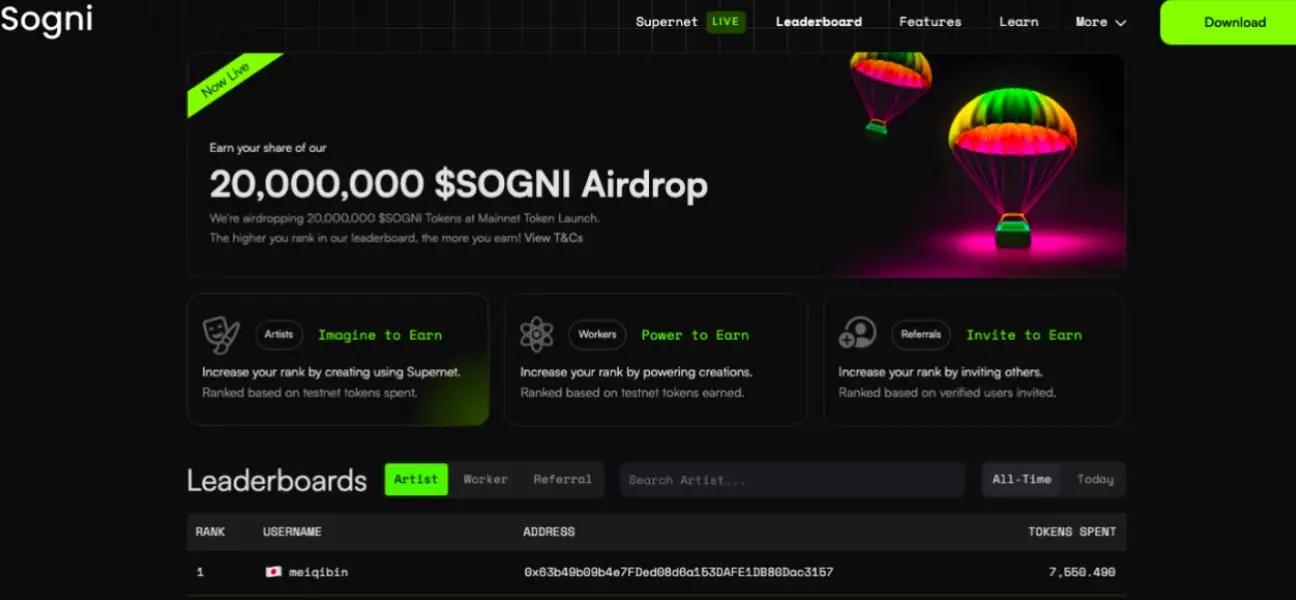
The project has already launched a testnet activity and clearly stated that it will airdrop the first batch of tokens to the current testnet users in December, with a total of 20 million tokens to be airdropped, but the project has not disclosed the total token supply and the proportion of this airdrop.
After the mainnet launch, users who want to use the Sgni platform will need to purchase the platform tokens for consumption. Currently, in the testnet state, everyone can receive 200 test tokens per day and use the model image function for free by consuming the test tokens.
Airdrop rules
Half of the tokens in the first airdrop will be given to the artist users who generate images. The more images the artist users generate and the more tokens they consume, the more airdrop they can receive, which is to encourage everyone to claim the test tokens every day and consume them as much as possible every day, and then the airdrop will be distributed based on the token consumption.
The other half of the airdrop tokens will be given to the users who provide computing power. Currently, it only supports Apple computers. If your computer has good performance and idle computing power, you can open the Sogni software to provide the performance, and once there are users with creation needs, the system will call your computer's computing power to render the images.
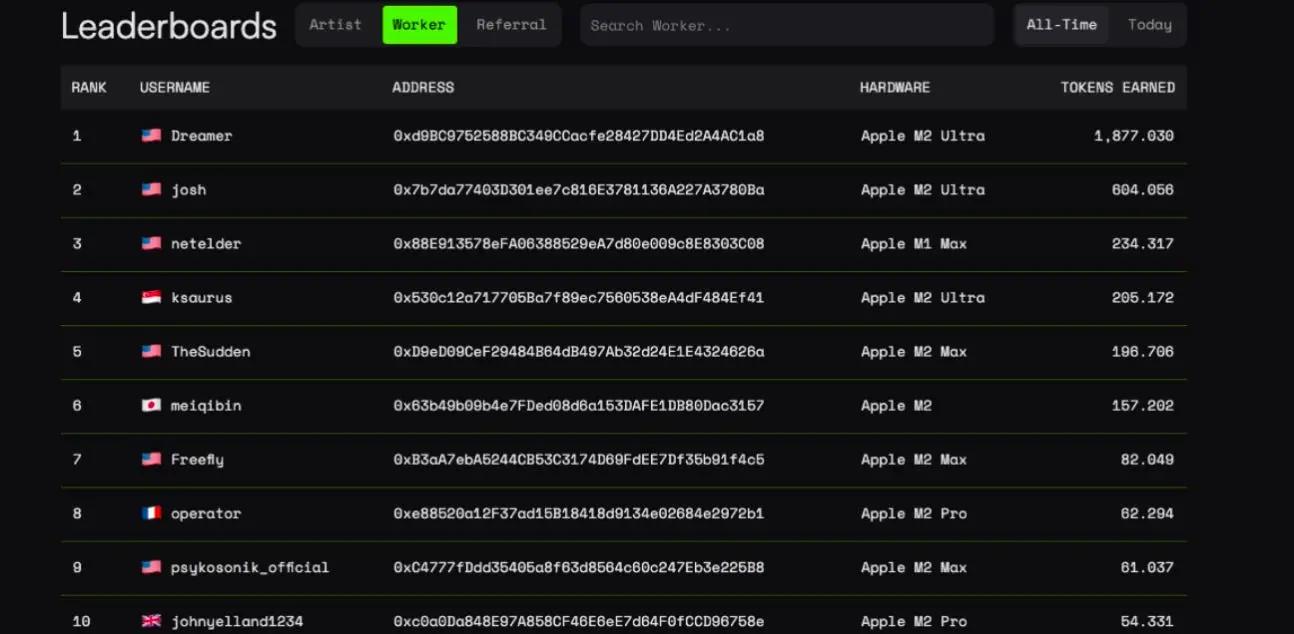
The rankings of these two types of users on the official website can be seen, and the current participants are very few, so it is easy to rank in the top of the leaderboard, especially the leaderboard for providing computer computing power, where the competition is not intense.
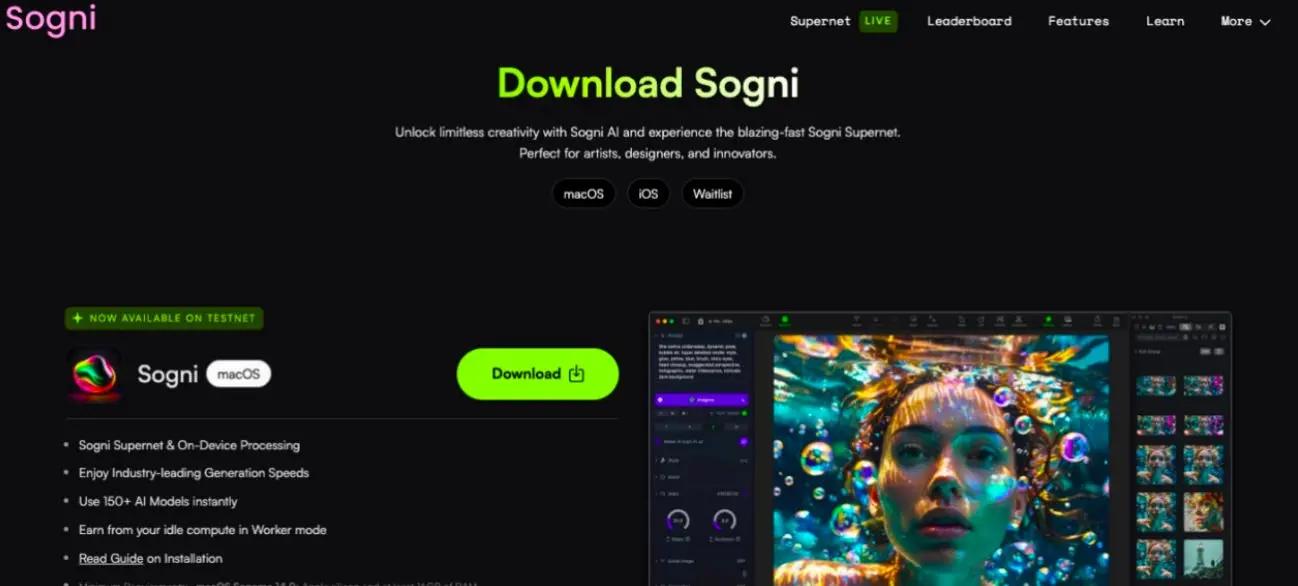 The participation method for the artist role is very simple. After installing the software on the official website and registering an account, you can get 2,000 test tokens, and you can also claim 200 test tokens every 24 hours, which you should spend quickly. Enter the PRO instructions you want, select different models and click "view model" to see the various open-source models you can use. After selecting the model, there are some parameters below that you can fine-tune, and you can generate 16 images at a time, which will consume tokens faster. Finally, click confirm to generate the images.
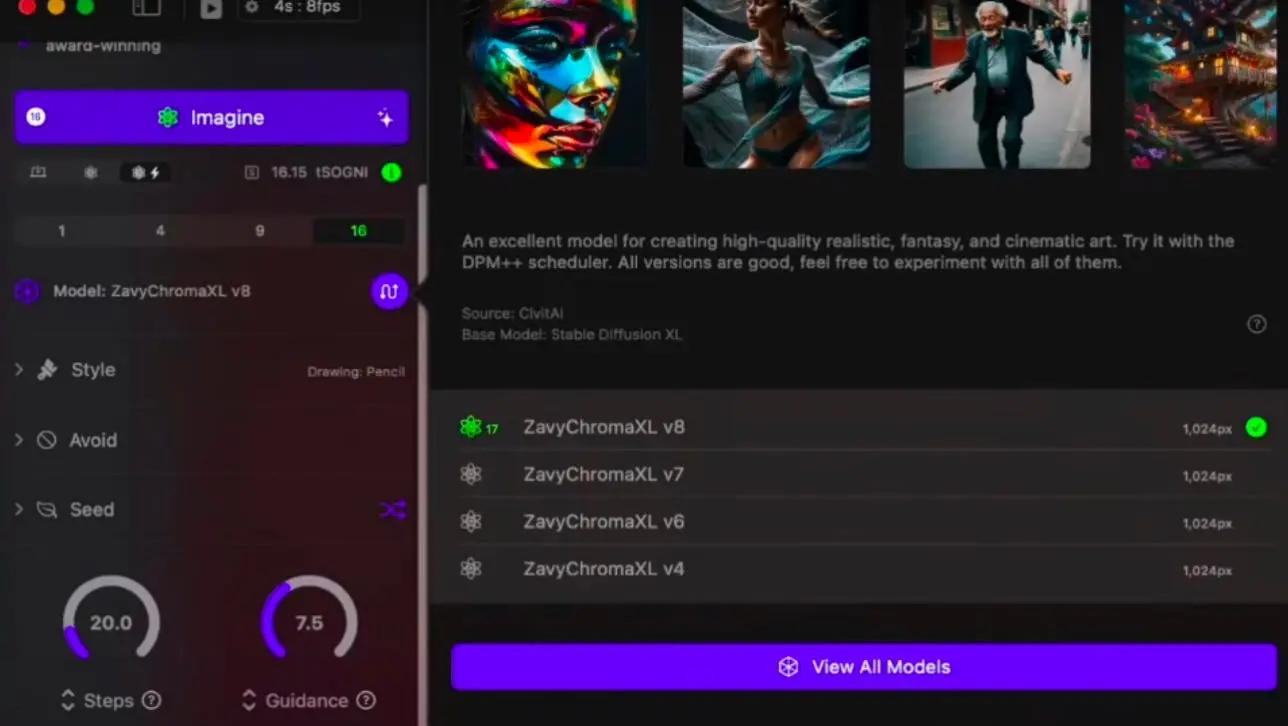
The other role is the provider of machine performance, who needs to download some models on their own computer before they can complete tasks with these models. Click "model" to download the models, and the more models you download, the better. Suppose you download four models ABCD, then you can accept tasks of these four styles, but if you only download one model, and the user doesn't choose to use this style model, you won't be able to accept the task.
So, as long as your computer's storage space allows, install as many models as possible, and you will be able to accept more tasks and earn more points.
Summary
Sogni is an open-source AI model, and Sogni can install many open-source image models, which is a useful tool, but a useful tool does not necessarily mean the market will give it a high valuation.
Sogni has not yet disclosed its funding situation, and the known information does not include any institutional investment, so it is unknown whether the airdrop tokens we receive will have any value in the future.
In terms of the investment lineup, the first project introduced, DAWN, has higher expectations. The common point of these two projects is that ordinary users can participate without additional costs, and they can easily lay low without being counterattacked.